Table of Contents
- How Solar Pool Heating Works to Extend Your Season
- How Long Does Solar Pool Heating Extend the Season?
- Solar Pool Heater Temperature: What to Expect in Spring and Fall
- Solar Pool Cover Heat Retention and Overnight Heat Loss
- Solar Pool Heating Costs Compared With Gas and Heat Pumps
- System Sizing and Installation: Getting the Setup Right
- Operating and Maintenance Tips for a Longer Season
- Frequently Asked Questions
Last Updated: October 19, 2026
How Solar Pool Heating Works to Extend Your Season
Solar pool heating uses rooftop collectors to absorb heat from the sun and transfer it into your pool water as it circulates. This guide from Dixie Pool Solar Heating & Misting explains how that cycle works, what it realistically delivers in spring and fall, and how to set it up right. Your existing pump pushes cool water up to the panels, sunlight warms it, and the warmed water returns to the pool, repeat all day and the whole pool climbs in temperature.
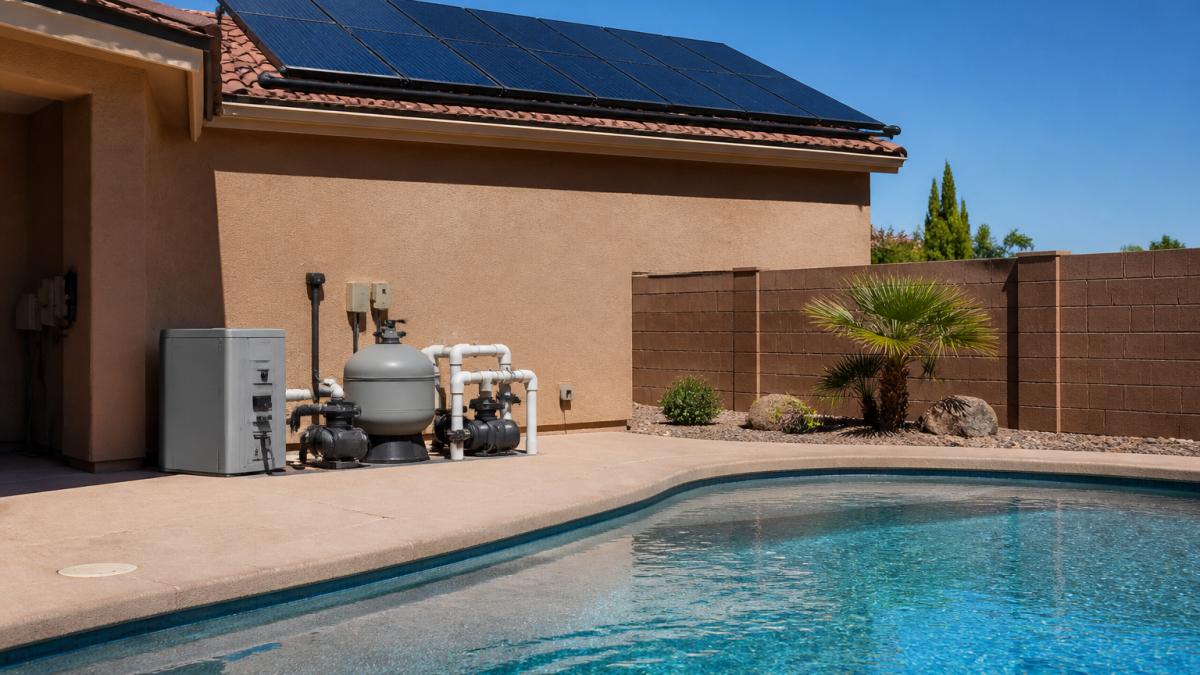
The system works best when three things line up: good sun exposure, steady circulation, and a cover on the pool overnight.
Collectors, Circulation, and Sunlight
The collector is the heart of the system. Panels mounted on a roof or rack catch direct sunlight and heat the water passing through them.
Circulation is the second piece. Your pool pump moves water through the panels and back into the pool. When the pump runs, the system heats. When it stops, heating stops.
Sunlight is the third and least controllable piece. Long, clear days in spring and fall do more for water temperature than any setting you can adjust.
Run your pump during the sunniest hours of the day, typically mid-morning to late afternoon. Those are the hours when the panels collect the most heat.
How Long Does Solar Pool Heating Extend the Season?
A well-sized solar pool heating system typically adds four to eight weeks to the front and back of the swimming season. Most homeowners aim to swim from March through November rather than June through September. The exact gain depends on your climate, sun exposure, and whether you use a cover.
There is no fixed number of weeks: a pool in a sunny, mild-winter area will stretch further than one in a shaded yard with cold nights. Here are three worked scenarios showing the assumptions behind the claim.
Scenario 1: Sunny, Mild Climate With a Cover
Assume a 400-square-foot pool, 300 square feet of south-facing collectors, full sun from 9 a.m. to 5 p.m., nighttime lows in the 50s, and a solar cover used every night, targeting 80°F. A common pattern is a season from early March to late November. The cover does as much work as the panels here, holding the daytime gain overnight.
Scenario 2: Mixed Climate With Partial Shade
Assume the same pool but with afternoon shade from 3 to 5 p.m., nighttime lows in the 40s, and a cover used most nights, targeting 78°F. Expect four to six extra weeks, concentrated in fall; spring warm-up is slower because the pool starts colder and shade cuts collection. This is where homeowners are most often disappointed, and why panel placement matters more than panel count.
Scenario 3: Cool Climate, No Cover
Assume a 300-square-foot pool, 200 square feet of collectors, clear days but cold nights in the 30s and 40s, and no cover, targeting 76°F. Expect two to four extra weeks at best, mostly in fall. Without a cover, much of the heat collected during the day leaves overnight, so the system fights the weather. Adding a cover is the single change that moves this scenario the most.
What Moves the Estimate Up or Down
- Sun hours on the panels: more direct sun means faster heat gain
- Nighttime temperatures: cold nights drain heat faster than warm ones
- Cover use: a cover holds heat in overnight and can add weeks on its own
- System size: an undersized system will not keep up in the shoulder months
- Wind exposure: windy sites lose more heat from the pool surface
- Target temperature: every degree you lower the goal buys extra days
Skipping the cover is the most common reason a solar system underdelivers in spring and fall. Without one, much of the heat you collect during the day leaves the pool overnight.
For a number for your own pool, note four things before calling an installer: pool surface area, target water temperature, whether you will use a cover, and your typical overnight low in the shoulder months. Those inputs turn a vague promise into a realistic estimate.
Solar Pool Heater Temperature: What to Expect in Spring and Fall
Most pool owners find a comfortable swimming range sits between 78°F and 85°F.
In spring, expect gradual gains: the pool starts cold, nights are still cool, and the system must overcome both. Clear, warm days move the temperature up noticeably; a cold snap pulls it back.
In fall, the pattern reverses: the pool holds summer warmth and solar heating slows the decline.
What to expect, realistically:
- Clear spring week: steady gains toward the low end of the comfort range
- Cool, cloudy stretch: little to no gain, possibly a small loss
- Fall with a cover: slower heat loss and more swimmable days
- Fall without a cover: faster decline, shorter season
If your pool is shaded part of the day, expect slower warm-up and a slightly shorter extension. A reputable installer will tell you so up front.
Solar Pool Cover Heat Retention and Overnight Heat Loss
A solar pool cover is the cheapest and most effective add-on for extending the season. It traps heat at the surface and cuts evaporation, which is where most overnight heat loss happens. Pairing a cover with solar pool heating is the combination that delivers the best results.
Warm water gives up heat to cool night air, and evaporation carries even more away; a cover blocks both. Homeowners who add a cover often see the biggest single jump in usable season length, more than any panel upgrade.
What the cover does for you:
- Cuts evaporation: less water loss and less heat lost with it
- Holds daytime heat: water stays warmer into the evening and morning
- Reduces chemical demand: less evaporation means more stable water chemistry
- Speeds spring warm-up: the pool reaches comfortable temps sooner
The pool heater and cover combination matters more than either piece alone. A strong solar array with no cover will lose ground overnight; a cover with a modest array will hold what it gains.
One practical note: covers need to be rolled back for swimming and put back on afterward. If that routine feels like a hassle, a reel makes it a one-minute job.
Solar Pool Heating Costs Compared With Gas and Heat Pumps
Solar pool heating has a higher upfront cost than a gas heater but little to no operating cost after installation; gas and heat pumps cost less to buy and more to run. Which wins depends on how long you plan to stay, how much you swim, and local fuel and electricity costs.
Here is the comparison in plain terms, with the trade-offs that actually decide the purchase:
| Option | Upfront Cost | Operating Cost | Heating Speed | Best For |
|---|---|---|---|---|
| Solar thermal | Highest | Little to none | Slow, weather-dependent | Long-term owners, sunny climates |
| Gas heater | Lowest | High fuel use | Fast, on demand | Quick heat, occasional use, cold snaps |
| Heat pump | Moderate | Electricity use | Moderate, air-temperature dependent | Mild climates, steady use |
How the Operating Math Works
A gas heater burns fuel every hour it runs, and cost scales with the gap between pool and target temperature. A heat pump moves rather than makes heat, so it is more efficient per unit, but output falls as air temperature drops, exactly when you need it most in the shoulder months.
Gas wins on purchase price and loses on lifetime cost; solar wins on lifetime cost and loses on speed and predictability. Heat pumps sit in the middle, most attractive in mild climates with steady use.
The Decision Framework
Ask three questions before choosing:
- How long will you own the pool? Solar’s higher upfront cost is recovered over multiple seasons of near-zero fuel bills. A short horizon favors gas.
- How do you swim? Occasional weekend use favors a fast gas heater. Daily use through the shoulder months favors solar or a heat pump.
- What does your climate allow? Solar needs sun hours and manageable nighttime lows. Heat pumps need mild air. Gas works anywhere but costs the most to run.
Pricing for a system depends on pool size, roof layout, and panel count, so we quote each project individually. Reach out to Dixie Pool Solar Heating & Misting for a free quote rather than guessing from a generic number.
Ask any installer for the estimated annual operating cost of each option in your climate, not just the purchase price. The cheapest system to buy is rarely the cheapest to own.
System Sizing and Installation: Getting the Setup Right
Correct sizing and clean installation decide whether a solar pool heating system performs. Panels should cover a meaningful share of the pool’s surface area, and the plumbing should tie into existing circulation without cutting flow.
Sizing basics:
- Panel area: roughly matched to pool surface area, adjusted for climate and shade
- Flow rate: enough to move water through the panels without starving the returns
- Orientation: south-facing where possible, with full sun during peak hours
- Roof condition: sound roofing before panels go up
Installation should include a proper tie-in to the pool plumbing, a control valve to route water through the panels or bypass them, and a check that the pump can handle the added run.
At Dixie Pool Solar Heating & Misting, we install Heliocol panels with a 12-year warranty on the panels and a 2-year labor warranty on the rest of the work.
Operating and Maintenance Tips for a Longer Season
Solar pool heating needs little maintenance, but a few habits protect your season length: keep the panels clean, run the pump during sunny hours, and use the cover every night.
A simple routine:
- Rinse panels a few times a season to clear dust and debris
- Check the filter regularly and clean it when pressure rises
- Run the pump during peak sun hours
- Put the cover on every evening, especially in spring and fall
- Watch for leaks at fittings and call for service if flow drops
- Bypass the panels in peak summer if the pool gets too warm
That last point surprises people: in the hottest weeks, solar heating can push water past comfortable, and a bypass valve lets you skip the panels. Some homeowners pair heating with misting to cool things down.
Ignoring a drop in flow can strain the pump and cut heating performance. If returns feel weak, check the filter and fittings before assuming the panels are the problem.
Maintenance is mostly about circulation, not the panels themselves: clean water moving at the right rate does more for performance than any panel cleaning routine.
Extending your season comes down to three things: enough collector area, steady circulation during sunny hours, and a cover at night.
Frequently Asked Questions
How much can solar pool heating extend the swimming season?
Most homeowners gain roughly four to eight weeks of usable pool time, split between an earlier spring start and a later fall finish. The exact gain depends on your climate, collector square footage, sun exposure, and whether you use a cover at night. In a sunny, mild climate, a properly sized solar pool heating system can push the season from March through November. Colder or shadier sites see smaller gains, so realistic expectations matter more than marketing promises.
What temperature can a solar pool heater maintain?
A well-sized solar pool heater typically holds water in the 78-85°F range during sunny periods, which is the comfort band most swimmers prefer. Cloudy stretches and cool nights pull temperatures down, so pairing the heater with a solar pool cover keeps overnight losses in check and helps the system recover faster the next morning.
Does a solar pool cover help retain heat overnight?
Yes. A solar pool cover works mainly by cutting evaporation, which is where most pool heat disappears overnight. Covering the pool when it is not in use can hold several degrees of heat that would otherwise be lost, reducing how hard the solar heater has to work the next day. Keep the cover on during cool nights and off during hot, sunny days so the pool can absorb sunlight directly.
What do solar pool heating costs look like compared with gas or heat pumps?
Solar pool heating has a higher upfront installation cost than a gas heater or heat pump, but it has no fuel or electricity operating costs once installed, since the sun does the work. Gas heaters carry ongoing fuel bills that climb with every degree of temperature rise, and heat pumps draw electricity all season. Over a 20-year panel lifespan, solar usually wins on total cost. Request a quote for current pricing on your pool.


Leave a Reply