Table of Contents
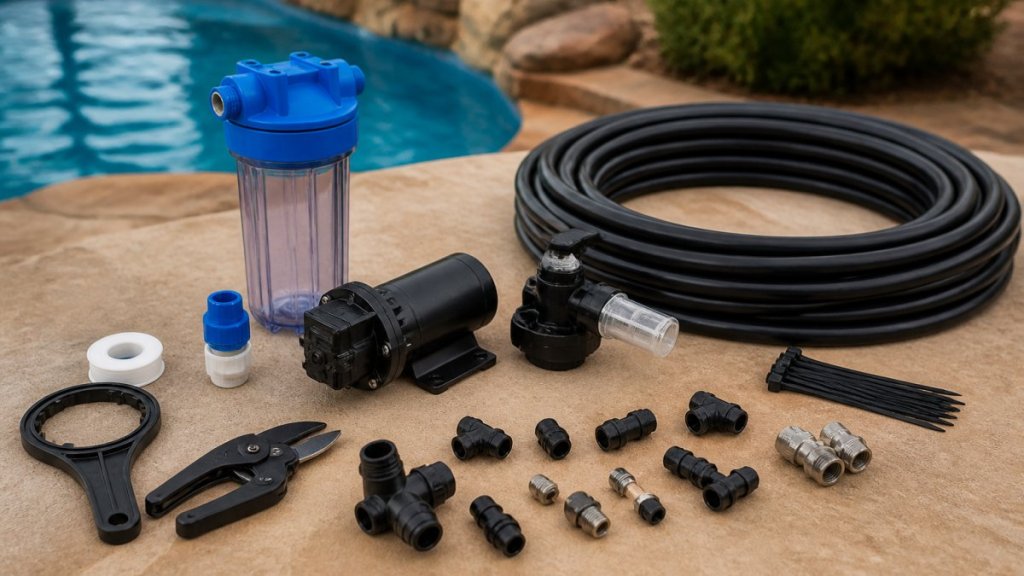
- What Components Make Up a Backyard Pool Misting System
- High-Pressure Outdoor Misting System: Why Pressure Decides Performance
- Poolside Misting Nozzles: Materials, Sizes, and Placement
- Misting System Pump and Filter: The Pair That Keeps Everything Running
- Misting System Pros and Cons for Pool Owners
- Comparison Table: Misting System Components at a Glance
- How to Choose the Best Misting System Components for Your Pool
- Frequently Asked Questions
Last Updated: October 18, 2026
What Components Make Up a Backyard Pool Misting System
A backyard pool misting system is a network of nozzles, tubing, a high-pressure pump, and a filtration unit that sprays fine water droplets into the air to cool your patio and pool deck. Homeowners often fight hot water and hotter concrete, then buy one cheap component and wonder why nothing improves. A misting system only works when every part matches the others.
Here is the honest math. A pump rated for high pressure feeding nozzles built for low pressure produces drips, not mist. Oversized nozzles on a small pump do the same. Below, we break down each component, explain what to look for, and show you how to choose a set that works together. Most guides skip the matching problem entirely. That is the part that decides whether you get cooling or a wet patio.
High-Pressure Outdoor Misting System: Why Pressure Decides Performance
Pressure is the single spec that separates a real high-pressure outdoor misting system from a glorified garden sprayer. Most residential systems run in a high-pressure band, and the pump must hold that pressure across every nozzle on the line. Drop below it and droplets grow too heavy to evaporate.
Why does that matter? Evaporating mist absorbs heat from the air. Large droplets just land on your furniture and guests. The smaller the droplet, the faster it cools and the less wetness you feel.
Three pressure rules we would give any pool owner:
- Size the pump to the total nozzle count, not to the patio size alone
- Keep runs short and tubing rigid where possible; long flexible runs bleed pressure
- Buy nozzles rated for the same pressure band as your pump
Mismatching a low-pressure nozzle to a high-pressure pump causes fittings to fail and joints to leak. The repair usually costs more than buying the correct nozzle the first time.
Poolside Misting Nozzles: Materials, Sizes, and Placement
Poolside misting nozzles come in brass, stainless steel, and engineered plastic, and the material you pick determines how long the nozzle survives hard water and sun exposure. Stainless steel resists corrosion best in most residential settings. Brass holds up well but costs more. Plastic is the budget option and the first to clog or crack.
Size matters just as much. Nozzles are rated by orifice size and flow rate, and a smaller orifice makes finer mist but clogs faster if your water is mineral-heavy. That is the trade-off nobody mentions in the product listing.
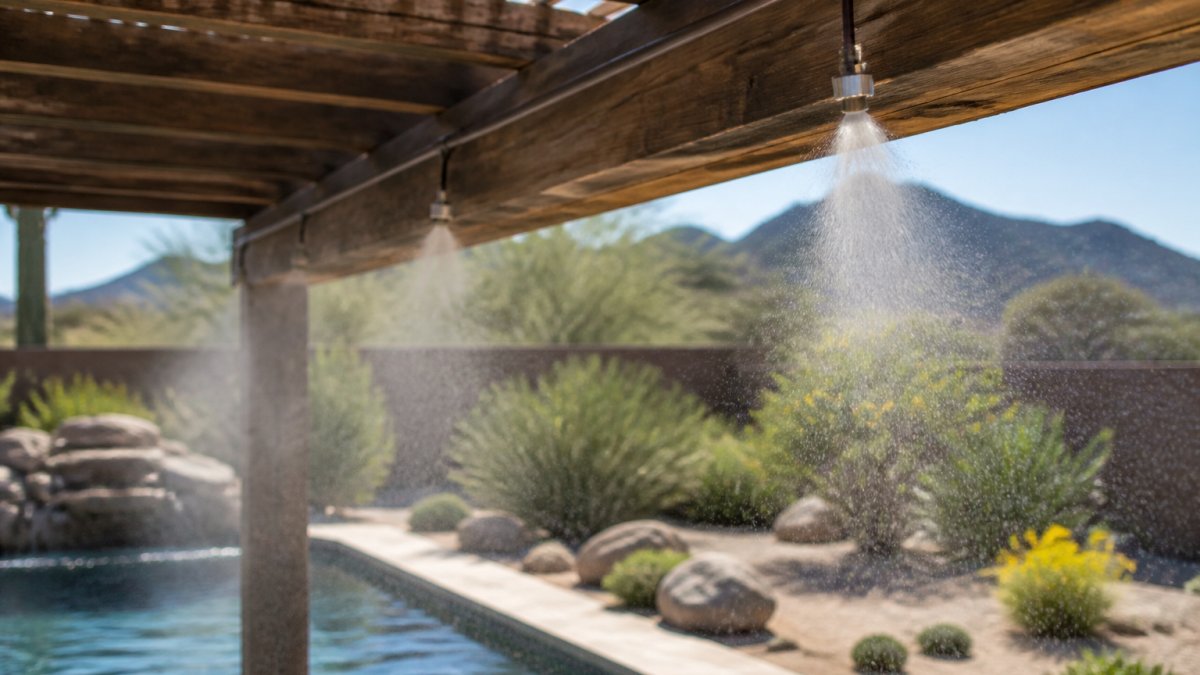
Placement follows a simple rule: mount nozzles high and aim slightly downward so mist falls through the air before reaching people. Ten feet of mounting height is a common target for patio cooling. Space nozzles so their spray patterns just overlap. Too far apart and you get hot gaps; too close and the mist condenses on itself and drips.
A common mistake is mounting nozzles where prevailing wind pushes mist away from the seating area. Watch your afternoon wind before you drill.
Misting System Pump and Filter: The Pair That Keeps Everything Running
The misting system pump and filter work as one unit, and treating them separately is how systems fail early. The pump creates pressure; the filter protects the pump and nozzles from sediment and minerals. Skip the filter and mineral scale slowly narrows every orifice until the mist turns to spitting.
What to look for in the pump:
- A pressure rating that matches your nozzle count with headroom to spare
- A duty cycle rated for continuous afternoon use, not intermittent bursts
- Serviceable seals, because seals are the first wear item
What to look for in the filter:
- A sediment rating fine enough to catch what your water carries
- Easy cartridge access so you actually change it
- A housing that survives sun exposure if mounted outdoors
Change or clean the filter cartridge at the start of every season, before you ever run the system. Starting the season with a clogged filter is the fastest way to burn out a pump motor.
Misting System Pros and Cons for Pool Owners
Misting system pros and cons come down to comfort versus upkeep. On the plus side, a well-matched system cools your patio air noticeably, lets you use the deck during the hottest part of the day, and uses very little water compared with dumping heat another way. It also runs quietly once the pump is set up correctly.
The cons deserve equal time. Mineral-heavy water clogs nozzles, so filtration and occasional nozzle cleaning are non-negotiable. Wind scatters mist and reduces cooling. And a cheap, mismatched kit will disappoint you no matter how carefully you install it.
- Pro: Noticeable comfort improvement on hot afternoons
- Pro: Low water use for the cooling delivered
- Con: Nozzle clogging without good filtration
- Con: Wind exposure cuts effectiveness
- Con: Poor component matching ruins results
Here is where a broader view helps. If your real problem is water that stays too hot, misting cools the air around the pool, not the pool itself. Solar thermal heating and cooling strategies solve different problems, and we help homeowners sort out which one they actually need.
Comparison Table: Misting System Components at a Glance
| Component | What It Does | Key Spec to Check | Watch Out For |
|---|---|---|---|
| High-pressure pump | Creates the pressure that makes fine mist | Pressure rating vs. nozzle count | Undersized motor, short duty cycle |
| Filter | Traps sediment and minerals | Sediment rating, cartridge access | Clogged cartridge burning out pump |
| Nozzles | Atomize water into cooling mist | Orifice size, material, pressure band | Mismatched rating, hard-water clogging |
| Tubing and fittings | Carry pressurized water to nozzles | Pressure rating, rigid vs. flexible | Leaks at joints, pressure loss on long runs |
How to Choose the Best Misting System Components for Your Pool
Choosing the best misting system components for backyard pools starts with counting nozzles, not shopping sales. Work backward: decide how much patio you need to cool, estimate the nozzle count that covers it, then pick a pump that holds pressure across that count with margin. Add the filter next, sized to your water quality. Pick nozzle material last, based on your budget and how hard your water runs.
A checklist we would hand any customer:
- Measure the patio area you want cooled
- Count nozzles needed for even coverage
- Match pump pressure to total nozzle count
- Choose a filter fine enough for your water
- Confirm nozzle material suits your climate and water
- Plan mounting height and wind direction
- Buy every part from the same pressure band
The best components are the ones rated to work together. A premium pump with mismatched nozzles performs worse than a mid-range matched set.
If hot pool water is the bigger frustration, our team at Dixie Pool Solar Heating & Misting can walk you through solar heating options alongside cooling, so you solve the right problem the first time.
Frequently Asked Questions
What components do you need for a backyard pool misting system?
A complete setup needs four core parts: a high-pressure pump, a filter or water treatment stage, misting lines, and poolside misting nozzles. Add a timer or controller if you want automatic operation, and a drain valve for freeze protection in cooler months. The pump drives water through the filter, the lines carry it around the patio, and the nozzles turn it into a fine mist. Skipping the filter is the most common mistake, because unfiltered water clogs nozzles fast.
What is the difference between low-pressure and high-pressure misting systems?
Low-pressure systems run under roughly 100 PSI and produce larger droplets that feel wet and cool a smaller area. High-pressure outdoor misting systems run 1,000 PSI or more and flash water into a fine fog that evaporates quickly, cooling more air without soaking guests or furniture. High-pressure setups cost more upfront and need stronger pumps and tubing, but they are the better fit for poolside patios where people sit close to the nozzles.
How many misting nozzles do I need for a pool area?
Plan on roughly one nozzle every 3 to 4 feet along the perimeter you want to cool, mounted 8 to 10 feet high. A typical pool patio needs 10 to 20 nozzles depending on the linear footage and how open the space is. More nozzles than the pump can support will drop pressure and turn the mist into drips, so match the nozzle count to the pump’s flow rating rather than adding nozzles later.
Does a misting system cool the pool water or just the surrounding air?
A standard misting system cools the air around the patio, not the pool water itself. The mist evaporates before it reaches the surface in most setups, so water temperature stays roughly the same. If hot pool water is the real problem, misting is a comfort add-on, not a water-cooling fix. Solar heating and shading decisions address water temperature, while misting handles the patio environment where people sit.
Hot afternoons shouldn’t decide when your family can use the pool. If misting alone won’t fix water that stays too warm, Dixie Pool Solar Heating & Misting can help you build a complete comfort plan. Our Heliocol panels carry a 12-year warranty, our labor is backed for 2 years, and our systems run on solar thermal energy with no operating costs after installation. Get a free quote and find out which combination fits your pool and your budget.


Leave a Reply