Table of Contents
- How Solar Pool Heaters Work
- Solar Pool Heating Cost vs. Gas: What You’ll Actually Spend
- The Real ROI: Annual Savings and Payback Period
- Extending Swimming Season With Solar: March Through November
- Solar Pool Heater Maintenance Tips and Long-Term Durability
- Climate Suitability and System Sizing for Your Pool
- Is Solar Pool Heating Worth It for You?
- Frequently Asked Questions
Last Updated: September 3, 2026
How Solar Pool Heaters Work
Solar pool heating systems capture the sun’s thermal energy and transfer it directly to your pool water through a straightforward mechanical process. Unlike photovoltaic panels that generate electricity, solar thermal collectors absorb heat from sunlight and pass it through a heat exchanger, warming your pool without any ongoing electrical costs.
The system operates in three core stages. First, your existing pool pump circulates water through flat-plate or evacuated-tube collector panels mounted on your roof. These panels contain a dark absorptive surface that captures solar radiation and converts it to heat. Second, a thermostat control monitors your pool’s temperature and automatically diverts water through the collectors when the sun provides enough heat. Third, a diverter valve ensures water only passes through the collectors when conditions are favorable, typically when outdoor temperatures and solar intensity justify the heating benefit.
Modern solar glazing materials mean systems continue generating meaningful heat even on partly cloudy days. Flow rate through the collectors is calibrated so water spends 5-10 seconds in the panels per pass, allowing adequate heat transfer without excessive pressure drop (peer-reviewed research).
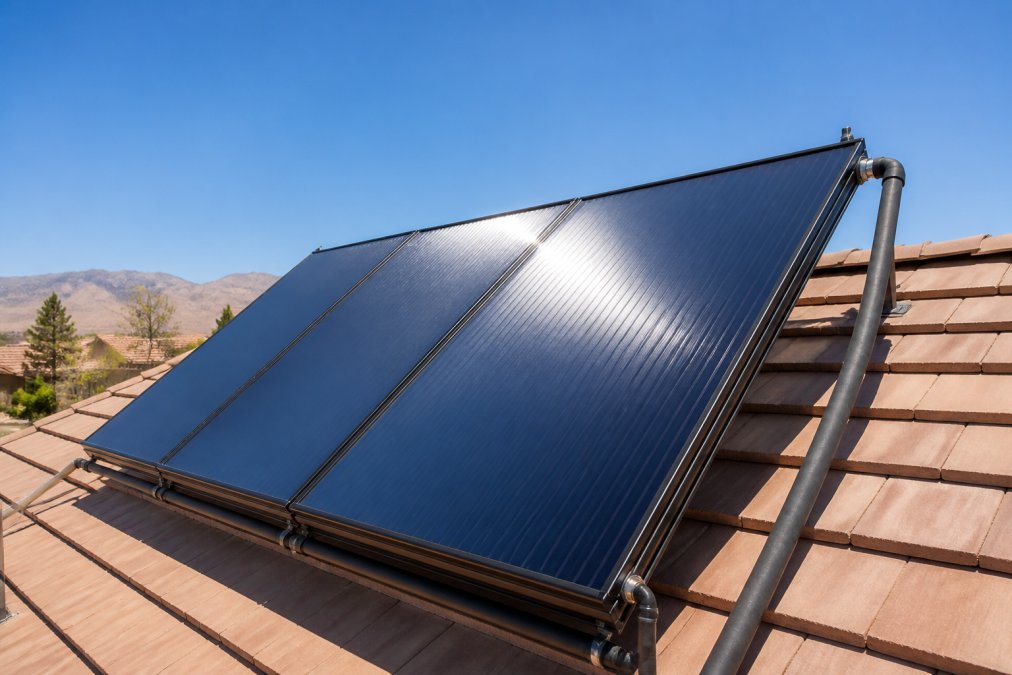
Solar thermal systems require minimal maintenance once installed. Heliocol panels, which feature industrial-grade construction, are designed to withstand decades of UV exposure and temperature cycling. At Dixie Pool Solar Heating & Misting, we integrate these systems with your existing pool infrastructure so they operate passively, with no moving parts to wear out, no filters to replace regularly, and no fuel to purchase.
The payback period depends on your current heating method, local climate, and how much you extend your swimming season. Homeowners who switch from gas heating typically see the fastest returns because gas heating carries substantial annual operating costs.
Solar Pool Heating Cost vs. Gas: What You’ll Actually Spend
Gas pool heaters are fast but expensive to operate. A typical gas heater consumes significant BTU output to raise pool temperature quickly, translating to monthly utility bills that climb during spring and fall when you’re actively heating.
Solar heating eliminates those monthly expenses entirely. Once installed, your system generates free heat from the sun with no fuel consumption. Gas heating requires ongoing energy purchases, while solar thermal energy costs nothing after installation.
Initial system cost varies based on your pool size, roof space available, and local labor rates. We recommend getting a quote from Dixie Pool Solar Heating & Misting that accounts for your specific situation. What matters is understanding the long-term financial picture: gas heating costs accumulate year after year, while solar costs concentrate upfront and then decline to zero.
Many homeowners qualify for incentives that improve the financial case significantly. The Utah State 25% tax credit or $2,000 state tax credit reduces your net investment. Additionally, the Enbridge Gas $750 rebate applies when you switch away from gas heating. These incentives can offset a meaningful portion of your upfront expense.
The real ROI calculation hinges on how long you plan to stay in your home and how much you currently spend on pool heating. A personalized analysis matters more than generic cost comparisons.
The Real ROI: Annual Savings and Payback Period
Annual savings from solar pool heating depend directly on what you’re replacing. If you’re switching from gas heating, your savings equal the annual gas bills you no longer pay. Families report saving $1,500 to $2,000 annually in heating costs, though your actual savings depend on your current heating method, pool size, and how aggressively you heat (energy.gov).
The payback period is the number of years required for cumulative savings to equal your initial investment. With substantial annual savings and available tax credits, many systems pay for themselves in 5-7 years. After that point, every year of operation is pure savings since the system has minimal maintenance expenses and no fuel costs.
Consider this scenario: if your current gas heating costs $2,000 per year and your solar system costs $8,000 after applying the state tax credit, you’d break even in four years. Years five through twenty-plus represent pure financial benefit. Over a 20-year period, that’s $36,000 in savings.
The durability of Heliocol panels extends this payback calculation significantly. With a 20+ year lifespan and an industry-best 12-year warranty on panels, your system will likely outlast your ownership of the home. Homes with solar pool heating systems appeal to buyers seeking energy-efficient features and extended recreational seasons, potentially improving your home’s marketability when you eventually sell.
Extending Swimming Season With Solar: March Through November
The most tangible benefit of solar pool heating is the ability to use your pool during shoulder seasons when you’d otherwise have cold water. In many climates, March and April present perfect weather for swimming, but unheated pools remain too cold for comfort. Solar heating extends your season by warming the water to enjoyable temperatures without the high operating costs of gas heating.
Spring heating is where solar systems shine. As days lengthen and solar intensity increases, your collectors begin generating meaningful heat. A properly sized system can raise pool temperature by 5-10 degrees Fahrenheit during spring months, transforming your pool from unusable to comfortable. Many families find this alone justifies the investment, gaining three extra months of usable pool time each year.
Fall conditions present a similar opportunity. September and October typically offer excellent weather and solar conditions, yet unheated pools cool rapidly as ambient temperature drops. Solar heating maintains comfortable water temperatures well into November, extending your season by 4-6 weeks compared to an unheated pool.
The seasonal extension works because solar heating operates continuously whenever conditions permit. Your thermostat control monitors both water temperature and solar intensity, automatically diverting water through the collectors whenever the sun provides heat gain. A pool cover during non-use periods minimizes evaporation and retains heat overnight, amplifying the benefit of solar heating.
Solar Pool Heater Maintenance Tips and Long-Term Durability
Solar thermal systems require remarkably little ongoing maintenance compared to gas heaters. There’s no fuel to purchase, no burner to service, no combustion byproducts to manage. The main maintenance task is keeping collector panels clean so sunlight reaches the absorptive surface effectively.
Dust, pollen, and debris accumulate on roof-mounted panels over time, reducing thermal efficiency slightly. A simple rinse with a garden hose 2-3 times per year maintains optimal performance. In dusty climates or areas with heavy pollen, quarterly cleaning may be worthwhile.
The plumbing integration connecting your pool pump to the collectors requires occasional inspection but minimal intervention. Check that the diverter valve operates smoothly and that no leaks develop at connection points. Most systems use durable PVC or copper plumbing designed for decades of service. A 2-year warranty on labor from Dixie Pool Solar Heating & Misting covers any installation-related issues during the critical early period.
Heliocol panels are engineered for extreme durability. The polypropylene absorber and aluminum frame withstand freeze-thaw cycles, UV degradation, and temperature extremes. The 20+ year lifespan is realistic; many systems installed 15-20 years ago continue operating at full capacity. The industry-best 12-year warranty on panels reflects manufacturer confidence in their longevity.
Solar thermal panels degrade very gradually. After 20 years, a panel might operate at 85-90% of original efficiency rather than failing suddenly. This gradual decline means you continue benefiting from the system even beyond the warranty period. Winterization is unnecessary in most climates since modern residential pool heating systems use pool water itself as the heat transfer medium, eliminating freeze-damage risk in most installations.
Climate Suitability and System Sizing for Your Pool
Solar pool heating works best in climates with abundant sunshine and moderate temperatures. Regions with consistent cloud cover or very short days struggle to generate sufficient heat for meaningful seasonal extension. However, even in less-than-ideal climates, solar heating still reduces gas heating costs by providing supplemental warmth.
System sizing is critical for performance. A system that’s too small will heat your pool very slowly, defeating the purpose of seasonal extension. A system that’s oversized wastes money on unnecessary collector area. Professional sizing considers your pool’s surface area, desired temperature rise, local solar intensity, and roof space available.
The surface area ratio between your pool and collector panels determines heating speed. A typical rule of thumb suggests collector area equal to 50-80% of your pool’s surface area for aggressive heating, though this varies by climate and goals.
Roof orientation and shading dramatically affect performance. South-facing roofs receive optimal solar exposure in the Northern Hemisphere. East or west-facing roofs still work but generate less heat. Shade from trees, buildings, or terrain can reduce output significantly during critical morning or afternoon hours.
| Climate Factor | Impact on System | Consideration |
|---|---|---|
| Abundant sunshine | Faster heating, shorter payback | Ideal for solar thermal |
| Moderate cloudiness | Slower heating, longer payback | Still worthwhile for supplemental heat |
| Significant shade | Reduced output, poor ROI | May not be suitable |
| Cold winters | Minimal winter heating | Better for extending shoulder seasons |
| Hot summers | Strong summer output | Excellent for spring/fall extension |
At Dixie Pool Solar Heating & Misting, we assess your specific location’s solar resource, roof characteristics, and pool configuration to recommend an appropriately sized system.
Is Solar Pool Heating Worth It for You?
Solar pool heating is worth it if you meet several criteria. First, you must use your pool during months when you’d otherwise need heating, spring, fall, or both. Second, you should plan to stay in your home long enough for the payback period to complete. A five-year payback period makes sense only if you’ll own the home for at least that long.
Third, your current heating method matters significantly. If you heat with gas, solar’s financial advantage is substantial because you’re replacing expensive fuel consumption. If you use a heat pump system, the economics are less compelling but still favorable in many cases.
Fourth, your roof must have adequate south-facing space and minimal shade. A professional site assessment from Dixie Pool Solar Heating & Misting confirms whether your home is suitable before you commit.
Fifth, consider your environmental values. Even if the financial payback is marginal, reducing your carbon footprint and eliminating fossil fuel consumption for pool heating aligns with sustainability goals. Solar thermal energy is genuinely renewable and produces zero emissions during operation.
The most common hesitation is upfront cost. However, the state tax credit and gas rebate reduce your net cost meaningfully. Additionally, financing options may be available to spread payments over time, making the monthly cost comparable to your current heating bills.
Another concern is whether the system will actually deliver the promised heating. This is why working with an experienced installer like Dixie Pool Solar Heating & Misting matters. Our Heliocol panels and professional integration ensure your system performs as designed. The 12-year warranty on panels and 2-year labor warranty protect your investment.
The bottom line: solar pool heating is worth it for homeowners who plan to stay in their home for 5+ years, currently heat with gas or electricity, have suitable roof space, and value both financial savings and environmental benefits. For families seeking to extend their swimming season from March through November while reducing energy costs, solar thermal heating delivers genuine value.
Ready to extend your swimming season while reducing heating costs? Dixie Pool Solar Heating & Misting specializes in solar thermal systems designed for Southern Utah homeowners. Our Heliocol panels deliver 20+ years of reliable heating with industry-best warranties, and our professional installation ensures your system performs optimally. Explore how much you could save with a personalized solar pool heating assessment and discover whether the Utah State tax credit and Enbridge Gas rebate apply to your situation. Get a Free Quote from Dixie Pool Solar Heating & Misting today to learn your specific savings potential.
Frequently Asked Questions
How long does it take for a solar pool heater to warm up a pool in spring?
Solar pool heating works best when the sun is strongest, but heating speed depends on system size, collector surface area, and ambient temperature. In spring, expect gradual temperature increases over several days rather than overnight heating. Pairing your solar system with a pool cover significantly accelerates warm-up by reducing evaporation loss and retaining heat overnight. Most homeowners see 2-5 degree increases per day in favorable conditions, allowing you to reach comfortable swimming temperatures by late March or early April.
How much can you save annually with solar pool heating compared to gas?
Annual savings depend on your current gas heating costs, pool size, and usage patterns. Homeowners typically reduce their pool heating energy consumption by 70-90% when switching to solar, translating to significant utility bill reductions. Many pool owners report saving $1,500-$2,000 annually. Your actual savings depend on local utility rates and how much you currently heat your pool. Request a personalized quote to calculate your specific ROI based on your pool’s dimensions and heating needs.
Does solar pool heating work on cloudy days?
Solar pool heaters function on cloudy days but at reduced efficiency. Collector panels still absorb diffuse solar radiation even without direct sunlight, though thermal output drops significantly. On mostly cloudy days, you may see minimal temperature gains. However, even partial sun contributes to passive heating, and a well-sized system with adequate collector surface area compensates by accumulating heat over multiple days. This is why proper system sizing and geographic suitability assessment matter for consistent performance.
What’s the typical lifespan of a solar pool heating system?
Quality solar pool heating systems last 15-20+ years with minimal maintenance. Heliocol collector panels are engineered for durability and typically outlast other system components. The pump, filter, and controls may need replacement or servicing within 10-15 years depending on usage and water chemistry. Most systems include extended warranties covering panels and labor, providing peace of mind for long-term investment. Proper maintenance, including regular filter cleaning and seasonal inspections, extends system life significantly.
This article was written using GrandRanker


Leave a Reply