Table of Contents
- What You Need to Know About Solar Pool Heater Tax Credits in 2026
- Why Pool Heaters Don’t Qualify (and What This Means for Your System)
- Residential Clean Energy Credit Eligibility for Your Home
- How to Claim Energy Tax Credits on Form 5695
- Solar Pool Heater vs. Gas Heater: Cost Comparison and Tax Implications
- Additional State and Local Incentives for Pool Heating
- Next Steps: Maximizing Your Pool Heating Investment
Last Updated: August 26, 2026
What You Need to Know About Solar Pool Heater Tax Credits in 2026
The federal government doesn’t offer a direct tax credit for solar pool heaters. This is the first thing homeowners need to understand when exploring incentives for pool heating upgrades. While residential solar photovoltaic systems and other renewable energy equipment qualify for substantial federal tax credits, solar thermal pool heating exists in a different category, one that’s currently ineligible at the federal level.
However, the landscape for pool heating incentives is more nuanced than a simple "no." At Dixie Pool Solar Heating & Misting, we work with homeowners to understand what tax credits and rebates actually apply to their situation, and more importantly, what alternative incentives and long-term savings make solar pool heating a compelling investment regardless of federal tax credit eligibility.
The distinction matters because many homeowners conflate all solar systems. A solar photovoltaic panel that generates electricity qualifies for the Investment Tax Credit. A solar thermal system that heats your pool does not. Understanding this difference is essential before you make decisions about your pool heating upgrade.
Check your state and local utility programs first. Many states offer rebates or credits for energy-efficient pool heating that can offset a significant portion of your installation costs, even without a federal tax credit.
Why Pool Heaters Don’t Qualify (and What This Means for Your System)
The federal Investment Tax Credit, established under the Inflation Reduction Act, covers specific categories of qualified energy property. Solar thermal systems for pool heating fall outside those categories. The ITC applies to residential clean energy equipment that serves the home itself, not auxiliary systems like pools.
This exclusion has practical implications. When you’re evaluating a solar pool heater investment, you cannot count on a 30% federal tax credit reduction in your upfront costs. The calculation changes. Your return on investment timeline extends. But this doesn’t mean the investment becomes uneconomical.
The real value proposition for solar pool heating rests on operational savings. A well-installed system eliminates the ongoing cost of heating your pool through gas or electric resistance heating. Over 15 to 20 years, those cumulative savings often exceed the installation cost by a substantial margin. The system itself becomes the incentive.
Understanding this distinction also helps you avoid misguided decisions. Some homeowners delay solar pool heating installation waiting for a federal tax credit that will never materialize. Others bundle pool heating with other home energy improvements, hoping the combination qualifies. Neither approach works. What does work is focusing on the systems that actually qualify for federal incentives while separately evaluating pool heating on its own financial merits.
Don’t conflate solar thermal pool heating with solar photovoltaic systems. A solar PV array on your roof qualifies for federal tax credits. A solar thermal pool heater does not. Mixing these up can lead to incorrect tax filings and missed opportunities for actual available incentives.
Residential Clean Energy Credit Eligibility for Your Home
While solar pool heaters don’t qualify for the federal Investment Tax Credit, other residential clean energy improvements in your home absolutely do. The Residential Clean Energy Credit (also called the residential energy credit) applies to qualified energy property installed in your primary residence.
Eligible systems include solar photovoltaic arrays, solar water heaters for domestic hot water, geothermal heat pumps, and certain wind turbines (energy.gov). A solar water heater that heats your home’s potable water, distinct from pool water, qualifies. A geothermal heat pump that conditions your home’s living spaces qualifies. These systems can claim up to 30% of installation costs as a non-refundable tax credit (irs.gov).
The eligibility requirements are straightforward. The property must be your primary residence. The equipment must be new, not used. It must be placed in service during the tax year you’re claiming the credit. And it must meet specific performance and safety standards established by the IRS and Department of Energy.
For homeowners with pools who are also considering broader home energy improvements, this creates an opportunity. You might install a solar photovoltaic system that qualifies for the 30% federal credit while simultaneously installing a solar pool heater that doesn’t. Both investments contribute to your overall energy independence and operational cost reduction, but only the PV system generates a federal tax credit.
Many homeowners find that combining these improvements makes financial sense. The federal credit reduces the cost of your PV system. The operational savings from both systems, the PV reducing your electricity bill and the pool heater eliminating gas heating costs, compound over time. This is where the real financial advantage emerges.

How to Claim Energy Tax Credits on Form 5695
If you’ve installed qualified residential clean energy property, you’ll claim the credit using IRS Form 5695, Credit for Residential Energy Efficient Property. This form is filed with your annual tax return and calculates your eligible credit amount based on the equipment you’ve installed and the costs you’ve incurred.
The process starts with documentation. You need to retain records showing the equipment you installed, the date it was placed in service, and the total installation costs. Manufacturer certifications confirming that the equipment meets IRS requirements are essential. If you’ve had a professional installer handle the work, their documentation becomes critical evidence for your tax filing.
On Form 5695, you’ll list each piece of qualified property separately. The form walks you through calculating the credit for each system. For most residential installations, the credit equals 30% of the qualified expenditures. You’ll then transfer this credit to your main tax return, where it reduces your federal income tax liability dollar-for-dollar.
The credit is non-refundable, which means it can reduce your tax liability to zero but cannot generate a refund. If your credit exceeds your tax liability for the year, you can carry the unused portion forward to future years until it’s fully used. This is important for homeowners who’ve made large energy improvements in a single year.
One critical point: the equipment must be placed in service during the tax year you’re claiming the credit. Installation completion is what matters, not purchase date. If you purchased equipment in December 2025 but didn’t complete installation until January 2026, you’d claim the credit on your 2026 return.
Keep all receipts, manufacturer certifications, and installer documentation. The IRS may request proof that your equipment meets eligibility requirements. Organized records make the audit process straightforward if questions arise.
Solar Pool Heater vs. Gas Heater: Cost Comparison and Tax Implications
When evaluating pool heating options, the comparison between solar and gas systems reveals why the federal tax credit exclusion matters less than homeowners often assume. A gas heater carries lower upfront costs but substantial ongoing expenses. A solar system requires significant initial investment but eliminates operating costs.
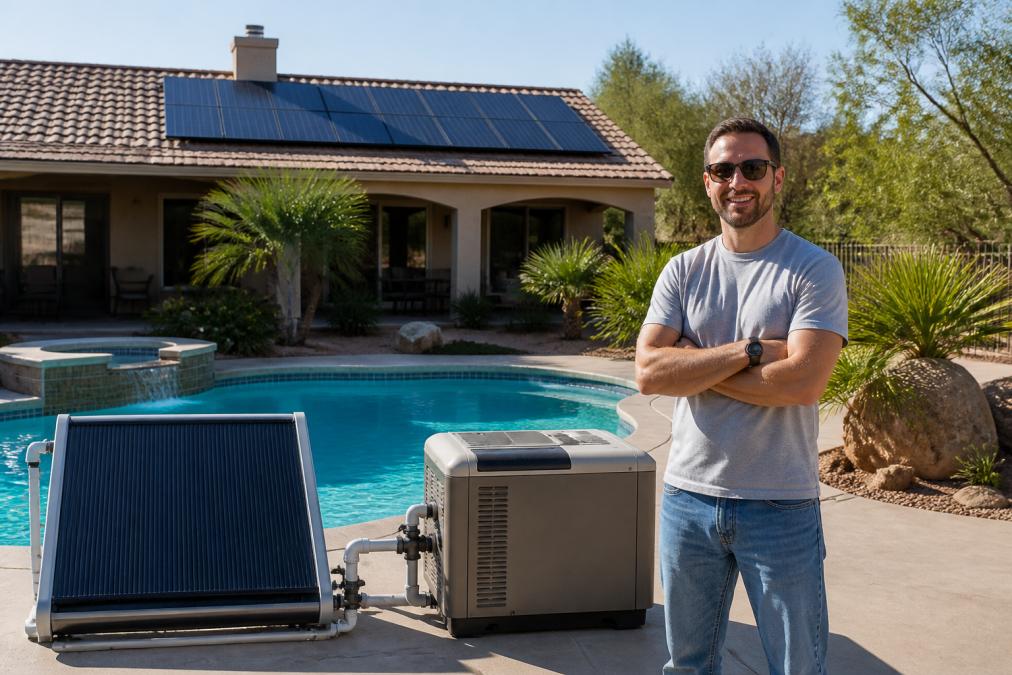
Gas heaters operate by burning natural gas or propane to rapidly heat pool water. They’re effective in cold weather and can heat a pool quickly. However, they consume fuel continuously during the heating season. Over a 15-year period, fuel costs accumulate significantly. The system also requires regular maintenance, burner cleaning, valve inspection, and eventual component replacement.
Solar thermal pool heaters use the sun’s energy to warm water as it circulates through collectors. They heat more slowly than gas heaters but operate with virtually zero fuel costs. Maintenance is minimal. A quality solar thermal system with proper installation lasts 20 years or more. The upfront installation cost is substantial, but the long-term operational cost approaches zero.
The tax implication is straightforward: neither system qualifies for a federal tax credit to reduce upfront costs. You’re comparing them on installation cost, operating cost, and longevity. A gas heater might cost less to install but will cost considerably more to operate over its lifetime. A solar system costs more upfront but delivers cumulative savings through eliminated fuel expenses.
For homeowners in climates with consistent sun exposure, solar thermal heating typically achieves payback within 7-10 years of operation. After that, you’re operating with essentially free heating for the remaining system life. Gas heaters never achieve this economic advantage, they continue consuming fuel indefinitely.
The decision framework shifts when you consider your actual pool usage. If you use your pool year-round or extend your season significantly, the solar investment becomes more attractive. If you use your pool for a brief summer season only, the longer payback period might make gas heating more practical despite ongoing fuel costs.
Additional State and Local Incentives for Pool Heating
While federal tax credits don’t apply to solar pool heaters, state and local incentives often do. These programs vary considerably by location, but they represent real opportunities to reduce your net installation cost.
Many states offer rebate programs for energy-efficient pool equipment. Some provide direct cash rebates when you install solar thermal systems. Others offer tax credits at the state level that supplement or replace federal incentives. Utility companies frequently run their own rebate programs, offering cash back for qualifying equipment upgrades that reduce energy consumption.
In Utah, homeowners may qualify for state-level energy efficiency incentives. The Utah State Tax Credit offers 25% or up to $2,000 for solar thermal systems (energy.utah.gov). Additionally, homeowners with Enbridge Gas service may be eligible for a $750 Gas Rebate. These programs vary by utility district, so your specific incentives depend on your location and service provider.
The key is researching what’s available in your area before you commit to an installation. Contact your state energy office, your local utility company, and your state’s environmental agency. Ask specifically about pool heating incentives. Many homeowners discover substantial rebates only after they’ve already paid for installation.
Some states also offer low-interest financing programs for residential energy improvements. While this doesn’t reduce your total cost, it spreads payments over time and can improve the project’s financial feasibility. Combined with utility rebates and long-term operational savings, financing options can make solar pool heating accessible even for homeowners with limited upfront capital.
Call your utility company before you get a quote for installation. Many utilities have rebate programs specifically for pool heating upgrades. These rebates often don’t require federal tax credit eligibility, they’re based purely on energy savings. You could offset a portion of your installation cost through utility incentives alone.
Next Steps: Maximizing Your Pool Heating Investment
Understanding tax credit eligibility is important, but it’s only one piece of the decision. The real question is whether a solar pool heating system makes financial sense for your specific situation.
Start by assessing your actual pool usage and heating needs. How many months per year do you use your pool? What temperatures do you target? How much sun exposure does your pool area receive? These factors determine how much a solar system will actually save you and how quickly it will pay for itself.
Next, research incentives specific to your location. Contact your utility company and state energy office. Document any rebates, tax credits, or financing programs available to you. These can significantly improve the project’s economics.
Then, get a professional assessment from an experienced installer. At Dixie Pool Solar Heating & Misting, we evaluate your pool system, your sun exposure, your usage patterns, and your financial goals to determine whether solar thermal heating makes sense for you. We can also discuss how solar pool heating might complement other home energy improvements you’re considering, some of which may qualify for federal tax credits.
The solar pool heater tax credit discussion often distracts homeowners from the actual financial case for solar thermal heating. You don’t need a federal tax credit to justify the investment. The operational savings, extended pool season, and system longevity create compelling value on their own. Understanding what credits do and don’t apply helps you focus on what actually matters: whether this investment aligns with your pool usage, your climate, and your financial situation.
Get a free quote from Dixie Pool Solar Heating & Misting to understand your specific costs, savings potential, and available incentives. We’ll walk you through the numbers and help you make a decision based on your actual circumstances, not on tax credit eligibility that doesn’t apply to pool heating systems.
The federal solar pool heater tax credit doesn’t exist, but your opportunity to save on pool heating costs absolutely does. By understanding which systems qualify for federal incentives, researching state and local programs, and evaluating the long-term operational savings from solar thermal heating, you can make an informed decision about your pool heating investment. Dixie Pool Solar Heating & Misting specializes in solar thermal systems designed to extend your pool season while eliminating fuel costs, contact us for a free assessment of how solar heating can work for your home.
Frequently Asked Questions
Q: Do solar pool heaters qualify for the federal solar tax credit in 2026?
A: No. The federal investment tax credit does not apply to pool heaters, whether solar or gas-powered. Pool heating systems are explicitly excluded from the Residential Clean Energy Credit. However, other qualifying home energy improvements like solar water heaters for domestic use, heat pumps, and insulation upgrades may be eligible. Check your full home energy profile to identify other systems that could qualify for tax credits.
Q: What is the Residential Clean Energy Credit eligibility for homeowners?
A: To qualify for the Residential Clean Energy Credit, you must own a residential property in the United States, install qualifying energy equipment (such as solar electric systems, solar water heaters for domestic use, or heat pumps), and have the equipment placed in service during the tax year. The property must be your primary residence. The credit covers 30% of qualified equipment and installation costs. Equipment must meet specific efficiency standards set by the Department of Energy.
Q: How do I claim energy tax credits on Form 5695?
A: File Form 5695 (Residential Energy Credits) with your federal tax return. Report the cost of qualified energy property in Part I, calculate your eligible credit amount (30% of qualified expenses), and transfer the result to your tax return. Keep detailed documentation of installation dates, equipment specifications, and contractor invoices. If your credit exceeds your tax liability, unused credits may carry forward to future years. Consult a tax professional to ensure proper filing.
Q: What's the real cost difference between solar pool heaters and gas heaters over time?
A: Solar pool heaters have higher upfront installation costs but eliminate ongoing fuel expenses and maintenance. Gas heaters cost less initially but require continuous propane or natural gas purchases, typically running $1,500 to $2,000 annually depending on usage and climate. Solar systems produce heat free after installation, with minimal maintenance. Over 10-15 years, solar systems often deliver significant savings despite the higher initial investment. Your specific savings depend on sun exposure, pool usage, and local energy prices.
Q: Are there state or local tax credits for solar pool heating?
A: Federal credits don't cover pool heaters, but some states and utilities offer rebates for energy-efficient pool equipment. These vary by location and may include rebates for variable-speed pool pumps, LED pool lighting, or other efficiency upgrades. Contact your state energy office or utility company to learn about available incentives in your area. Some regions also offer performance-based rebates that reward energy savings documented over time.
Q: Will the solar tax credit still be 30% in 2026?
A: Yes. The Investment Tax Credit (ITC) for qualifying residential solar electric systems remains at 30% through 2032 under current federal law. This applies to photovoltaic solar panels that generate electricity. However, this credit does not extend to solar thermal systems used for pool heating. If you're considering solar electric panels for other home uses, the 30% credit remains available in 2026.
Q: What happens if I install both a solar pool heater and other qualified energy improvements?
A: You can claim the Residential Clean Energy Credit for qualifying systems separately from your pool heater. For example, if you install a solar water heater for domestic use, heat pump, or insulation upgrades alongside your pool heating system, those eligible improvements can be claimed on Form 5695. The pool heater itself won't qualify, but other home energy investments may reduce your overall tax liability. Document each system's installation separately.
Q: Can I get a tax credit for replacing an old pool heater with a solar system?
A: The federal tax credit does not apply to pool heating replacements, whether you're upgrading from gas to solar or any other scenario. Pool heaters are categorically excluded from the Residential Clean Energy Credit. However, you may benefit from state rebates or utility incentives for energy-efficient pool equipment. Consult your local utility or state energy program to explore alternative financial incentives for your pool heating upgrade.
This article was written using GrandRanker


Leave a Reply