Table of Contents
- How Solar Pool Heaters Work
- Solar Pool Heating Cost: What to Expect
- Pool Heating Season Extension: March Through November
- Professional Solar Pool Heater Installation: Step by Step
- DIY Solar Pool Heater Installation: Honest Pros and Cons
- Maintenance, Warranty, and Long-Term Durability
- Conclusion
Last Updated: August 22, 2026
How Solar Pool Heaters Work
A solar pool heater captures heat from sunlight and transfers it directly into your pool water with no gas, no electricity, and no operating costs. At Dixie Pool Solar Heating & Misting, we’ve helped homeowners across Southern Utah switch from expensive gas heaters to solar thermal systems that run on sunshine alone.
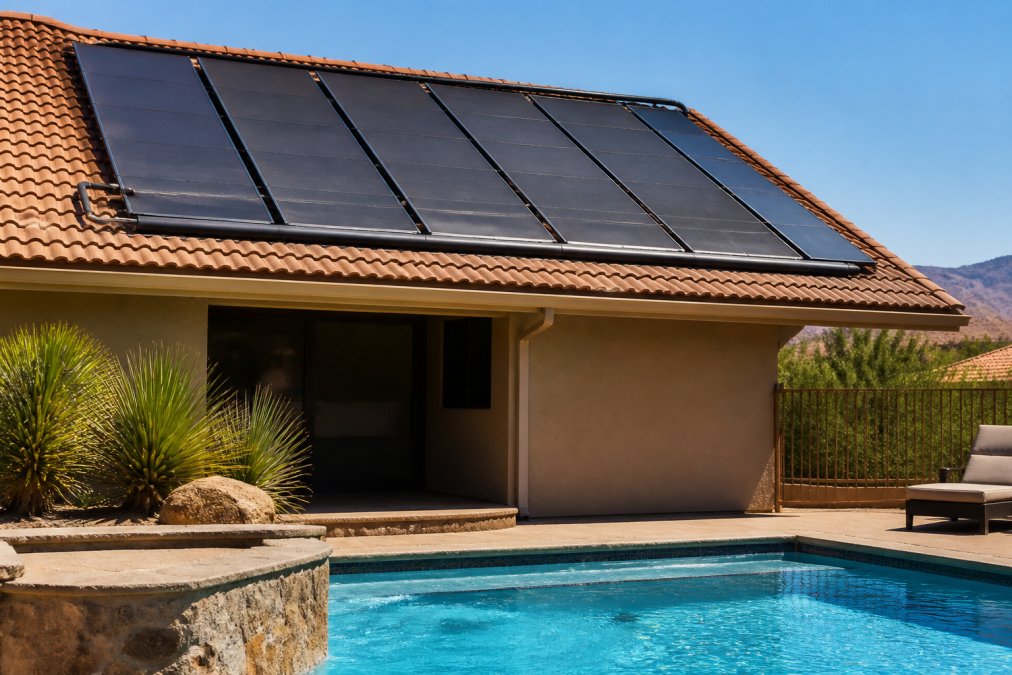
Your existing pool pump circulates water through solar collectors mounted on your roof. As water passes through the collectors, it absorbs thermal energy from the sun and returns to the pool warmer. This cycle throughout the day maintains comfortable swimming temperatures from March through November without thermostat adjustments or utility bills.
Solar thermal systems differ from photovoltaic solar panels: they transfer heat directly to water rather than generating electricity, making them far more efficient for pool heating and one of the most cost-effective renewable energy upgrades available.
Solar Collectors and Heat Transfer
Solar collectors are the panels that do the work. Pool water enters through an inlet, flows through tubes or channels, absorbs heat from the sun-warmed surface, and exits back toward the pool. A flow control valve regulates water movement to maintain consistent temperature even on partly cloudy days.
Heat transfer efficiency depends on collector surface area, water flow rate, and direct sunlight. A properly sized system integrated with your pool filtration can raise water temperature by several degrees per day under good conditions.
Collector Materials: Glazed vs. Unglazed Panels
Unglazed collectors are made from heavy-duty rubber or UV-resistant polypropylene with no glass covering. They cost less and work well for warm climates with mild winters, handling high flow rates and prolonged sun exposure effectively.
Glazed collectors feature a tempered glass cover over a metal absorber plate with insulated backing. The glazing traps heat more effectively, making them better for colder climates or year-round use, though they cost more upfront.
For most residential applications in warm, high-sun climates, unglazed collectors deliver excellent performance at a lower price point.
| Collector Type | Best Climate | Relative Cost | Lifespan Expectation |
|---|---|---|---|
| Unglazed polypropylene | Warm, sunny climates | Lower | 15-20+ years |
| Glazed metal/glass | Cold climates, year-round | Higher | 20+ years |
Solar Pool Heating Cost: What to Expect
Upfront cost varies based on pool size, roof configuration, and system design. Request a quote specific to your home for an accurate number. The defining financial advantage is the absence of operating costs after installation.
Request quotes from licensed solar pool heating contractors who will assess your roof orientation, shading, and pool volume. A quote based on actual site conditions is far more reliable than a generic estimate.
ROI and Payback Period Analysis
Payback period depends on current heating costs and swimming season length. Homeowners using natural gas or propane see the fastest payback since solar eliminates those fuel costs entirely.
Dixie Pool Solar Heating & Misting estimates customers save $1,500 to $2,000 per year on heating costs after switching to solar thermal. At that rate, the system pays for itself over several years, then delivers free heat for its 20-plus-year lifespan.
Key variables affecting payback include current annual heating costs, pool size, direct sun hours on collectors, swimming season length, and available incentives.
Tax Credits and Rebates That Reduce Upfront Cost
Eligible homeowners can qualify for a Utah State tax credit of 25% or up to $2,000 on qualifying solar thermal installations. The Enbridge Gas rebate program offers an additional $750 for eligible systems. Combined, these incentives meaningfully reduce net installation cost.
According to U.S. Department of Energy’s guide to solar pool heaters, solar pool heating systems are among the most cost-effective solar technologies available for residential use in high-sun regions.
Tax credits and rebate programs have eligibility requirements and application deadlines. Verify current program terms with your installer and the relevant program administrator before making purchasing decisions, as program details change year to year.
Pool Heating Season Extension: March Through November
The real value of a solar pool heater is more time in the water. Most unheated pools in high-desert climates are comfortable for only a few summer months. A properly sized solar thermal system extends that dramatically by capturing thermal energy during daylight hours.
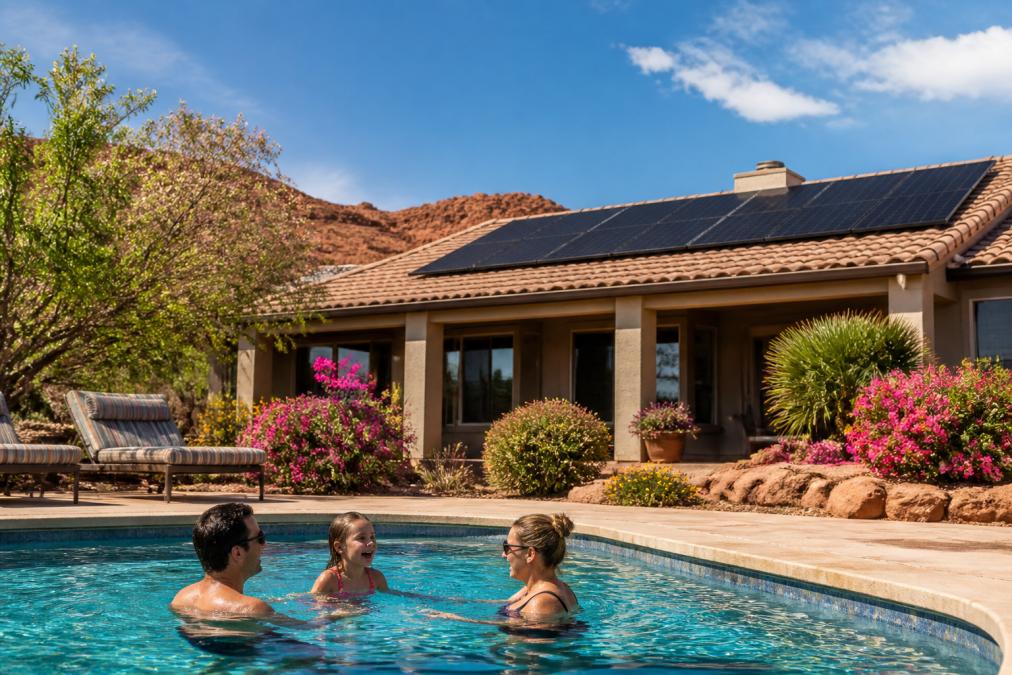
Dixie Pool Solar Heating & Misting designs every system for a swimming season running from March through November, roughly nine months instead of four or five. That’s more than double the usable season from the same pool.
For families who use their pool regularly, that extension translates to quality of life: early morning laps in April, evening swims in October. The pool becomes a year-round feature rather than a summer-only amenity.
High-sun regions with low humidity and long days are ideal for solar pool heating. Extended sun hours mean collectors capture substantial thermal energy even in shoulder months. According to the National Renewable Energy Laboratory’s solar resource data, the southwestern United States ranks among the highest solar resource areas in the country, making it ideal for solar thermal performance.
Professional Solar Pool Heater Installation: Step by Step
Professional installation is the right choice for most homeowners. A licensed contractor handles everything from system sizing to plumbing integration, leaving you with a fully operational system.
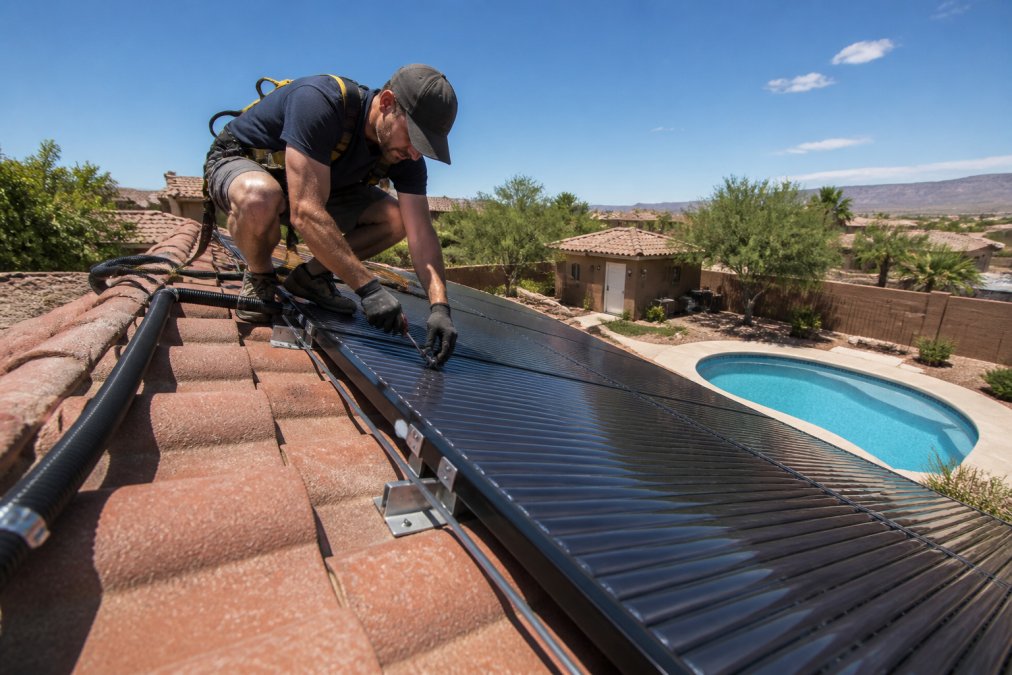
A typical professional installation unfolds as follows:
- Site assessment, The contractor evaluates roof orientation, pitch, shading, and available surface area, plus pool volume and filtration configuration.
- System design and sizing, Collector area is calculated based on pool size and target swimming season. Proper sizing is critical for performance.
- Permit application, The contractor pulls required permits from your local building department, ensuring code compliance.
- Mounting hardware installation, Roof-mounted installation begins with securing the racking system to roof rafters, rated for local wind and snow loads.
- Collector installation, Solar collectors are mounted to the racking and connected to each other using UV-resistant materials and proper sealing.
- Plumbing integration, The solar loop connects to your existing pool filtration system with appropriate fittings and a dedicated flow control valve.
- System automation, A differential temperature controller automates water circulation, sending water through collectors when warmer than the pool.
- Inspection and testing, The system is pressure-tested, inspected by the building department, and run through full operational testing.
The entire process typically takes one to two days for a standard residential installation.
Permitting, HOA Rules, and Code Compliance
Most municipalities require a permit for roof-mounted solar installations. Permitted work is inspected, code-compliant, and documented, which matters for home sales and insurance claims.
HOA rules are a separate consideration. Many homeowners associations have architectural guidelines governing roof-mounted equipment. Many states have solar access laws limiting HOA ability to prohibit solar systems outright. Check your HOA’s CC&Rs and consult your contractor before installation. Reputable installers are familiar with local requirements and can help navigate approval.
System Sizing and Roof-Mounted Installation
Collector area should equal 50% to 100% of the pool’s surface area, with the higher end appropriate for longer seasons or less-than-ideal roof orientation.
South-facing roof sections with minimal shading deliver best performance. East and west orientations can work but require larger collector area to compensate for reduced sun exposure. Your contractor should model expected output based on your specific roof geometry and local climate data.
DIY Solar Pool Heater Installation: Honest Pros and Cons
DIY solar pool heater installation is technically possible with basic unglazed collector kits available through pool supply retailers. The appeal is lower upfront cost and personal satisfaction.
Where DIY can work:
- Small above-ground pools with simple plumbing
- Homeowners with roofing and plumbing experience
- Situations where permits aren’t required
- Supplemental heating additions to existing systems
Where DIY creates problems:
- Incorrect roof penetrations void roofing warranties and create leak risk
- Improperly sized systems underperform or overheat the pool
- Plumbing errors damage the pool pump or filtration system
- Unpermitted work complicates home sales and insurance claims
- Manufacturer warranties often require professional installation
The 12-year warranty on Heliocol panels installed by Dixie Pool Solar Heating & Misting is tied to professional installation. DIY installations with consumer-grade kits won’t carry that coverage. When factoring in warranty value, available tax credits (typically requiring licensed contractors), and risk of costly errors, professional installation is financially rational for most homeowners.
The long-term value of professional solar pool heating installation, warranty coverage, permit documentation, correct sizing, and tax credit eligibility, typically outweighs upfront DIY savings for in-ground pool owners.
Maintenance, Warranty, and Long-Term Durability
One of the most underappreciated advantages of solar pool heating is how little maintenance it requires. Unlike gas heaters with burners, heat exchangers, and ignition systems, a solar thermal system has almost no moving parts beyond the existing pool pump. Many systems run for years with only occasional visual inspection.
Preventative maintenance includes:
- Annual visual inspection of collectors, mounting hardware, and plumbing connections
- Checking the flow control valve for proper operation each season
- Clearing debris from collector surfaces
- Verifying the differential controller functions correctly at season start
According to the Solar Energy Industries Association’s residential solar guidelines, solar thermal systems are among the lowest-maintenance renewable energy installations available.
Heliocol panels carry a 12-year warranty, the best in the industry for residential solar pool heating. The UV-stabilized polypropylene resists degradation under prolonged sun exposure, and systems are designed to last 20 years or more.
Dixie Pool Solar Heating & Misting backs every installation with a 2-year labor warranty. That combination, 12 years on panels, 2 years on labor, provides meaningful protection during the period when issues are most likely to surface.
One customer noted: "Corbin and his team did a fantastic job. I couldn’t be more pleased with their work performance. The solar system they put in to heat the water was professionally integrated into the pool system."
That integration, where the solar loop works seamlessly with existing filtration and circulation, separates well-executed installations from problematic ones. The system should be invisible in daily operation. You set the temperature you want, and the sun does the rest.
Extending your swimming season while cutting heating bills is straightforward. The challenge is finding an installer combining quality panels, honest system sizing, and proper permitting. Dixie Pool Solar Heating & Misting delivers Heliocol industrial panels with a 12-year warranty, professional roof-mounted installation, and guidance on qualifying for the Utah State tax credit and Enbridge Gas rebate. Get a free quote from Dixie Pool Solar Heating & Misting and find out exactly what a solar pool heater installation would look like for your home.
Frequently Asked Questions
Are solar pool heaters worth the money?
For most pool owners, yes. A solar pool heater eliminates ongoing fuel costs entirely after installation. With savings of $1,500 to $2,000 per year on heating bills, plus available state tax credits and gas rebates, most systems pay for themselves within a few years. Heliocol panels are built to last 20 or more years, so the long-term value far exceeds the upfront investment compared to gas or electric alternatives that carry monthly operating costs.
How long do solar pool heating panels last?
Quality solar pool heating panels, such as Heliocol's industrial-grade collectors, are designed to last 20 or more years. UV-resistant materials and durable mounting hardware allow them to handle years of sun exposure and weather without significant degradation. The Heliocol panels installed by Dixie Pool Solar Heating & Misting carry an industry-best 12-year warranty, giving homeowners strong protection well into the system's lifespan.
Can I install a solar pool heater myself?
DIY solar pool heater installation is possible for handy homeowners, but it carries real risks. Improper plumbing integration, incorrect system sizing, or skipped permits can void warranties, fail inspections, and reduce collector efficiency. Professional installation ensures the system connects correctly to your pool pump and filtration system, meets local code requirements, and qualifies for available tax credits and rebates. For most homeowners, professional installation protects both the investment and the warranty.
How much does it cost to add a solar heater to a pool?
Solar pool heating cost varies based on pool size, roof configuration, and the number of solar collectors needed. Pricing depends on system sizing, labor, and any required permits. A free quote from a licensed contractor gives you the most accurate figure for your specific setup. After installation, operating costs are essentially zero, and available incentives like a 25% state tax credit (up to $2,000) and a $750 gas rebate can significantly offset the initial investment.
This article was written using GrandRanker


Leave a Reply