Table of Contents
- Understanding Seasonal Pool Temperature Control
- Solar Thermal Systems for Spring and Fall Heating
- Pool Temperature Cooling Strategies for Summer Months
- Automated Temperature Control Systems
- Extending Your Swimming Season in Desert Climates
- Getting a Solar Pool Heating Quote
- Maintaining Ideal Water Temperature Year-Round
- Conclusion
Last Updated: August 25, 2026
Understanding Seasonal Pool Temperature Control
Seasonal swimming pool temperature control manages your pool’s water temperature throughout the year to extend your usable swimming season. In Southern Utah’s unique climate, where spring arrives late and fall departs early, this becomes essential for maximizing your investment.
Most pool owners heat their pools in summer when the sun does most of the work naturally, then abandon them in spring and fall when the water turns uncomfortably cold. The real opportunity lies in strategic heating during shoulder seasons, March through May and September through November, when the sun still provides substantial thermal energy.
At Dixie Pool Solar Heating & Misting, we’ve helped Southern Utah homeowners extend their swimming season by understanding how seasonal temperature shifts affect pool usability. Water temperature preferences vary by activity: most swimmers find 78-82°F comfortable for recreational swimming, lap swimmers prefer 75-78°F, and children and elderly swimmers may need 82-86°F (the American Academy of Dermatology). The difference between a pool at 72°F and 80°F is the difference between a pool you use daily and one you avoid entirely.
Solar Thermal Systems for Spring and Fall Heating
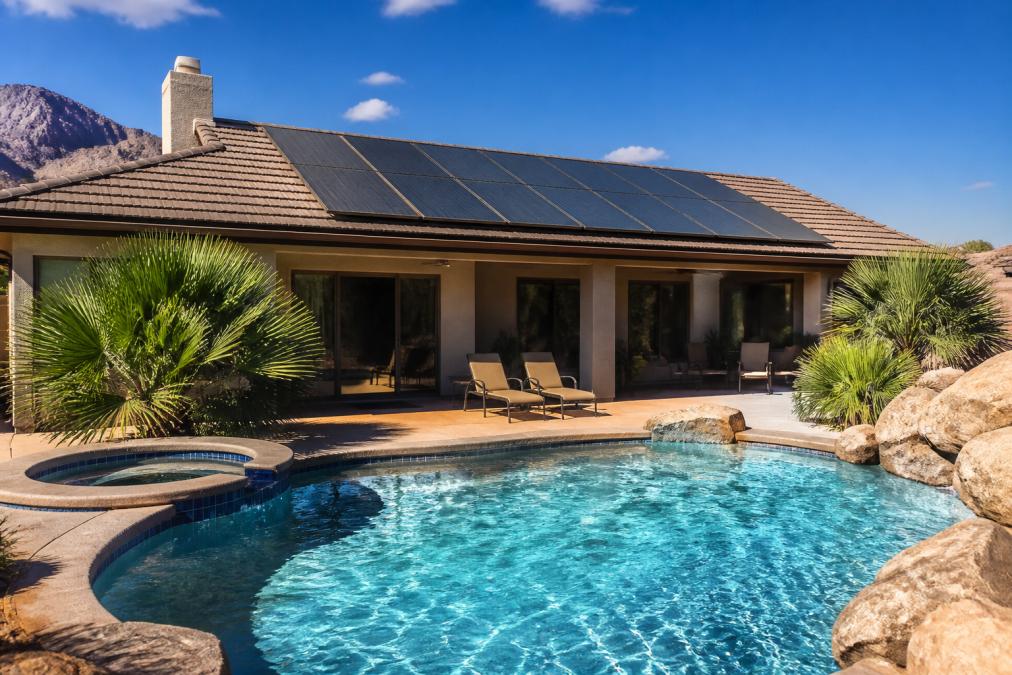
Solar thermal heating captures the sun’s warmth and transfers it directly to your pool water. Unlike photovoltaic panels that generate electricity, thermal systems use the sun’s heat energy itself, making them ideal for extending your season during spring and fall months when the sun angle is lower but still powerful.
How Solar Thermal Energy Works
Solar thermal panels contain a dark absorber surface that captures sunlight and converts it to heat. Water circulates through the panels, absorbing that thermal energy, then flows into your pool through your existing circulation system. The process requires no electricity, only the water circulation your pool pump already provides.
Efficiency depends on panel orientation, roof angle, shading, and ambient air temperature. In Southern Utah’s high desert climate with 300+ days of annual sunshine, solar thermal systems perform exceptionally well even during shoulder seasons (noaa.gov). Heliocol industrial-grade panels represent the standard for residential pool heating in this region, engineered to last 20+ years with minimal maintenance.
Water Circulation and Heat Exchanger Integration
Your pool’s existing circulation system becomes the delivery mechanism for solar heating. Water flows from your pool through a filter, then through the solar panels or a heat exchanger, and back into the pool. A heat exchanger allows you to integrate solar heating with other heat sources, like a gas heater for backup on cloudy weeks, without mixing the systems.
Programmable controls manage water flow through the solar panels, automatically activating the system when panels are warmer than your pool water and shutting off when they’re not.
Pool Temperature Cooling Strategies for Summer Months
Summer in Southern Utah brings intense heat. Pool water temperatures can exceed comfortable swimming ranges, sometimes reaching 88-92°F by August. Strategic cooling during peak summer months protects your investment and maintains usable conditions.
Evaporation Reduction and Pool Covers
Evaporation is your pool’s primary heat loss mechanism during cooler months, but during summer, it becomes a heat retention problem. In Utah’s low-humidity climate, evaporation rates can reach 0.1-0.2 inches per day, meaning a 15×30-foot pool loses thousands of gallons and significant thermal energy monthly (usgs.gov).
A pool cover reduces evaporation by 95%, cutting both water loss and heat loss. During spring and fall, when you’re trying to retain solar-heated warmth, a cover becomes your most cost-effective tool. Even a simple bubble cover makes a measurable difference. Liquid pool covers offer an alternative, creating an invisible monomolecular layer that reduces evaporation without installation hassle.
Active Cooling Systems and Chiller Options
When passive cooling isn’t enough, pool chillers extract heat from water and release it into the air. These systems make sense for pools that regularly exceed 85°F and have limited shade or natural cooling options. Chiller efficiency depends on ambient air temperature; when outside air is already 95°F, a chiller works harder and consumes more energy.
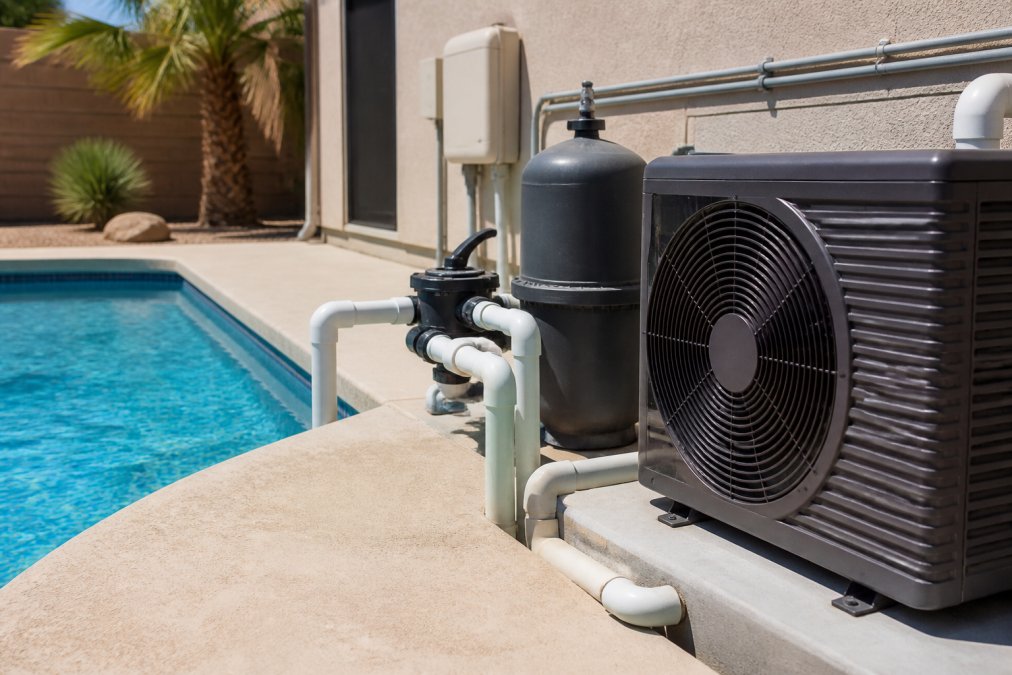
Heat pumps offer another cooling option, reversing operation to heat in spring and fall and cool in summer from a single unit. They’re more efficient than separate heaters and chillers but require professional sizing and installation.
Automated Temperature Control Systems
Manual temperature management creates friction that leads to inconsistent comfort. Automated systems handle these decisions based on preset parameters, delivering consistent water temperature with minimal effort.
Programmable Thermostats and Digital Interfaces
A programmable thermostat monitors your pool’s water temperature continuously and activates heating or cooling systems to maintain your target range. You set your preferred temperature, and the system handles the rest. Digital interfaces let you view current water temperature, set seasonal targets, and review historical data showing how much thermal energy the solar panels captured or how many hours the heater ran.
Analog controls, simple on/off switches and dial thermostats, still exist on older systems but lack the precision and automation of digital controls. Upgrading to a programmable system often pays for itself within a season through improved efficiency.
Smart Home Integration and Seasonal Adjustment
Modern pool control systems integrate with home automation platforms, allowing you to adjust settings from your phone or voice commands. More importantly, you can automate seasonal transitions, automatically lowering your target temperature in late fall or raising it in early spring without manual intervention.
Geofencing adds another layer: the system can adjust settings based on whether you’re home or away. If you’re traveling in July, the system might lower your target to 80°F (saving energy while you’re gone) and automatically return to 84°F when your phone detects you’ve arrived home.
Extending Your Swimming Season in Desert Climates
Southern Utah’s high desert climate creates unique opportunities for season extension. Unlike humid regions where spring arrives gradually, desert springs bring rapid temperature swings, 60°F mornings followed by 85°F afternoons.
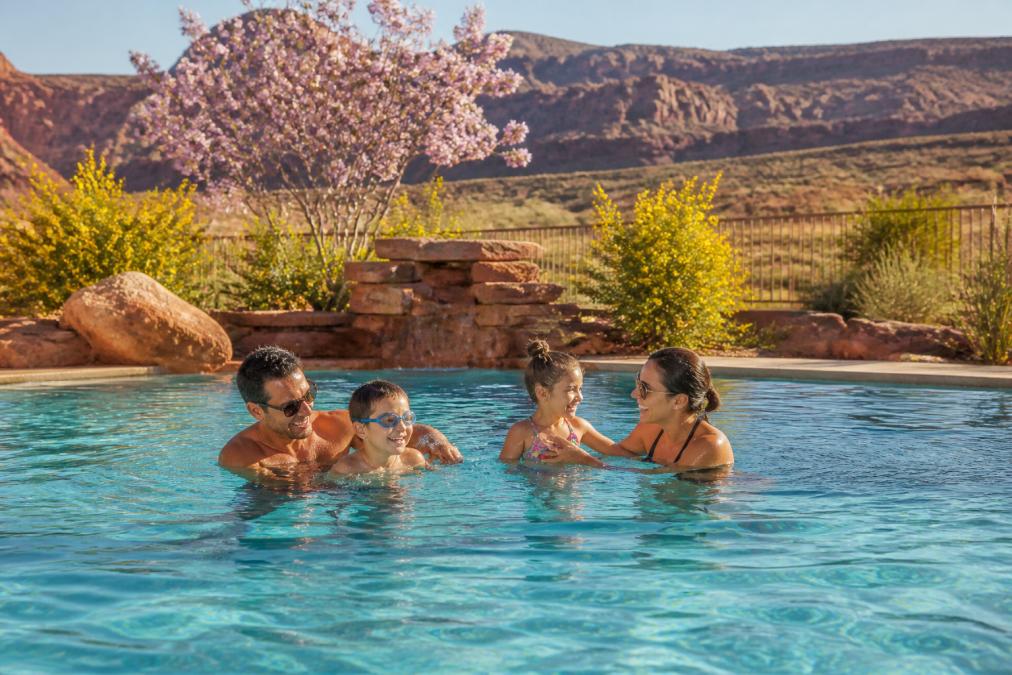
Your actual usable season depends on three factors: water temperature, air temperature, and wind. A 78°F pool feels cold when the air is 55°F and the wind is blowing. In Southern Utah, comfortable conditions typically occur in mid-April and end in mid-October, a natural 6-month window. Solar thermal heating can reliably extend this to March through November, adding 2-3 months of usable season.
March and April present the biggest opportunity. Spring sunshine is intense, but air temperatures remain cool. Solar thermal panels capture that energy efficiently. A properly sized system can raise your pool from 65°F (typical early spring temperature) to 75-78°F within 2-3 weeks, making it swimmable. Without solar heating, you’d wait until late May for the pool to reach comfortable temperature naturally.
Fall extension works similarly. September and October maintain warm air temperatures and strong sunlight. A solar system keeps your pool at 80-82°F well into October, extending your season by 4-6 weeks. Desert winds accelerate evaporation, which cools water through latent heat loss. A pool cover becomes essential during shoulder seasons, reducing this effect dramatically.
Getting a Solar Pool Heating Quote
Understanding what to expect during a professional assessment removes uncertainty and helps you make an informed decision.
What to Expect During a Professional Assessment
A professional assessment begins with understanding your goals: how many months do you want to use your pool, what temperature do you prefer, and how much of the season do you want to rely on solar versus backup heating? These answers determine system size.
Next, the technician evaluates your roof for sun exposure, shading from trees or structures, roof condition and age, and structural capacity to support panels. Southern Utah’s intense sun means most south-facing and west-facing roofs are suitable. The assessment includes your pool’s size, current heating method, and circulation system capacity.
Long-Term Savings and Warranty Protection
Solar thermal heating eliminates operating costs. Unlike gas heaters or electric heaters, solar panels produce heat from sunlight, a resource you’re not paying for. Once installed, your only ongoing costs are routine maintenance and potential repairs.
Heliocol panels carry an industry-leading 12-year warranty on the panels themselves, covering defects in materials and workmanship. Labor and installation typically carry a 2-year warranty from the installing contractor. Utah State offers incentives that reduce your net investment: a 25% state tax credit (up to $2,000 maximum) applies to solar thermal systems installed in Utah, and the Enbridge Gas $750 rebate rewards homeowners who reduce natural gas consumption by switching from gas heating to solar.
Maintaining Ideal Water Temperature Year-Round
Consistent temperature maintenance requires understanding how your pool’s thermal balance works and how to optimize it seasonally.
Chemical Balance and Temperature Interaction
Water temperature directly influences chemical behavior. Chlorine dissipates faster in warmer water, meaning an 85°F pool requires more frequent chlorine additions than a 75°F pool. Alkalinity and pH stability also shift with temperature. A pool cover reduces not just heat loss but also chemical loss, retaining chemicals more effectively and reducing the total amount you need to add.
Temperature consistency matters more than absolute temperature. A pool that swings from 72°F to 82°F daily is harder to balance chemically than one that stays at 78°F. Automated temperature control maintains consistency, which simplifies chemical management.
Seasonal Maintenance Schedules
Spring startup (March-April) requires checking your equipment after winter shutdown: inspect the pump for debris, clean the filter, verify all plumbing connections are tight, and test your control system. Reset your pool chemistry by balancing alkalinity and pH before adding chlorine. Activate your heating system and begin the gradual temperature increase over 2-3 weeks.
Summer maintenance (June-August) focuses on chemical consistency and equipment monitoring. Check chlorine levels twice weekly. Monitor water temperature daily; if it consistently exceeds your target, activate cooling or increase circulation. Inspect solar panels monthly for debris.
Fall transition (September-October) involves gradual temperature reduction and preparing for winter. As outdoor temperatures drop, your solar system will produce less thermal energy. Embrace the gradual cooldown. Once temperatures drop below 75°F and usage declines, consider winterization by draining lines that could freeze and shutting down equipment.
Winter maintenance (November-February) varies by your approach. Most Southern Utah homeowners find the cost of winter heating unjustifiable; the 3-4 month closure is economically sensible.
Extending your swimming season from March through November requires understanding how thermal energy moves through your pool and how to manage it strategically. Dixie Pool Solar Heating & Misting specializes in designing systems that capture Southern Utah’s abundant sunshine and convert it into months of additional pool enjoyment. With Heliocol panels engineered to last 20+ years and a 12-year warranty backing your investment, you gain both immediate season extension and long-term financial benefit. Get a free quote today to see exactly how much season extension and annual savings your specific situation can achieve.
Frequently Asked Questions
Q: How long does it take to heat a pool with solar thermal energy in spring?
A: Solar thermal systems begin heating your pool within hours of installation, with water temperature rising 5-10 degrees daily depending on sun exposure and ambient air temperature. Spring heating works fastest when the system runs 8+ hours daily. In March, when ambient temperatures are cooler, expect 2-3 weeks to reach your target swimming temperature (75-82°F). Larger pools and shaded areas extend heating time. A professional assessment determines your specific timeline based on pool size, solar panel capacity, and local climate conditions.
Q: What is the ideal swimming pool temperature for comfort and efficiency?
A: Most swimmers prefer 78-82°F for comfort, with 80°F being the sweet spot for recreational swimming. Competitive swimmers often prefer 78°F. Lower temperatures (75-76°F) reduce energy consumption and operational costs but may feel cold for casual use. Higher temperatures (85°F+) increase evaporation and energy demand. Maintaining your pool at 80°F balances comfort, thermal efficiency, and energy savings. Programmable thermostats let you adjust seasonal temperatures automatically, lowering settings during cooler months and raising them in peak summer for optimal thermal regulation.
Q: Can I use solar heating and cooling strategies together year-round?
A: Yes. Many homeowners combine solar thermal heating for spring and fall with evaporation reduction (pool covers) and active cooling systems for summer. This layered approach maximizes your swimming season while managing energy consumption. In spring, solar panels heat the water. By mid-summer, when ambient air temperature rises, you switch to cooling strategies like covers to reduce evaporation and maintain comfortable temperatures. Automated systems with digital interfaces and temperature sensors switch between heating and cooling modes based on ambient temperature, and your programmed settings, reducing operational costs year-round.
Q: What warranty and long-term protection should I expect from a solar pool heating system?
A: Industry-leading solar thermal panels typically include 12-year manufacturer warranties on the panels themselves, with many systems lasting 20+ years with minimal maintenance. Labor warranties vary by installer (commonly 2 years). Most solar thermal systems require little to no ongoing maintenance after installation, with occasional water circulation checks and seasonal adjustments. Before purchasing, confirm warranty coverage on the heating element, thermostatic control components, and labor. A professional quote clarifies all warranty terms and long-term protection.
This article was written using GrandRanker


Leave a Reply