Table of Contents
- How Solar Thermal Pool Heating Works
- Cost Savings and Energy Efficiency
- Extending Your Swimming Season with Solar
- Solar Pool Heating vs Gas Heaters
- Low Maintenance and Long System Lifespan
- Solar Pool Panel Maintenance Tips
- Environmental Impact and Tax Incentives
- System Sizing and ROI Calculation
Last Updated: August 27, 2026
How Solar Thermal Pool Heating Works
Solar thermal pool heating captures the sun’s energy directly and transfers it to your pool water without converting it to electricity first. This differs fundamentally from photovoltaic (PV) solar panels, which generate electricity. Instead, thermal collectors absorb solar irradiance and use heat transfer to warm water circulating through your filtration system.
Solar thermal collectors mounted on your roof contain fluid that heats as sunlight strikes the surface. This warm fluid flows through a heat exchanger, transferring thermal energy to your pool water. The cooled fluid returns to the collectors to repeat the cycle. Your existing pool pump handles water circulation, so no additional motor or equipment is needed.
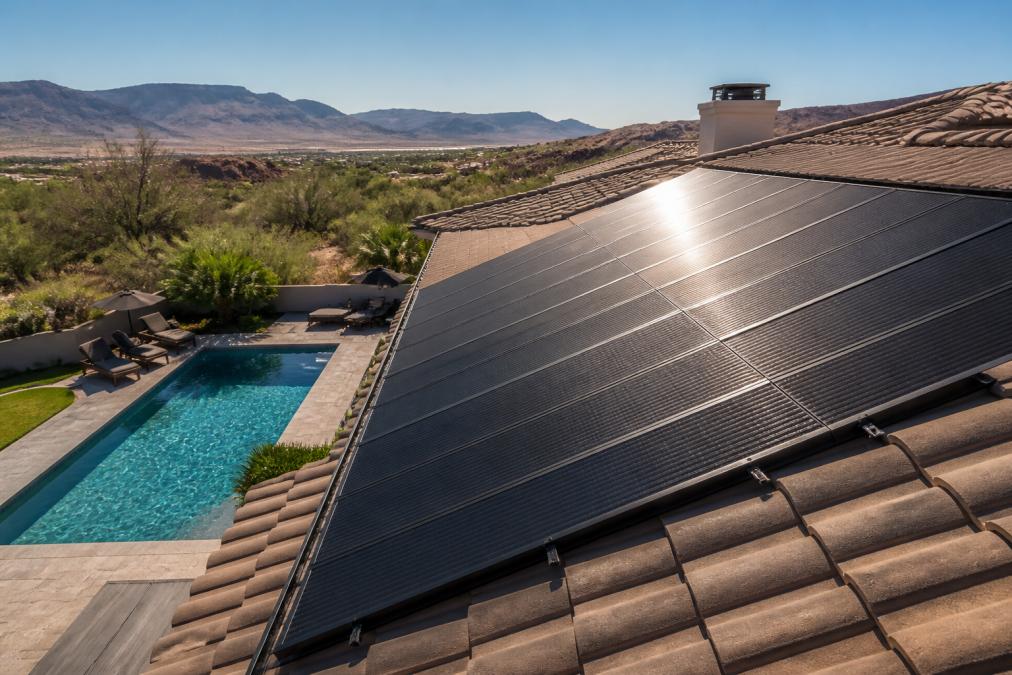
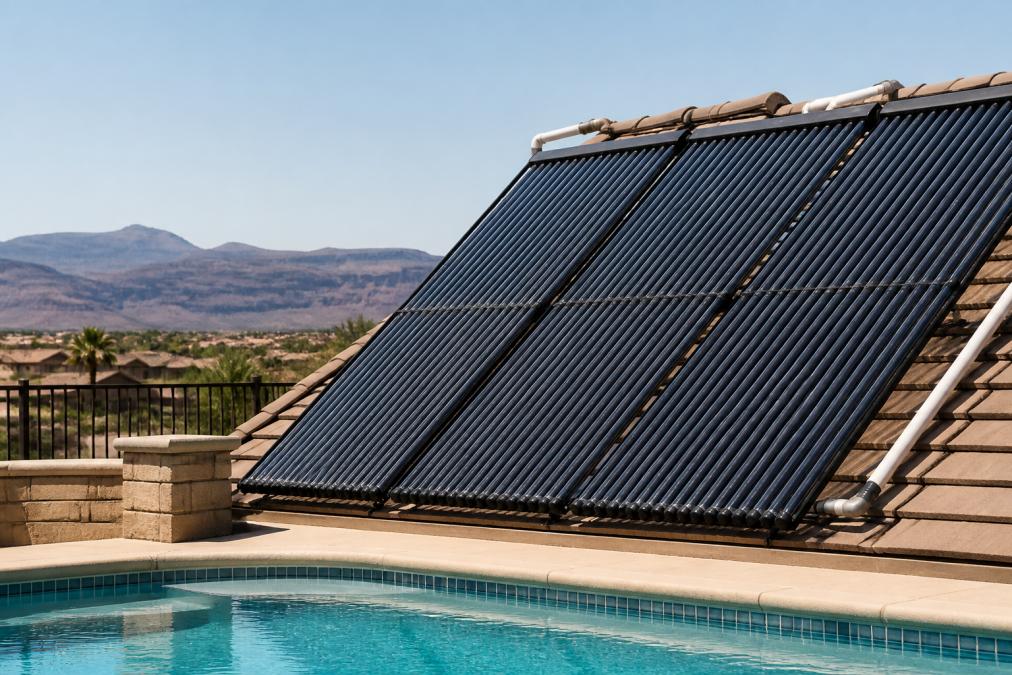
System efficiency depends on collector surface area, the temperature difference between collectors and pool, ambient temperature, and solar irradiance intensity. A properly sized system can maintain your pool temperature throughout the swimming season with minimal energy input. At Dixie Pool Solar Heating & Misting, we use industry-leading Heliocol panels specifically engineered for residential pools to maximize thermal efficiency and durability.
Solar thermal systems work even on partly cloudy days. While peak performance occurs under clear skies, these systems continue generating heat as long as solar irradiance reaches the collectors. Since your existing pool pump typically runs during daylight hours anyway, operating cost is essentially zero once installation is complete.
The key to system performance is proper sizing. An undersized system won’t reach your target temperature, while an oversized system wastes material and money. Professional assessment of your roof orientation, shading patterns, and pool volume ensures optimal heat transfer and efficiency.
Cost Savings and Energy Efficiency
Solar thermal pool systems deliver substantial energy savings by eliminating gas or electric heating. Traditional gas heaters consume fuel continuously whenever the pool needs warming, generating monthly utility bills that accumulate quickly during extended seasons. Electric heat pumps operate more efficiently than gas but still require ongoing electricity consumption. Solar thermal systems operate on free solar energy with no fuel or electricity costs after installation.
Actual savings depend on your current heating method, local utility rates, pool size, and desired swimming season length. Many homeowners eliminate several hundred dollars in monthly heating costs during peak season. The system begins paying for itself through these reductions, with payback period varying based on your situation and available incentives.
High-quality systems like those using Heliocol panels achieve thermal efficiency rates of 70-85%, making them competitive with or superior to electric heat pumps in many climates (peer-reviewed research). The absence of operating costs means every dollar saved on utilities is pure return on your initial investment.
Solar thermal systems have zero operating costs once installed. Unlike gas or electric heating, there’s no monthly fuel or electricity bill, just free energy from the sun. This fundamental difference makes solar thermal the lowest-cost heating option for extended pool seasons.
Understanding your ROI requires calculating three components: annual cost of your current heating method, installation cost of a solar system, and expected equipment lifespan. A system eliminating several hundred dollars in annual heating costs will recoup its investment over time. Federal and state incentives can accelerate this payback significantly.
Extending Your Swimming Season with Solar
Solar thermal pool systems extend your swimming season from March through November, months beyond what traditional heating allows (energy.gov). In early spring and late fall, solar heating maintains temperatures in the 75-82°F range that most swimmers prefer, transforming your pool from a summer-only amenity into a year-round recreation asset.
Solar thermal collectors work particularly well during shoulder seasons because they operate efficiently even when outdoor temperatures are moderate. The collectors capture solar irradiance throughout the day, and your pool acts as a thermal battery, storing heat collected during sunny hours. Even partial cloud cover contributes meaningful warmth. On clear days, the system can raise water temperature several degrees, and on consistently sunny weeks, you’ll reach and maintain your target temperature.
A larger collector surface area captures more thermal energy, allowing you to maintain higher temperatures for longer periods. Professional assessment ensures your system is sized to meet your specific season-extension goals and budget.
Undersizing a solar system is a common mistake. Homeowners sometimes choose smaller systems to save on installation costs, only to find the system can’t maintain their target temperature during shoulder seasons. Proper sizing upfront ensures your investment delivers the extended season you want.
Solar Pool Heating vs Gas Heaters
Gas heaters operate on combustion, burning fuel to generate heat, which means they produce operating costs every time you run them. They also create carbon emissions and depend on fuel availability and price fluctuations. Solar thermal systems eliminate these concerns entirely, there’s no combustion, no fuel consumption, and no monthly utility bills for heating.
Gas heaters do offer one advantage: they can heat water very quickly. If you need your pool at 85°F by Saturday afternoon, a gas heater can deliver that within hours. Solar thermal systems work more gradually, raising temperature over days or weeks depending on weather and system size. For most homeowners planning ahead, this difference is negligible.
Modern gas heaters operate at 80-85% efficiency, meaning 15-20% of fuel energy is lost as waste heat. Solar thermal systems achieve thermal efficiencies of 70-85%, but because they use free solar energy, the effective cost per BTU of heat delivered is far lower. Over time, solar thermal is dramatically more cost-effective.
Gas heaters also require ongoing maintenance, including annual inspections, potential repairs, and eventual replacement. Solar thermal systems require minimal maintenance after installation, reducing long-term ownership costs further.
Low Maintenance and Long System Lifespan
Solar thermal pool systems are engineered for durability and minimal upkeep. Once professionally installed, they operate with little intervention required. The main components, collectors, piping, and heat exchanger, are passive systems with no moving parts to wear out or fail.
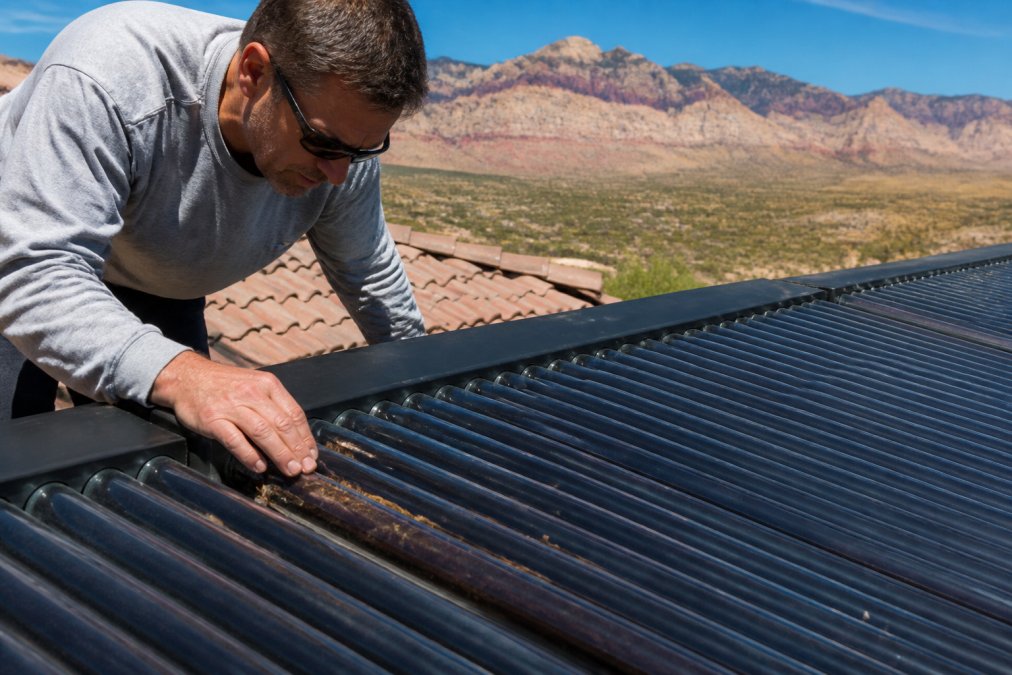
Collectors should be visually inspected once or twice annually to ensure they’re free of debris, leaves, or dirt that might reduce solar irradiance absorption. In most climates, rain naturally cleans the panels. If you live in a particularly dusty area, occasional gentle cleaning with water maintains peak performance.
The system’s piping and connections should be checked during annual pool maintenance to ensure no leaks have developed. Most systems are sealed and pressurized, so leaks are rare, but periodic inspection catches any issues early.
Heliocol panels are engineered to last 20+ years or longer. They’re made from polypropylene collectors with UV-resistant materials designed to withstand intense sun exposure, temperature fluctuations, and weather extremes. The industry-best 12-year warranty on all panels installed through Dixie Pool Solar Heating & Misting reflects confidence in this durability. Many systems installed 15-20 years ago continue operating effectively today.
Homeowners seeking a heating solution that requires minimal attention and delivers long-term value. Solar thermal systems are ideal for those who want to install equipment once and forget about it for decades.
The long lifespan means you’ll likely own your home longer than the system requires replacement, making solar thermal an excellent investment for increasing property value and reducing lifetime heating costs.
Solar Pool Panel Maintenance Tips
Maintaining your solar thermal panels is simple. Start with visual inspections twice yearly, once before the spring swimming season and once in fall. Look for visible debris, leaves, bird droppings, or dirt accumulation on the collector surface. Most dust and pollen wash away naturally with rain, but in dry periods, manual cleaning may be needed.
Cleaning is straightforward: use a soft brush or cloth with lukewarm water to gently wipe the collector surface. Avoid harsh chemicals, abrasive scrubbing, or high-pressure washers, which can damage the UV-resistant coating or seals. For stubborn deposits, a mild soap solution works well. Rinse thoroughly with clean water and allow to dry completely.
Check all visible piping connections where the collectors connect to your pool system for signs of leaks, corrosion, or loose fittings. If you notice a leak, contact a professional rather than attempting repairs yourself.
During winter months in colder climates, ensure your system is properly winterized to prevent freeze damage. Dixie Pool Solar Heating & Misting can provide specific winterization guidance based on your system and local climate conditions.
Monitor your pool water temperature during the season. If it’s not rising as expected on sunny days, the collectors may need cleaning or a component may need attention.
Environmental Impact and Tax Incentives
Solar thermal pool heating dramatically reduces your carbon footprint compared to gas or electric heating. Gas heaters produce carbon emissions from combustion. Electric heat pumps consume grid electricity, which in many regions is generated from fossil fuels. Solar thermal systems produce zero emissions during operation.
Over a 20-year lifespan, a solar thermal system prevents many tons of carbon dioxide from entering the atmosphere. For environmentally conscious homeowners, this is a meaningful contribution to reducing personal environmental impact.
Federal tax credits, state tax credits, and utility rebates can significantly reduce your net investment. Many states offer 25% tax credits or flat-dollar rebates for qualified solar thermal installations. In Utah, qualified solar thermal pool systems may be eligible for a 25% state tax credit or $2,000 state tax credit, whichever is greater. Additionally, some customers qualify for an Enbridge Gas $750 rebate when replacing gas heating with solar.
According to the Database of State Incentives for Renewables and Efficiency, incentive programs vary by location and change annually. Professional installers like Dixie Pool Solar Heating & Misting stay current on available incentives and can help you understand what you qualify for.
Don’t assume you know what incentives apply to you. Working with an experienced installer ensures you capture every incentive available, maximizing your financial benefit.
System Sizing and ROI Calculation
Properly sizing your solar thermal system is essential for both performance and financial return. The sizing process considers your pool volume, target water temperature, desired swimming season length, roof orientation and available space, shading patterns throughout the day, and local climate conditions.
A professional assessment calculates the required collector surface area. For most residential pools, systems range from 40-100 square feet of collector surface, depending on pool size and climate.
ROI calculation requires three components: your current annual heating cost, installation cost of your solar thermal system, and the system’s lifespan (typically 20+ years). The basic formula is: (annual heating cost saved × years to payback) = system installation cost. For example, if your current heating costs $1,500 annually and a solar system costs $6,000, payback occurs in four years. After that, all heating is free. Over 20 years, you’ve saved $30,000 in heating costs.
Incentives accelerate payback significantly. If a $6,000 system qualifies for $2,000 in tax credits and rebates, your net cost drops to $4,000. The same system now pays for itself in less than three years.
Local climate affects ROI significantly. Regions with abundant sunshine and long swimming seasons see faster payback than cloudier areas with shorter seasons. However, even in less sunny climates, solar thermal systems typically achieve payback within 5-7 years when incentives are factored in.
Solar thermal pool systems represent one of the most straightforward renewable energy investments a homeowner can make. They eliminate heating costs, extend your swimming season, require minimal maintenance, and provide environmental benefits, all backed by decades of proven technology. Dixie Pool Solar Heating & Misting specializes in designing and installing systems that deliver these benefits through industry-leading Heliocol panels and professional integration. With a 12-year warranty on panels and 2-year warranty on labor, our systems are built to perform reliably for 20+ years. Get a free quote today to discover how much you can save on heating costs while enjoying your pool from March through November.
Frequently Asked Questions
Q: Is solar heating for a pool worth it?
A: Solar thermal pool systems deliver significant value when your pool receives adequate sunlight. Most homeowners save $1,500-$2,000 annually on heating costs, and the systems last 20+ years with minimal maintenance. The payback period varies depending on your current heating method, pool size, and sun exposure. Combined with available tax credits and rebates, solar thermal becomes even more cost-effective for long-term pool owners.
Q: How long do solar thermal pool panels typically last?
A: High-quality solar thermal panels like Heliocol last 20+ years or longer. The industry-leading 12-year warranty on panels protects your investment against defects and performance issues. After the warranty period, properly maintained panels continue functioning efficiently. UV-resistant polypropylene construction and durable heat exchangers ensure longevity, making solar thermal systems a reliable long-term heating solution for residential pools.
Q: Does a solar pool heater work on cloudy days?
A: Solar thermal systems generate less heat on cloudy days but continue operating. Solar irradiance still reaches the collectors even through cloud cover, though at reduced efficiency. For consistent heating during variable weather, many systems integrate with your existing pool equipment or include thermal storage. In regions with seasonal cloud patterns, proper system sizing accounts for these variations to maintain adequate water temperature.
Q: How much can I save on energy bills by switching to solar pool heating?
A: Switching from gas or electric heating to solar thermal typically saves $1,500-$2,000 annually, depending on pool size, climate, and current heating method. Since solar systems have zero operating costs once installed, savings accumulate consistently. Additional state tax credits and rebates further reduce your net investment cost. Your actual savings depend on collector surface area, thermal efficiency, and how many months you heat your pool.
Q: What makes solar thermal different from electric heat pumps?
A: Solar thermal systems use the sun's heat directly through collectors and heat exchangers, requiring no electricity to operate once installed. Electric heat pumps, by contrast, consume significant electricity to transfer heat. Solar thermal offers lower operating costs and zero utility expenses, while heat pumps provide faster heating. For long-term energy savings and sustainable heating, solar thermal excels; for rapid temperature increases, heat pumps may be preferred.
Q: Can I qualify for tax credits and rebates on solar pool heating?
A: Yes. Most homeowners qualify for a 25% state tax credit (up to $2,000) on solar thermal installations, plus a $750 gas rebate if replacing gas heating. Eligibility depends on system type, installation quality, and state residency. Professional installation ensures compliance with tax credit requirements. Contact your local tax authority or installer to confirm current incentives and verify your eligibility before purchasing.
This article was written using GrandRanker


Leave a Reply