Table of Contents
- Why Extending Your Swimming Season Matters in Utah
- Understanding Utah’s Pool Heating Challenge
- Solar Pool Heating: The Most Cost-Effective Solution
- Cost of Heating a Pool With Gas vs Solar
- Pool Cover Effectiveness and Installation
- Getting a Solar Pool Heating Quote in Utah
- Step-by-Step Plan to Extend Your Swimming Season
- Conclusion
- Frequently Asked Questions
Last Updated: August 31, 2026
Why Extending Your Swimming Season Matters in Utah
Utah’s typical swimming season runs June through August, just three months. For homeowners who’ve invested in a pool, watching it sit unused for nine months feels wasteful. Extending your season to March through November gives you eight months of usable water. A pool used year-round becomes a genuine lifestyle asset that families depend on, while idle pools depreciate faster.
At Dixie Pool Solar Heating & Misting, we’ve helped homeowners reclaim their pools during Utah’s shoulder seasons. The strategy starts with understanding Utah’s unique climate, then choosing the right heating solution.
Most homeowners assume they need a gas heater to extend their season. [Solar thermal systems](/2026/08/26/solar-thermal-pool-systems-benefits-guide/) actually outperform gas in Utah’s climate because of our 300+ annual sunny days, even in spring and fall.
Understanding Utah’s Pool Heating Challenge
Utah’s dry climate creates a specific heating challenge. Water temperatures drop fast when the sun sets, even in late spring, and March nights still dip into the 40s. Gas heaters work but are expensive to operate. Electric-based systems face similar cost issues. Both methods fight against Utah’s natural conditions rather than working with them.
Solar thermal systems solve this differently by capturing the sun’s heat during the day and transferring it directly to your pool water. Utah’s 300+ annual sunny days mean consistent heat capture even during shoulder seasons (ncei.noaa.gov). The real challenge is sizing the system correctly to maximize performance when ambient temperatures are lower than summer.
Solar Pool Heating: The Most Cost-Effective Solution
Solar thermal pool heating is the most economical way to extend your swimming season in Utah. Unlike electric or gas heaters, solar systems capture free thermal energy from the sun and move it into your pool water.
How Solar Thermal Systems Work
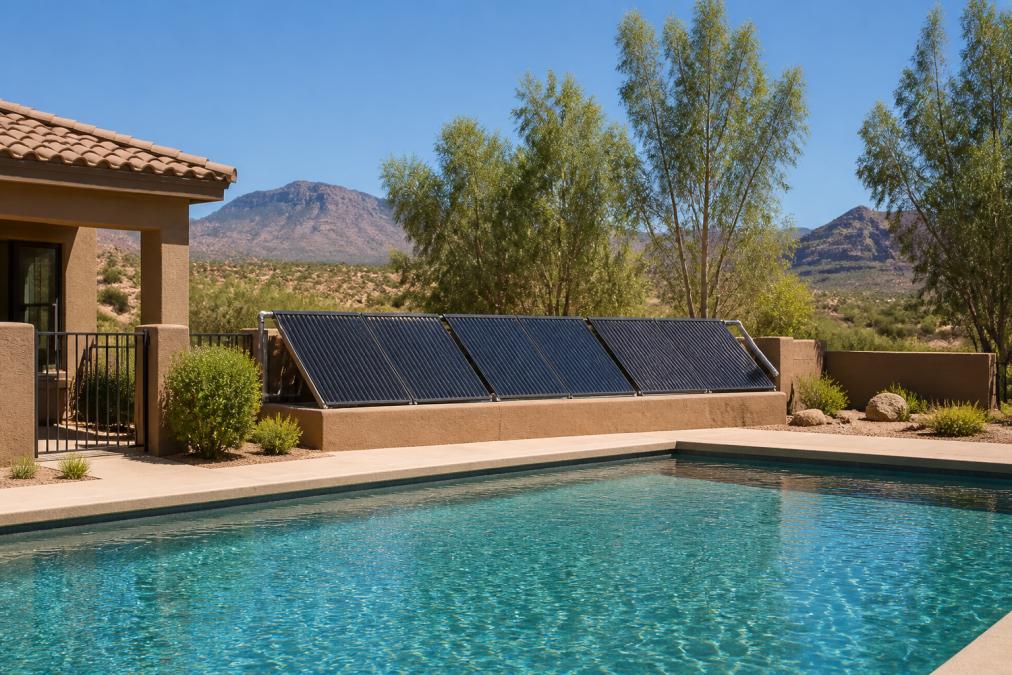
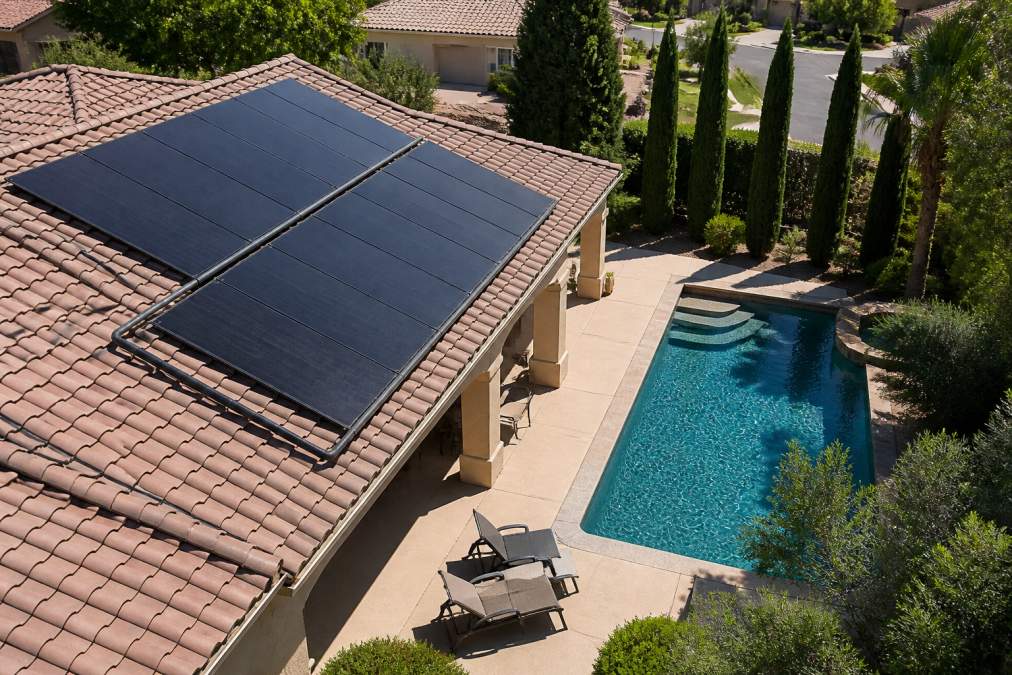
Solar collectors (panels) absorb the sun’s heat. Water circulates through those panels, getting heated in the process, then flows into your pool. A thermostat controls the flow, when panel temperature exceeds pool temperature by a set amount, the system activates. The system uses your existing pool pump and filtration equipment with no additional electrical circuits or gas lines needed. Panels last 20+ years with minimal maintenance and zero operating costs once installed.
In Utah’s climate, your pool can maintain 75-80 degrees during shoulder seasons, with steady temperature gains on sunny days in spring and longer-held temperatures in fall.
Why Solar Outperforms Gas and Electric Heating
Gas heaters and electric resistance heaters both consume expensive fuel or electricity every day they run. A gas heater might cost $500-$1,000 per season to operate; electric heaters cost similarly (energy.gov). Solar systems have zero operating costs, the sun’s energy is free, and your pool pump runs anyway for circulation and filtration.
Utah provides 250+ hours of usable sunlight per month during spring and fall, enough heat capture to maintain comfortable temperatures. Gas heaters also generate emissions and require ongoing maintenance, while solar systems need almost no maintenance beyond occasional panel cleaning.
Solar thermal heating in Utah costs nothing to operate after installation, while gas heating costs $500-$1,000 per season in fuel expenses alone.
Cost of Heating a Pool With Gas vs Solar
A gas heater costs less to install upfront ($2,000-$4,000) but requires $500-$700 per year in operating costs for shoulder season heating. Electric resistance heaters cost similarly to operate. A solar thermal system costs more upfront but has zero operating costs.
Over a 20-year system lifespan, a gas heater might cost $10,000-$14,000 in fuel alone, while a solar system costs nothing to operate. The federal government recognizes this value through tax credits for renewable energy installations. Utah also offers state tax credits specifically for solar thermal pool heating systems, and some utility companies offer rebates for switching away from gas heating.
Pool Cover Effectiveness and Installation
A pool cover is the second pillar of extending your swimming season. Covers reduce evaporation by 95%, which means less heat loss and reduced chemical treatment needs (peer-reviewed research).
Types of Covers for Heat Retention
Liquid solar covers are chemical treatments that create an invisible barrier reducing evaporation. They’re inexpensive but need reapplication every few weeks.
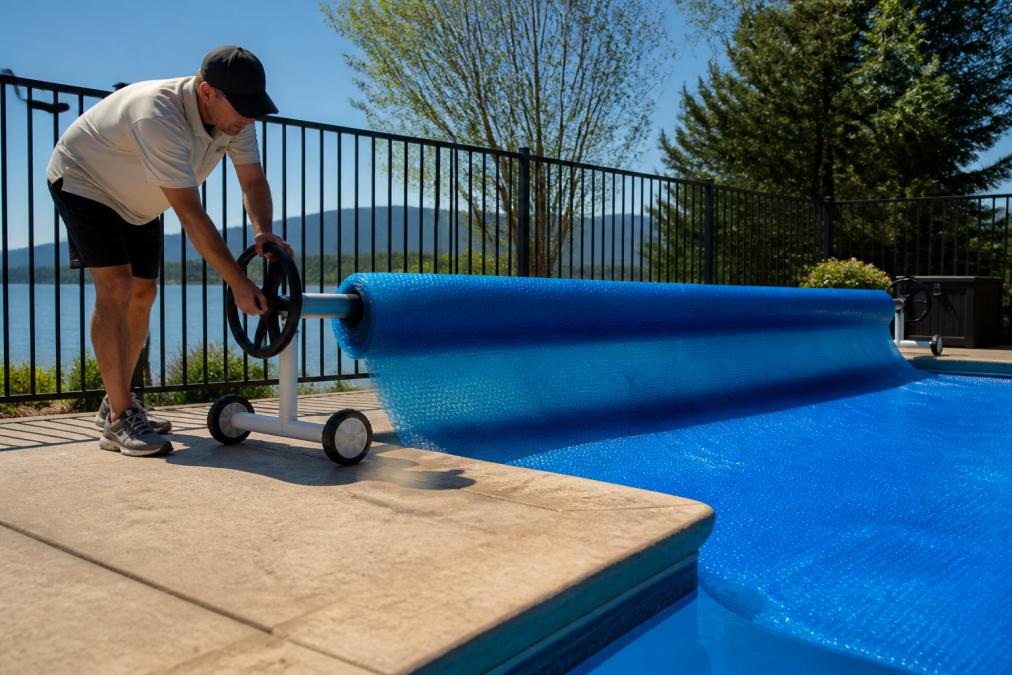
Thermal blankets are solid covers made of bubble material or foam that float on the water surface. They’re effective at reducing heat loss but require manual removal and storage.
Automatic pool cover reels are mechanical systems that roll covers across the pool surface in minutes, offering convenience without manual labor.
Solid safety covers are rigid covers providing maximum protection and required in some jurisdictions for safety.
For extending your swimming season in Utah, combine a liquid solar cover during shoulder seasons with a thermal blanket when not actively swimming. If using solar heating, the cover amplifies the effect by preventing nighttime heat loss.
Proper Installation and Maintenance
Installation depends on cover type. Liquid covers require no installation; thermal blankets need careful deployment and storage; automatic reels need professional installation. Maintenance is minimal, reapply liquid covers, clean and store thermal blankets, and inspect automatic reels occasionally. Consistency is key: deploy your cover every evening when not swimming to reduce heating needs by 20-30%.
Getting a Solar Pool Heating Quote in Utah
Every pool is different. Shading, roof orientation, pool size, and usage patterns all affect system sizing and performance.
What to Expect During a Professional Assessment
A professional assessment measures your pool’s surface area and depth, evaluates your roof or ground space for panel placement (south-facing roofs are ideal), checks for shade from trees or structures, assesses your existing pool equipment, and calculates your specific heating needs. A good assessment takes 30-45 minutes and results in a detailed proposal showing projected heating capacity, system size, installation timeline, and costs.
Tax Credits and Rebates Available
Utah offers a 25% state tax credit on solar thermal system installations, up to $2,000 per system. The federal government also supports solar thermal through tax credits. Some utility companies offer rebates for switching from gas heating, reaching $750 or more depending on your utility and system size. Combining these incentives can offset a significant portion of your installation cost.
Tax credits and rebates change annually. Verify current incentive amounts with the Utah State Tax Commission and your local utility before making your decision. Incentive eligibility depends on specific system specifications and installation timing.
Step-by-Step Plan to Extend Your Swimming Season
Spring Preparation (March-April)
Inspect your entire pool system for leaks or damage. Test and balance your water chemistry. Begin gradual heating on sunny days, expecting 2-3 degrees per week. Deploy a thermal cover at night to prevent heat loss. Expected timeline: 4-6 weeks to reach swimmable temperatures (72-74 degrees).
Shoulder Season Optimization (May-June and August-October)
Maintain consistency by keeping your cover deployed when not swimming and running your solar system daily on sunny days. By May, your pool should reach comfortable temperatures (75-80 degrees). As September approaches and ambient air temperatures drop, deploy thermal covers again and combine cover usage with active solar heating to keep your pool usable well into October.
Fall Maintenance (November)
Decide whether to close your pool or winterize it while keeping it usable. If closing, drain your solar system to prevent freeze damage and cover your pool with a solid safety cover. Store thermal covers in a clean, dry location and document your system’s performance for next year’s improvements.
The key to successful season extension is consistency. Deploy covers nightly during shoulder seasons and run your solar system daily on sunny days. These two habits alone can extend your season by 2-3 months.
Conclusion
Extending your swimming season in Utah from March through November is achievable with solar thermal heating and thermal covers. Most homeowners assume they’re limited to three months of pool use, an assumption that costs them money and lifestyle value.
Dixie Pool Solar Heating & Misting specializes in this problem. Our Heliocol thermal panels last 20+ years with virtually no maintenance, backed by a 12-year panel warranty and 2-year labor warranty. Combined with Utah’s abundant sunshine and available tax credits, solar thermal heating delivers the best return on investment for season extension.
Get a free quote from Dixie Pool Solar Heating & Misting today. Our team will assess your specific pool, roof, and usage patterns, then show you exactly how much you can extend your swimming season and what it will cost.
=== FAQ ANSWERS (audit these too, same rules) ===
[1] Q: Can solar pool heating work effectively in Utah’s cooler spring and fall months?
A: Yes. Solar thermal systems capture the sun’s heat even when air temperatures are cool, making them effective during Utah’s shoulder seasons. The key is proper system sizing and panel orientation. Professional solar pool heating assessments account for your specific location’s sun exposure patterns. Many homeowners successfully extend their swimming season from March through November using solar thermal systems, even during months when ambient air temperature drops significantly.
[2] Q: How much can I save annually by switching from gas to solar pool heating?
A: Savings depend on your current heating method, pool size, and usage patterns. Gas heaters typically cost hundreds of dollars monthly during heating season. Solar thermal systems have no operating costs once installed, potentially saving $1,500 to $2,000 annually for many homeowners. Additionally, you may qualify for a Utah State 25% tax credit or up to $2,000 in state incentives, plus utility rebates, which significantly reduce your upfront investment and accelerate your return on investment.
[3] Q: What makes pool cover effectiveness important for extending the swimming season?
A: Pool covers reduce heat loss through evaporation, which accounts for significant heat loss in cooler weather. A quality thermal blanket or liquid solar cover can maintain water temperature more efficiently, reducing the workload on your heating system. When combined with solar heating, covers extend the effectiveness of your heating solution, allowing you to maintain comfortable swimming temperatures longer into spring and fall with less energy input.
[4] Q: How do I get a solar pool heating quote in Utah and what should I expect?
A: Contact a professional solar pool heating provider for a free assessment. They’ll evaluate your pool size, sun exposure, current heating system, and local climate factors. The assessment determines the ideal system size and panel configuration for your needs. You’ll receive a detailed quote including equipment costs, installation, and available incentives. Many providers offer free quotes with no obligation, allowing you to understand your options and potential savings before making a decision.
Frequently Asked Questions
Q: Can solar pool heating work effectively in Utah’s cooler spring and fall months?
A: Yes. Solar thermal systems capture the sun’s heat even when air temperatures are cool, making them effective during Utah’s shoulder seasons. The key is proper system sizing and panel orientation. Professional solar pool heating assessments account for your specific location’s sun exposure patterns. Many homeowners successfully extend their swimming season from March through November using solar thermal systems, even during months when ambient air temperature drops significantly.
Q: How much can I save annually by switching from gas to solar pool heating?
A: Savings depend on your current heating method, pool size, and usage patterns. Gas heaters typically cost hundreds of dollars monthly during heating season. Solar thermal systems have no operating costs once installed, potentially saving $1,500 to $2,000 annually for many homeowners. Additionally, you may qualify for a Utah State 25% tax credit or up to $2,000 in state incentives, plus utility rebates, which significantly reduce your upfront investment and accelerate your return on investment.
Q: What makes pool cover effectiveness important for extending the swimming season?
A: Pool covers reduce heat loss through evaporation, which accounts for significant heat loss in cooler weather. A quality thermal blanket or liquid solar cover can maintain water temperature more efficiently, reducing the workload on your heating system. When combined with solar heating, covers extend the effectiveness of your heating solution, allowing you to maintain comfortable swimming temperatures longer into spring and fall with less energy input.
Q: How do I get a solar pool heating quote in Utah and what should I expect?
A: Contact a professional solar pool heating provider for a free assessment. They’ll evaluate your pool size, sun exposure, current heating system, and local climate factors. The assessment determines the ideal system size and panel configuration for your needs. You’ll receive a detailed quote including equipment costs, installation, and available incentives. Many providers offer free quotes with no obligation, allowing you to understand your options and potential savings before making a decision.
This article was written using GrandRanker


Leave a Reply