Table of Contents
- Why Solar Pool Heating Makes Sense for Utah Homeowners
- How Solar Pool Heating Works and What to Expect
- Understanding Solar Pool Heating Cost Estimate Factors
- Solar Thermal vs Gas Pool Heaters: Which System Wins
- Extending Swimming Season With Solar: March Through November
- Tax Credits, Rebates, and Financial Incentives Available
- Getting Your Solar Pool Heating Quote: What Happens Next
- Conclusion
Last Updated: August 29, 2026
Why Solar Pool Heating Makes Sense for Utah Homeowners
Solar pool heating is a renewable energy system that uses the sun’s thermal energy to warm your swimming pool water without relying on electricity or gas. At Dixie Pool Solar Heating & Misting, we’ve helped homeowners extend their swimming season from March through November by harnessing this abundant natural resource.
The climate in Southern Utah presents a unique opportunity for solar thermal systems. You get roughly 300 days of sunshine annually, which means your pool can stay at comfortable temperatures for most of the year, if you have the right heating solution in place (noaa.gov). Traditional gas heaters consume energy every time they run, driving up utility bills. Solar thermal collectors, by contrast, require no ongoing fuel or electricity costs once installed.
A common misconception is that solar pool heating only works in summer. Many homeowners believe spring and fall temperatures make solar heating ineffective. The reality is different. Modern solar thermal collectors capture heat even on cooler days, and when paired with a pool cover, they maintain water temperatures that keep your pool usable well into late fall and early spring.
Getting a solar pool heating quote is the first step toward understanding your actual savings potential. The quote process reveals how many collector panels you need, what your installation costs look like, and how quickly you’ll recoup that investment through reduced heating expenses.
How Solar Pool Heating Works and What to Expect
Solar pool heating operates on a straightforward principle: thermal energy from the sun heats a fluid that circulates through your pool’s existing filtration system. The system doesn’t generate electricity, it captures heat directly and transfers it to your water.
Here’s what happens during operation. Your pool pump circulates water through solar thermal collectors mounted on your roof (or another sunny location). As water passes through the collector panels, UV radiation warms the fluid inside. That heated fluid then flows back to your pool, raising the water temperature. A thermostat controls the process automatically, so your pool maintains your desired temperature without manual adjustments.
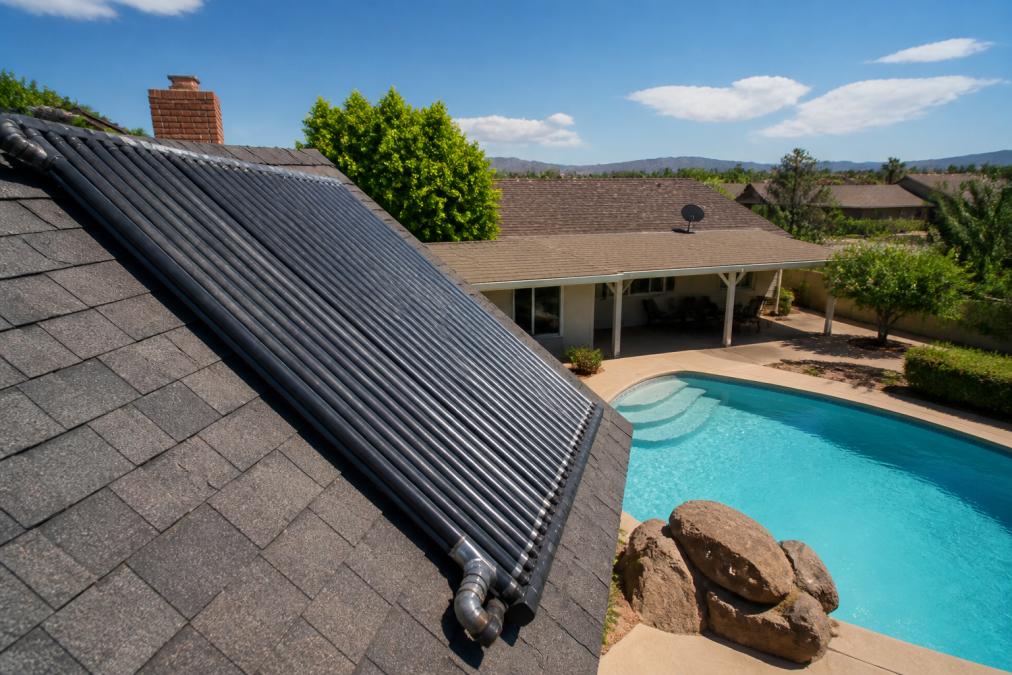
The Heliocol panels that Dixie Pool Solar Heating & Misting installs are engineered for durability and efficiency. These industrial-grade collectors last 20+ years and come with a 12-year warranty. They’re designed to withstand Utah’s weather extremes, intense sun, temperature swings, and occasional hail.
One question homeowners ask: won’t the system take forever to heat my pool in spring? The answer depends on your collector size and current water temperature. A properly sized system can raise pool temperature by 5-10 degrees in the first week of operation (peer-reviewed research). By mid-spring, your pool reaches comfortable swimming temperatures (typically 78-82 degrees) and stays there throughout the season with minimal effort.
The system integrates seamlessly with your existing pool equipment. Your current pump, filter, and circulation lines work with the solar installation, no need to replace your entire setup. The solar collectors simply become an additional heat source that your pump circulates water through.
Understanding Solar Pool Heating Cost Estimate Factors
When you request a solar pool heating quote, several variables determine your final cost. Understanding these factors helps you evaluate whether the investment makes sense for your specific situation.
System size is the primary cost driver. A larger pool or one that loses heat faster (due to shade or exposure) requires more collector panels. Homeowners often wonder: how many panels will I actually need? That depends on your pool’s square footage, your desired temperature, how many months you want to heat the pool, and how much sun exposure your roof receives. Pricing depends on quantity, dates, and delivery.
Installation complexity affects labor costs. A roof with simple access and good southern exposure is faster to install than a property with multiple roof angles or shade obstacles. Plumbing integration, how your solar system connects to your existing filtration, also influences the timeline and labor requirements.
Your current pool setup matters too. If your existing pump is undersized for solar circulation, you may need an upgrade. Some homeowners have older equipment that works fine but isn’t optimized for solar integration. Dixie Pool Solar Heating & Misting evaluates your entire system during the quote process and recommends upgrades only when necessary.
Geographic factors specific to Utah affect performance. Properties at higher elevations see different solar intensity than those in lower valleys. Seasonal shade from nearby trees or structures reduces winter efficiency. These site-specific details are factored into cost estimates because they influence how many panels you’ll need to reach your heating goals.
When you get a solar pool heating quote, the estimate should break down panel costs, installation labor, equipment upgrades, permits, and any integration work. A transparent quote shows you exactly what you’re paying for and why.
Solar Thermal vs Gas Pool Heaters: Which System Wins
Comparing solar thermal to gas heating reveals fundamental differences in how these systems operate and what they cost over time.
Gas heaters burn fuel to generate heat instantly. Turn them on, and your pool warms up quickly, often within hours. This immediate heat appeals to homeowners who want quick results. However, every time your gas heater runs, you’re paying for fuel. Operating costs accumulate month after month, year after year. A gas heater that runs regularly during the swimming season can cost hundreds of dollars annually in fuel alone.
Solar thermal systems have zero operating costs. Once installed, you pay nothing to run them. The sun provides the energy free. This means your only costs are the initial installation and occasional maintenance (which is minimal, typically just checking connections annually). Over 10-15 years, the savings compound significantly.
The real difference between solar thermal and gas comes down to your timeline and usage patterns. If you want to heat your pool occasionally for short periods, a gas heater’s flexibility is valuable. If you want consistent, season-long heating without ongoing fuel expenses, solar thermal wins decisively.
Gas heaters also require annual maintenance, inspections, filter cleaning, and occasional repairs. Solar thermal systems need almost no maintenance. The Heliocol panels are sealed units with no moving parts. There’s no combustion to maintain, no filters to replace regularly.
One consideration: gas heaters work regardless of weather. On cloudy days, a gas heater still produces heat. Solar systems are weather-dependent. However, in Utah’s climate with 300+ sunny days per year, this limitation rarely becomes a practical problem. Most homeowners find that solar thermal provides consistent heating throughout the extended swimming season.
Cost-wise, solar thermal requires higher upfront investment but delivers returns through eliminated operating expenses. Gas heaters cost less initially but drain your budget through monthly fuel bills. For homeowners planning to stay in their home for 5+ years, solar thermal typically proves more economical.
Extending Swimming Season With Solar: March Through November
Utah’s extended sunny season makes it possible to enjoy your pool for eight months instead of the typical three or four. Solar heating transforms your pool from a summer-only amenity into a year-round lifestyle upgrade.
In March, water temperatures naturally hover in the 50s, too cold for comfortable swimming. A solar thermal system begins warming the pool as soon as the sun’s intensity increases. By late April, most properly sized systems achieve 75-78 degree temperatures. This extends your season by a full month before traditional summer arrives.
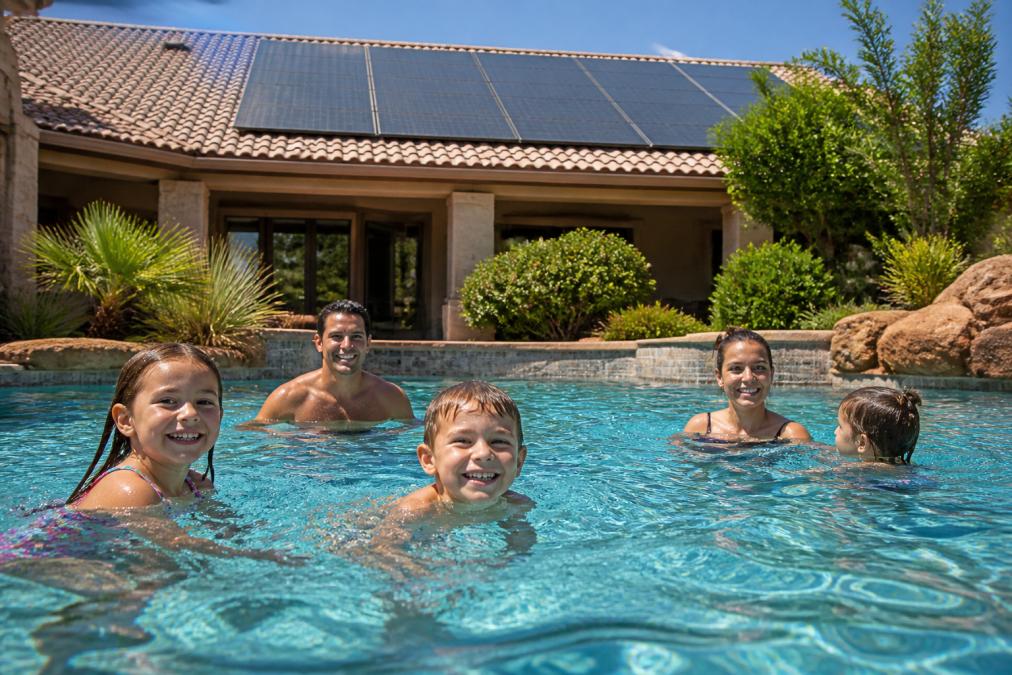
Throughout summer (June-August), your solar system maintains your pool at ideal temperatures while preventing overheating. Yes, overheating is a real concern in Utah’s intense summer sun. A properly installed system includes controls that bypass excess heat, keeping your water at your target temperature rather than turning it into a hot tub.
Fall is where solar heating shines. As outdoor temperatures drop in September and October, your gas-heated neighbors shut down their pools. Your solar system continues warming the water. Many Utah homeowners report swimming comfortably into November, sometimes even early December, thanks to solar thermal heating combined with a pool cover.
The key to extending your season is matching your system size to your goals. A homeowner who wants to swim March through May and September through November needs fewer panels than someone targeting March through November. Your solar pool heating quote accounts for these specific timing goals and recommends the right system size.
Pool covers amplify solar heating benefits. A cover reduces heat loss overnight and on cloudy days, allowing your system to maintain temperature more efficiently. Combined with solar thermal heating, a cover can extend your usable season by 4-6 weeks beyond what solar alone achieves.
Tax Credits, Rebates, and Financial Incentives Available
The financial incentives for solar pool heating in Utah make the investment more accessible than many homeowners realize. Multiple programs help reduce your out-of-pocket costs.
Utah State offers a 25% tax credit on solar thermal installations, up to $2,000 per system (tax.utah.gov). This credit applies to residential solar heating systems installed on your primary residence. The credit reduces your state income tax liability dollar-for-dollar, making it one of the most valuable incentives available. When you get a solar pool heating quote from Dixie Pool Solar Heating & Misting, we help ensure your installation qualifies for this credit.
Enbridge Gas provides a $750 rebate for customers who install solar pool heating. This program recognizes that solar thermal systems reduce reliance on gas heating. The rebate comes directly from the utility, reducing your net installation costs. Combining the state tax credit and the Enbridge rebate can offset a significant portion of your system investment.
These incentives stack, meaning you can claim both simultaneously. A homeowner installing a system could receive $2,000 from the state tax credit plus $750 from Enbridge, reducing their net cost. This dramatically improves the return on investment timeline.
Financing options also make solar heating more accessible. Many homeowners spread installation costs over 5-10 years through home equity lines of credit or solar-specific financing programs. When your monthly financing payment is lower than your previous gas heating bills, the transition feels painless.
The combination of tax credits, rebates, and financing transforms solar pool heating from a luxury upgrade into a practical investment. Your solar pool heating quote should itemize available incentives and show you exactly how they apply to your situation.
Getting Your Solar Pool Heating Quote: What Happens Next
Requesting a solar pool heating quote from Dixie Pool Solar Heating & Misting begins a straightforward process designed to give you clear, accurate information about your options.
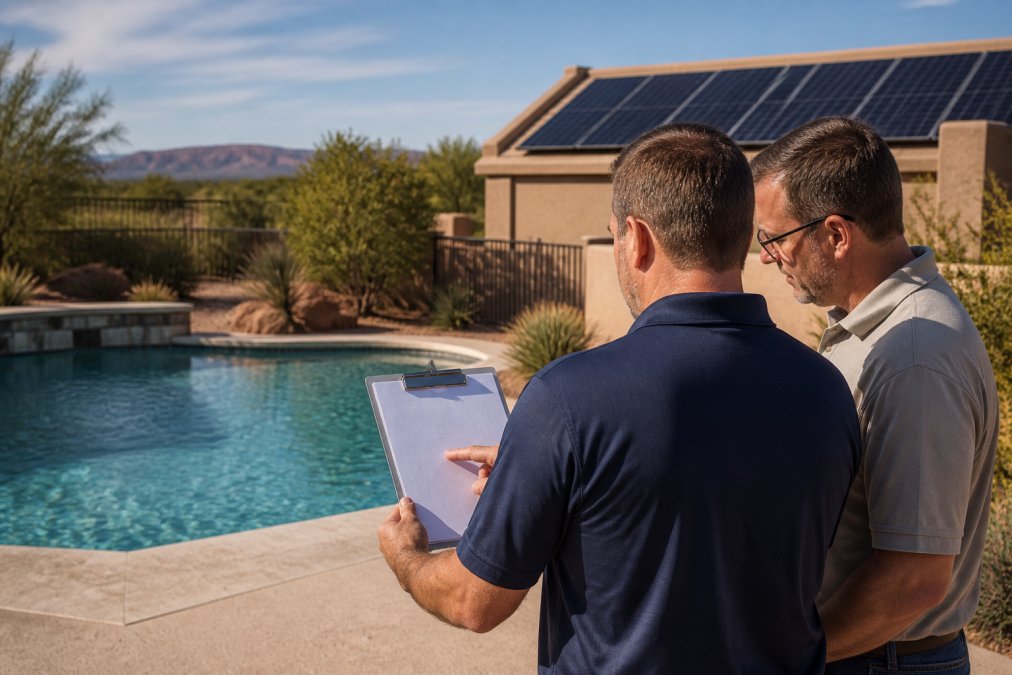
The first step is a site assessment. Our team evaluates your roof’s condition, sun exposure, and structural capacity. We measure your pool dimensions and assess your current equipment. This on-site inspection reveals details that affect your quote, things like roof pitch, shading patterns, and plumbing configuration. We also discuss your heating goals: do you want to swim March through November, or just extend spring and fall? This conversation shapes the system recommendation.
Next, we calculate the collector panels needed for your specific situation. Pool size, desired temperature, local climate data, and your roof’s solar exposure all feed into this calculation. A properly sized system balances cost with performance, big enough to heat your pool effectively but not oversized and wasteful.
We then prepare your solar pool heating quote, which includes panel costs, installation labor, equipment upgrades if needed, permits, and integration work. The quote also itemizes available tax credits and rebates, showing you the net cost after incentives. A transparent quote eliminates surprises and helps you make an informed decision.
Our 12-year warranty on Heliocol panels and 2-year warranty on labor provide confidence in your investment. If anything fails during these periods, we handle repairs at no cost. This warranty protection is rare in the industry and reflects our confidence in system quality.
Many homeowners ask: am I guaranteed to qualify for the $2,000 state tax credit and $750 rebate? We don’t make guarantees about tax credits, those depend on your individual tax situation and eligibility. However, we ensure your system is installed to qualify, and we provide documentation for your tax filing. We also handle the Enbridge rebate application process, maximizing your incentive recovery.
The installation typically takes 2-5 days depending on system size and complexity. Our team manages permits, coordinates with inspectors, and handles all integration work. You’ll have a functioning solar pool heating system with clear operating instructions before we finish.
Frequently Asked Questions
Q: How much does a solar pool heating system cost?
A: The cost of a solar pool heating system depends on your pool size, roof configuration, desired BTU output, and local installation complexity. System sizing and capacity vary by property. Rather than estimate, we recommend requesting a free quote to get an accurate price based on your specific situation and to learn about available tax credits and rebates that can offset your investment.
Q: What tax credits and rebates are available for solar pool heating in Utah?
A: Utah homeowners installing solar thermal pool heating systems may qualify for a 25% state tax credit (up to $2,000) and an Enbridge Gas rebate of $750. These incentives significantly reduce your net cost. Eligibility depends on system specifications and your tax situation. When you request a quote, our team can help clarify which incentives apply to your installation and guide you through the application process.
Q: How long does a solar pool heating system last?
A: Heliocol solar thermal collectors are built to last 20+ years with minimal maintenance. The industry-leading 12-year warranty on panels provides additional peace of mind. After 20 years, most systems continue operating efficiently, though component replacement may eventually be needed. This long lifespan makes solar thermal a durable, cost-effective heating solution compared to gas heaters that require more frequent servicing.
Q: Will solar pool heating work if my pool is shaded or I don't get strong sun in spring?
A: Solar thermal systems perform best with direct sunlight, but even partial sun generates heat. System sizing accounts for your roof's sun exposure and local climate patterns. Spring heating in Utah is feasible because the sun's intensity increases as days lengthen. A professional assessment during your quote consultation will evaluate your property's sun access and design a system sized to meet your heating goals, accounting for seasonal variations.
Extending your swimming season while reducing energy costs is achievable with the right solar thermal system. Dixie Pool Solar Heating & Misting specializes in designing and installing Heliocol solar heating systems that deliver reliable performance for 20+ years. Our industry-leading 12-year panel warranty and 2-year labor warranty protect your investment. Get a free solar pool heating quote today and discover how much you can save while enjoying your pool from March through November.
This article was written using GrandRanker


Leave a Reply