Table of Contents
- How Solar Pool Heating Works and Delivers Energy Savings
- Cost of Solar Pool Heating vs Gas: ROI and Payback Period
- Extending Swimming Season With Solar: March Through November
- Real Savings: Annual Operating Costs and Utility Bill Reduction
- Maintenance for Solar Pool Thermal Systems: What to Expect
- Environmental Impact and Tax Incentives You Qualify For
- Is Solar Pool Heating Right for Your Home?
- Frequently Asked Questions
Last Updated: October 3, 2026
How Solar Pool Heating Works and Delivers Energy Savings
Solar pool heating is a thermal energy system that captures the sun’s heat through collector panels and transfers it directly to your pool water, extending your swimming season without relying on gas or electricity. Unlike photovoltaic solar panels that generate electricity, solar thermal systems use the sun’s radiation to warm water that circulates through your pool’s existing pump system.
Here’s how the process works: water from your pool flows through flat-plate or evacuated-tube collector panels mounted on your roof. As UV radiation strikes the dark absorber surface inside these panels, thermal energy heats the water. The warmed water then returns to your pool through a thermostat-controlled valve that automatically regulates flow based on temperature. At Dixie Pool Solar Heating & Misting, we use industry-leading Heliocol panels specifically engineered for residential pool applications, with a proven lifespan exceeding 20 years.
The energy efficiency advantage is straightforward: you’re converting free solar radiation into usable heat rather than burning gas or consuming grid electricity. Your pool pump, which you’re already running for circulation and filtration, does the work of moving water through the collectors. Once installed, a solar pool heating system operates with virtually no ongoing fuel costs.
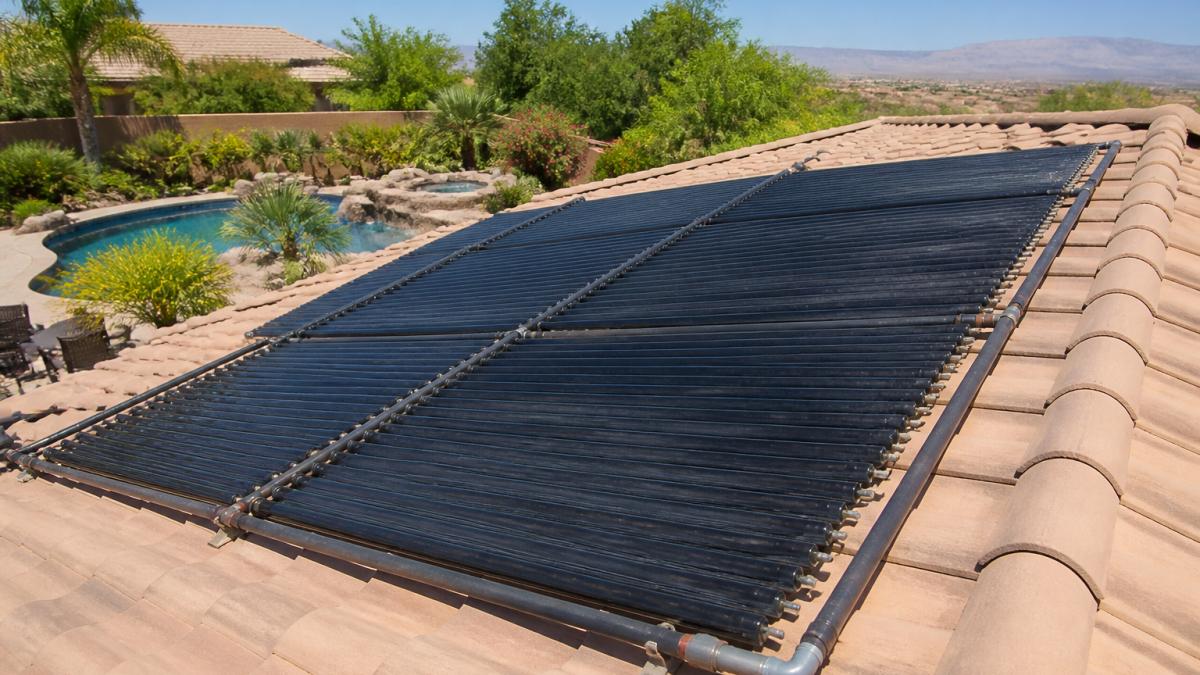
This approach works particularly well in regions with consistent sunshine. The thermal energy absorbed during daylight hours keeps your pool warm into evening, and on cloudy days, retained heat from previous sunny periods maintains comfortable temperatures. Most homeowners find they can extend their swimming season from March through November, a full eight months of usable pool time.
The key to maximizing energy savings is proper system sizing. An undersized system won’t heat efficiently; an oversized system wastes materials. A professional assessment determines the right panel area based on your pool’s surface area, local sun exposure, and desired temperature increase.
Cost of Solar Pool Heating vs Gas: ROI and Payback Period
Comparing the total cost of solar pool heating versus traditional gas heating requires looking at both upfront investment and long-term operating expenses. Gas heating demands continuous fuel purchases, your utility bills climb significantly during peak heating months as the system burns propane or natural gas to raise water temperature.
Solar thermal systems eliminate those recurring fuel costs. Once installed, your only ongoing expenses are minimal maintenance tasks like occasional filter cleaning and pump servicing, work you’d perform anyway for pool circulation. The operational cost difference is dramatic: gas heating requires constant energy input to maintain temperature, while solar heating leverages free renewable energy captured during daylight.
The payback period depends on several factors: your current gas heating costs, local sun conditions, system size, and how many months annually you heat your pool. After that window, the system continues delivering free heating for another 15+ years of panel life.
Tax incentives accelerate the financial picture. You may qualify for a Utah State tax credit covering 25 percent of system costs or up to $2,000, whichever is less. Additionally, the Enbridge Gas rebate program offers $750 toward qualifying solar pool heating installations. These incentives directly reduce your net investment.
The real financial advantage isn’t just lower monthly bills, it’s the cumulative savings over the system’s lifespan. A solar pool heating system that costs less to install than five years of gas heating bills represents exceptional long-term value.
Extending Swimming Season With Solar: March Through November
One of the most compelling benefits of solar pool heating is the dramatic extension of your usable swimming season. Without any heating system, most residential pools in this region remain too cold for comfortable swimming from November through March. Solar thermal systems change that equation entirely.
In March, as spring sunshine intensifies, your solar collectors begin capturing meaningful thermal energy. Even on cool mornings, afternoon heating can raise pool temperature 5-10 degrees above ambient air temperature. By April, consistent daily sun exposure maintains comfortable swimming temperatures. Throughout May through September, your pool stays warm enough for extended family use, water games, and recreation.
The real advantage emerges in shoulder seasons. October and November typically see air temperatures dropping, but solar collectors continue capturing afternoon heat. Homeowners report maintaining 75-80 degree water temperatures well into late fall, turning what would be a three-month swimming window into an eight-month season.
This extended usability translates directly to property value. Families with longer swimming seasons use their pools more frequently, increasing the amenity’s perceived value during home evaluations. Real estate data consistently shows that functional pool systems enhance property appeal, particularly in markets where outdoor entertainment matters.
Don’t assume cloudy or overcast days mean zero heat gain. Solar thermal panels still capture diffuse radiation on cloudy days, though at reduced efficiency. Your system continues providing heat even when direct sunshine isn’t visible, just at a slower rate than peak-sun conditions.
Real Savings: Annual Operating Costs and Utility Bill Reduction
The annual cost difference between solar pool heating and gas heating becomes apparent when you examine actual utility consumption. Gas heating systems run continuously during heating season, consuming significant volumes of propane or natural gas to maintain target water temperatures. Each degree of temperature increase requires proportionally more energy input.
Solar thermal systems have no fuel consumption. Your pool pump runs the same hours whether water flows through collectors or bypasses them, the energy cost is identical. The difference is that solar-heated water maintains temperature without additional energy input, while gas-heated water requires constant fuel combustion.
Many homeowners report annual savings ranging from $1,500 to $2,000 in reduced gas consumption, depending on heating duration and local utility rates. These savings compound year after year.
The savings accelerate when you consider that gas prices typically increase annually. A system installed today continues providing the same free heating ten years from now, while gas rates climb.
The transition from monthly gas charges to zero fuel costs creates immediate, visible savings on utility statements.
| Heating Method | Annual Fuel Cost | Monthly Average | Long-term Maintenance |
|---|---|---|---|
| Gas Pool Heating | $1,800-$2,400 | $150-$200 | Regular service required |
| Electric Heat Pump | $1,200-$1,600 | $100-$133 | Compressor maintenance |
| Solar Thermal | $0 | $0 | Minimal filter cleaning |
Maintenance for Solar Pool Thermal Systems: What to Expect
Solar pool heating systems require significantly less maintenance than gas or electric alternatives. The simplicity of thermal energy transfer, water flowing through panels and returning to your pool, eliminates many failure points present in combustion-based systems.
Annual maintenance typically involves inspecting collector panels for debris accumulation, ensuring water flow remains unobstructed, and checking thermostat controls. Most homeowners can perform basic visual inspections themselves. Professional servicing once yearly catches any issues before they escalate.
The panels themselves are remarkably durable. Heliocol panels come with an industry-best 12-year warranty on the collectors themselves, and many installations continue operating flawlessly well beyond that period. The glazing resists UV degradation, the absorber plates withstand thermal cycling, and the frame tolerates weather exposure across decades.
Your pool pump handles circulation through the solar system just as it does through filters and other equipment. No additional pumping infrastructure is needed, the existing system simply routes water through collectors when conditions favor heating. This integration minimizes complexity and maintenance burden.
Common maintenance tasks include clearing leaves or debris from panel surfaces, ensuring plumbing connections remain tight, and verifying thermostat operation. Unlike gas systems that require annual inspections for safety and efficiency, solar thermal systems need only basic attention to maintain performance.
Winterization is simple: if you close your pool seasonally, the solar system requires no special shutdown procedures. When you reopen in spring, basic system checks confirm everything operates normally. No antifreeze, no complex procedures, just straightforward preparation.
Environmental Impact and Tax Incentives You Qualify For
Solar pool heating directly reduces your household’s carbon footprint by eliminating fossil fuel consumption. Gas heating systems release CO2 and other greenhouse gases into the atmosphere with every heating cycle. Solar thermal systems generate zero emissions during operation, using renewable energy captured from the sun.
For environmentally conscious homeowners, this reduction represents a tangible contribution to climate impact reduction without lifestyle compromise, you’re simply extending your swimming season using renewable energy instead of fossil fuels.
The environmental benefit extends to energy independence. Every unit of thermal energy captured from the sun is energy not extracted from finite fossil fuel reserves. This renewable approach aligns with broader sustainability goals and reduces reliance on utility companies and energy markets.
Financial incentives recognize these environmental benefits. The Utah State tax credit for renewable energy provides 25 percent of system costs or up to $2,000, whichever is smaller. This credit applies directly to your state income tax liability, reducing your actual out-of-pocket investment.
Additionally, the Enbridge Gas rebate program offers $750 toward solar pool heating installations, acknowledging the gas consumption reduction these systems achieve. Combined, these incentives can offset a significant portion of upfront costs.
ENERGY STAR guidelines for pool heating efficiency recommend solar thermal systems as the most efficient option for pool heating when adequate sun exposure exists. This recognition reflects the technology’s proven performance and environmental credentials.
Is Solar Pool Heating Right for Your Home?
Determining whether solar pool heating makes sense for your specific situation requires honest assessment of several factors. First, evaluate your roof. Solar collectors need unobstructed south-facing exposure with minimal shade from trees or structures. East or west-facing roofs can work but deliver reduced efficiency. Your roof must have adequate structural capacity and sufficient area.
Second, consider your climate and sun exposure. Regions with consistent spring and fall sunshine maximize the season extension benefit. Areas with frequent cloud cover or heavy winter precipitation may see reduced heating efficiency during shoulder seasons.
Third, assess your current heating method. If you’re already using gas heating, the savings comparison is straightforward, you’re replacing monthly fuel costs with zero operating expenses. If your pool currently runs unheated, solar thermal systems make seasonal heating affordable without ongoing utility bills.
Fourth, evaluate your usage patterns. Families that use pools actively from March through November see maximum benefit from season extension. Seasonal users who close pools in winter may see reduced financial advantage, though the environmental impact remains significant.
Your pool’s location matters too. Pools receiving consistent afternoon sun throughout the year heat more efficiently than those in partially shaded yards. A professional site assessment identifies sun exposure patterns and determines realistic heating potential for your specific location.
Solar pool heating works best for homeowners with south-facing roof space, consistent spring and fall sunshine, active pool usage extending beyond summer months, and long-term plans to remain in their homes. The 20+ year system lifespan rewards owners who intend to enjoy the pool for many seasons ahead.
Solar pool heating transforms pool ownership by extending your swimming season, eliminating monthly heating bills, and reducing environmental impact. At Dixie Pool Solar Heating & Misting, we’ve helped Southern Utah homeowners capture the sun’s thermal energy to enjoy their pools from March through November. Our Heliocol panel systems deliver proven performance with an industry-best 12-year warranty and a 20+ year lifespan. Combined with available tax credits and rebates, solar thermal heating becomes an investment that pays dividends for two decades.
Frequently Asked Questions
How much money can you save with a solar pool heater?
Homeowners typically save $1,500-$2,000 annually on pool heating costs by switching to solar thermal systems. Actual savings depend on your current heating method, pool size, climate exposure, and how often you use your pool. Since solar pool heating has no operating costs once installed, these savings compound year after year.
How does the cost of solar pool heating compare to gas heating over time?
While gas heating has lower upfront costs, it carries ongoing fuel expenses that increase yearly. Solar pool heating requires a higher initial investment but eliminates operating costs entirely. Solar panels last 20+ years, so long-term savings are substantial.
Does a solar pool heater require a lot of maintenance?
Solar pool thermal systems require minimal maintenance. Annual inspections to check collector panel connections, water circulation, and thermostat function are recommended. Unlike gas heaters, there are no combustion byproducts, fuel lines, or complex mechanical parts to service. Most systems need only occasional cleaning of panels to remove dust or debris, a simple task homeowners can handle themselves or schedule annually with a professional.
Will solar pool heating actually work during cooler months in spring and fall?
Yes. Solar thermal systems work effectively in spring and fall because they capture the sun’s heat energy directly into water, not electricity. Even on cloudy days, UV radiation and thermal energy still reach the collector panels. High-efficiency Heliocol panels are engineered to absorb heat across a wide temperature range, allowing you to maintain comfortable pool temperatures from March through November in most climates.


Leave a Reply