Table of Contents
- How Solar Heating Works for Saltwater Pools
- Durable Solar Panels for Salt Pools: Why Corrosion Resistance Matters
- Solar Pool Heater Lifespan and Long-Term Performance
- Solar Thermal vs Gas Pool Heaters: Cost and Efficiency Comparison
- Extending Your Swimming Season: March Through November
- ROI and Tax Credits: Calculating Your Savings
- Integration with Variable Speed Pumps and Filtration
- Frequently Asked Questions
Last Updated: October 2, 2026
How Solar Heating Works for Saltwater Pools
Solar heating saltwater pools harnesses thermal energy from the sun to warm your water without relying on gas or electricity-powered heating systems. The process begins when sunlight passes through glazing on solar collector panels, converting that radiation into heat. Water circulates through the collectors, absorbs that thermal energy, and returns to your pool significantly warmer than when it left.
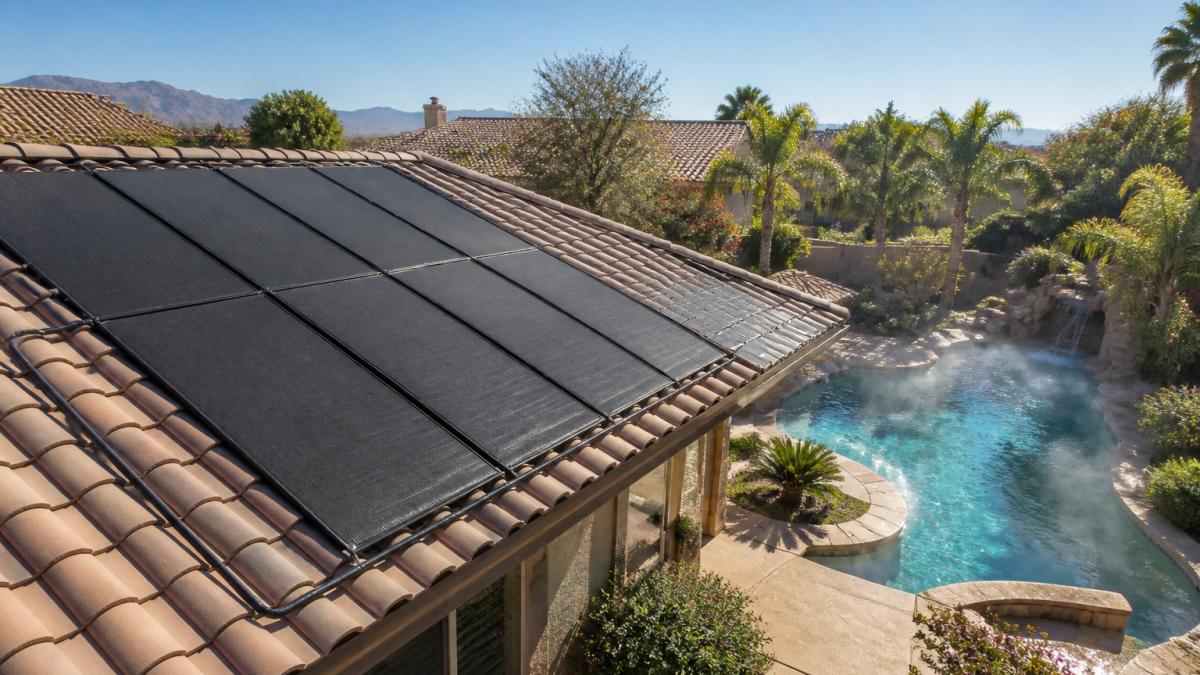
The system integrates directly with your existing pool filtration setup. Your variable speed pump pulls water through the filter, then diverts it through the solar collectors before returning it to the pool. No additional equipment or complex plumbing is required, the collectors simply become another component in your circulation loop. This integration means your solar heating for saltwater pools operates passively once installed, requiring no daily adjustments or monitoring.
Saltwater pools present unique challenges for solar collectors because chlorine generated through salt chlorination is more corrosive than traditionally added chlorine. Heliocol panels, which Dixie Pool Solar Heating & Misting installs, use polypropylene construction specifically engineered to resist this corrosive environment. Unlike metal or copper collectors that degrade quickly in saltwater conditions, polypropylene maintains its structural integrity year after year, making it the industry standard for salt pool applications.
The efficiency of your solar collectors depends partly on ambient temperature and sun angle. In spring and fall, collectors still generate significant heat, they’re not just for summer. Even on partly cloudy days, thermal collectors continue warming your water, though at reduced rates compared to full sun.
Durable Solar Panels for Salt Pools: Why Corrosion Resistance Matters
Durable solar panels for salt pools must withstand constant exposure to corrosive saltwater vapor and chlorine byproducts. This is where material selection becomes critical. Copper or aluminum collectors, common in traditional pool heating, corrode rapidly when exposed to salt chlorination systems. Within a few years, corrosion can compromise the panels’ structural integrity and reduce heat transfer efficiency.
Polypropylene panels resist this corrosion because the material doesn’t react chemically with chlorine or salt. The panels maintain their thermal properties throughout their operational life, ensuring consistent performance whether you’re heating in March or November. This durability directly impacts your long-term investment, you’re not replacing corroded collectors every five to seven years.
Heliocol panels feature a glazed design that maximizes solar radiation absorption while the polypropylene frame and tubing withstand saltwater exposure indefinitely. The glazing acts as a thermal barrier, trapping heat inside the collector while allowing sunlight to penetrate. This design has proven effective across thousands of installations in coastal and inland regions where saltwater pools are prevalent.
Installing non-corrosion-resistant collectors on a saltwater pool is a costly mistake. Metal collectors may seem cheaper upfront, but they’ll require replacement within 5-7 years as corrosion degrades performance. Polypropylene panels cost more initially but eliminate this recurring expense entirely.
Solar Pool Heater Lifespan and Long-Term Performance
A solar pool heater lifespan depends almost entirely on panel material and installation quality. Heliocol panels consistently deliver 20+ years of reliable operation when properly installed and maintained. This exceptional lifespan stems from the polypropylene construction combined with minimal moving parts, there’s no compressor, no pump within the panels themselves, and no mechanical components that wear out over time.
The industry-leading 12-year warranty that Dixie Pool Solar Heating & Misting provides on all installed panels reflects confidence in this durability.
Maintenance requirements remain minimal throughout the lifespan. Solar collectors need occasional inspection and cleaning. Dust, pollen, and debris can reduce glazing transparency, but a simple rinse with water restores collector efficiency.
The 20+ year lifespan of quality solar panels means you’re investing in a heating solution that will outlast most other pool equipment. When you factor in zero operating costs and minimal maintenance, the long-term economics become compelling.
Solar Thermal vs Gas Pool Heaters: Cost and Efficiency Comparison
Solar thermal vs gas pool heaters represents a fundamental choice between renewable and fossil fuel heating. Gas heaters operate on demand, you turn them on, they burn fuel, and they heat your pool quickly. This convenience comes with ongoing costs: natural gas consumption, annual maintenance, and eventual replacement. Gas heaters typically last 8-10 years before requiring significant repair or replacement.
Solar thermal systems operate differently. They generate no operating costs because they use free solar energy. Your only expenses are the initial installation and occasional maintenance. Over a 20-year period, the cost difference becomes substantial. A gas heater running incurs fuel costs every month, while a solar system generates heat at zero marginal cost once installed.
Efficiency comparisons favor solar thermal in most climates. While solar collectors convert incoming solar radiation into usable heat, remember that solar energy is free and infinitely renewable. A solar collector achieving efficiency on free energy beats the economics of a gas heater.
| Heating Method | Operating Cost | Lifespan | Maintenance | Environmental Impact |
|---|---|---|---|---|
| Gas Heater | $1,500-$2,500/year | 8-10 years | Annual service required | Fossil fuel consumption |
| Solar Thermal | $0/year | 20+ years | Minimal (cleaning only) | Zero emissions |
The comparison becomes even more favorable when you consider available incentives. According to the U.S. Department of Energy’s renewable energy tax credit information, federal tax credits support solar thermal installations. Additionally, many states offer their own incentives. In your region, you may qualify for a 25% state tax credit or a $2,000 credit, plus a $750 gas rebate when switching away from gas heating. These incentives effectively reduce your solar installation cost, improving ROI substantially.
Extending Your Swimming Season: March Through November
Extending your swimming season represents the primary benefit of solar heating saltwater pools. Without supplemental heating, most pools in this region remain too cold for comfortable swimming from November through February. Solar heating raises water temperature into a comfortable range, creating conditions for extended use.
The extension works in both directions. In March, as days lengthen and solar intensity increases, your collectors begin warming the pool steadily. By mid-March, most pools reach swimmable temperatures. This early-season heating means your pool is ready when you are, rather than waiting until June when water naturally warms. Similarly, as fall arrives and temperatures drop, solar heating maintains comfortable water temperatures through October and into November.
The seasonal extension adds months of usable pool time annually. For families, this means more summer activities, outdoor entertaining, and recreation. For fitness-focused pool users, it enables year-round swimming without traveling to indoor facilities. The psychological benefit of having your pool available for nine months rather than four is significant, you’re maximizing your property investment.
Variable speed pumps enhance this seasonal extension by optimizing circulation during cooler months. When water temperature is low, the system runs the pump at lower speeds, reducing energy consumption while still moving water through the solar collectors. As temperatures rise, the pump adjusts automatically, maintaining efficient heat transfer.
ROI and Tax Credits: Calculating Your Savings
Calculating ROI for solar heating for saltwater pools requires understanding both direct savings and available incentives. Direct savings come from eliminating gas heating costs. A typical pool running a gas heater during the March-November season incurs substantial fuel expenses. Solar thermal systems eliminate these costs entirely, once installed, the sun provides free heat indefinitely.
Your actual savings depend on several factors: current gas usage, local utility rates, and how intensively you use your pool. However, even seasonal pools generate significant savings when you eliminate heating expenses. Many homeowners report annual savings in the range that makes the investment pay for itself within a reasonable timeframe.
Federal and state incentives accelerate ROI considerably. According to the Utah State Energy Office’s renewable energy incentive programs, homeowners may qualify for a 25% state tax credit or a $2,000 maximum credit on solar thermal installations.
When calculating your personal ROI, account for the 12-year warranty on Heliocol panels. This warranty period often aligns closely with your payback timeline. After the payback period expires, every additional year of operation represents pure savings with zero heating costs.
To estimate your specific savings, consider your current monthly heating costs during the pool season. This becomes your annual savings once solar heating is installed. Solar thermal systems eliminate this expense, creating significant annual savings.
Integration with Variable Speed Pumps and Filtration
Integration with variable speed pumps and filtration systems creates an optimized heating solution that maximizes efficiency across seasons. Variable speed pumps adjust their operating speed based on heating demands and ambient conditions. During cooler months when solar intensity is lower, the pump runs at reduced speed, maintaining adequate flow through collectors without wasting energy.
Frequently Asked Questions
How long do solar pool heaters last?
Quality solar heating systems, particularly those using polypropylene panels like Heliocol, typically last 20+ years with minimal degradation. The panels themselves are designed to withstand UV radiation and temperature fluctuations without losing efficiency. With proper maintenance and professional installation, your solar pool heater lifespan can extend well beyond two decades, making it a durable long-term investment for your saltwater pool.
Are solar panels compatible with saltwater pool systems?
Yes, but compatibility depends on using corrosion-resistant materials. Durable solar panels for salt pools must be constructed from polypropylene or similar non-metallic materials that resist the corrosive effects of saltwater chlorination. Standard copper or aluminum collectors will corrode rapidly in saltwater environments. When properly selected and installed, solar collectors integrate seamlessly with saltwater pools. Professional installation ensures all connection points and heat exchangers are also saltwater-compatible.
Will solar heating actually save me money compared to gas heating?
Solar thermal systems typically deliver $1,500-$2,000 in annual savings on pool heating costs, with zero operating expenses once installed. Gas heaters consume fuel continuously and require ongoing maintenance. The ROI depends on your local climate, pool size, and sun exposure, but most homeowners see payback within 5-7 years. Additional incentives like the Utah State 25% tax credit (up to $2,000) and utility rebates accelerate your return. Solar thermal vs gas pool heaters favors solar when you factor in 20+ year lifespan and cumulative energy savings.
How do I know if solar heating makes sense for my pool usage?
Solar heating benefits pools used year-round or seasonally. The key is adequate sun exposure and compatible system sizing. If your pool receives 6+ hours of direct sunlight daily and you want to extend your season from March through November, solar heating delivers measurable value. A professional assessment of your roof, pool size, and climate zone determines whether the investment aligns with your usage patterns.


Leave a Reply