Table of Contents
- Why Saltwater Pools Need a Different Solar Heater
- How Solar Pool Heaters Work With Salt Systems
- Durable Solar Panels for Salt Pools: What to Look For
- Solar Pool Heating System Installation Cost and What Affects It
- Saltwater Pool Heater Maintenance Tips for Long Panel Life
- Integrating a Solar Pool Heater With Your Salt System and Automation
- Climate, Freeze Protection, and Year-Round Performance
- Frequently Asked Questions
Last Updated: September 16, 2026
Why Saltwater Pools Need a Different Solar Heater
The best solar pool heater for saltwater systems is one built around corrosion-resistant materials, because salt cells and chlorinated water attack the same metals that standard collectors rely on.
Saltwater pool corrosion is the electrochemical breakdown of metal components exposed to dissolved salt and the chlorine a salt chlorine generator produces from it. It shortens system longevity in ways freshwater pools rarely see. A collector rated for a freshwater pool can fail early when it sits downstream of a salt cell.
That changes what you should buy.
How Solar Pool Heaters Work With Salt Systems
A solar pool heater works by pumping pool water through UV-stabilized collectors, where solar gain raises the water temperature before it returns to the pool. A diverter valve controls how much flow passes through the panels versus bypassing them, and the pool pump supplies the flow rate the collectors need.
Never install a metal-absorber collector downstream of a salt chlorine generator without confirming it’s rated for saltwater. The chlorine the cell produces accelerates corrosion at the manifold and fittings, and a failed absorber usually means replacing the whole panel.
Durable Solar Panels for Salt Pools: What to Look For
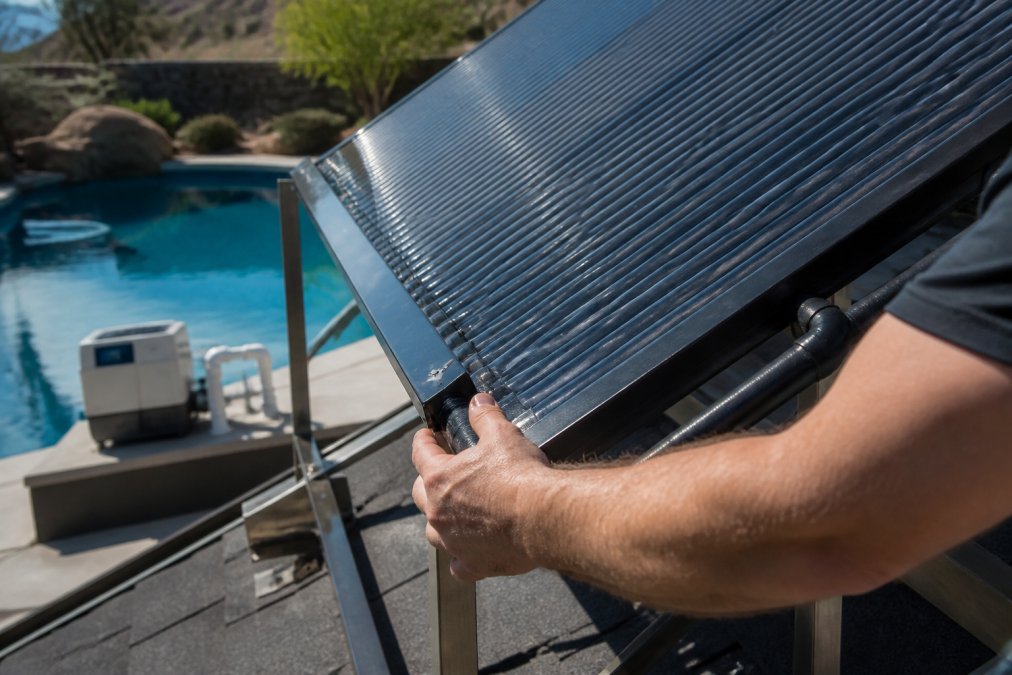
Durable solar panels for salt pools use corrosion-resistant thermoplastics, sized so the collector surface area matches your pool volume and pump output. Get either wrong and you’ll either underheat the pool or stress the panels.
Materials That Resist Saltwater Corrosion
The material matters more than the marketing. Look for:
- Polypropylene or thermoplastic absorbers with no exposed metal in the water path
- UV-stabilized formulations, since constant sun exposure degrades untreated plastic
- Corrosion-resistant manifolds and mounting hardware rated for coastal or salt-heavy water
- A weatherproof design that survives hail, wind, and freeze cycles
Panel choice decides how long the system lasts. Dixie Pool Solar Heating & Misting installs Heliocol panels built for this exact environment, backed by a 12-year warranty on every panel.
Sizing and Flow Rate for Your Pool
Size the system by collector surface area, not guesswork. A common rule is matching collector area to a percentage of pool surface area, then confirming your pool pump compatibility and flow rate can push water through the panels without excessive pressure drop.
| Pool Consideration | What to Check | Why It Matters |
|---|---|---|
| Pool volume | Gallons to heat | Sets total collector area needed |
| Pump output | Flow rate at panel height | Too low starves the collectors |
| Panel placement | Roof-mounted or rack-mounted | Affects head pressure and BTU output |
| Salt system type | Chlorine generator output | Determines corrosion risk to metals |
Measure your pump’s actual flow rate at the height the panels will sit, not at the equipment pad. Roof-mounted systems lose flow to head pressure, and a pump that’s fine on the ground can starve a second-story array.
Solar Pool Heating System Installation Cost and What Affects It
Solar pool heating system installation cost depends on collector area, mounting method, plumbing distance, and whether your existing pump and filtration system can handle the added loop. There’s no single figure, and any installer quoting one without seeing your equipment pad is guessing. But you can still build a realistic budget by pricing the four components that drive almost every quote.
The Four Cost Buckets
1. Collectors (the largest line item). Unglazed, UV-stabilized polypropylene mats are the workhorse for pool heating and are priced per square foot of collector area. A typical residential array runs 200-400 sq ft, so collector cost scales directly with pool size and how much of the season you want to extend. Because saltwater systems require non-metallic absorbers, you are not paying a premium for the material itself, you are avoiding the metal-absorber panels that would fail early downstream of a salt cell.
DIY vs. Professional Installation
A DIY install can cut labor, but the hidden costs are real: roof-penetration leaks, undersized plumbing that starves the collectors, missing freeze-protection valves, and voided panel warranties if the manufacturer requires a licensed installer.
What to Ask Every Installer
- A line-item quote separating collectors, mounting, plumbing, valves, and any pump upgrade
- Confirmation the collectors are rated for saltwater and carry a written warranty
- Whether the quote includes freeze protection and automation wiring
- The expected flow rate at the array height, not at the equipment pad
Dixie Pool Solar Heating & Misting provides free quotes so you get a real number based on your pool, not a national average. Pricing depends on your specific layout and panel count, so request a quote for current figures.
Saltwater Pool Heater Maintenance Tips for Long Panel Life
Saltwater pool heater maintenance tips come down to three habits: keep the panels clean, watch the flow, and protect the loop from freezing. Seasonal maintenance takes an afternoon, not a weekend.
- Rinse collector surface area periodically to clear dust and debris that block solar gain
- Check flow rate and clear any pressure drop caused by clogged panels or valves
- Inspect the diverter valve and manifold connections for leaks or salt buildup
- Flush the heat exchanger loop if your system uses one
- Confirm the chlorine generator isn’t pushing chlorine levels above the panels’ rating
Integrating a Solar Pool Heater With Your Salt System and Automation
Integration is where a good system becomes a great one. A properly integrated solar pool heater ties into your existing pool automation so the diverter valve opens only when the panels are warmer than the pool, protecting both efficiency and equipment.
The single biggest integration win is automation-controlled valve timing. A panel that runs when it’s colder than the pool actually cools your water and wastes pump energy.
Climate, Freeze Protection, and Year-Round Performance
Freeze protection is non-negotiable in cold snaps, even in a warm climate. Water left sitting in uninsulated collectors can freeze and crack the tubing, which is why a drain-down or automated freeze cycle matters. The two common approaches are an automated valve that drains the array back to the pool when ambient temperature approaches freezing, and a freeze-stat that runs the pump to keep water moving.
Sizing by Climate, Not Guesswork
Most guides tell you to match collector area to a percentage of pool surface area and stop there. That rule ignores the two variables that actually decide performance: peak sun hours and average ambient temperature during the months you want to swim.
- High sun, warm ambient (desert Southwest, inland valleys). A smaller array relative to pool surface area can carry the season because solar gain is strong and heat loss overnight is modest. A pool cover becomes the single highest-return add-on here.
- Moderate sun, cool nights (most of the country). You need a larger array relative to pool surface area, and a cover is effectively mandatory, without it, overnight heat loss can erase most of the day’s gain.
- Low sun, cold ambient (northern and coastal). Solar heating still works, but it extends the shoulder season rather than heating year-round. Size the array generously and expect the pump to run longer cycles.
Orientation, Tilt, and Shading
Array output depends heavily on orientation and tilt. In the northern hemisphere, collectors should face as close to true south as your roof allows, with tilt roughly matched to your latitude minus 10-15 degrees for pool heating (flatter than solar-electric panels, because you want peak output in summer, not winter). Even partial afternoon shade on a single panel can drop the whole array’s output, because panels are plumbed in series, one shaded panel restricts flow for the rest.
The Saltwater Twist on Climate Performance
Saltwater systems add one climate consideration most guides skip: the salt cell runs more in warm months, so chlorine concentration in the loop is highest exactly when the solar array is working hardest. That combination is why non-metallic, UV-stabilized polypropylene collectors matter more in hot, high-use climates than in mild ones. A metal-absorber panel that survives a short season in a cool climate may corrode quickly in a long, hot, high-chlorine season.
Frequently Asked Questions
Do all solar pool heaters work with saltwater systems?
No. Saltwater pools carry a corrosive load that standard panels may not survive. Panels made with UV-stabilized polypropylene and corrosion-resistant manifolds handle saltwater well, while lower-grade plastics and metal components can pit or degrade. Before buying, confirm the panel material and that the manufacturer supports salt system use. A solar pool heater built for saltwater will protect your investment and keep thermal efficiency steady for years.
Why is corrosion a concern for solar pool heaters in saltwater pools?
Saltwater pool water carries dissolved chloride that attacks metal fittings, headers, and heat exchangers over time. Even small amounts of saltwater weeping at connections can corrode standard hardware. Choosing panels with thermoplastic headers, UV-stabilized polypropylene absorbers, and corrosion-resistant mounting hardware reduces that risk. Pairing the heater with a proper diverter valve and regular rinsing of exposed metal parts also limits salt buildup and extends system longevity.
How much does a solar pool heating system cost to install?
Solar pool heating system installation cost depends on collector surface area, roof or rack mounting, plumbing integration, and whether you tie into existing pool automation. Because every pool is different, the best way to get an accurate figure is a site assessment and written quote. Dixie Pool Solar Heating & Misting offers a free quote so you can see the numbers for your specific pool, roof layout, and salt system before committing.
Can I use Heliocol panels with a saltwater pool system?
Yes. Heliocol panels are built with UV-stabilized polypropylene and corrosion-resistant manifolds, which is why they hold up in saltwater pools. Dixie Pool Solar Heating & Misting installs Heliocol panels with an industry-best 12-year warranty on the panels and a 2-year labor warranty on the rest of the work. That coverage matters in salt environments, where cheaper panels often fail early and leave owners facing replacement costs.
Heating a saltwater pool with solar works when the panels are built for salt and the system is sized for your pump. Most failures trace back to a mismatched collector or a shortcut on freeze protection, not the technology itself. Dixie Pool Solar Heating & Misting installs Heliocol panels with a 12-year warranty, a 2-year labor warranty, and integration built for your existing salt system and automation. Get a free quote and see how much of your season you can reclaim.
 Dixie Pool Solar Heating & Misting
Leave a comment