Table of Contents
- How Solar Pool Panels Save Energy: The Simple Mechanics
- Solar Thermal vs. Photovoltaic: Why Panels Beat PV for Pools
- The Real Numbers: Solar Pool Heating Cost vs Gas
- Solar Pool Heater Tax Credit 2026: What You Can Claim
- Installation and System Components That Maximize Savings
- How to Maintain Solar Pool Panels for 20+ Years of Service
- Conclusion: Is Solar Pool Heating Worth the Investment?
- Frequently Asked Questions
Last Updated: September 6, 2026
How Solar Pool Panels Save Energy: The Simple Mechanics
Solar pool panels save energy by using the sun’s thermal energy to heat water directly, bypassing the electricity or gas that conventional heaters demand. Rather than converting sunlight into electricity and then back into heat, these systems circulate pool water through dark, sun-exposed collectors where heat transfers straight into the water. Solar pool panels save energy because they eliminate the middleman: no combustion, no electric resistance elements, and no fuel purchase.
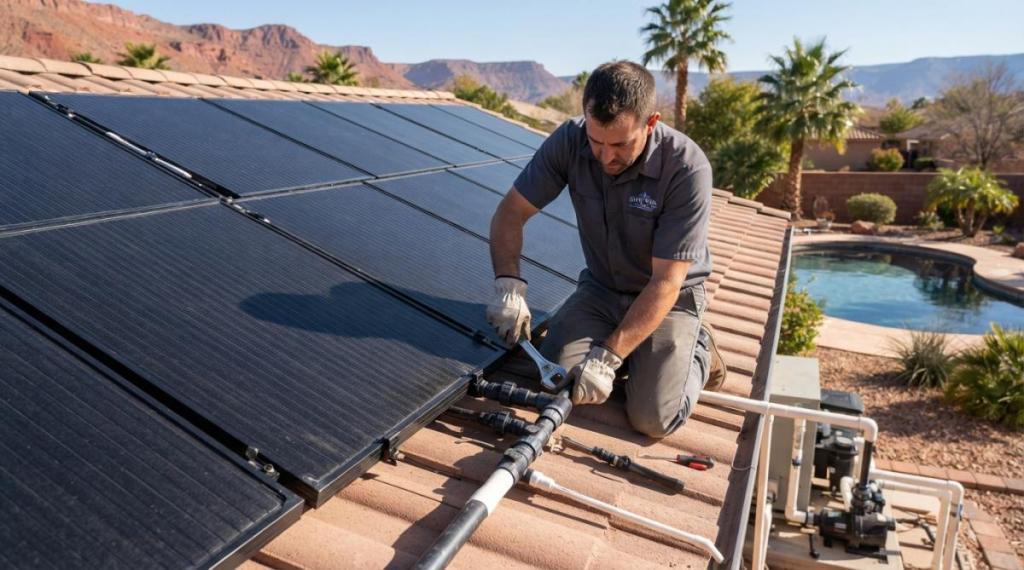
The process is remarkably straightforward. A differential controller monitors the temperature difference between the pool water and the solar collectors. When the collectors are warmer, a valve redirects water from your pool pump up to the roof-mounted panels. As that water passes through the tubes, it absorbs thermal energy and returns to the pool several degrees warmer. The system runs only when heat is available, so pump runtime stays efficient rather than burning energy on cloudy days.
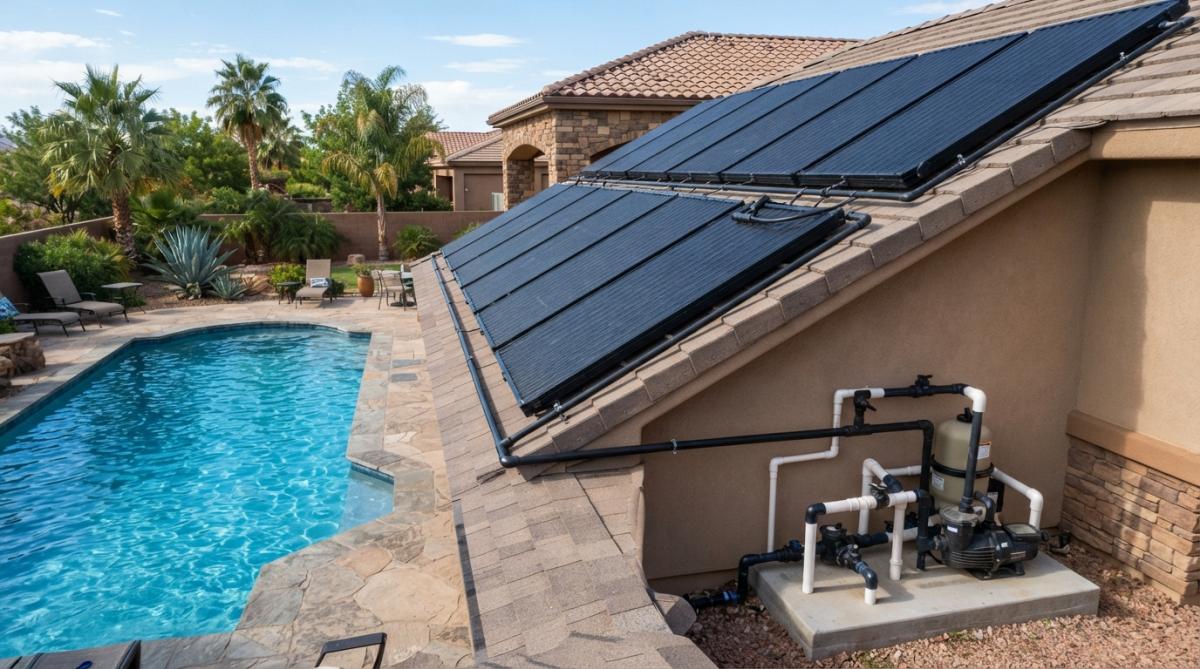
This guide explains how solar pool panels save energy, what they cost compared to gas, and how to keep them running for decades.
Solar Thermal vs. Photovoltaic: Why Panels Beat PV for Pools
Solar pool panels are a fundamentally different technology from the photovoltaic panels used for home electricity. Photovoltaic panels convert sunlight into electricity, which then must power a heat pump or resistance heater to warm your pool. Each conversion step loses energy. Solar thermal collectors skip the electrical step entirely, delivering heat directly to the water.
That distinction matters for swimming pools because heating water is an energy-intensive job. A typical pool needs a large surface area of collectors to raise water temperature meaningfully, and thermal collectors achieve this with far less installed footprint than PV arrays producing equivalent heat. The [U.S. Department of Energy’s guide to solar pool heating(/2026/08/27/solar-pool-heating-installation-cost-guide/) | energy.gov] notes that solar pool heating systems are one of the most cost-effective uses of solar energy in the country, precisely because they avoid the efficiency losses of conversion.
For homeowners comparing options, the practical difference is simple: PV panels reduce your electric bill, but solar thermal panels eliminate your pool heating bill almost entirely. Many homeowners find that pairing solar thermal for the pool with a smaller PV array for the home delivers the best overall return.
The Real Numbers: Solar Pool Heating Cost vs Gas
When comparing solar pool heating cost vs gas, the deciding factor is operating expense over the system’s lifetime. A gas heater carries a significant upfront price tag plus every therm of fuel it burns each season. A solar thermal system carries a higher initial investment but near-zero operating costs, because sunlight is free.
To make the comparison concrete, consider a typical unglazed polymer collector system sized for a 20,000-gallon pool in a warm climate. That system carries an initial investment, depending on roof complexity and local labor rates. A new gas heater of comparable heating capacity also has an installed cost. The gap is real, but it closes quickly.
Natural gas prices fluctuate, though regional spikes can push rates higher in winter months. A gas heater warming a 20,000-gallon pool from 70°F to 82°F consumes fuel per hour of operation. Running that heater through a season adds up to significant annual costs in fuel alone, before accounting for annual service calls and the eventual replacement of the heater unit itself.
A solar thermal system, by contrast, has no fuel line. The only operating cost is the small amount of electricity the pool pump uses to circulate water through the collectors. Over the same 10-year period, total operating costs for solar are minimal.
The payback calculation follows directly. With an installed solar system and average annual gas savings, the break-even point can be achieved in a few years in sunny, high-utility-rate regions. In cooler climates with shorter swimming seasons, annual savings may be lower, pushing payback to a longer period, still well within the 20+ year lifespan of quality panels.
A common mistake is comparing only purchase prices without accounting for fuel. Gas prices fluctuate, and a heater running several hours daily through the season consumes fuel steadily. Solar thermal systems, by contrast, have no fuel line at all.
| Heating Method | Upfront Cost (Installed) | Annual Operating Cost | Lifespan | Maintenance |
|---|---|---|---|---|
| Gas Heater | $2,500 – $4,000 | $1,000 – $1,800 (fuel) | 5-10 years | Annual service, ~$150/yr |
| Solar Thermal | $4,000 – $6,500 | $15 – $45 (pump electricity) | 20+ years | Minimal, occasional cleaning |
| Electric Heat Pump | $3,500 – $6,000 | $600 – $1,200 (electricity) | 10-15 years | Occasional filter cleaning |
The figures above are national averages and regional estimates. Your actual costs depend on local utility rates, pool size, sun exposure, and the specific equipment you choose. Obtain itemized quotes from at least two licensed installers before making a purchase decision.
For homeowners in states with above-average electricity rates, California, Hawaii, and parts of the Northeast, the savings case strengthens further. The Energy Saver guidance on swimming pool heating confirms that solar pool heaters are most economical in areas with high utility rates and long swimming seasons, where they typically pay for themselves faster than other options.
Solar Pool Heater Tax Credit 2026: What You Can Claim
The solar pool heater tax credit 2026 landscape includes both federal and state incentives that can substantially offset your installation cost. At the federal level, residential solar equipment has historically qualified for the Investment Tax Credit, though eligibility and percentages have shifted in recent years. Because rules change, confirming current terms with the IRS guidance on energy credits before you commit is essential.
State-level incentives can be even more generous for pool owners. In Utah, homeowners may qualify for a state tax credit covering a portion of their solar pool heating installation, which can significantly shorten the payback period. Dixie Pool Solar Heating & Misting helps homeowners understand which credits apply to their situation, though final qualification depends on your individual tax circumstances and current law. Eligible for Utah State 25% or $2,000 State Tax Credit, Eligible for Enbridge Gas $750 Gas Rebate
Do not assume you qualify for every incentive you read about. Tax credits often carry caps, income limits, and installation deadlines. Verify your eligibility with a tax professional before purchasing, and confirm that your installer documents the system properly for credit claims.
Installation and System Components That Maximize Savings
The components of a solar pool heating system determine how effectively it captures and delivers heat. The collectors themselves are the heart of the system, and the material matters more than most guides acknowledge. Three collector types dominate the U.S. market, and each has a distinct role.
Unglazed polypropylene panels are the most common choice for seasonal pools in warm climates. These lightweight, UV-stabilized polymer panels cost the least per square foot and perform well when air temperatures stay above 50°F. Their dark color absorbs sunlight efficiently, but they lose heat quickly in wind or cool air. Most manufacturers rate their output at roughly 900 to 1,100 Btu per square foot per day under full sun.
Rubber mat collectors, often EPDM-based, are flexible and freeze-tolerant, making them a durable option for colder climates. They carry a slightly higher price than polypropylene but resist degradation from chlorine and UV exposure better over time. Their thermal performance is comparable, though the thicker rubber walls can slow heat transfer slightly.
Glazed collectors with a glass or polymer cover and a copper or aluminum absorber plate are the premium option. The glazing traps heat and blocks wind, so these units maintain high efficiency even when air temperatures drop below 50°F or breezes pick up. They typically deliver 1,400 to 1,800 Btu per square foot per day, roughly 50% more than unglazed panels, but cost two to three times more per square foot. For year-round pools or installations in cooler northern states, the added cost often pays for itself in reduced collector area and longer swimming seasons.
Collector surface area should roughly match your pool’s surface area for meaningful temperature rise in most regions. A 20,000-gallon pool with 400 square feet of surface area typically needs 400 to 500 square feet of unglazed collectors, or 250 to 350 square feet of glazed collectors, to raise water temperature by 10°F to 15°F during peak season.
Roof orientation and azimuth play a major role in performance. South-facing roofs with an unobstructed view of the sun capture the most thermal energy, though east or west exposures still deliver useful heat in many cases. A differential controller manages flow rate automatically, ensuring water circulates only when the collectors are warmer than the pool. This protects pump efficiency and prevents nighttime heat loss.
Retrofitting vs. new construction is a decision most guides skip, but it shapes both cost and design. For new pools, solar integration happens during the plumbing phase, the builder runs dedicated supply and return lines, installs a three-way valve, and mounts collectors before the roof finish is finalized. This approach typically saves on labor compared to retrofits because there is no need to cut into finished decking or reroute existing pipes.
Retrofits on existing homes require evaluating the roof structure first. A typical unglazed collector array has a certain weight when dry and slightly more when filled with water. Most asphalt shingle roofs handle this load without reinforcement, but tile, slate, or older roofs may need structural assessment. Ground-mounted systems are a practical alternative when roof orientation is poor or the roof is nearing replacement age. Ground mounts cost more for trenching and piping but allow optimal tilt and orientation, and they simplify maintenance access.
If your roof is more than 10 years old, consider its remaining lifespan before installing collectors. Mounting a 20-year solar system on a roof that needs replacement in 5 years means paying for removal and reinstallation, an expense that can add to the lifetime cost.
A solar pool cover works in synergy with your panels. The cover reduces evaporative heat loss overnight, meaning your solar system starts each morning from a warmer baseline. This combination can cut heating demand dramatically and is one of the most overlooked ways to maximize solar savings.
How to Maintain Solar Pool Panels for 20+ Years of Service
Solar pool panels require surprisingly little maintenance, which is a major reason they deliver long-term savings. The primary tasks are keeping the collector surface clean and checking the system’s water chemistry. Dust, pollen, and debris block sunlight and reduce thermal efficiency, so an occasional rinse with a garden hose usually restores full output.
System durability depends on the quality of the panels and the installation. Industrial-grade panels designed for longevity, combined with proper mounting and plumbing, routinely serve homeowners for two decades or more. A common question is what happens when panels age past their warranty. Quality panels degrade slowly, and individual components like seals or valves are far cheaper to replace than the entire array.
The lowest-maintenance solar pool heating systems share one trait: quality components installed correctly from day one. Skimping on panel quality or installation work creates problems that surface years later, when repairs are more disruptive and costly.
Conclusion: Is Solar Pool Heating Worth the Investment?
Solar pool heating is worth the investment for most homeowners who heat their pools for more than a few months each year and live in a region with reliable sun. The system eliminates ongoing fuel costs, extends your swimming season, and adds value to your property without adding meaningful maintenance burden.
The financial case strengthens when you stack federal and state incentives on top of the operating savings. Dixie Pool Solar Heating & Misting installs industry-leading Heliocol panels backed by a 12-year warranty, with professional integration into your existing pool system. Our team handles the installation so your system runs efficiently from day one, and our 2-year labor warranty covers the workmanship.
Get started with Dixie Pool Solar Heating & Misting and turn your pool into a solar-powered asset that heats itself for free.
Frequently Asked Questions
How many solar panels are needed to run a pool heater?
The number depends on your pool’s surface area, your roof’s orientation, and your local climate. A general rule is to install collector area equal to 50-100% of your pool’s surface area. A professional installer calculates the exact size based on your pool’s dimensions and sun exposure to ensure solar pool panels save energy effectively from March through November.
Should I turn my solar pool heater off at night?
Yes. Running the pump at night circulates water through the panels, which radiates heat back into the cooler night air, actually cooling your pool. Use a differential controller to automatically bypass the panels when the ambient temperature drops below the water temperature. This maintains your pool’s warmth and reduces unnecessary pump runtime, helping your solar pool heating cost vs gas comparison favor solar.
Do solar pool heaters work on cloudy days?
Solar pool heaters still capture diffuse radiation on overcast days, but their output drops significantly. Most systems include a controller that diverts water through the panels only when there is enough solar irradiance to add heat. The system’s design prioritizes efficiency, ensuring solar pool panels save energy even when conditions are less than ideal. A gas heater is not required as a backup in most sunny climates.
How long does it take for solar panels to heat a pool?
With a properly sized system and full sun, you can typically raise your pool’s temperature by 10-15°F over the first few days of operation. The exact time depends on the starting water temperature, ambient temperature, and whether you use a pool cover at night. The system is designed for consistent, gradual heating that extends your swim season without the high operating costs of gas.


Leave a Reply