Table of Contents
- How Shading Affects Solar Pool Heating Performance
- Understanding Solar Irradiance and Energy Loss
- Durable Solar Panels for Salt Pools Under Shade Conditions
- Solar Pool Heater Efficiency: Design Solutions for Shaded Arrays
- Troubleshooting Solar Pool Heating Performance Issues
- Calculating Annual Energy Loss and Financial ROI
- Shading Impact on Battery Storage Systems
- Frequently Asked Questions
Last Updated: September 18, 2026
How Shading Affects Solar Pool Heating Performance
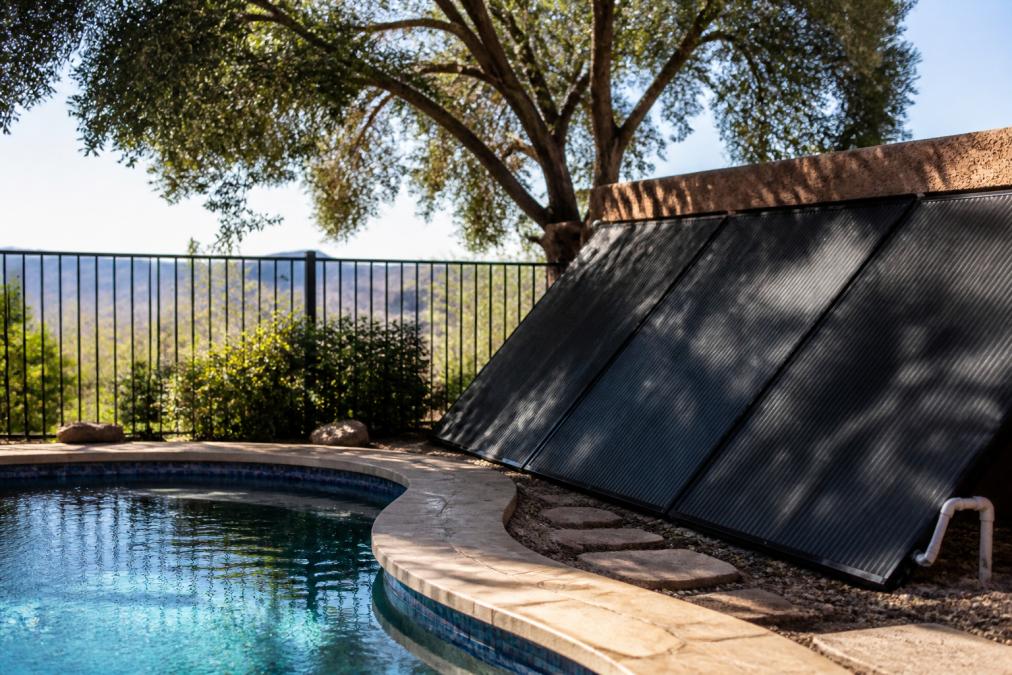
Shade is one of the most underestimated factors in shade solar heating system design. Trees, buildings, and other obstructions block direct solar irradiance from reaching your panels, reducing energy production and extending the time needed to reach your target water temperature. Even partial shading during peak sun hours can cut your system’s output by 20-40%.
The relationship between shade and solar pool heating isn’t linear. A panel receiving 80% of available sunlight doesn’t produce 80% of its rated output. Unlike photovoltaic panels, solar thermal collectors transfer heat directly to pool water. When irradiance drops, the temperature differential between the collector and water decreases, reducing heat transfer efficiency. Shaded panels produce disproportionately less heat.
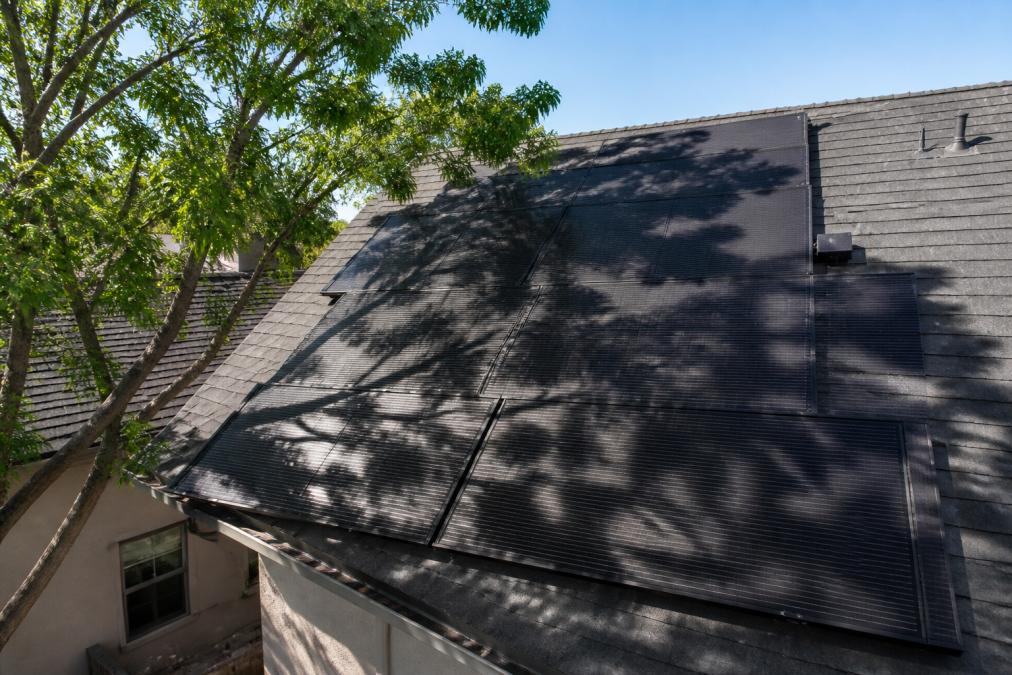
Morning and evening shade matters far less than midday obstruction, because the sun’s angle is too low to deliver useful irradiance. What matters is whether trees or structures block the 10 a.m. to 3 p.m. window, when the sun delivers peak energy to your collectors.
Understanding Solar Irradiance and Energy Loss
Solar irradiance measures the power of electromagnetic radiation hitting a surface, expressed in watts per square meter. For pool heating systems, typical peak irradiance on a clear day reaches 1,000 W/m². When shade reduces irradiance to 600 W/m² or lower, your collectors can’t reach the temperature needed to transfer heat effectively to the pool water.
Below a certain irradiance level (typically 300-400 W/m²), solar thermal collectors produce almost no usable heat because the collector temperature barely exceeds the pool water temperature. A panel in dappled shade receiving 50% of peak irradiance might deliver only 10-15% of its rated heat output.
A panel shaded for 3 hours daily during summer produces less total energy loss than one shaded for 6 hours during spring and fall, because summer sun angles are steeper and irradiance is higher. Professional solar site surveys document shadow positions throughout the year, showing exactly which hours your panels will be obstructed.
Partial vs. Total Shading Impact
Partial shading creates a different problem than uniform shade. In a string configuration (panels connected in series), one shaded panel can reduce the output of the entire string because current flows through the weakest link.
Total shading, where all panels are equally blocked, is less damaging than partial shading in a string setup. Every panel degrades equally, so the system operates at reduced capacity without internal current mismatches.
Thermal Stress and Long-Term Panel Degradation
When a solar thermal panel is partially shaded, the shaded cells experience “hot spotting,” localized overheating where current from unshaded cells concentrates in shaded areas. Solar thermal collectors don’t have bypass diodes because they’re not electrical systems; they rely on fluid flow and temperature regulation.
Repeated thermal cycling from partial shading accelerates material degradation. The absorber plate expands and contracts unevenly, stressing the copper tubing and solder joints. Over 15-20 years, this can cause microfractures and fluid leaks. Heliocol industrial-grade collectors handle this stress better than other providers, but even premium panels degrade faster under chronic partial shading.
Most solar thermal panels carry warranties on manufacturing defects, but degradation from thermal stress often falls outside coverage because it’s caused by installation conditions. Proper system design upfront prevents costly repairs later.
Durable Solar Panels for Salt Pools Under Shade Conditions
Durable solar panels for salt pools under shade conditions require specific material choices and design features. Heliocol panels feature a marine-grade copper absorber and reinforced construction to withstand salt corrosion and thermal cycling. The copper absorber resists salt spray degradation, and the modular design allows for easier replacement if thermal stress causes localized damage.
When selecting durable solar panels for salt pools under shade conditions, prioritize collectors with heavy-duty absorber materials resistant to corrosion, reinforced tubing and joint construction to handle thermal cycling, and manufacturers with track records in coastal or high-stress environments.
The upfront cost of premium panels is offset by reduced maintenance and longer system lifespan.
Solar Pool Heater Efficiency: Design Solutions for Shaded Arrays
When shade is unavoidable, shade solar heating system design becomes the mitigation strategy. The efficiency of your solar pool heater depends on array configuration, how power optimizers handle mismatches, and whether your system includes controls that adapt to changing solar irradiance.
Array Configuration and String vs. Parallel Setup
String configuration connects panels in series, working well for uniform sun exposure. When shade affects even one panel, the entire string’s output drops to match the weakest panel. For arrays with partial shading, parallel configuration performs better because each group operates independently.
Parallel arrays require additional piping, control valves, and potentially separate circulation pumps, increasing installation cost and maintenance points. String configuration is simpler and cheaper, which is why it remains standard for most residential installations.
For pools with partial shading during certain hours, design the array so shaded panels form their own string, isolated from unshaded panels. This prevents the entire system from degrading when afternoon shade arrives.
Bypass Diodes and Power Optimization
Power optimizers, electronic devices that regulate fluid flow and temperature, can help thermal systems adapt to partial shading.
Troubleshooting Solar Pool Heating Performance Issues
When a solar pool heating system underperforms, distinguish between design limitations and actual problems. A system that heats your pool to 82°F in July but struggles to reach 78°F in May might be performing exactly as designed.
Identifying Shading Problems and Hot Spots
Start with a visual inspection during peak sun hours (10 a.m. to 3 p.m.). Note which panels receive direct sunlight and which don’t. Take photos monthly to document how shadows shift with the seasons.
Hot spots indicate thermal stress from uneven irradiance. If one panel runs 15-20°F hotter than others in the same string, thermal stress is occurring, signaling either changed shading patterns or suboptimal installation.
Check your circulation pump’s flow rate by measuring the time it takes to fill a bucket from the return line. If too high, water moves through collectors too quickly to absorb heat. If too low, water stagnates and overheats.
Environmental Factors: Clouds, Dust, and Debris
Clouds reduce irradiance temporarily, but dust and debris have a more permanent effect. In Southern Utah’s arid climate, dust accumulation happens faster than in humid regions. A thin layer of dust can reduce irradiance transmission by 10-15%.
Debris blocks irradiance locally and can accelerate thermal stress if it accumulates unevenly. In dry climates, periodic cleaning (2-4 times annually) significantly improves performance.
Calculating Annual Energy Loss and Financial ROI
A typical residential solar pool heating system produces 30,000-50,000 BTU per day under full sun. If shade reduces average irradiance by 25% during the heating season (March through November), you lose approximately 25% of expected annual heat production.
A 25% energy loss translates to needing 4-6 additional weeks to reach target temperature, or accepting a 2-3°F lower equilibrium temperature. The financial impact depends on what alternative heating you’d use instead.
If your system is designed to save $1,500-$2,000 annually and shade reduces output by 25%, you lose $375-$500 in annual savings. Over a 20-year panel lifespan, that’s $7,500-$10,000 in foregone savings.
| Shading Impact | Annual Output Loss | Annual Savings Loss | 20-Year Impact |
|---|---|---|---|
| 10% shade | 10% | $150-$200 | $3,000-$4,000 |
| 25% shade | 25% | $375-$500 | $7,500-$10,000 |
| 40% shade | 40% | $600-$800 | $12,000-$16,000 |
Professional solar site surveys provide detailed analysis of your specific shading pattern, accounting for seasonal sun angles and tree growth projections, enabling informed decisions before installation.
Shading Impact on Battery Storage Systems
Battery systems store excess heat generated during peak sun hours for use when irradiance drops. Partial shading reduces the peak output available to store, reducing the battery’s utility.
A battery-integrated system makes sense only if your system produces enough surplus heat during peak hours to justify the storage cost. With significant shade, peak output may be insufficient to charge batteries meaningfully.
Shade reduces solar pool heating output non-linearly, a 25% reduction in irradiance typically cuts heat production by 35-40%. Proper system design, regular maintenance, and realistic expectations about seasonal performance are essential for maximizing ROI.
Shading is one of the biggest variables in solar pool heating performance, but it’s manageable with proper planning and professional installation. At Dixie Pool Solar Heating & Misting, we conduct detailed solar site surveys to map shade patterns throughout the year before recommending system size and configuration. Our Heliocol panels are engineered to handle thermal cycling and salt corrosion, and our 12-year warranty on all panels installed covers manufacturing defects. A free quote includes a shade analysis specific to your property, so you’ll know exactly how much your system can save before you commit. Get started with Dixie Pool Solar Heating & Misting and extend your swimming season with confidence.
Frequently Asked Questions
How much does shade affect solar pool heating efficiency?
Even partial shade significantly reduces solar heating performance. Shading as little as 25% of your panel array can reduce energy output by 50% or more, depending on where the shadow falls and the system design. Total shading eliminates heating capacity entirely. The impact is more severe on thermal systems than photovoltaic panels because thermal collectors depend on consistent irradiance across the entire surface to maintain water flow and temperature gain.
Can partial shading significantly reduce pool heating performance?
Yes. Partial shading creates uneven heating within solar arrays and causes current mismatch between panels. This forces the system to operate at reduced efficiency across the entire array, not just the shaded section. Thermal stress develops in shaded cells, leading to long-term degradation. Prevention through site survey and panel placement remains the most effective solution.
What are the best ways to mitigate shading issues for solar pool heaters?
Start with a professional solar site survey to map sun angles throughout the year and identify obstructions. Trim trees or relocate panels to avoid shade during peak heating hours. Consider array reconfiguration from series to parallel strings if shading is unavoidable. Request a free quote to evaluate your specific property and mitigation options.
How does shading impact payback period and annual savings?
Significant shade reduces annual energy production, extending payback period and lowering total savings. However, durable solar panels rated for 20+ years and backed by strong warranties still deliver positive ROI over their lifespan. Conduct a site assessment to calculate realistic energy loss and financial returns for your property.
 Dixie Pool Solar Heating & Misting
Leave a comment