Table of Contents
- Why Salt Water Threatens Solar Pool Heater Lifespan
- Understanding Durable Solar Panels for Salt Pools
- Pool Water Chemistry for Solar Heaters in Saltwater Systems
- Saltwater Pool Maintenance Checklist for Solar Systems
- Plumbing Configuration Best Practices for Salt Tolerance
- Recognizing and Preventing Salt-Induced Damage
- Winterization and Off-Season Protection
- Frequently Asked Questions
Last Updated: October 1, 2026
Why Salt Water Threatens Solar Pool Heater Lifespan
A solar pool heater salt water system faces unique challenges: salt water corrodes metal components, degrades rubber seals, and deposits mineral buildup that clogs your system.
Salt water contains sodium chloride and minerals that accelerate oxidation in copper, aluminum, and steel. EPDM gaskets break down faster in saltwater, and polypropylene headers degrade under prolonged salt exposure combined with UV radiation.
Salt water can cut a solar pool heater salt water system’s lifespan in half without preventative steps, but you can extend system life significantly with proper maintenance.
Salt buildup accumulates in pipes, heat exchangers, and collectors, reducing flow rate and thermal efficiency while accelerating component failure.
Understanding Durable Solar Panels for Salt Pools
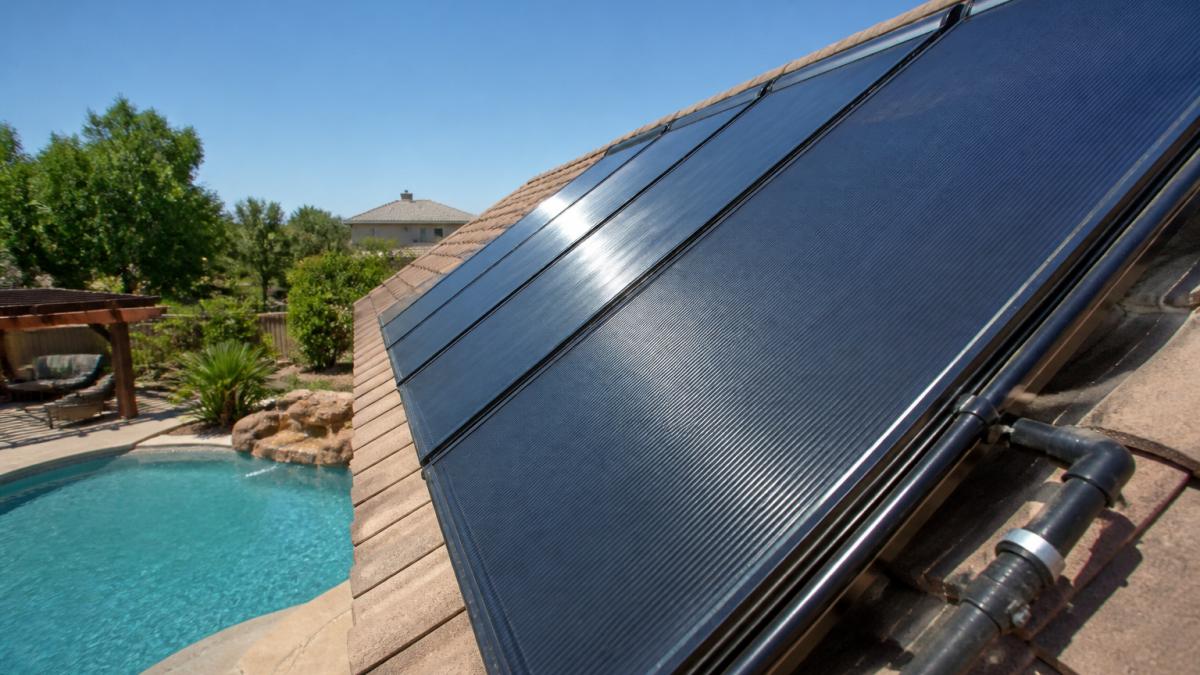
The best panels for saltwater pools use salt-tolerant materials and corrosion-resistant construction.
Material Compatibility: EPDM, Polypropylene, and Copper Headers
Polypropylene absorber plates resist salt water but degrade under sustained UV exposure. A UV-protective coating extends lifespan significantly.
EPDM rubber gaskets seal connections but salt water causes hardening and cracking. Replace every 5-7 years in saltwater systems.
Copper headers conduct heat efficiently but corrode in salt water. Brass or stainless steel headers resist corrosion better but cost more upfront.
The industry standard for salt-tolerant systems combines polypropylene absorbers with stainless steel or brass headers and high-grade EPDM seals. This combination lasts 15-20 years in saltwater environments.
Sacrificial Anodes and Corrosion Prevention
A sacrificial anode is a metal component placed in your plumbing that corrodes first, protecting copper headers and other metals.
Zinc and magnesium anodes oxidize faster than copper or aluminum. Replace when 50% corroded to prevent expensive component failure.
Install sacrificial anodes in your heat exchanger and near copper headers. Check annually and replace if more than 50% corroded.
Pool Water Chemistry for Solar Heaters in Saltwater Systems
Salt water chemistry directly impacts your solar heater’s longevity. Imbalanced water creates corrosive conditions that accelerate component degradation.
The Chemistry of Salt Corrosion in Solar Collectors
Sodium chloride dissociates into sodium and chloride ions. Chloride ions penetrate protective oxide layers on metals and initiate pitting corrosion, creating holes that grow over time.
Chloride ions attack copper and brass, forming unstable copper oxide. Stainless steel forms a more stable passive layer and outperforms copper in saltwater systems.
Polypropylene resists ionic attack but degrades through UV-induced chain scission at 140-160°F. Salt water accelerates this by acting as a plasticizer. UV-protective coatings are essential in high-sun regions.
EPDM gaskets suffer from chloride leaching and UV exposure, losing 30-50% of flexibility after 5-7 years in saltwater.
Monitoring pH Balance and Salt Concentration
pH controls corrosion aggressiveness. Keep pool pH between 7.2 and 7.6 (above 7.8 accelerates corrosion). Test weekly during swimming season.
Salt concentration increases ionic strength and corrosion risk. Keep salt at 2,700-3,400 ppm; every 500 ppm above 3,400 roughly doubles corrosion in copper and brass.
Test salt concentration monthly. If above recommended ranges, partially drain and refill with fresh water to reduce ionic load.
Chemical Interactions That Damage Heat Exchangers
Your heat exchanger is the most vulnerable component in a saltwater system because water velocity, temperature, and salt concentration all peak there simultaneously.
High pH (above 7.8) and chlorine interact with salt to create corrosive compounds that attack metals. Corrosion rates roughly double for every 18°F temperature increase.
Turbulent flow, elevated temperature, and high chloride concentration accelerate corrosion in heat exchangers. Stainless steel (316L) outperforms copper but costs 40-60% more.
Maintain these chemical targets:
- pH: 7.2-7.6
- Alkalinity: 80-120 ppm
- Salt concentration: 2,700-3,400 ppm
- Free chlorine: 1-3 ppm
- Calcium hardness: 200-400 ppm
White or blue-green deposits indicate chemistry is out of balance and corrosion is accelerating.
Saltwater Pool Maintenance Checklist for Solar Systems
Preventative maintenance is the difference between a 10-year system and a 20-year system. Follow this schedule consistently.
Weekly and Monthly Inspection Steps
Weekly: Check water chemistry, inspect panels for debris, monitor pressure gauges.
Monthly: Clean panels, inspect plumbing for leaks, check sacrificial anode, test flow rate.
Quarterly: Flush bypass valve, inspect gaskets and seals, check header connections.
Freshwater Rinsing Protocols and Salt Buildup Removal
Rinse solar panels with fresh water every 2-4 weeks using a soft brush and low-pressure spray. Quarterly, flush plumbing and heat exchangers with fresh water for 10-15 minutes at normal flow rate. For severe buildup, consult a professional before chemical flushing.
Freshwater rinsing is most effective immediately after heavy pool use or when salt concentration is highest. Schedule rinses at the end of your busiest swimming weeks.
Plumbing Configuration Best Practices for Salt Tolerance
Proper plumbing configuration determines how well your system handles salt water. Component order controls where aggressive, salt-saturated water flows and where stagnant water sits.
Bypass Valve Setup and Flow Rate Management
A bypass valve diverts water away from the collector during cold nights or when the pool is hot enough, preventing stagnant water in hot collectors where worst corrosion occurs.
Install automatic bypass valves with thermostats that open when collector temperature drops below 2-5°F above pool temperature, preventing water loss through cold collectors.
Set flow rate between 40-60 GPM. Below 30 GPM reduces efficiency; above 80 GPM prevents adequate heat absorption. Adjust using a flow meter or pressure gauges.
A properly configured bypass prevents salt-laden water from stagnating in hot collectors overnight, which accelerates pitting corrosion by 3-5 times.
Salt Cell Placement and System Integration
Salt cell placement affects your entire system’s corrosion risk.
Correct plumbing order: Pool → Pump → Solar Heater → Salt Cell → Back to Pool. Placing the salt cell downstream allows water to cool and partially de-gas chlorine before returning to the pool, reducing corrosion in the heater and thermal stress on gaskets.
Ensure adequate water flow to the salt cell (usually 30+ GPM). Low flow reduces chlorine production and forces the cell to work harder, accelerating its own corrosion and creating more aggressive water chemistry.
Isolation Valves and Drain Points
Install isolation valves on both the inlet and outlet sides of your solar heater. These allow you to close off the heater for maintenance, repairs, or winterization without draining the entire pool system.
Pressure and Flow Monitoring
Install pressure gauges on both sides of the solar heater (inlet and outlet). The pressure differential tells you whether your system is flowing correctly. A normal differential is 5-15 psi. If the differential exceeds 20 psi, salt and mineral buildup is restricting flow; you need to flush the system with fresh water.
Draw a simple diagram of your plumbing layout and label the location of every valve, drain point, and component. Keep this diagram near your equipment. When you need to perform maintenance or troubleshoot problems, you’ll know exactly where to turn off water and where to expect salt accumulation.
Recognizing and Preventing Salt-Induced Damage
Early detection saves thousands in repair costs. Know the warning signs and act quickly.
Early Warning Signs of Corrosion and Scaling
Watch for these red flags:
- White or blue-green crusty deposits on visible plumbing or collector surfaces indicate salt scaling or copper corrosion
- Reduced water flow suggests mineral buildup in pipes or heat exchangers
- Leaks at connection points mean gaskets are failing or corrosion has created holes
- Discolored water (cloudy, green, or rusty) signals advanced corrosion
- Declining system efficiency (slower heating) often precedes visible damage
Address any of these immediately.
Preventative Coating and Treatment Options
Some homeowners apply protective coatings to exposed metal components. Epoxy or polyurethane coatings create a barrier against salt water exposure.
Never use pool acid or harsh chemicals to clean salt deposits from your solar panels. These damage the protective coating and accelerate degradation. Fresh water and a soft brush are sufficient.
Winterization and Off-Season Protection
Proper winterization protects your system during months when it’s not actively heating your pool.
| Maintenance Task | Frequency | Why It Matters |
|---|---|---|
| Check water chemistry | Weekly | Prevents corrosive conditions |
| Freshwater rinse panels | Every 2-4 weeks | Removes salt and mineral buildup |
| Inspect sacrificial anode | Monthly | Catches corrosion before it spreads |
| Flush plumbing system | Quarterly | Dislodges accumulated deposits |
| Replace EPDM gaskets | Every 5-7 years | Prevents leaks and water damage |
| Winterize system | Annually | Protects against freeze damage |
Frequently Asked Questions
How long do solar pool heaters typically last in saltwater environments?
Solar pool heaters designed for saltwater systems can last 15-20+ years with proper maintenance. Heliocol industrial-grade panels are engineered to withstand salt exposure and come with industry-leading warranties. Longevity depends heavily on material quality, regular freshwater rinsing, and preventative maintenance. Systems installed with corrosion-resistant components and proper plumbing configuration consistently outperform those without these protections.
Does salt water cause more corrosion to solar pool heating panels?
Yes, saltwater accelerates corrosion compared to freshwater pools. Salt deposits, mineral buildup, and oxidization damage copper headers, aluminum frames, and internal heat exchangers. EPDM rubber and polypropylene components resist salt better than standard materials. The key to extending solar pool heater life is using salt-tolerant materials, installing sacrificial anodes, and implementing regular freshwater rinses to prevent salt concentration from reaching damaging levels.
What maintenance steps prevent salt buildup in solar pool heaters?
Perform weekly visual inspections for white crystalline deposits on panels and plumbing. Monthly, measure salt concentration and pH balance to catch imbalances early. Every 3-6 months, run freshwater rinses through the system to flush accumulated salt. After pool season, drain and winterize the system completely. Use a bypass valve to control flow rate and prevent excessive salt exposure during peak summer months. This saltwater pool maintenance checklist prevents scaling and extends thermal efficiency.
Should I turn my solar pool heater off at night?
Yes, turning off your solar pool heater at night prevents heat loss and reduces unnecessary water circulation through the panels when solar collection is impossible. More importantly for saltwater systems, reducing circulation time decreases salt concentration exposure to sensitive components. Use a timer or bypass valve to stop flow during evening hours. This practice extends system longevity while improving thermal efficiency and reducing wear on the heat pump and heat exchanger.


Leave a Reply