Table of Contents
- How Pool Cooling Systems Work
- How to Cool Down Hot Pool Water
- Pool Chiller vs Aerator: Which Cools Better
- Energy Efficient Pool Cooling Options
- Solar Cooling and Shade Solutions
- Cost Savings and Long-Term ROI
- Choosing the Right System for Your Pool
- Frequently Asked Questions
Last Updated: September 29, 2026
How Pool Cooling Systems Work
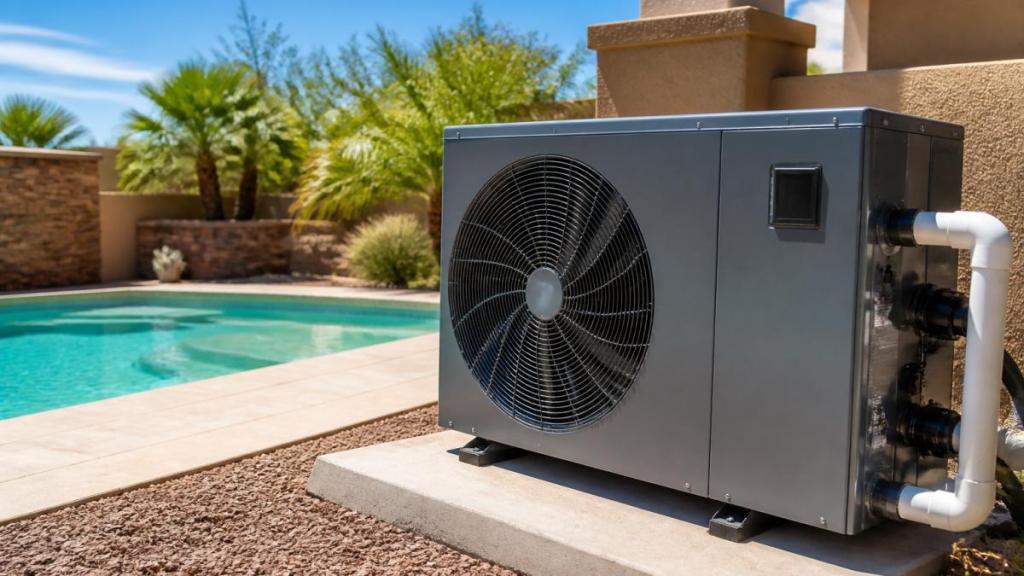
Pool cooling systems regulate water temperature by removing excess heat through mechanical or passive methods. The most common approach uses a heat pump or chiller that circulates water through a cooling unit, similar to how an air conditioner cools a room.
Evaporative coolers and aerators promote water evaporation to lower temperature. Chillers use refrigeration cycles to extract heat directly. Solar cooling systems prevent excess absorption by blocking sunlight before it reaches the water.
Heat enters your pool through direct sunlight, warm air, and circulation friction. Your pool’s size, sun exposure, climate, and usage patterns determine which cooling system makes sense.
Most pools gain 5-7 degrees over a full sunny day in summer. If your pool consistently exceeds your comfort threshold, a cooling system becomes essential, not optional.
How to Cool Down Hot Pool Water
Running your circulation system during cooler evening and early morning hours can drop water temperature by several degrees without equipment investment.
A pool chiller removes heat through refrigeration, typically lowering temperature by 5-10 degrees within hours, ideal for emergency situations or extreme heat waves.
Shade structures, pool covers, shade sails, and landscaping, prevent heat absorption and cost less than mechanical systems. Combining shade with circulation timing often delivers adequate cooling without expensive equipment.
| Cooling Method | Speed | Cost | Maintenance |
|---|---|---|---|
| Circulation timing | Slow (hours) | None | Minimal |
| Pool chiller | Fast (1-2 hours) | High upfront | Moderate |
| Shade structures | Medium (gradual) | Medium | Low |
| Solar cooling integration | Medium (gradual) | Medium | Very low |
Pool Chiller vs Aerator: Which Cools Better
A pool chiller uses refrigeration to extract heat directly, making it the most effective method for rapid temperature reduction. However, chillers consume significant electricity and generate substantial operating costs throughout the cooling season.
Aerators introduce air through fountains or jets to promote evaporative cooling, which works best in dry climates. They cost far less to operate but are slower and less reliable in humid conditions.
Choose a chiller if you need guaranteed cooling and can absorb operating costs. Choose an aerator if you want low-cost cooling and don’t mind gradual temperature drops. Many homeowners use both for routine and emergency cooling.
Running a pool chiller continuously during peak summer can add hundreds to your monthly energy bill. Use it strategically during the hottest periods, not as a constant solution.
Energy Efficient Pool Cooling Options
Solar thermal cooling stands out as an efficient option because it harnesses free solar energy with zero operating costs and requires minimal maintenance.
Heat pumps move existing warmth rather than generating new cold, making them far more efficient than traditional chillers and ideal for moderate climates.
Passive cooling through shade and circulation timing requires no equipment or electricity. Strategic landscaping, shade sails, and pool covers prevent heat absorption and work well for pools needing modest temperature reduction.
Combining multiple efficiency strategies works better than relying on a single system. A solar thermal solution paired with strategic shade and smart circulation timing keeps energy costs minimal while maintaining comfortable water temperatures.
The most energy-efficient pool cooling combines passive methods (shade, circulation timing) with solar thermal integration. This layered approach reduces reliance on electricity-consuming equipment and cuts long-term operating costs dramatically.
Solar Cooling and Shade Solutions
Solar cooling prevents heat absorption rather than removing existing heat. Unglazed solar collectors on your roof block direct sunlight, naturally lowering temperature while the system circulates.
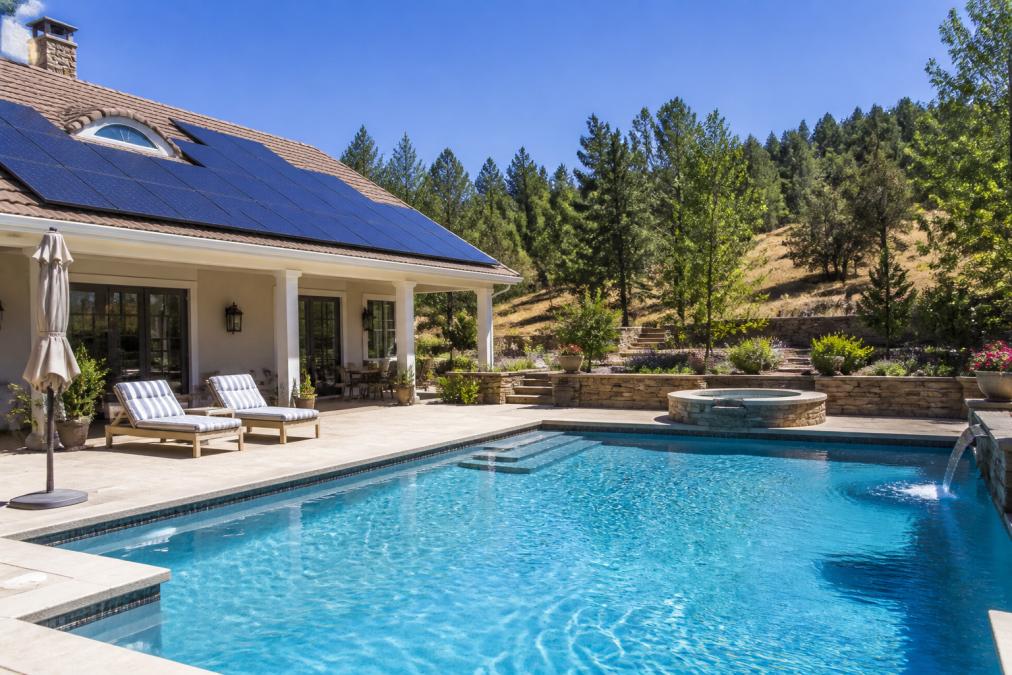
Shade structures complement solar cooling by reducing heat gain. Shade sails, pergolas, and landscaping block afternoon sun; pool covers provide nighttime insulation. Together, these passive methods reduce cooling burden on active systems.
Solar systems offer durability and low maintenance. Heliocol panels last 20+ years with minimal upkeep. Water circulates through panels using your existing pump.
Solar cooling pairs well with heating needs, extending swimming season by heating in spring/fall and cooling in summer.
Cost Savings and Long-Term ROI
True cooling costs require comparing upfront investment against operating expenses over the system’s lifespan. The cheapest option upfront often becomes the most expensive over time.
Mechanical Chiller Costs
A pool chiller costs $3,000-$8,000 installed. Operating costs are substantial: a chiller running 8 hours daily during a 120-day season costs $576-$1,080 per season in electricity, plus $500-$1,000 annually for maintenance. Total 10-year cost: $11,260-$19,800.
Solar Thermal System Costs
Solar cooling systems cost $4,000-$10,000 installed with minimal operating costs ($100-$200 annually for maintenance). Over 10 years, total cost is $5,000-$12,000 with virtually no energy expenses. Most systems last 20+ years with flat costs after year 10.
Shade and Passive Cooling Costs
Shade sails cost $1,500-$4,000; pool covers $500-$2,000; landscaping $2,000-$5,000. These provide modest temperature reduction (2-4 degrees) and work best as supplementary cooling.
ROI Calculation Framework
Payback Period = System Cost ÷ Annual Savings. Example: A $6,000 solar system versus a $5,000 chiller costing $720 annually to operate (solar costs $150). Annual savings = $570. Payback = 10.5 years. Over 20 years, solar saves $11,400 compared to the chiller.
Energy Efficiency Impact on Costs
Heat pump technology is 3-4 times more efficient than traditional chillers. A heat pump chiller costs $5,000-$9,000 but operates at $200-$300 annually, cutting operating costs by 60-70% and accelerating payback periods.
Financing and Incentives
The federal Investment Tax Credit (ITC) allows homeowners to deduct 30% of solar system costs from federal income taxes (through 2032). A $7,000 solar system becomes $4,900 after the credit, improving payback to 8.6 years. Check DSIRE for local programs.
Extended Swimming Season Value
Beyond direct energy savings, cooling systems extend usable pool season. A system maintaining 80-degree water from April through October (7 months) versus May through September (5 months) adds 60 days of swimming.
Solar thermal systems can offer long-term value despite moderate upfront investment. Mechanical chillers appear cheaper initially but can incur significant operating expenses over time. Calculate your specific payback period using local electricity rates and your pool’s cooling needs to identify the true lowest-cost option for your situation.
Choosing the Right System for Your Pool
The best cooling system depends on your pool type, size, sun exposure, climate, and budget. However, above-ground and in-ground pools have dramatically different cooling requirements and installation options, and treating them generically leads to poor system selection.
-
Evaporative coolers and aerators: These are ideal for above-ground pools because they’re portable, require no permanent installation, and cost $300-$800. They work best in dry climates where evaporation rates are high. In humid regions, effectiveness drops significantly.
-
Portable pool chillers: Compact units ($2,000-$4,000) connect to your existing pump and filter. They’re effective but consume substantial electricity and generate heat, which can be problematic in small backyards.
-
Shade and passive cooling: This is your most practical option. A shade sail ($1,500-$3,000) or retractable cover dramatically reduces heat gain. Combined with running your pump during cooler evening hours, passive cooling often keeps above-ground pools at acceptable temperatures without mechanical equipment.
-
Strategic landscaping: Planting trees or installing pergolas on the south and west sides blocks afternoon sun, the primary heat source. This takes 2-3 years to mature but provides permanent, maintenance-free cooling.
-
Solar thermal systems: These are ideal for in-ground pools because roof-mounted panels integrate seamlessly with existing plumbing. Unglazed solar collectors cost $4,000-$10,000 installed and eliminate operating costs. They’re most effective in pools with consistent sun exposure and work year-round (heating in winter, cooling in summer).
-
Heat pump chillers: These are efficient for in-ground pools in moderate climates. They cost $5,000-$9,000 and operate at roughly $200-$300 annually. They work in any climate but are most cost-effective where winter heating is also needed.
-
Traditional refrigeration chillers: These are the fastest-cooling option ($3,000-$8,000) but consume $600-$1,000 annually in electricity. They’re practical for in-ground pools that need emergency cooling during extreme heat waves but shouldn’t run continuously.
-
Geothermal heat pump integration: In-ground pools can integrate with geothermal systems if your property has space for ground loops. This is the most efficient option (coefficient of performance of 3-5) but requires significant upfront investment ($10,000-$20,000) and is practical only for new construction or major renovations.
Above-ground pools benefit most from shade, passive cooling, and portable aerators. In-ground pools support the full range of cooling technologies, with solar thermal systems offering the best long-term value. Match system capacity to your pool size and climate, and prioritize passive cooling methods before investing in mechanical equipment.
Frequently Asked Questions
What is the best way to keep my pool cool during the summer?
The best pool cooling approach depends on your climate, pool size, and budget. Solar covers and shade structures reduce evaporative cooling losses and water temperature rise. Pool chillers actively remove heat but consume significant energy. Aerators and fountains provide modest cooling through water circulation and evaporation. Many homeowners combine methods: using shade during peak heat hours, running aerators in evening, and installing solar thermal systems for long-term efficiency. Your specific cooling needs depend on how much your water temperature rises above your target threshold.
How do pool aerators help lower water temperature?
Aerators increase water circulation and expose more surface area to air, which enhances evaporative cooling. As water circulates through the aerator and breaks into smaller streams or fountains, evaporation accelerates, pulling heat from the pool. This method works best in low-humidity conditions and during cooler evening hours. However, aerators provide only modest temperature reduction, typically 2-5 degrees, and work continuously, consuming electricity. They’re most effective as part of a multi-method cooling strategy rather than as a standalone solution for significant temperature reduction.
Do pool chillers actually work for residential pools?
Yes, pool chillers effectively cool water by removing heat through a refrigeration cycle, similar to air conditioning. They can lower water temperature 5-10 degrees or more, depending on ambient temperature and system capacity. However, chillers consume substantial electricity, often $100-300+ monthly during peak summer use, making them expensive to operate. They work best in climates where ambient temperature remains relatively moderate. For many homeowners, the operational cost outweighs the cooling benefit, especially compared to passive methods like covers and shade or solar thermal solutions.
What are the most energy-efficient ways to cool a swimming pool?
The most energy-efficient cooling methods avoid active cooling systems. Pool covers reduce evaporation by 95%, preventing heat loss and maintaining water temperature with zero operating cost. Shade structures like sails or trees block solar gain during peak heat hours. Aerators and fountains use minimal electricity while providing modest cooling through circulation and evaporation. For long-term efficiency, solar thermal systems harness sun energy without consuming electricity. Combining passive methods, covers, shade, and strategic circulation, typically costs far less to operate than chillers while maintaining comfortable water temperature.


Leave a Reply