Table of Contents
- Why Pool Temperature Control Matters
- How to Cool Down Hot Pool Water with Evaporative Cooling
- Increase Circulation and Nighttime Filtration
- Deploy Shade Structures and Strategic Placement
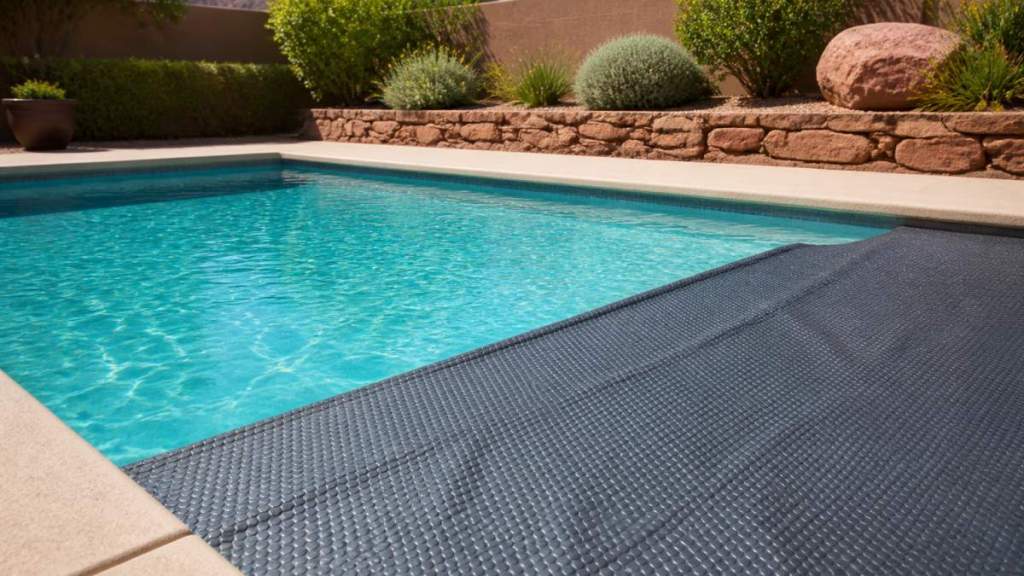
- Does a Pool Cover Keep Water Cool
- Benefits of Pool Misting Systems for Temperature Reduction
- Water Replacement and Chemical Management During Cooling
- Common Mistakes When Cooling Pool Water
- Frequently Asked Questions
Last Updated: September 30, 2026
Why Pool Temperature Control Matters
Managing water temperature directly affects your pool’s usability and comfort. A pool that’s too hot becomes uncomfortable for swimming and can damage equipment faster. When you learn how to lower pool temperature naturally, you gain control over your swimming season without relying on expensive cooling systems.
At Dixie Pool Solar Heating & Misting, we understand that Southern Utah’s intense summer sun can push pool temperatures into the 85-95°F range. That’s when swimmers stop using the pool. The good news: natural cooling methods work effectively when applied correctly.
Temperature control also impacts water chemistry. Hot water accelerates chlorine dissipation, making it harder to maintain proper pH balance. Cooler water holds chemicals more stable, reducing the work required to keep your pool safe.
How to Cool Down Hot Pool Water with Evaporative Cooling
Evaporative cooling is one of the most effective natural methods to lower pool temperature, but its success depends entirely on one factor: the difference between air temperature and dew point. Understanding this principle separates effective cooling strategies from wasted effort.
When water evaporates, it absorbs latent heat energy from the surrounding water, approximately 1,050 BTU per pound of water evaporated. This is the mechanism behind all evaporative cooling. However, evaporation only occurs when the air is unsaturated. Once air reaches its dew point (the temperature at which it becomes saturated with moisture), evaporation stops entirely, regardless of how much water you spray.
Why humidity matters more than temperature:
In arid climates with low humidity (below 40%), evaporative cooling is highly efficient. A misting system or fountain in Phoenix or Las Vegas can reduce pool temperature by 5-8°F because the air actively pulls moisture from the water surface. In humid climates (above 70% relative humidity), the same system may only reduce temperature by 1-2°F because the air is already saturated and cannot accept more moisture.
This is why evaporative cooling works exceptionally well in the Southwest but delivers minimal results in the Southeast or during summer months in coastal regions.
Using Fountain Sprayers and Aerators
Fountain sprayers break water into small droplets exposed to air. This increases surface area dramatically, speeding up evaporation and heat loss. The smaller the droplet, the faster evaporation occurs because more water is exposed to unsaturated air simultaneously.
How to install fountain sprayers:
- Attach the sprayer to your pool’s return line (the pipe that pushes water back into the pool)
- Position the sprayer head above water level to maximize air exposure
- Adjust the spray pattern to cover the widest area possible
- Run the system during peak heat hours (typically 2 PM to 6 PM) when the air-to-water temperature differential is greatest
- Monitor humidity levels; if relative humidity exceeds 65%, reduce operating hours as effectiveness drops sharply
Aerators serve the same purpose by pulling water up and letting it fall back down, exposing it to air. Many pools have built-in aerator jets. Running these jets during peak heat hours can reduce temperature by 2-4°F over several hours in dry climates, but only 0.5-1°F in humid conditions.
The key is consistency and climate awareness. Short bursts won’t help much. Run your aerators or fountains for at least 4-6 hours daily when temperatures peak, but only if your local humidity is below 60%. In humid climates, extend operating hours to 8-10 hours to compensate for slower evaporation rates.
Installing a Misting System
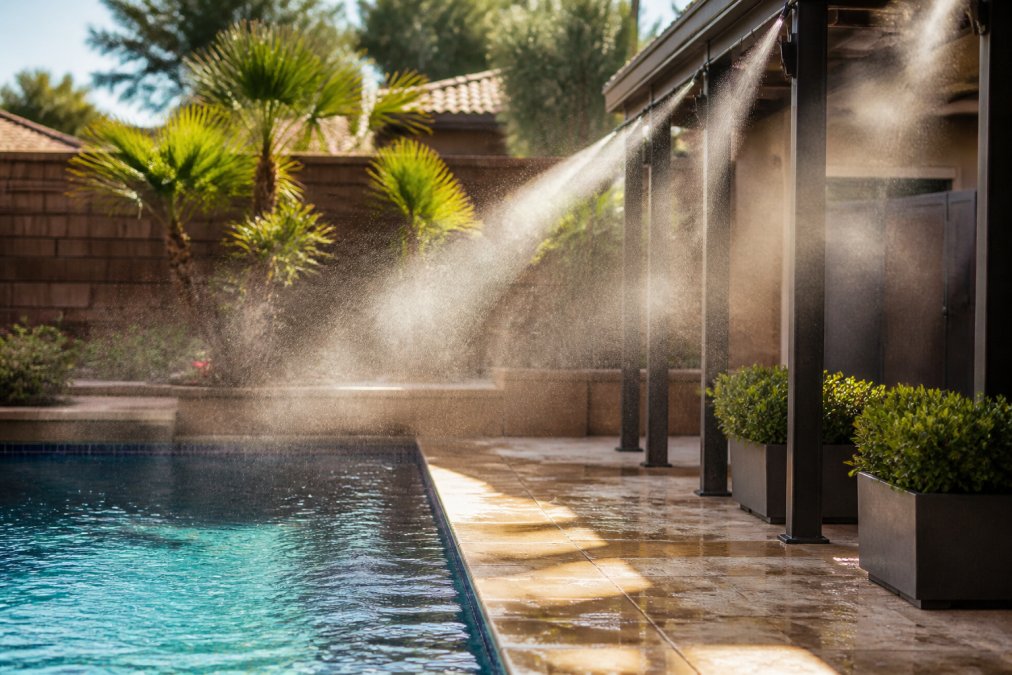
A misting system sprays fine water droplets over the pool surface and surrounding deck. The mist doesn’t just cool the water; it also cools the air around the pool, creating a more comfortable environment for swimmers. Misting is most effective in low-humidity environments where evaporation is rapid.
Basic misting system setup:
- Install nozzles around the pool perimeter (every 6-8 feet)
- Connect nozzles to a water line or pump system
- Set the system to run during peak heat hours (10 AM to 4 PM)
- Ensure nozzles spray directly over the water surface at a 45-degree angle to maximize droplet exposure time
- Use a timer to shut off the system if humidity rises above 70% (indicated by visible mist that doesn’t evaporate quickly)
Misting systems are particularly effective in dry climates where humidity is low. The drier the air, the faster evaporation occurs. In arid regions with humidity below 40%, a quality misting system can reduce water temperature by 5-8°F over 4-6 hours of operation. In humid regions, expect 2-3°F reduction over the same period.
Climate-specific expectations:
- Arid climates (Southwest, high desert): 5-8°F reduction, 4-6 hours operation
- Moderate climates (Midwest, Mountain West): 3-5°F reduction, 6-8 hours operation
- Humid climates (Southeast, coastal): 1-3°F reduction, 8-10 hours operation
One often-overlooked benefit: misting systems reduce the thermal load on your water chemistry.
Increase Circulation and Nighttime Filtration
Running your pool’s circulation system at night pulls cooler air across the water. Nighttime temperatures are significantly lower than daytime, so this simple step delivers real results.
Nighttime filtration strategy:
- Run your pump and filter system from 8 PM to 6 AM
- Keep the filter clean to maintain water flow
- Use a variable-speed pump to reduce energy use
- Ensure your return jets point downward to maximize water circulation
Deploy Shade Structures and Strategic Placement
Direct sunlight is the primary driver of water heating. Blocking that sunlight directly reduces temperature gain.
Shade solutions that work:
- Shade sails or tarps stretched over 30-50% of the pool surface
- Trees planted on the west or southwest side (blocks afternoon sun)
- Umbrellas or pergolas positioned over shallow areas
- Retractable awnings for flexible coverage
Does a Pool Cover Keep Water Cool
Pool covers serve different purposes depending on the type. Standard opaque covers trap heat, making them better for warming pools in spring and fall. However, reflective covers and shade covers work differently.
Benefits of Pool Misting Systems for Temperature Reduction
Misting systems offer cooling benefits beyond simple temperature reduction. They create a more pleasant environment for swimmers and deck users.
Key benefits of misting systems:
- Reduce water temperature 5-8°F in 4-6 hours
- Cool the surrounding air, making the deck more comfortable
- Work without electricity in some designs
- Require minimal maintenance once installed
- Provide consistent cooling throughout the day
Water Replacement and Chemical Management During Cooling
Cooling methods affect water chemistry in distinct ways. Understanding these mechanisms prevents costly chemical imbalances and equipment damage.
How evaporative cooling alters chemistry:
How circulation and aeration affect pH:
How temperature changes affect chlorine:
Monitoring schedule during active cooling:
- Test water chemistry every 2-3 days (not weekly) when using evaporative cooling methods
- Check chlorine levels daily if using fountains or misters, as evaporation accelerates dissipation
- Monitor pH every 3 days, especially if running nighttime circulation, as aeration tends to raise pH
- Test calcium hardness weekly during extended evaporative cooling; if it exceeds 400 ppm, perform a partial water replacement
- Measure total alkalinity every 3 days as it affects pH stability
Target ranges during cooling:
- pH: 7.2-7.6
- Chlorine (free): 1-3 ppm
- Total alkalinity: 80-120 ppm
- Calcium hardness: 200-400 ppm
- Total dissolved solids: Below 1,500 ppm (if higher, perform partial drain and refill)
Water replacement strategy:
Chemical adjustments during cooling:
- If chlorine drops below 1 ppm: Add chlorine immediately (1 ppm requires approximately 0.0013 lbs per 1,000 gallons)
- If pH rises above 7.8: Add muriatic acid (follow product instructions; typically 1 quart per 10,000 gallons lowers pH by 0.2)
- If calcium hardness exceeds 400 ppm: Perform a 10-15% water replacement
- If alkalinity drops below 80 ppm: Add alkalinity increaser (typically 1.5 lbs per 10,000 gallons raises alkalinity by 10 ppm)
Common Mistakes When Cooling Pool Water
Many pool owners make choices that reduce cooling effectiveness or damage equipment.
Mistakes to avoid:
- Running aerators only during peak heat (run them 4+ hours for results)
- Covering the pool during the day (traps heat; use reflective covers instead)
- Neglecting water chemistry while cooling (chemicals become concentrated)
- Using only one cooling method (combine approaches for better results)
- Installing shade structures that block water circulation
- Running filtration during the hottest part of the day (nighttime is more effective)
| Method | Temperature Reduction | Best For | Effort Level |
|---|---|---|---|
| Evaporative cooling (fountains/aerators) | 2-4°F | Budget-friendly cooling | Low |
| Misting systems | 5-8°F | Significant cooling + comfort | Medium |
| Nighttime filtration | 3-5°F | Consistent overnight cooling | Low |
| Shade structures | 3-5°F | Blocking direct sun | Medium |
| Reflective covers | 2-3°F | Passive daytime cooling | Low |
| Water replacement | Variable | Maintaining chemistry | Medium |
Frequently Asked Questions
Can running your pool pump at night help lower water temperature?
Yes. Running your pump at night circulates cooler water and allows heat absorption into the surrounding air and ground. Nighttime filtration cycles take advantage of lower ambient air temperatures, reducing your pool’s overall thermal load. This is one of the most cost-effective ways to lower pool temperature naturally, especially when combined with shade or evaporative cooling methods.
What is the best way to keep your pool cool during summer?
Combine multiple methods for best results: use shade structures to block direct sunlight, run your pump during cooler nighttime hours, install a misting system to increase evaporation, and maintain good water circulation. Evaporative cooling is particularly effective in drier climates where humidity levels are lower, allowing more water to evaporate and carry heat away from the pool.
How effective are natural cooling methods compared to pool chillers?
Natural cooling methods like evaporation, circulation, and shade are highly effective and cost-free to operate, though they work more gradually than mechanical chillers. Natural methods reduce water temperature by 5-15 degrees depending on climate, humidity, and sun exposure. They’re ideal for homeowners seeking energy-efficient solutions without ongoing electricity costs.
Do pool covers actually keep water cool, or do they trap heat?
Solar covers trap heat and are designed for warming pools. However, solid opaque covers or shade cloths block sunlight and prevent evaporation, which helps keep water cooler. If cooling is your goal, use a reflective or opaque cover during the hottest parts of the day, or deploy shade structures instead. This reduces radiant heat absorption while allowing nighttime cooling through circulation.


Leave a Reply