Table of Contents
- Physical Damage and Leaks in Solar Pool Panels
- Decreased Heating Efficiency and Performance
- Temperature Differential Monitoring and Water Flow Issues
- Solar Pool Heater Lifespan and System Age
- Inverter, Electrical Faults, and Sensor Calibration
- Solar Pool Panel Leak Repair vs. Replacement
- Troubleshooting Solar Pool Heating Systems
- Conclusion
- Frequently Asked Questions
Last Updated: September 28, 2026
Physical Damage and Leaks in Solar Pool Panels
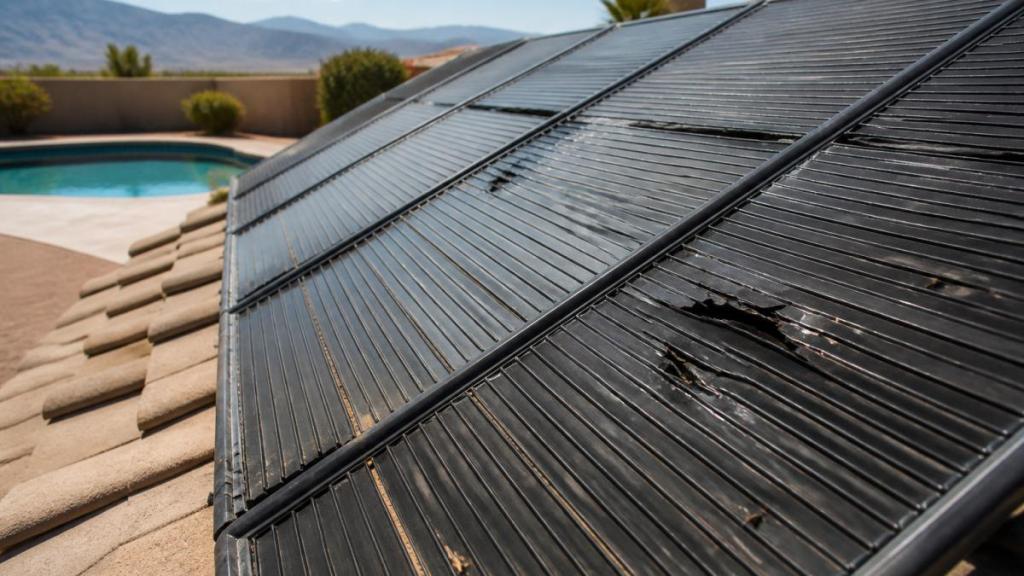
Among the signs your solar pool panels need replacing, the most obvious is visible physical damage. Cracks, delamination, and leaks are the clearest indicators that a panel has reached the end of its useful life.
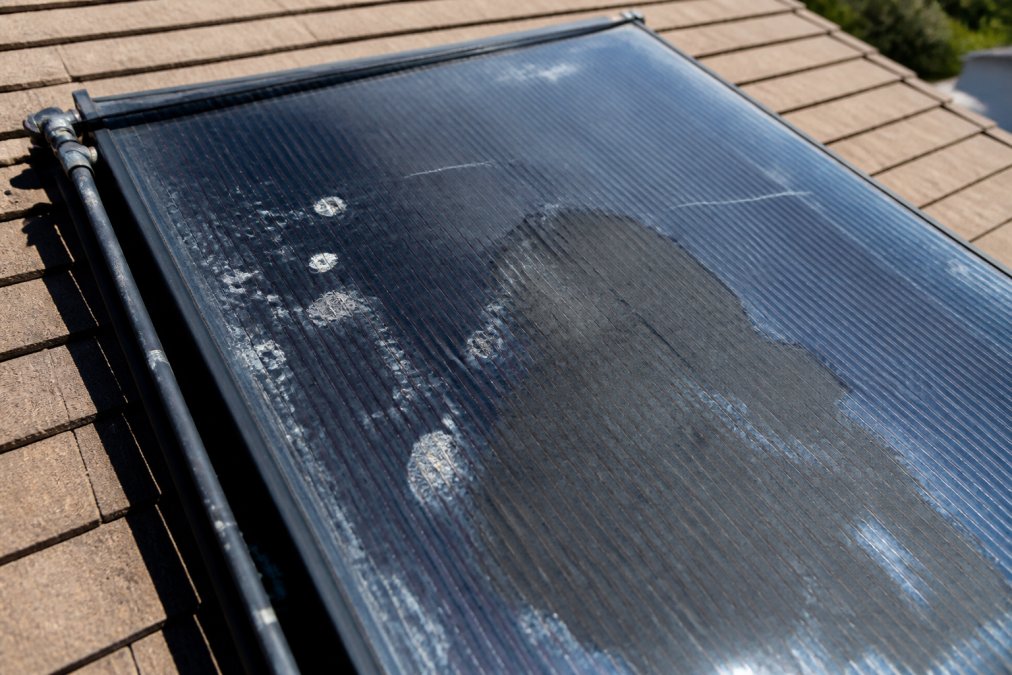
Fine cracks indicate freeze damage; delamination (white or cloudy spots) signals moisture penetration; water pooling or rust stains show structural compromise.
Water dripping from connections, pooling beneath hardware, or moisture in the header pipe indicates seal failure. Small leaks accelerate corrosion and scale buildup; a professional inspection determines if repair or replacement is warranted.
Ignoring visible cracks or delamination can lead to complete system failure. Water inside the panel freezes in winter, expanding and cracking the structure further. This accelerates the need for replacement and can damage connected piping.
Decreased Heating Efficiency and Performance
Gradual heating decline, slower temperature rise or loss of cloudy-day heating, signals efficiency loss.
Systems should raise pool temperature 3-5°F daily in good sun; drops to 1-2°F indicate scale buildup or UV degradation of the absorber plate.
Mineral deposits restrict water flow and heat transfer; UV degradation breaks down the absorber coating, reducing solar energy capture.
Temperature differential monitoring reveals the problem clearly. A healthy system maintains a 15-20 degree differential between water entering the panel and water leaving it. If that differential has dropped to 5-10 degrees or lower, the panel is no longer absorbing heat efficiently.
Test your system’s performance on a clear, sunny day. Measure the water temperature entering the panel and leaving it at the same time. A small differential suggests the panel needs either professional cleaning or replacement.
Temperature Differential Monitoring and Water Flow Issues
Temperature differential, the difference between inlet and outlet water temperature, directly measures heat transfer.
A healthy panel shows 15-20°F rise; 5-10°F indicates reduced flow, scale buildup, or failing absorber coating.
Slow flow reduces heat absorption; rapid flow prevents adequate contact with the absorber plate. Optimal flow is 5-8 gallons per minute.
High pressure drop (>5-10 PSI) indicates scale or debris; combined with low temperature differential, suggests panel degradation beyond cleaning.
Inaccurate sensors cause premature shutoff or unnecessary running; a professional should verify and recalibrate annually.
Solar Pool Heater Lifespan and System Age
Quality panels last 20+ years with proper maintenance, but lifespan depends on installation quality, climate, and maintenance history.
Systems 15-20 years old should be evaluated for replacement; modern panels deliver 15-25% better heat transfer.
Harsh climates with intense sun, freeze-thaw cycles, and high UV accelerate aging; systems may need replacement at 12-15 years.
Well-maintained systems last longer; neglected systems have shorter actual lifespans than theoretical maximums.
Repair costs often approach 50% of replacement; on 15+ year old systems, replacement usually makes better financial sense given improved efficiency.
A solar pool heater’s useful life is typically 15-20 years, but systems over 12 years old should be evaluated for replacement if major repairs are needed. Newer panels deliver better thermal efficiency and come with modern warranties.
Inverter, Electrical Faults, and Sensor Calibration
The booster pump, control sensors, and wiring must function properly for the panel to deliver heat.
Pump failure prevents water flow and heating; electrical faults are often repairable, but repeated failures suggest system aging.
Sensor calibration drift is subtle but significant. Temperature sensors that read 5-10 degrees off will cause the system to turn on and off at the wrong times. Flow sensors that malfunction prevent the pump from running. A professional should verify sensor accuracy annually, especially on systems over 10 years old.
Erratic on/off cycling or error codes may indicate control board failure; replacement boards are available, but on older systems, full replacement may be more economical.
Solar Pool Panel Leak Repair vs. Replacement
The decision between repairing and replacing a leaking solar pool panel depends on several factors: the panel’s age, the leak’s severity, repair costs, and the panel’s remaining performance potential. A structured cost-benefit analysis removes guesswork from this decision.
Repair-eligible leaks occur at connection points and seams.
The repair vs. replacement threshold: Compare three numbers:
- Repair cost (get a quote from a licensed solar pool technician)
- Replacement cost (typically $1,500-$3,500 per panel, installed)
- Panel age and remaining lifespan
Before accepting a repair quote, ask the technician whether the leak is at a connection point (repairable) or inside the panel structure (non-repairable). This single question determines whether repair makes financial sense.
Troubleshooting Solar Pool Heating Systems
Before concluding that replacement is necessary, work through a structured diagnostic process to isolate whether the problem is the panel itself or a simpler, repairable component. This decision tree separates quick fixes from true panel failure.
Step 1: Verify the pump is running. This is the first gate. If water isn’t flowing, the panel can’t heat anything, but the panel itself may be fine.
- Listen for the booster pump motor running when the system is on.
- Check the pump’s electrical breaker in your home’s panel; reset it if tripped.
- Verify the control board is powered (look for indicator lights).
- If the pump runs but produces no water flow, the pump may be failed (repairable/replaceable) rather than the panel being bad.
Step 2: Measure temperature differential on a clear, sunny day. This is the most reliable single indicator of panel health.
- Turn on the system and let it run for 10 minutes to reach steady state.
- Measure the water temperature entering the panel (inlet) using a calibrated thermometer.
- Measure the water temperature leaving the panel (outlet) at the same time.
- Calculate the difference: outlet temperature minus inlet temperature.
Interpreting the differential:
- 15-20°F differential = Panel is healthy. If heating is still slow, the problem is elsewhere (pump size, system design, or pool size).
- 10-15°F differential = Panel efficiency is declining. Proceed to Step 3 (cleaning) before considering replacement.
- 5-10°F differential = Significant degradation. The panel is losing heat transfer capacity. Cleaning may help; if differential doesn’t improve, replacement is likely needed.
- Below 5°F differential = Panel is functionally failed. Replacement is necessary.
Step 3: Flush the system and clean the panel. Scale and sediment buildup can artificially lower temperature differential. A professional flush may restore performance without requiring panel replacement.
- Contact a licensed solar pool technician to perform a system flush.
- The technician will circulate a mild acid solution through the panel to dissolve mineral deposits.
- Retest temperature differential 48 hours after flushing.
- If differential improves by 5°F or more, the panel is salvageable. If it remains low, the absorber coating has degraded and replacement is needed.
Step 4: Check for visible leaks and physical damage. Walk the entire panel array in daylight.
- Look for water pooling beneath the mounting frame or dripping from connection points.
- Inspect the panel surface for visible cracks, white delamination spots, or rust stains around the frame.
- Check all union connections (where pipes join) for weeping or active drips.
- If you find internal leaks (water escaping from inside the panel structure), replacement is necessary. If leaks are at connection points, they may be repairable (see “Solar Pool Panel Leak Repair vs. Replacement” section).
Step 5: Verify sensor calibration. Faulty temperature or flow sensors can cause the system to shut off prematurely or run at the wrong times, masking true panel performance.
- If the system turns on and off erratically, or if the control display shows temperature readings that don’t match your manual thermometer, sensors may be drifting.
- A professional can test sensor accuracy with calibrated equipment and recalibrate or replace sensors.
- After sensor correction, retest temperature differential. If it improves significantly, the panel was fine; the sensor was the problem.
Step 6: Assess system age and remaining value. If the panel passes Steps 1-5 but is still underperforming:
- If the system is under 10 years old, investigate whether the booster pump is undersized or the system design is inefficient (repairable issues).
- If the system is 15+ years old and differential is low even after cleaning, the absorber coating has degraded and replacement is the best investment.
- If the system is 12-15 years old, obtain a quote for replacement and compare the cost to the energy savings from a new, more efficient panel over its remaining lifespan.
Do not attempt to disassemble or repair the panel yourself. Solar pool panels operate under pressure and contain sealed thermal fluid. Improper handling can cause injury or system damage. Always hire a licensed solar pool technician for diagnosis and repair.
Conclusion
Recognizing the signs your solar pool panels need replacing prevents you from pouring money into repairs on a system nearing the end of its life. Look for physical damage like cracks and delamination, declining heating efficiency, low temperature differentials, and system age over 15 years. These signs indicate it’s time to consider replacement.
Frequently Asked Questions
How long do solar pool heating panels typically last?
Quality solar pool panels like Heliocol systems are built to last 20+ years with proper maintenance. Most panels come with warranties covering 12 years or more, protecting your investment. However, lifespan depends on climate exposure, maintenance frequency, and installation quality. Regular flushing and sensor checks help extend performance throughout the panel’s life.
Can leaking solar pool panels be repaired or do they need replacement?
Small leaks at connection points or header pipes may be repairable, but leaks inside the panel itself (delamination or internal cracks) typically require replacement. A professional diagnostic test can determine leak location and severity. If repair costs are substantial compared to replacement, replacement is usually the better choice. Continuing to operate a leaking panel wastes energy and risks further system damage.
What’s the difference between solar thermal pool panels and solar PV panels?
Solar thermal panels heat water directly using the sun’s heat through fluid circulation, while solar PV panels generate electricity. Pool heating uses thermal technology, which is simpler and more cost-effective for extending your swimming season. Thermal panels require no batteries or inverters and have minimal operating costs. This distinction matters because PV panels won’t heat your pool efficiently.
How does a drop in pool temperature indicate panel failure?
If your pool temperature drops 5-10 degrees below normal despite sunny conditions, it signals reduced heat transfer. This indicates possible scale buildup, sensor calibration errors, or internal panel degradation. Check flow rate and pressure first, low readings suggest blockages. If pressure and flow are normal but temperature won’t rise, thermal efficiency loss points to panel failure requiring professional diagnostic testing.


Leave a Reply