Last Updated: November 23, 2026
Quick Summary
A solar pool heater maintenance checklist runs on frequency: weekly debris, runtime and controller checks, monthly visual panel and filter cleaning, quarterly plumbing and valve inspections, seasonal spring startup and fall shutdown, and an annual professional inspection. The full homeowner routine takes less than an hour a month.
- Walk the array weekly and remove leaves, twigs or bird debris shading the collectors.
- Clean the pool filter monthly, because clogged filters slow flow and weaken heating.
- Tighten hand-tight unions by hand only, since over-tightening cracks them.
- Drain collectors and exposed pipes before freezing weather to prevent cracked panels.
- Schedule the annual professional inspection in spring, before the heating season.
Table of Contents
- The Homeowner’s Solar Pool Heater Maintenance Checklist by Frequency
- Solar Pool Heating Panels Troubleshooting by Symptom
- How to Winterize a Solar Pool Heater for Freeze Protection
- Safe DIY Boundaries and Working at Height
- Solar Pool Heater Repair Costs: What to Expect and When to Call a Professional
- Solar Pool Heating Performance Benchmarks: What Normal Looks Like
- Schedule Your Professional Solar Pool Heater Inspection
- Frequently Asked Questions
The Homeowner’s Solar Pool Heater Maintenance Checklist by Frequency
Most pool owners never think about their solar heater until the water stops warming up. That is the wrong time to start.
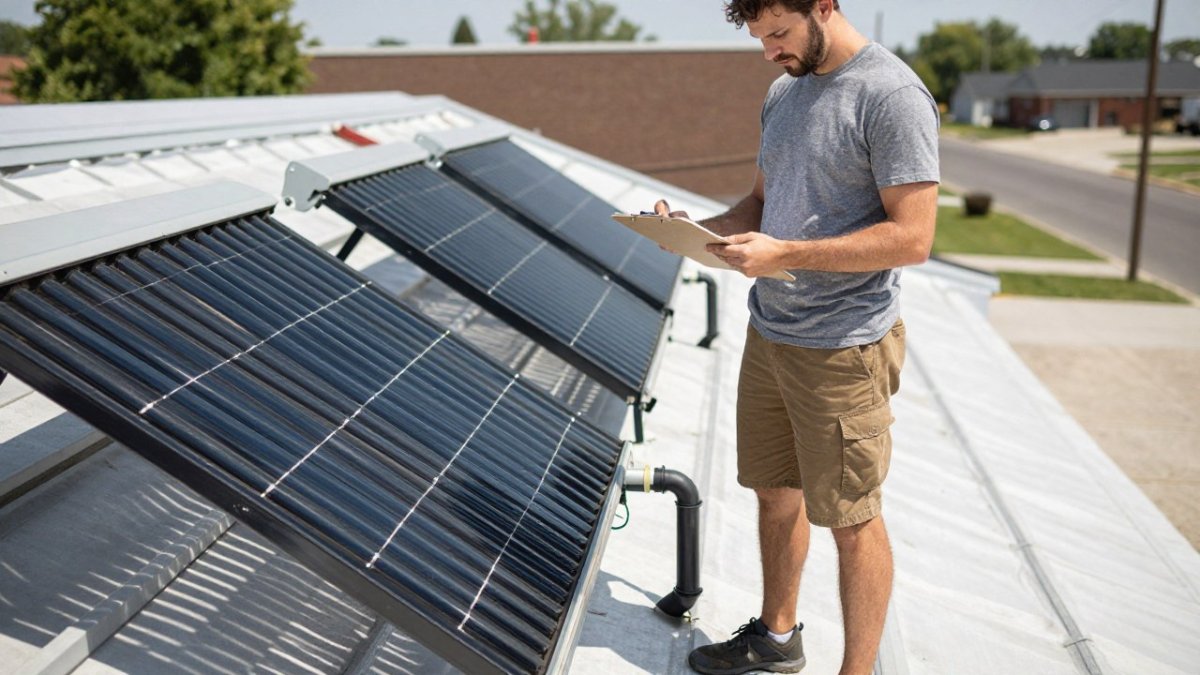
The key to a solar pool heater checklist is frequency. Tasks you do every week catch slow drift; tasks you do once a year catch wear you cannot see from the ground. Here is a full schedule homeowners can follow:
| Frequency | Core Task | Time Needed |
|---|---|---|
| Weekly | Skim debris from collectors, confirm pump runtime, glance at controller | 5-10 minutes |
| Monthly | Visual panel inspection, filter cleaning, pump basket check | 20-30 minutes |
| Quarterly | Plumbing, union, valve, and connection check | 30-45 minutes |
| Seasonal | Spring startup and fall shutdown | 1-2 hours |
| Annual | Professional inspection, sensor verification, pressure test | 1-2 hours (technician) |
Below, each one is walked through. The full homeowner routine takes less than an hour a month, and it is the cheapest insurance your system has.
Weekly: Debris, Runtime, and a Glance at the Controller
Five minutes a week prevents most heating complaints. Walk the edge of the array, from the ground if the panels are on a roof, and look for leaves, twigs, or bird debris piled on the collectors. Even a small pile shades the panel underneath it, and a shaded panel absorbs far less heat than a clean one. Remove what you can reach safely with a soft brush or leaf blower on low.
Next, confirm the pump is running during the hours your controller schedules for heating. Solar pool heaters only gain heat when water is flowing through the collectors, so a pump that trips a breaker or runs at the wrong time of day silently cancels your heating. Finally, glance at the controller display and note the pool temperature and the collector temperature.
Monthly: Quick Visual Checks and Filter Cleaning
Start with your eyes. Walk the panels and look for cracked glazing, loose clamps, or debris piled on top. Clean leaves and dirt off the panel surface with a soft cloth and plain water.
Next, clean the pool filter. A clogged filter slows water circulation through the collectors, and slow flow means weak heating. Backwash or rinse the filter per the manufacturer’s instructions, then check the pump basket for debris.
If anything on the panels looks off, our guide on how to inspect solar pool panels for damage walks through what to look for in detail.
Quarterly: Plumbing, Valve, and Connection Inspections
Every three months, follow the pipes from the pump to the roof and back. Look for drips at the unions, loose fittings, and white mineral stains that signal a slow leak. Tighten hand-tight unions by hand only. Over-tightening cracks them.
Check valve alignment while you are there. The diverter valve should send water through the collectors when heating is wanted and bypass them when it is not. A valve stuck halfway starves the panels of flow.
Finally, look at the wiring and electrical connections at the controller. Loose conduit or chewed insulation is a job for a professional, not a weekend fix.
Seasonal: Spring Startup and Fall Shutdown Tasks
Spring startup is about opening the system safely. Uncover the panels, restore water flow, and check for leaks before you trust the system for the season. Run the pump and watch the pressure gauge for a few minutes.
Fall shutdown protects your investment. Drain the collectors and exposed pipes if freezing weather is coming, and shut the system down per the manufacturer’s steps. Skipping this step is the fastest way to crack a panel.
Annual: The Professional Inspection
Once a year, have a qualified technician inspect what you cannot see: hidden leaks under panels, sensor accuracy, vacuum breaker operation, and the condition of roof mounts and straps. A sensor that reads off can quietly cost heating performance, and a technician with a reference thermometer is the one who can catch it. Schedule this inspection in spring, before the heating season, so any repair happens before you need the system.
Solar Pool Heating Panels Troubleshooting by Symptom
When something feels wrong, work backward from the symptom. Most solar pool heating panels troubleshooting comes down to three areas: flow, leaks, and controls. Our overview of the common causes of solar pool heater failure covers the full list of culprits.
Pool Water Is Not Heating: Check Flow, Valve Alignment, and Controller
No heat usually means no flow through the panels. Check the filter first, then the pump, then the valve alignment. If water is moving and the valve is correct, look at the controller settings. A sensor reading that does not match the actual pool temperature will keep the system from running.
Leaks, Drips, and Stains: Inspect Unions, Fittings, and Panel Surfaces
Small leaks rarely fix themselves. A drip at a union, a wet spot on the roof, or a white stain on the pipe all point to a failing connection. Tighten what you can reach safely. For anything on the roof or inside a panel, stop and call a pro. Our step-by-step guide on how to troubleshoot solar pool heater leaks covers the safe checks.
Controller Fault Codes and Electrical Connections
A fault code is the system telling you what it sees. Write the code down and check the manual before touching anything. Loose wiring and corroded connections belong to a licensed technician.
How to Winterize a Solar Pool Heater for Freeze Protection
Freeze protection is the single most important seasonal task in cold snaps. Water left in the collectors expands when it freezes and splits the panel. To winterize, shut off flow to the collectors, drain the panels and exposed pipes, and cover the array if your manual calls for it. In areas with hard freezes, a professional blowout removes trapped water you cannot reach. If you are unsure about how to winterize solar pool heater equipment on your roof, have it done before the first freeze, not after.
Safe DIY Boundaries and Working at Height
Know where your limits are. Safe homeowner tasks include:
- Visual checks from the ground
- Filter cleaning
- Hand-tightening reachable unions
- Reading the controller display
Leave these to a professional:
- Any work on the roof
- Panel removal or repair
- Electrical wiring and sensor replacement
- Pressure testing
Watch out: a fall from a roof causes serious injury, and roof work on a wet or windy day is never worth the risk. If a task needs a ladder above the first story, call a pro.
Solar Pool Heater Repair Costs: What to Expect and When to Call a Professional
Repair costs depend on the part and the labor, so we never quote a number without seeing the system. What we can say is that small fixes caught early cost far less than a full panel replacement. Call a professional when you see a leak you cannot reach, a fault code you cannot clear, storm damage, or a system that will not heat after basic checks. If your panels are older and showing wear, our guide on the signs your solar pool panels need replacing helps you weigh repair against replacement.
Solar Pool Heating Performance Benchmarks: What Normal Looks Like
A healthy system warms the pool gradually, not instantly. Expect the biggest temperature gain on sunny afternoons and little gain on cloudy days. The problem is that ‘normal’ varies so much with weather, shade, and pump runtime that homeowners have no baseline to compare against. The fix is to track four numbers instead of judging by feel.
The Four Numbers to Track
Write these down once a week during the heating season, a note on your phone is enough:
- Pool temperature at the same time of day, ideally mid-afternoon after several hours of sun.
- Collector temperature from the controller display, taken at the same time.
- Pump runtime in hours per day, and whether the schedule matches the controller’s heating window.
- Filter pressure at the gauge, recorded when the filter is clean and again before each backwash.
Exact gains depend on panel square footage, pool volume, air temperature, wind, and shade, so treat any single reading as a data point, not a verdict.
What the Numbers Tell You
If collector temperature climbs but pool temperature does not, heat is being made but not delivered, check flow, valve alignment, and whether the pump runs during the sunniest hours. If collector temperature barely rises above pool temperature on a sunny afternoon, the panels may be shaded, dirty, or bypassed.
A common pattern is a system that heated well in spring and fades by midsummer. That is usually debris on the panels, a filter that needs backwashing, or a pump schedule that has drifted, not a failed panel.
Setting a Realistic Expectation
Solar pool heating is a slow, cumulative process. A system that adds nothing on a clear day with the pump running is telling you something changed. Compare this week’s numbers to last month’s, not to a neighbor’s pool, and you will spot drift before it becomes a repair.
If your system used to heat well and now does not, something changed. That is your signal to inspect.
Schedule Your Professional Solar Pool Heater Inspection
An annual professional inspection catches what a homeowner cannot see: hidden leaks, failing sensors, and worn connections. Read about the benefits of professional solar pool heater inspection and see why homeowners trust our work.
Your system works hard all season, and a few hours of care each year keeps it that way. If your panels are due for a check, or you want a system that needs little more than a monthly glance, we can help.
Frequently Asked Questions
How often should I inspect my solar pool heating system?
A quick visual check of the panels, plumbing, and valves once a month catches most issues early. Perform a more thorough quarterly inspection of unions, fittings, and the controller. Schedule a professional service annually, ideally before spring startup. In freezing climates, add a pre-winter inspection to confirm the system is drained and protected. Regular checks keep your solar pool heater maintenance simple and prevent small drips from becoming costly repairs.
Do solar pool heaters use a lot of electricity?
Solar pool heaters use very little electricity. The pool pump circulates water through the panels, and that pump runs for filtration anyway. There is no gas or electric heating element. A controller may draw a small amount of power, but operating costs are minimal compared with gas heaters. Solar heating has no operating costs. Savings vary with the system and conditions, so contact Dixie Pool Solar Heating & Misting for details.
What are the signs that my solar pool heater needs repair?
Watch for pool water that stays cool despite sunny days, visible leaks or drips at unions and fittings, unusual pump pressure changes, controller fault codes, or panels that look damaged or clogged with debris. If the pump runs but the panels stay cool, check valve alignment and water circulation first. Persistent issues after basic solar pool heating panels troubleshooting usually mean a professional should inspect the system.
How do I winterize my solar pool heater to prevent damage?
To winterize a solar pool heater, first turn off the system and let panels cool. Drain water from the panels and plumbing by opening the drain valves, then use low-pressure air to blow out remaining water if your system allows. Confirm the controller is off and valves are set for winter. Freeze protection is important because trapped water can crack panels. If you are unsure about the procedure, consult a qualified professional.


Leave a Reply