Last Updated: November 22, 2026
Quick Summary
High pressure misting cools the air around your pool deck, not the pool water, by forcing water through micron-sized nozzles so droplets evaporate in flight and pull heat from the surrounding air. The result is a measurable drop in ambient temperature with no wet furniture and no puddles.
- High-pressure systems run at roughly 1,000 PSI, while low-pressure systems operate under 100 PSI.
- Use stainless steel nozzles rated for system pressure, since brass corrodes and clogs faster in hard water.
- Size the pump to total nozzle count, not the number of zones, because every nozzle adds flow demand.
- Evaporative cooling loses ground as humidity climbs, so performance numbers should be tied to a climate.
- Keep nozzle lines clear of the water’s edge and splash zones to avoid wasted water and faster clogging.
Table of Contents
- Why High Pressure Misting Systems for Pools Change Outdoor Comfort
- How Evaporative Cooling Drops the Temperature Around Your Pool
- High-Pressure vs. Low-Pressure Misting Systems: Which Fits a Pool Deck
- Misting System Pressure Requirements and Nozzle Selection
- Misting System Water Usage: What a Poolside System Actually Consumes
- Misting System Installation Cost and Total Cost of Ownership
- Where Pool Misting Falls Short: Humidity, Wind, and Wet Surfaces
- Planning Your Poolside Misting Installation with Dixie Pool Solar Heating & Misting
- Frequently Asked Questions
Why High Pressure Misting Systems for Pools Change Outdoor Comfort
Most pool owners assume a hot deck is just part of summer. It isn’t, and the benefits of high pressure misting systems for pools start with reclaiming the space around the water, not the water itself.
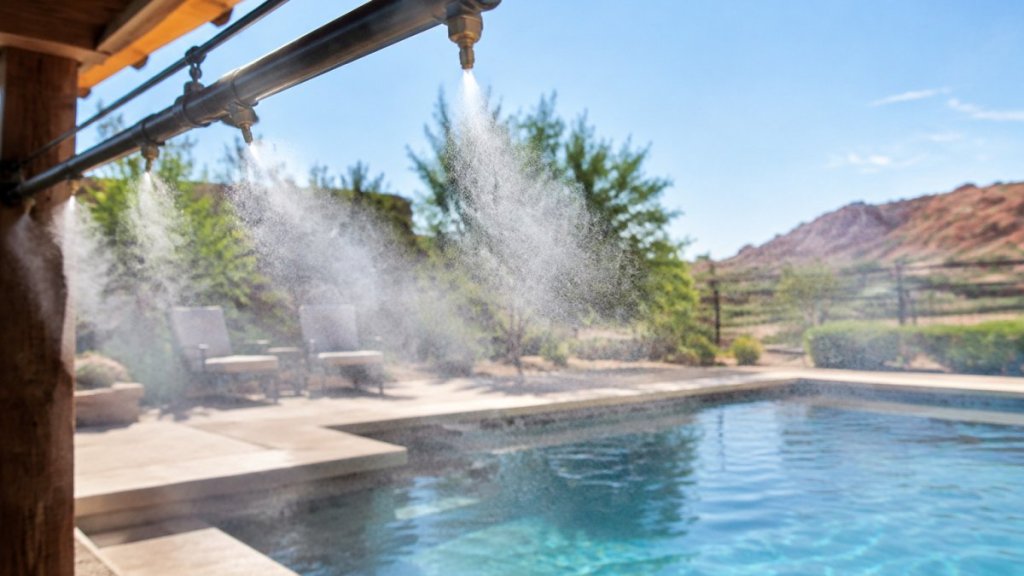
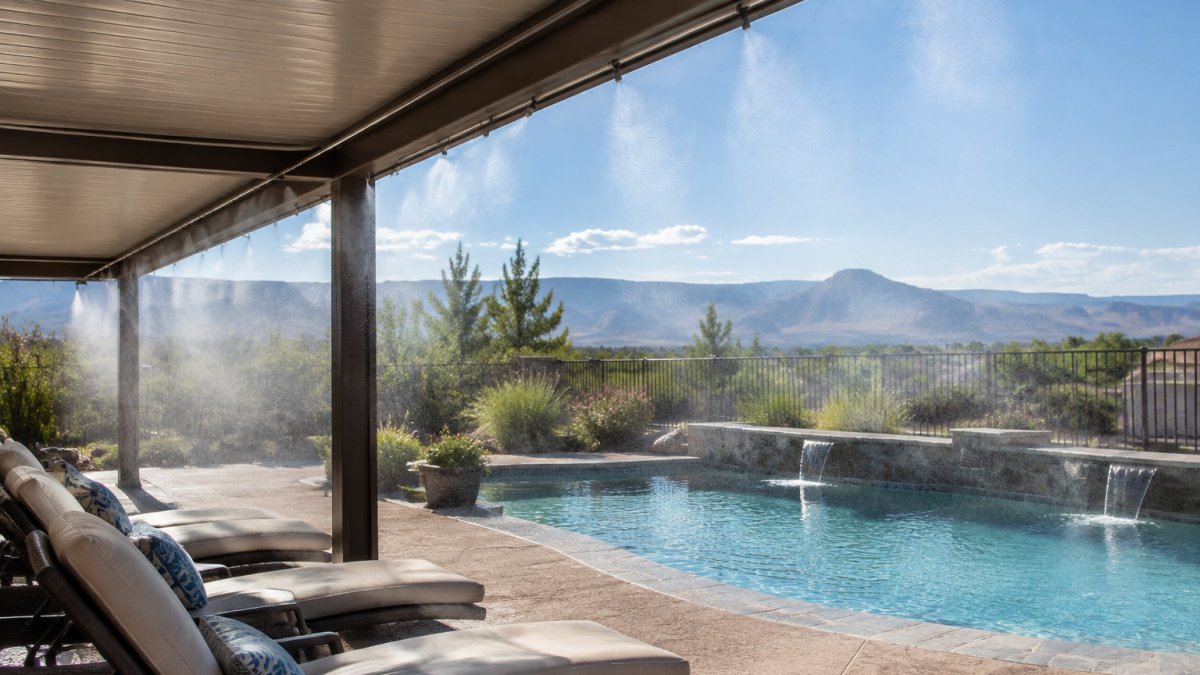
The working principle is simple. A high-pressure pump pushes water through nozzles sized to break it into droplets measured in microns. Those tiny droplets flash into vapor before they land, and that phase change pulls heat out of the surrounding air. The result is a measurable drop in ambient temperature over the pool deck, with no wet furniture and no puddle at the base of the posts.
Here is the distinction most guides get wrong: a misting system cools the air around the pool, not the pool water. If your water is running too warm in late July, misting will not fix that. It fixes the experience of sitting beside it.
How Evaporative Cooling Drops the Temperature Around Your Pool
Evaporative cooling works by converting sensible heat into latent heat. Water absorbs energy as it changes from liquid to vapor, and the air gives up that energy in the exchange. The drier the air, the more room it has to absorb moisture, and the bigger the temperature drop.
In practice, that means two things for a pool deck:
- Droplet size controls the result. Large droplets fall before they evaporate, leaving surfaces wet and the air unchanged. Fine mist evaporates in flight.
- Airflow controls the reach. A gentle breeze helps disperse the mist. Dead calm air lets it hang, which feels clammy rather than cool.
The U.S. Department of Energy guidance on evaporative cooling explains the underlying physics well: the process is most effective in hot, dry conditions and loses ground as humidity climbs. That is why performance numbers quoted by any installer should always be tied to a climate, not presented as universal.
High-Pressure vs. Low-Pressure Misting Systems: Which Fits a Pool Deck
The short answer: high-pressure wins on comfort, low-pressure wins on upfront simplicity.
| Feature | High-Pressure Misting | Low-Pressure Misting |
|---|---|---|
| Operating pressure | ~1,000 PSI | Under 100 PSI |
| Droplet size | Very fine, evaporates in flight | Coarser, settles on surfaces |
| Feel on the patio | Dry, cool air | Noticeably damp |
| Pump cost | Higher | Lower |
| Nozzle maintenance | Requires filtration | More forgiving |
| Best for | Pool decks, entertaining areas | Shade structures, temporary setups |
For a pool deck where guests sit for hours, the dampness of a low-pressure system is the dealbreaker. Nobody wants slick pavers around a pool. If you are still weighing cooling options beyond misting, our comparison of the best pool cooling systems for summer covers how misting stacks up against shade and other approaches.
If you are new to the category entirely, the broader guide to pool water cooling misting systems is worth reading before you start pricing hardware.
Misting System Pressure Requirements and Nozzle Selection
Three rules we follow on every install:
- Size the pump to the total nozzle count, not to the number of zones. Every nozzle adds flow demand.
- Use stainless steel nozzles rated for the system pressure. Brass corrodes and clogs faster in hard water.
- Filter before the nozzle, not after. A inline filter ahead of the nozzle manifold prevents the mineral clogging that kills coverage over a season.
Nozzle spacing depends on the mounting height and the wind exposure. A line mounted under a patio cover at eight feet needs wider spacing than one mounted at six feet on a pergola post. When you are selecting components, our breakdown of the best misting system components for backyard pools walks through the trade-offs in more detail.
Misting System Water Usage: What a Poolside System Actually Consumes
Water consumption is the question we hear most, and the honest answer is that it depends on run time and nozzle count, but that does not mean the number is unknowable. You can estimate it before you buy, and you should.
Misting does not lower pool water temperature.
Misting System Installation Cost and Total Cost of Ownership
Our detailed pool misting system cost and installation guide breaks down what each component contributes to the total, so you can see where the money actually goes before you commit. When you compare quotes, ask each installer to separate hardware, labor, filtration, and the projected annual water and electricity use, that breakdown is what makes two quotes comparable.
Where Pool Misting Falls Short: Humidity, Wind, and Wet Surfaces
Humidity. Evaporative cooling depends on dry air. On a muggy monsoon afternoon, the air is already loaded with moisture and the temperature drop shrinks accordingly. The system still moves air and provides some relief, but it will not deliver the same result as a dry June afternoon.
Wind. A steady breeze disperses mist and carries it off the deck. Gusty conditions make coverage uneven. Mounting on the windward side of the seating area helps, but no nozzle layout fully solves a strong crosswind.
Wet surfaces. Poorly sized nozzles, low pressure, or a clogged filter all push droplet size up, and larger droplets land. That is the source of the slippery-paver complaints people attribute to misting generally. The fix is filtration and correct pressure, not abandoning the approach.
There is also a maintenance angle worth flagging. Standing water in misting lines can grow algae between seasons, which is why lines should be drained and purged before winter. Our article on why algae grows in pool misting lines covers the causes and the flush routine that prevents it.
Planning Your Poolside Misting Installation with Dixie Pool Solar Heating & Misting
Placement decisions made before the first hole is drilled determine whether the system feels good or just looks busy. We plan around three things: where people actually sit, which direction the prevailing afternoon wind comes from, and how far the pump can push without losing pressure at the last nozzle.
A practical planning sequence:
- Mark the seating and entertaining zones on the deck.
- Identify the windward edge so mist blows across the space, not away from it.
- Count nozzles needed for even coverage at the chosen mounting height.
- Size the pump to that nozzle count with headroom for future zones.
- Locate the pump where it can be serviced and drained easily.
One more consideration specific to pool owners: keep nozzle lines clear of the water’s edge and out of splash zones. Overspray into the pool is wasted water, and mounting too low puts nozzles in range of splashing that accelerates clogging.
Our Heliocol panels carry a 12-year warranty, our labor carries a 2-year warranty, and the systems need little to no maintenance after installation.
The gap between a pool you look at from inside and a pool deck you actually use all afternoon usually comes down to planning, not hardware. If your deck is too hot to enjoy from June through August, we can size a misting system to your space and pair it with solar heating so the water and the air both work in your favor. Get started with Dixie Pool Solar Heating & Misting and turn your pool area into usable outdoor space again.
Frequently Asked Questions
Can a high pressure misting system cool the pool water itself?
Not meaningfully. High pressure misting cools the air above the deck, not the water in the pool. The droplets evaporate before they reach the surface, and a large body of water holds far more heat than the air around it. If hot pool water is your actual problem, misting is the wrong tool. Solar heating controls water temperature in the other direction, and a pool cover limits heat gain and overnight loss. Treat misting as an air-comfort upgrade for the patio, not a water chiller.
Do high pressure misting systems use a lot of water?
Less than most people expect. A typical residential high pressure system runs roughly half a gallon to one gallon per nozzle per hour, so a 12-nozzle setup uses about 6 to 12 gallons an hour while running. Compare that to evaporation from an uncovered pool, which can lose several hundred gallons a week in hot, dry weather. Run the system on a timer only when the patio is in use, and misting system water usage stays a minor line item.
Will poolside misting leave my furniture and deck wet?
It should not if the system is set up correctly. High pressure systems push water through nozzles at roughly 1,000 psi or more, which breaks it into droplets around 5 to 10 microns. Those droplets evaporate within a few feet of the nozzle. Wet surfaces usually point to a low pressure system, clogged or worn nozzles, or a pump that is not reaching its rated pressure. A pressure gauge check and a nozzle cleaning usually solve it.
Does humidity affect how well a pool misting system works?
Yes, and it is the biggest performance variable. Evaporative cooling depends on dry air, so a system that drops temperatures noticeably in low humidity may do very little on a muggy afternoon. Wind matters too: a steady breeze carries mist away from the seating area, while still air lets it hang. Place nozzles on the upwind edge of the patio and run the system in shorter cycles during humid stretches.


Leave a Reply