
Last Updated: November 21, 2026
Quick Summary
A hybrid pool heating system is worth it when your pool gets good sun most of the day, you want to extend the swimming season, and your heating costs are high enough for savings to add up. It is a weaker fit for heavily shaded pools, short seasons, or owners who expect to move soon.
- Build the payback estimate with your own utility bills, not a generic savings claim.
- Ask for the quote as four separate line items: collectors, backup heater, integration, and permits.
- Confirm current federal, state, and utility incentive eligibility with the relevant agencies before budgeting.
- Pool covers reduce evaporation losses, which can shorten payback noticeably.
- Plan for the backup heater to carry more of the load in early spring and on cloudy days.
Table of Contents
- What a Hybrid Pool Heating System Actually Is
- Pool Heat Pump vs Gas Heater: How They Compare
- Solar and Heat Pump Pool Heating: Combining the Two
- Solar Pool Heating System Cost and Upfront Investment
- Pool Heat Pump Operating Cost and Payback Period
- Heating Speed, Cold Weather and Shaded Pools
- Deciding Whether a Hybrid System Fits Your Pool
- Frequently Asked Questions
Most Southern Utah pool owners want the same thing: swimming from March through November without a gas bill that grows every year. A hybrid pool heating system, which pairs solar thermal panels with a heat pump or gas heater, is one way to get there. This guide explains what a hybrid system actually is, how the main options compare, and when the investment makes sense for a typical household. We’ll keep the math honest, including the parts most sales pitches leave out.
What a Hybrid Pool Heating System Actually Is
A hybrid pool heating system uses two or more heat sources that share the work of warming the water. The most common pairing is solar thermal panels as the primary heater, with a heat pump or gas heater as the backup for cool days, cloudy stretches, and early or late season use.
The term gets used loosely, so it helps to be precise. Solar thermal panels collect heat directly from sunlight and transfer it to the water passing through them. This is different from photovoltaic (PV) solar, which generates electricity. Solar thermal systems heat water rather than produce power for the house.
A backup heater is what makes a system “hybrid” in the practical sense. Without one, a solar-only pool is limited by weather and sun hours. With one, the pool stays usable when conditions turn.
Pool Heat Pump vs Gas Heater: How They Compare
Before deciding whether a hybrid makes sense, it helps to understand the two backup options most homeowners weigh.
A pool heat pump moves heat from the outside air into the water. It is electric, typically efficient in mild weather, and loses output as air temperature drops. A gas heater burns natural gas or propane to heat water quickly, regardless of outdoor temperature, but its fuel cost depends on local gas rates.
| Factor | Heat Pump | Gas Heater |
|---|---|---|
| Energy source | Electricity | Natural gas or propane |
| Heating speed | Slower, especially in cold air | Fast, regardless of air temperature |
| Cold-weather output | Drops as air temperature falls | Consistent |
| Operating cost driver | Local electricity rates | Local gas or propane prices |
| Upfront equipment cost | Moderate | Moderate |
Neither option is universally better. A heat pump tends to suit homes with reasonable electricity rates and mild shoulder seasons. A gas heater suits owners who need fast heat or use the pool heavily in cooler months. Pairing either one with solar shifts most of the load to free sunlight, so the backup runs far less often.
Solar and Heat Pump Pool Heating: Combining the Two
Pairing solar with a heat pump is the configuration that most often gets called a hybrid. To see how a standalone solar pool heater performs and pays off in your climate, read a cost and climate breakdown of solar pool heaters.
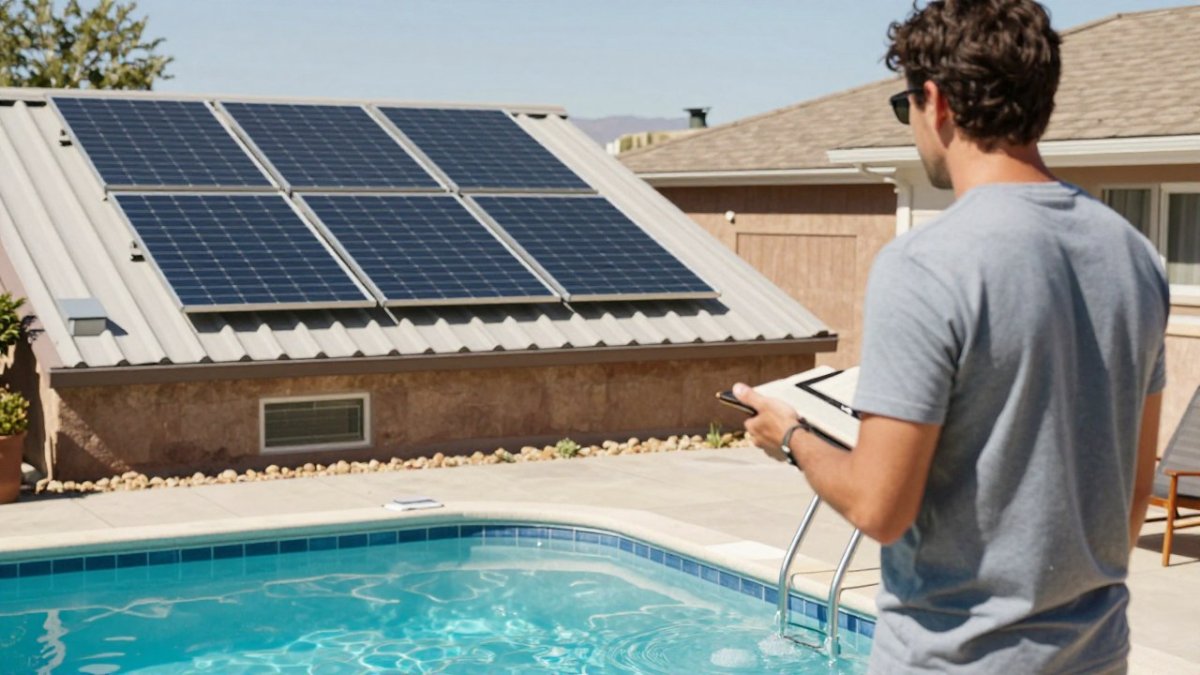
Here is how the division of labor usually works. On a clear spring afternoon, solar panels may raise water temperature enough that the heat pump barely runs. On a cold, overcast morning, the heat pump does the lifting.
Installation matters here. The solar loop, the heat pump, and the pool’s filtration and plumbing have to be integrated so water flows through the right components in the right order. Poor integration is one of the most common reasons a hybrid underperforms, so the setup should be planned around your specific pool and site.
Solar Pool Heating System Cost and Upfront Investment
The upfront price is where most homeowners hesitate, and it is reasonable to ask hard questions before committing. Factors affecting solar pool heating installation pricing are covered in a detailed price guide.
The four line items.
- Solar thermal collector array. Priced per panel and sized to the pool’s surface area. A larger pool needs more panels, and panel count is the single biggest driver of the solar portion of the quote.
- Backup heater. A heat pump or a gas heater, sized to the pool volume and to how fast you want temperature recovery. This is the second-largest line item and the one that most changes the total.
- Integration and plumbing. The solar loop, the backup heater, valves, controller, and the plumbing that sequences water through the right components in the right order. Poor integration is one of the most common reasons a hybrid underperforms, so this is not the line to shave.
- Permitting and electrical or gas work. A heat pump may need a dedicated electrical circuit; a gas heater may need a gas-line upgrade. Both can require a permit, and both add cost that a solar-only quote will not show.
What moves the number most. Pool size and panel count set the floor. Whether the backup is a heat pump or a gas heater moves the total by a meaningful margin, because the two have different equipment and utility-connection costs. Roof versus ground mounting changes labor.
Incentives change the net, not the sticker. Two programs are worth checking before you budget. Incentive programs for solar and backup heating equipment exist at the federal, state, and utility level, and their eligibility rules and amounts change over time (Home Upgrades). Confirm current terms with a tax professional, the IRS, or the relevant state and utility agencies before counting on any of them.
How to read a quote. Ask for the four line items separately rather than one lump sum. A quote that bundles the solar array, the backup heater, integration, and permits into a single number makes it impossible to compare against another proposal, and it hides where the cost is actually going. Ask also whether the quote assumes a specific panel count and backup size, if it does not state those, the number is not comparable.
Watch out: a quote that excludes permitting, electrical or gas work, or the controller is not the price you will pay. Ask explicitly what is excluded before you compare two proposals.
Think of the upfront cost as one half of a payback calculation, not a standalone number. The next section shows how to pair it with operating costs to get a break-even estimate.
Pool Heat Pump Operating Cost and Payback Period
Operating cost is where the payback math is decided, and it is also where most articles get vague. The fix is to build a simple total-cost-of-ownership model with your own numbers.
The four inputs.
- Your current annual heating cost. Pull it from past utility statements or estimate it from the heater’s rated energy use and your local rate. If you heat with gas, use your gas rate per therm; if you heat with a heat pump, use your electricity rate per kWh.
- The share of that load solar can carry. This depends on your climate, panel count, and shade. A sunny pool with a full array can carry most of the load in the shoulder seasons; a shaded pool carries much less. Solar typically covers a larger share of the load on clear days than across a full season.
- The backup’s operating cost for the remaining load. A heat pump’s running cost depends on electricity rates and how far air temperature falls; a gas heater’s depends on fuel prices. The backup runs far less often in a hybrid than it would alone, which is the whole point.
- Net upfront cost after incentives. Take the quote from the previous section and subtract the incentives you have confirmed you qualify for.
A worked example, with placeholders you replace. Suppose your current gas heating bill runs a set amount per year.
Break-even by pool and usage profile. The payback shortens when the pool is large, the season is long, the pool is covered when not in use, and local energy rates are high.
Maintenance, lifespan, and the years after payback. The years after break-even are where the savings accumulate.
Why the model beats a savings claim. Be cautious with any savings figure that does not state its assumptions.
Watch out: a payback estimate that ignores the backup heater’s remaining operating cost, or that assumes 100% solar coverage, will overstate savings. Build the model with the backup’s share included.
Heating Speed, Cold Weather and Shaded Pools
Speed and reliability are the questions homeowners ask most. Solar thermal heats water gradually. In early spring, the pool may take longer to reach comfortable temperatures than it would with a gas heater running at full output. That is why the backup heater matters for the first weeks of the season.
Cold weather affects each part of the system differently. Solar output falls on overcast days and in winter, and a heat pump’s efficiency drops as air temperature falls. A gas heater keeps producing heat at the same rate, but it costs more to run.
Shade is the other major variable. Solar panels need direct sun for most of the day to perform well. A pool that sits in shade for part of the afternoon will collect less heat, and that reduces both the comfort and the savings.
Deciding Whether a Hybrid System Fits Your Pool
Use the payback steps above with your own numbers. Ask for a site-specific quote, confirm current incentive eligibility, and ask about the warranty terms for the panels and labor. Dixie Pool Solar Heating & Misting’s panels carry a 12-year warranty and the labor carries a 2-year warranty, and both are worth comparing against any other proposal you receive.
We would rather you make a decision based on your own pool and bills than on a sales pitch. If your numbers work, a hybrid can extend your swimming season and reduce heating costs for years. If they don’t, a simpler setup may serve you better.
For a quote tailored to your pool, visit Dixie Pool Solar Heating & Misting’s website or contact the team directly.
Frequently Asked Questions
What is a hybrid pool heating system?
A hybrid pool heating system combines two or more heating methods, such as solar thermal panels with a heat pump or gas heater. The solar panels handle the free daytime heat when the sun is strong, while the backup unit takes over on cloudy days, at night, or when the pool needs a quick temperature boost. This setup is designed to keep the pool warm through the shoulder seasons without relying on one energy source alone. Costs and savings depend on pool size, sun exposure and how often the pool is used.
Is a heat pump or gas heater better for a swimming pool?
A heat pump is usually more energy efficient for pools in mild or moderate climates because it moves heat from the air rather than burning fuel. A gas heater heats water faster and performs better in cold weather or when the pool must be warmed quickly. Many owners choose a heat pump for steady operating cost and a gas heater for speed, and a hybrid system tries to capture the benefits of both. The right choice depends on your climate, how long your swimming season runs, and your local energy prices.
How much does it cost to run a hybrid pool heater?
Operating cost depends on the components in the system, your local electricity or natural gas rates, pool size, cover use and the outdoor temperatures during your season. Solar thermal panels have no fuel cost, so the backup heater usually drives most of the operating expense. Ask any installer for an estimate based on your pool volume and typical usage, and compare it against your current heating bills. For a quote tailored to your pool, visit Dixie Pool Solar Heating & Misting’s website or contact the team directly.
Can solar panels and a pool heat pump work together?
Yes. Solar thermal panels can preheat the water before it passes through a heat pump, which reduces how hard the heat pump has to work. The combination can shorten heating times and lower electricity use, especially on sunny spring and fall days. Installation compatibility, roof space and the existing plumbing all affect whether the two systems can be integrated efficiently. A site assessment is the best way to confirm what your pool can support.


Leave a Reply