Last Updated: November 4, 2026
Quick Summary
A solar pool heater is worth it if it can extend your swimming season enough to justify the upfront cost. Its value depends on your installed cost, your annual savings from avoided gas or electric heat, and your payback period. Run the payback math with your own numbers before deciding.
- Installed cost depends on collector area, roof height, plumbing run length and pump capacity.
- Operating cost is mainly the electricity to run the pump you already use.
- Run payback three ways: conservative, expected and optimistic, since results vary widely.
- Verify incentives in writing before counting them, because they change often.
- Replace an aging roof before installing panels to avoid paying for removal and reinstallation.
Table of Contents
- How a Solar Pool Heater Works and Why It Matters for Your Pool
- Solar Pool Heater Costs, Savings and Payback Period
- How Southern Utah Climate and Shade Affect Performance
- Solar Pool Heater for Inground Pool vs. Above Ground Pool
- Solar Pool Cover vs. Solar Pool Heater: Which Saves More
- Roof Requirements, Durability and Warranty Coverage
- Choosing the Best Solar Pool Heater and Booking Your Free Quote
- Frequently Asked Questions
How a Solar Pool Heater Works and Why It Matters for Your Pool
A solar pool heater is a system that uses thermal collector panels to warm pool water with sunlight, without gas or electricity to produce the heat. Homeowners in Southern Utah who ask whether a solar pool heater is worth it for their pool are usually asking one question: can it extend the season enough to justify the cost?
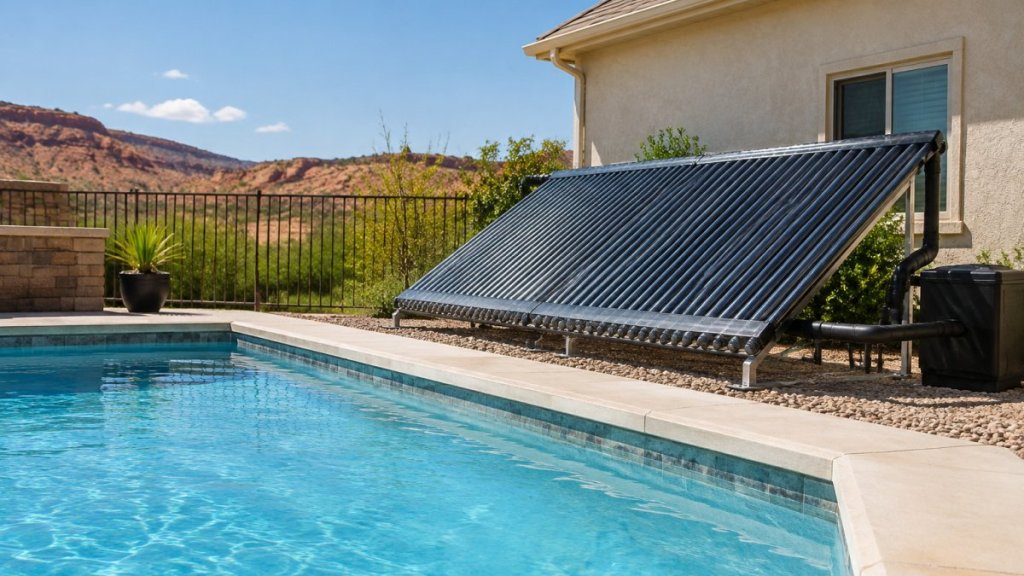
Water circulates from the pool pump through roof-mounted collector panels, picks up heat, and returns to the pool. A diverter valve and thermostat control decide when the flow runs. Because the panels capture thermal energy directly, the system does not produce electricity, and that distinction matters for performance.
Thermal Collection vs. Electricity-Generating Solar Panels
Thermal collectors and photovoltaic (PV) panels both sit on a roof and both use sunlight, but they do different jobs. A thermal collector heats water. You can compare solar, gas, and heat pump options in our pool heating cost guide for Southern Utah. A PV panel generates electricity, which you could then use to run a standard electric heater or the pump. Thermal systems are typically the more direct route for pool heating because they skip the conversion step, so less of the sun’s energy is lost along the way.
Solar Pool Heater Costs, Savings and Payback Period
Most homeowners asking whether a solar pool heater is worth it are really asking two questions: what does it cost up front, and how fast does it pay that back? Answer both with your own numbers before you sign anything.
Installed cost is driven by four variables: collector area (square feet of panel), roof height and pitch, distance and complexity of the plumbing run to the pool equipment pad, and whether your existing pump and filter can handle the added flow. Because those vary so much, a single national price is misleading. Pricing depends on your pool size, roof layout and installation requirements. Ask for a written, itemized quote that separates panels, mounting hardware, plumbing, labor, and any pump or controller upgrades, which lets you compare bids fairly.
Operating cost is where solar wins. A thermal system has no fuel bill; the only ongoing cost is the electricity to run the pump, which you are largely paying anyway to circulate and filter the pool.
Payback period is upfront cost divided by annual savings. Run it three ways, conservative, expected, and optimistic, because the answer swings widely with pool size, sun exposure, and how many months you actually swim.
Federal, State and Utility Incentives You May Qualify For
Incentives shorten payback, but they change often, so verify current terms with the program administrator before you count them. At the state level, confirm whether your state offers a residential energy tax credit or property tax exemption for solar thermal systems and what the cap is. At the utility level, ask your gas provider whether it offers a rebate for switching pool heating off fossil fuel, some do, and a rebate in the hundreds of dollars materially moves a five-year payback. At the federal level, check the IRS and the U.S. Department of Energy for the current rules rather than relying on an article’s date.
The Hidden Costs Competitors Skip
Three costs rarely appear in a sales quote but belong in your payback math. First, roof work: if your roof is near end of life, replacing it before panels go on is far cheaper than removing and reinstalling the array later. Second, a solar blanket or reel, which is often the single highest-return add-on because it cuts overnight heat loss and evaporation. Third, controller or variable-speed pump upgrades if your current equipment cannot be scheduled to run the collector loop during peak sun.
The article breaks installed cost down into the variables that drive it, which a reader can compare directly.
| Cost driver | What it affects | Why it matters |
|---|---|---|
| Collector area | Panel size needed | Sets how much heat the system adds |
| Roof height and pitch | Installation labor | Changes the install complexity |
| Plumbing run distance | Pipe and labor cost | Longer runs add expense |
| Existing pump and filter capacity | Need for upgrades | Insufficient flow requires added equipment |
| Payback period | Upfront cost divided by annual savings | Swings with pool size, sun and swim months |
How Southern Utah Climate and Shade Affect Performance
Southern Utah’s sunny climate supports solar heating, because the panels depend on strong sunlight. Warmer air temperatures also mean the pool starts from a higher baseline, so less heat has to be added. Performance still depends on your site.
Ambient temperature, wind and evaporation loss all affect how quickly the water warms. A thermal blanket on the pool at night can reduce evaporation and help the heater hold temperature. Our guide explains how to heat a swimming pool without gas in Southern Utah using solar panels.
Solar Pool Heater for Inground Pool vs. Above Ground Pool
Solar pool heaters work with both inground and above-ground pools, but the sizing and installation details differ. An inground pool typically holds more water and has a larger surface area, which means more collector area is usually needed to reach the same temperature. An above-ground pool often needs fewer panels, though its plumbing connection and pump arrangement require their own planning.
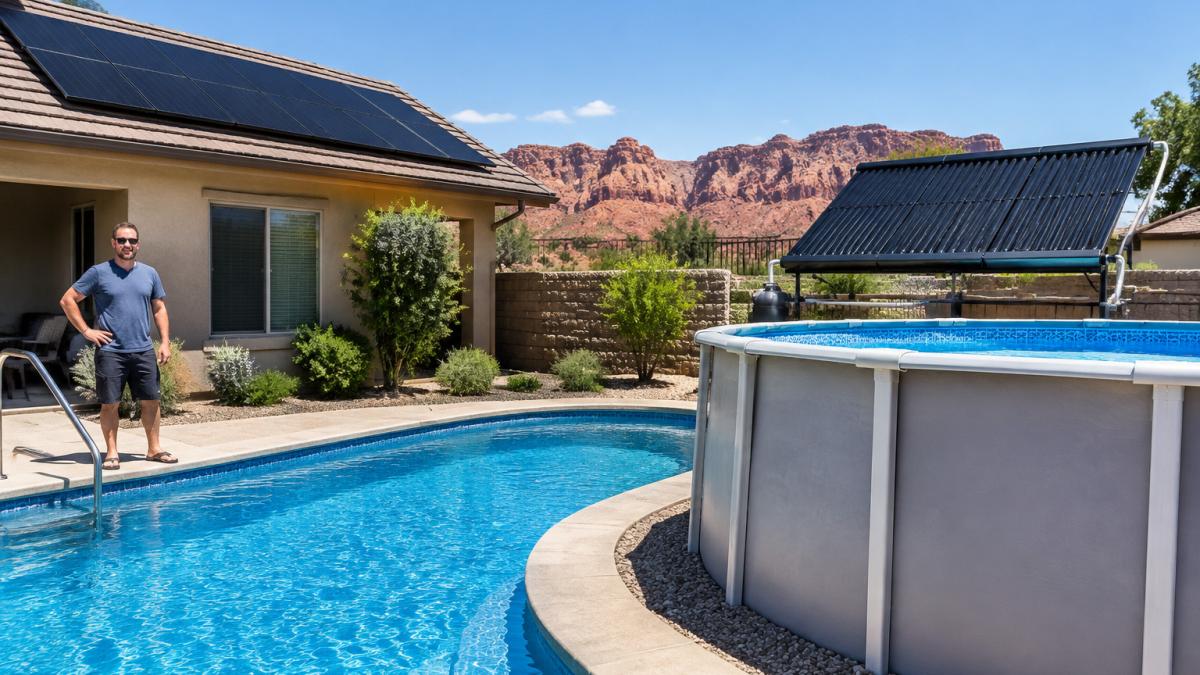
Because surface area and volume drive the required output, a proper sizing calculation matters more than any general rule. Describe your pool dimensions and pump setup when you request a quote so the system is matched to the water it has to heat.
Solar Pool Cover vs. Solar Pool Heater: Which Saves More
A solar pool cover and a solar pool heater address different losses. A cover reduces evaporation and traps heat overnight, which is often the cheapest first step. A solar pool heater adds heat during the day. Many homeowners get the best results by combining both: the cover holds the warmth the heater produces. If you can only choose one, a cover is the lower-cost starting point, while a heater is the choice when you need a meaningfully longer swimming season.
Roof Requirements, Durability and Warranty Coverage
Solar thermal panels are mounted on the roof, so the roof is part of the system. Three things determine whether your roof is a good host: available unshaded area facing south, west, or a split of both; the roof’s age and condition; and how the panels will be attached without creating leaks or voiding coverage.
Sizing is a surface-area calculation, not a rule of thumb. Collector area generally needs to be a meaningful fraction of the pool’s surface area to add heat at a useful rate, and shading, roof pitch, and orientation all reduce effective output.
Roof Penetrations and Warranty Impacts
This is the concern most articles skip. Panels are typically secured with mounting hardware that penetrates the roof surface, and every penetration is a potential leak point if it is flashed and sealed incorrectly. More importantly, many roofing manufacturers and roofing contractors treat penetrations by third parties as a reason to limit or void the roofing warranty on the affected area. Before you sign, ask the solar installer how they flash and seal penetrations, whether they will provide a written workmanship warranty on the roof penetrations themselves, and get your roofer’s position in writing on how the array affects your existing roof warranty.
Structural Load and Roof Age
Collector panels, mounting rails, and the water inside them add dead load to the roof structure. For most residential roofs this is manageable, but it is a real engineering question on older homes, tile roofs, and anything with prior repairs. If your roof is within a few years of replacement, the sensible sequence is roof first, panels second, removing and reinstalling an array to reroof is a cost you do not want to pay twice. A roof inspection belongs in the planning stage, not after the deposit.
Durability, Maintenance and What the Warranty Actually Covers
Heliocol panels are built to last 20+ years, and the system requires little to no maintenance after installation. Read more about how long solar pool panels last and how to extend their life. Warranties vary widely, so read three things: the length of the panel warranty, whether labor to remove and reinstall panels for a roof repair is covered, and what maintenance or installation conditions void coverage. Know which warranty protects you when something fails. See what solar pool heating warranty coverage includes and how to file a claim. Ask for the warranty document, not a summary, and confirm it transfers if you sell the home.
Regional Climate Performance: What to Expect Where You Live
Performance is not uniform across the country, and generic claims hide that. In the Sunbelt, Arizona, Nevada, Southern California, Texas, Florida, and the southern tier generally, long swim seasons and high solar irradiance mean a solar heater can carry most of the season’s heating load and pay back fastest. In the northern states and mountain West, the system still works, but the swim season is shorter, spring and fall sun is weaker, and a solar blanket becomes close to mandatory to hold heat overnight. In mixed climates, expect solar to extend the season at the shoulders rather than heat the pool through winter.
Choosing the Best Solar Pool Heater and Booking Your Free Quote
When you compare options, focus on panel durability, warranty length, how well the system integrates with your existing pump and plumbing, and whether the installer sizes the array to your pool and sun exposure. Ask each provider the same questions and compare written terms side by side. A well-integrated system with a long panel warranty offers strong value over the life of the pool.
Pricing depends on your pool size, roof layout and installation requirements, so the next step is a site assessment. You can also learn how to get a solar pool heating quote in Utah.
Frequently Asked Questions
Is a solar pool heater worth the investment?
For most pool owners who swim from spring through fall, a solar pool heater pays off because it runs on sun rather than gas or electricity, so operating costs are close to zero after installation. Dixie Pool Solar Heating & Misting estimates savings of $1,500 to $2,000 a year on heating costs, though actual results depend on your pool size, shade, roof orientation and how long you keep the water warm. Ask for a site-specific estimate before you decide, since final pricing depends on your system and installation details.
Do solar pool heaters work on cloudy days?
Solar thermal collectors work best in direct sun, so output drops on overcast days, but they still capture some heat from diffuse light and warmer ambient air. In Southern Utah’s generally sunny climate, most pool owners see consistent performance during the main swim season. A solar pool cover used alongside the heater helps hold in heat overnight and during cool, cloudy stretches.
Is a solar pool heater suitable for an above ground pool?
Yes, solar pool heaters can work with above ground pools as well as inground pools, though the setup and sizing differ. Above ground pools are often smaller and lose heat faster through their walls, so the panel area and the pump flow rate need to match the pool volume. A professional can confirm the right configuration and plumbing integration for your specific pool before installation.
Can a solar pool cover work as well as a solar heater?
A solar pool cover is an affordable way to cut evaporation and retain heat, but it does not add heat to the water the way a solar heater does. Many pool owners use both: the cover reduces heat loss at night, and the heater supplies daytime warming. Covers and heaters complement each other, so the best choice depends on whether you need to raise the temperature or simply hold onto the heat you already have.


Leave a Reply