Last Updated: November 4, 2026
Quick Summary
Most pool heater temperature problems start with water flow, not the heater itself, so check the filter, skimmer and pressure switch before touching a dial. A pool heater temperature that won’t climb is often a flow problem in disguise, and fixing it costs nothing.
- A clogged filter is the most common cause of low flow, so clean or backwash it first.
- A reset clears the code but not the cause, so the fault often returns within minutes.
- An undersized heater will never hit the set point, no matter how well it runs.
- Read the filter pressure gauge weekly and compare it to your clean-filter baseline.
- Every degree you raise the set point costs energy and stresses the heater.
Table of Contents
- Start With the Basics: Water Flow and Your Pressure Switch
- Why Your Pool Heater Is Running but Not Heating
- Decoding Error Codes and Resetting Your Heater Safely
- Sizing, Cold Weather, and Heat Loss Challenges
- Pool Heater Maintenance Tips to Prevent Temperature Problems
- Energy Efficiency vs. Temperature Settings
- When to Get a Solar Pool Heating Quote in Utah
- Frequently Asked Questions
Start With the Basics: Water Flow and Your Pressure Switch
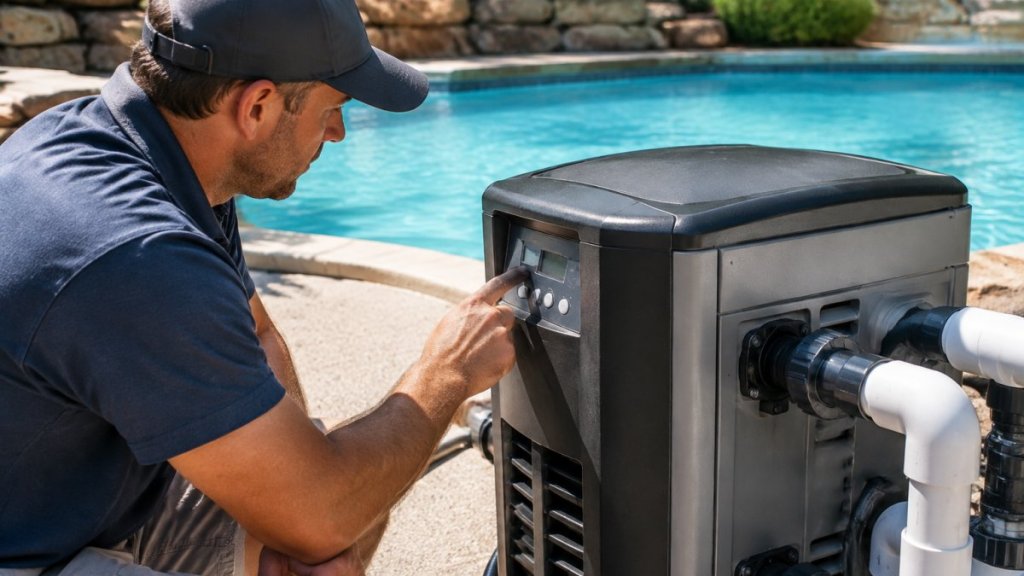
Most pool heater temperature problems start with water flow, not the heater itself. Check circulation before you touch a single dial. A pool heater temperature that won’t climb is often a flow problem in disguise, and fixing it costs nothing.
Here’s the short version. Your heater needs steady water moving through it to transfer heat. When flow drops, safety switches cut the burner or pump. The result is cold water and a heater that seems to do nothing.
Check the Filter and Skimmer First
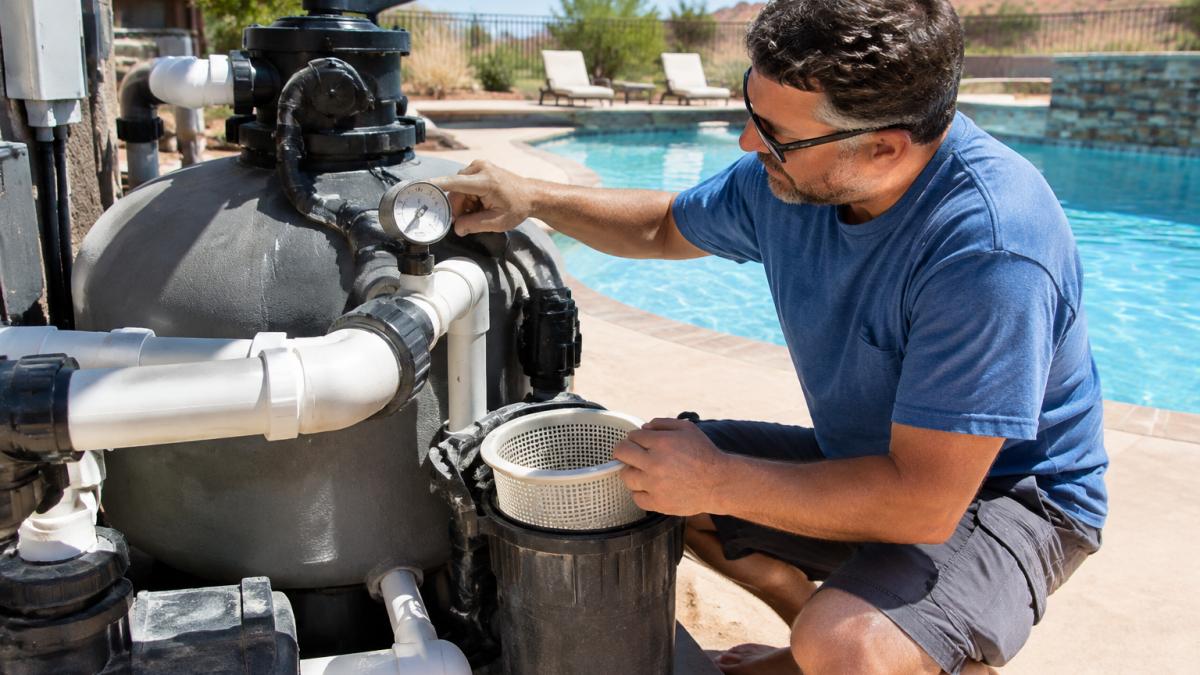
A clogged filter is the most common cause of low flow. Clean or backwash it, then empty the skimmer basket. Debris starves the pump, and a starved pump can’t push water through the heater.
Watch the pressure gauge. A reading well above your normal clean-filter level points to a blockage. Also check the pump basket for leaves and hair.
Test the Pressure Switch and Bypass Valve
The pressure switch tells the heater water is moving. If it fails, the heater shuts down to protect itself. A stuck bypass valve causes the same symptom.
- Confirm the pump runs at full speed
- Check that valves are open to the heater
- Look for air bubbles in the pump basket
Why Your Pool Heater Is Running but Not Heating
A pool heater running but not heating usually means the heat source isn’t firing, or heat isn’t reaching the water. The unit hums, the fan spins, and the water stays cold. Two culprits dominate: fuel and ignition, or a sensor that’s lying to the control board.
Gas Supply and Ignition Failures
Gas heaters need steady fuel and a clean spark. Check that the gas valve is open and the supply line isn’t shut off. A dirty igniter or flame sensor stops ignition.
Listen for the click of the igniter. No click means an electrical or control issue. A click with no flame points to fuel or a clogged burner.
Thermostat and Sensor Calibration
A thermostat that reads the wrong temperature won’t call for heat. Calibration fixes a sensor that’s drifted off its true reading. Test the temperature sensor against a known thermometer.
If the reading is off by several degrees, recalibrate or replace the sensor.
Decoding Error Codes and Resetting Your Heater Safely
Error codes are the heater’s way of telling you what failed, but the code itself is only a starting point. The trick is reading the code, matching it to the right subsystem, and testing that subsystem before you reset anything. A reset clears the code but not the cause, so the fault returns, often within minutes.
Most residential heaters use a two- or three-digit code displayed on the control board or a small LED window. Codes fall into a handful of families: flow or pressure faults, ignition or flame faults, sensor faults, high-limit faults, and voltage or communication faults. The table below maps the common code families to the first check you should run. Treat the code family as a diagnostic shortcut, not a diagnosis.
| Code Family | Typical Display | Likely Cause | First Check | Second Check |
|---|---|---|---|---|
| Flow / pressure | “FLO”, “PS”, “LO FLOW” | Clogged filter, closed valve, air in pump | Clean filter, open valves to heater | Bleed air from pump basket, confirm pump at full speed |
| Ignition / flame | “IGN”, “IF”, “FLAME” | Gas valve off, dirty igniter, flame sensor fouled | Confirm gas valve open, listen for igniter click | Clean or replace igniter and flame sensor |
| Sensor | “SEN”, “TEMP”, “SNS” | Failed or drifted temperature sensor | Test sensor resistance against a known thermometer | Inspect sensor wiring for corrosion or rodent damage |
| High-limit | “HL”, “HLS”, “OVERHEAT” | Low water flow causing overheating | Restore water flow, clean filter | Check bypass valve and internal bypass spring |
| Voltage / communication | “V”, “COM”, “PCB” | Breaker trip, loose wiring, control board fault | Check breaker and voltage at the heater | Inspect control board for burn marks or loose harnesses |
Brand-specific codes vary, so the same family can appear under different labels. When you see a code you don’t recognize, look it up in the manufacturer’s installation and service manual for your exact model, the manual is the only authoritative source for that unit’s code set.
Watch out: resetting a high-limit or flow fault without restoring water flow can cause the heat exchanger to overheat and crack, which turns a cheap fix into a heater replacement.
Reset safely by cutting power at the breaker, waiting a few minutes for the control board to discharge, then restoring power. If the code returns immediately, stop and diagnose the code family rather than resetting again. Repeated resets mask the real fault and can damage the ignition system or heat exchanger. For a deeper walkthrough of what goes wrong, see our guide to common causes of solar pool heater failure.
Sizing, Cold Weather, and Heat Loss Challenges
A heater that’s too small for your pool will never hit the set point, no matter how well it runs. Sizing matters as much as function. An undersized unit runs constantly and still loses ground.
Cold air and uncovered water steal heat fast. Ambient temperature drops at night, and an uncovered pool loses heat to the sky. A pool cover helps hold warmth overnight.
If your heater runs but the water stays cool, our breakdown of common problems with solar pool heating systems covers the deeper causes.
Pool Heater Maintenance Tips to Prevent Temperature Problems
Regular maintenance prevents most temperature issues before they start, but the value comes from matching each task to the failure it prevents. A generic checklist tells you what to do; a diagnostic checklist tells you what each task is protecting against and what to do when the check fails.
Use the schedule below as a starting point and tighten it during heavy swim season or after storms. The intervals assume a residential pool running a typical daily filtration cycle.
| Interval | Task | Failure It Prevents | If the Check Fails |
|---|---|---|---|
| Weekly | Read the filter pressure gauge and compare to the clean-filter baseline | Low flow that trips the pressure switch or high-limit | Backwash or clean the filter; investigate if pressure stays high |
| Weekly | Empty the skimmer and pump baskets | Debris starvation of the pump, air in the system | Clear debris, bleed air from the pump basket |
| Monthly (heavy use) | Clean or backwash the filter | Clogged filter, reduced flow, sensor faults from poor circulation | Replace media if cleaning no longer restores baseline pressure |
| Monthly | Inspect the pump basket, valves, and visible plumbing for leaks or air | Air bubbles that cause pressure-switch chatter and ignition faults | Tighten unions, replace O-rings, reseal valve stems |
| Quarterly | Test the thermostat and temperature sensor against a known thermometer | Drifted sensor that reads the wrong temperature and won’t call for heat | Recalibrate or replace the sensor |
| Quarterly | Inspect the igniter and flame sensor for soot or corrosion | Ignition faults and no-heat calls | Clean or replace the igniter and flame sensor |
| Seasonally | Schedule a startup check before swim season | Undersized performance, gas supply issues, control board faults | Address findings before the first heat call |
| Seasonally | Prepare the heater for winter per the manufacturer’s manual | Freeze damage, cracked heat exchanger, spring startup faults | Follow our steps to prepare pool heating for winter |
A common pattern is that homeowners clean the filter only when the water looks cloudy, but the pressure gauge is the better early warning. A reading well above your clean-filter baseline means the filter is loading up long before the water shows it. Log the baseline pressure after each cleaning so you have a reference point.
Watch out: skipping the quarterly sensor test lets a drifted sensor run the heater past its set point or short-cycle it, and both shorten the heat exchanger’s life.
Seasonal prep matters most. A heater that sat idle all winter can develop a stuck bypass valve, a fouled igniter, or a gas line that was shut off and never reopened. Walk through the startup checklist before the first heat call so spring startup goes smoothly, and keep a simple log of pressure readings, sensor tests, and any codes you cleared. That log turns a future temperature problem into a five-minute diagnosis instead of a service call.
Energy Efficiency vs. Temperature Settings
Every degree you raise the set point costs energy. Running hotter than you need wastes money and stresses the heater.
A common approach is to set the temperature to what you’ll actually swim in, not the maximum. Use a cover to trap heat, and run the pump during the warmest hours. Balance comfort against cost, and your heater lasts longer.
For guidance on the ideal setting, see our notes on the best pool temperature for energy efficiency.
When to Get a Solar Pool Heating Quote in Utah
Some problems are worth fixing. Others signal it’s time to upgrade. If your heater is old, undersized, or failing repeatedly, a repair may cost more than it’s worth.
Solar thermal heating uses the sun instead of gas. Heliocol panels carry a 12-year warranty and last 20+ years.
If you’re weighing a fix against a new system, get a solar pool heating quote to see what fits your pool.
Frequently Asked Questions
What are the most common reasons a pool heater fails to reach the set temperature?
The most common causes are restricted water flow from a clogged filter, a faulty pressure switch, a miscalibrated thermostat or temperature sensor, and heat loss from an uncovered pool. Gas supply issues and undersized heaters also play a role. Start by checking your filter and water circulation, then test the thermostat against a separate thermometer before calling a technician.
Is it normal for a pool heater to run constantly without raising the water temperature?
No. A heater that runs nonstop without warming the water usually points to a flow restriction, a failing heating element, or significant heat loss. Check for a clogged filter, confirm the bypass valve is set correctly, and make sure the pool cover is in use. If the pool heater temperature still will not rise after these checks, the issue may be a bad sensor or gas supply problem that needs professional diagnosis.
How can I tell if my pool heater has a flow restriction issue?
Watch the pressure gauge on your filter. A reading well above the normal clean-filter baseline often signals a restriction. You may also hear banging or whistling from the heater, or see the pressure switch trip repeatedly. Clean the filter, empty the skimmer baskets, and check the bypass valve. Restoring proper water flow usually resolves the temperature problem quickly.
When should I call a professional for pool heater repairs?
Call a professional if you smell gas, see repeated error codes after a reset, notice the heater short-cycling, or find water leaking from the unit. Electrical and gas work should always be handled by a licensed technician. For homeowners in Southern Utah, a solar pool heating quote is also worth requesting if your current heater keeps failing, since solar thermal systems have no operating costs and last 20 or more years.
Your pool shouldn’t leave you guessing whether it will heat. If temperature problems keep coming back, Dixie Pool Solar Heating & Misting can help. Our Heliocol panels last 20+ years, come with a 12-year warranty, and need little maintenance after installation. Get started with Dixie Pool Solar Heating & Misting and enjoy a warmer pool from March through November.


Leave a Reply