Last Updated: October 23, 2026
Quick Summary
The best pool temperature for energy efficiency is 78°F as your baseline during peak summer months, with seasonal adjustments of 2-3 degrees cooler in spring and fall. Each degree of temperature increase requires roughly 8-10% more energy to maintain, so lowering your setpoint by just 2-3 degrees can cut heating costs by 10-15% without noticeably affecting comfort for active swimming.
- Start at 78°F during peak summer for recreational swimming and adjust seasonally as outdoor temperature changes
- Each degree of temperature increase requires roughly 8-10% more energy, making the difference between 78°F and 82°F roughly 32-40% more heating energy over a season
- A pool cover reduces heat loss from evaporation by 50-80% and is one of the most cost-effective efficiency upgrades available
- Use automation to lower your setpoint by 2-3 degrees during non-use hours, cutting energy consumption by 15-25% compared to maintaining constant high temperature
- Competitive lap swimming requires 76-78°F, while therapy pools need 90-92°F in a separate heating zone to avoid heating your entire pool to spa temperatures
Table of Contents
- Understanding Pool Temperature and Energy Efficiency
- Most Efficient Pool Temperature by Activity and Season
- How Pool Heating Costs Rise with Temperature Setpoints
- Pool Cover Heat Retention and Its Impact on Efficiency
- Solar Pool Heating as an Energy-Efficient Alternative
- Factors That Affect Your Optimal Temperature Choice
- Practical Steps to Choose and Maintain an Efficient Temperature
- Common Mistakes When Choosing Pool Temperature
- Frequently Asked Questions
Understanding Pool Temperature and Energy Efficiency
Finding the best pool temperature for energy efficiency starts with understanding a simple trade-off: comfort versus cost. Every degree you raise the water temperature requires more energy to heat and maintain.
At Dixie Pool Solar Heating & Misting, we help homeowners in Southern Utah balance these competing needs. The key is matching your temperature setpoint to how you actually use your pool, not what feels comfortable for a single swim, but what makes sense year-round.
Water temperature affects three critical factors: your comfort while swimming, the energy your heating system consumes, and how much heat your pool loses to evaporation and the surrounding air. A pool set too cold wastes money on heating. A pool set too hot wastes money on both heating and cooling. The sweet spot depends on your climate, pool size, sun exposure, and how often you use it.
Most pool owners set their temperature too high in spring and fall. Lowering it by just 2-3 degrees during shoulder seasons can cut heating costs by 10-15% without noticeably affecting comfort for active swimming.
Most Efficient Pool Temperature by Activity and Season
Recreational Swimming and Family Use
For casual family swimming, the comfortable range is typically 78-82°F. This temperature feels pleasant for most swimmers and doesn’t require excessive heating energy.
The key insight: recreational pools don’t need to feel like a bathtub. A temperature of 78°F is still comfortable for play and exercise, especially if swimmers are moving around.
For maximum efficiency, use 78°F as your baseline during peak summer months when ambient air temperature is high and sun exposure is strong.
Competitive and Lap Swimming
Competitive swimmers and serious lap swimmers prefer cooler water: 76-78°F. This temperature supports faster lap times and keeps core body temperature down during intense exercise. Competitive swimming pools are often set to 77-78°F as a standard.
If your household includes someone training seriously, you face a choice: set the pool cooler for their needs, or compromise at 78-79°F. Many households split the difference and accept that lap swimmers wear wetsuits during shoulder seasons.
Therapy and Therapeutic Pools
Therapy pools and hot tubs used for rehabilitation or relaxation operate at much higher temperatures: 90-92°F. This range promotes muscle relaxation and joint mobility but requires significantly more energy. If you have a dedicated therapy area or spa, isolate it from your main pool with a separate heating zone to avoid heating your entire pool to spa temperatures.
Seasonal Temperature Adjustments
The most important efficiency lever is adjusting your setpoint with the seasons.
In September and October, lower your setpoint back to 78-80°F as nights cool and evaporation increases.
Learn more about seasonal adjustments to extend your pool season year-round with Seasonal Pool Temperature Control: A 2026 Guide.
Different swimming activities and seasons call for different temperature setpoints to balance comfort and energy use.
| Activity or Season | Ideal Temperature | Energy Efficiency Note |
|---|---|---|
| Recreational swimming | 78-82°F | 78°F baseline minimizes heating demand |
| Competitive lap swimming | 76-78°F | Cooler water supports faster times |
| Therapy and spa use | 90-92°F | Requires separate heating zone |
| Spring (March-April) | 76-78°F, increasing gradually | Start cool, raise as outdoor temp rises |
| Summer peak (July-August) | 82-84°F | Solar gain does most heating work |
| Fall (September-October) | 78-80°F, lowering to 76-78°F | Reduce as nights cool and evaporation increases |
How Pool Heating Costs Rise with Temperature Setpoints
The relationship between water temperature and energy consumption is nearly linear. Each degree of temperature increase requires roughly 8-10% more energy to maintain.
For a typical residential pool heated with gas or electricity, this translates directly to higher monthly bills.
The cost compounds because higher water temperature increases evaporation.
Explore practical strategies to reduce your pool heating costs in our guide 7 Ways to Reduce Pool Heating Costs: 2026 Guide.
Setting your pool 2 degrees cooler than your comfort threshold can reduce seasonal heating costs by 15-20%. The comfort difference is minimal for active swimmers, but the savings are substantial.
Pool Cover Heat Retention and Its Impact on Efficiency
A pool cover is one of the most cost-effective efficiency upgrades available.
The efficiency math is straightforward: if your pool loses 5-10°F of temperature overnight without a cover, a cover can reduce that loss to 1-2°F.
Understand how pool covers affect water temperature and efficiency in our detailed analysis Does a Pool Cover Keep Water Cool? What You Need to Know.
Solar Pool Heating as an Energy-Efficient Alternative
Solar pool heating is fundamentally different from traditional gas or electric heating.
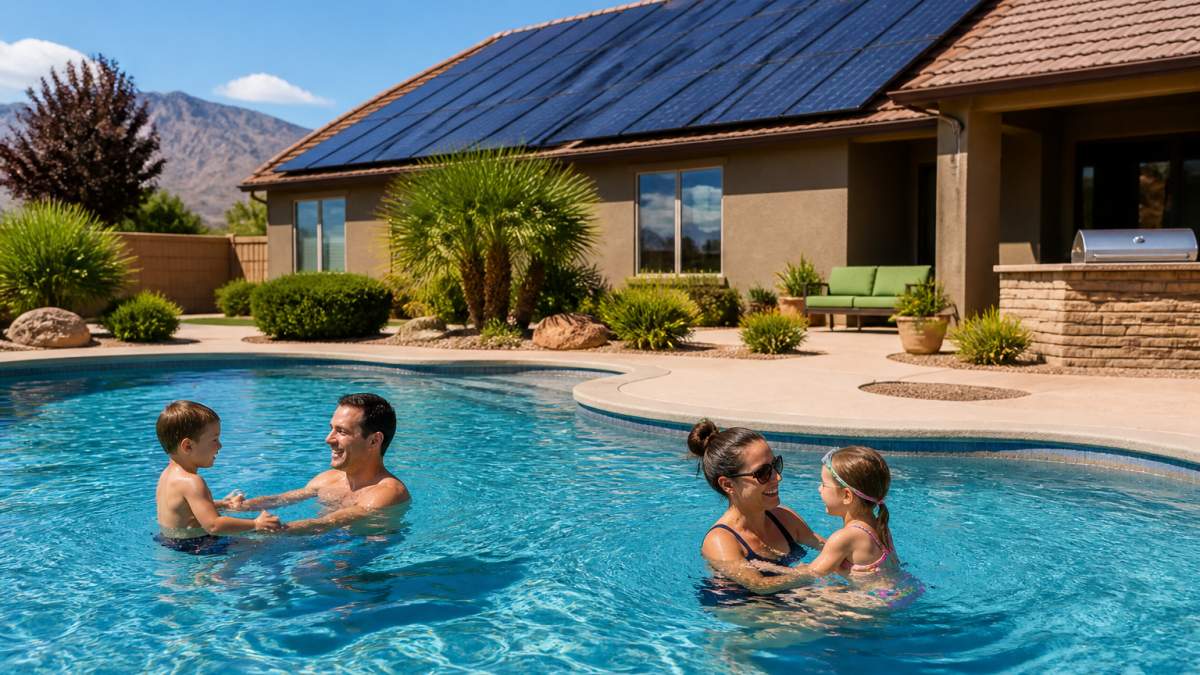
For homeowners in Southern Utah, solar heating aligns perfectly with local climate conditions.
The efficiency advantage is substantial: solar systems have no fuel cost, no electricity consumption, and minimal maintenance. Your only energy investment is the initial installation. After that, the sun does the work.
Learn about the key factors that affect solar heating performance in your specific situation Factors Affecting Solar Pool Heater Performance.
Solar heating works best with consistent sun exposure. If your pool sits in shade for significant portions of the day, solar efficiency drops dramatically. Assess your site’s shade patterns before committing to solar-only heating.
Factors That Affect Your Optimal Temperature Choice
Climate and Ambient Temperature
Your local climate is the single biggest determinant of your optimal setpoint. In cooler regions, maintaining a comfortable temperature requires more heating energy, so efficiency demands a lower setpoint.
Southern Utah’s climate supports pool use from March through November because of strong spring and fall sunshine. This extended season means you can afford to run your pool cooler during shoulder months and still enjoy comfortable swimming.
Sun Exposure and Shade
Direct sun exposure is free heating. A pool in full sun receives 200-300 BTU per hour per square foot of water surface on a clear day. Shade reduces this to near zero. If your pool receives 6+ hours of direct sun daily, you can run 2-3 degrees cooler than a shaded pool and still maintain the same comfort level.
Understand how shade patterns affect your heating efficiency and what you can do about it How Shade Impacts Solar Pool Heating Efficiency.
Pool Size and Surface Area
Larger pools require more energy to heat because they contain more water. But larger pools also have a lower surface-area-to-volume ratio, which means less heat loss relative to the total water volume. A 15,000-gallon pool loses heat more slowly (proportionally) than a 5,000-gallon pool.
This matters for setpoint choice: smaller pools benefit more from aggressive temperature management because they respond faster to heating and cooling changes. Larger pools are more stable and forgiving of setpoint adjustments.
Usage Frequency and Duration
A pool you use daily can run cooler than one you use once a week. Frequent use means your heating system maintains the temperature consistently, and swimmers adapt quickly to cooler water. A pool used occasionally might need to be warmer to feel inviting when guests arrive.
Usage frequency also affects heat loss patterns. A pool in constant use has less time to cool between swims. A pool sitting unused for days loses more heat overall.
Practical Steps to Choose and Maintain an Efficient Temperature
Setting Your Baseline Temperature
Start with 78°F as your baseline during peak summer. Run your pool at this temperature for one week and track your comfort level. If you’re satisfied, keep it there. If not, raise it to 79°F and try again.
Once you’ve set your summer baseline, use it as the reference point for seasonal adjustments. In spring, start 2-3 degrees cooler and increase gradually as outdoor temperature rises. In fall, lower by 1-2 degrees each month as weather cools.
Using Automation and Scheduling
Modern pool control systems allow you to program temperature setpoints by time of day and day of week. This is where real efficiency gains happen. Lower your setpoint by 2-3 degrees during hours when the pool isn’t in use.
This scheduling approach cuts energy consumption by 15-25% compared to maintaining a constant high temperature 24/7. Your pool reaches your preferred temperature when you want to use it, but doesn’t waste energy maintaining that temperature overnight or during work hours.
Monitoring Water Loss and Evaporation
Check your pool water level weekly. If it drops more than 1 inch per week, you’re losing water faster than normal, either through evaporation or a leak. High evaporation indicates your pool is losing significant heat energy.
Track your heating system’s runtime. If it’s running more than 6-8 hours per day during peak summer, your setpoint is likely too high for your climate and sun exposure. Lower it by 1-2 degrees and monitor whether runtime decreases.
Common Mistakes When Choosing Pool Temperature
Setting the temperature too high in spring. Many pool owners crank their heater to 82-84°F in March, wanting immediate comfort.
Ignoring seasonal changes. Running your pool at the same temperature year-round is inefficient. Your pool needs different setpoints in March versus July.
Not using a pool cover. This is the single biggest missed opportunity.
Overestimating comfort needs. Most swimmers adapt to cooler water within one or two visits. If you’re afraid to lower your setpoint, try it for a week. You’ll likely find you’re comfortable at 2-3 degrees cooler than you expected.
Neglecting equipment maintenance. A clogged filter or failing pump reduces heating efficiency.
Choosing the best pool temperature for energy efficiency isn’t about finding one magic number.
Frequently Asked Questions
What is the most energy-efficient temperature for a swimming pool?
The most energy-efficient pool temperature depends on use and climate, but 78°F is a practical baseline for residential pools during peak season. Every degree above 78°F increases energy consumption significantly, raising the setpoint to 82°F can increase heating costs by 10-15%. For seasonal extension in cooler months, maintaining 75-76°F reduces energy demand while remaining swimmable. Off-season storage pools require only 65-70°F. Choose based on actual usage patterns rather than maximum comfort.
How much does lowering pool temperature save on heating costs?
Reducing your pool temperature by just 2°F can lower pool heating costs by 10-15% annually, depending on your heating system and climate. A pool maintained at 78°F instead of 82°F uses measurably less energy because heat loss through evaporation and radiation scales with the temperature difference between water and air. Over a full season, this difference compounds, especially in spring and fall when ambient temperatures are lower. Using a pool cover amplifies these savings by reducing heat loss by 50-70%.
How does a pool cover help maintain water temperature and reduce energy use?
A pool cover reduces water loss through evaporation by 50-70% and cuts heat loss from radiation and wind exposure. This means your heating system runs less frequently to maintain your target temperature, directly lowering energy consumption. Solar covers add passive heating during sunny days. For seasonal pools, a cover overnight and during off-hours prevents temperature swings that force your heater to work harder. The payback period for a quality cover is typically 1-2 seasons through reduced heating demand.
Is solar pool heating more energy-efficient than gas heating?
Solar pool heating has zero operating costs once installed, making it far more energy-efficient than gas heating over time. Gas heaters consume fuel continuously and lose 20-30% of energy as waste heat. Solar systems harness free thermal energy from the sun with no fuel consumption or emissions. In sunny climates with adequate roof or ground space, solar heating can extend your swimming season from March through November while significantly reducing monthly gas bills. Initial installation costs differ, but long-term efficiency and savings strongly favor solar systems for residential pools.


Leave a Reply