Table of Contents
- Does a Pool Cover Keep Water Cool? The Short Answer
- How Pool Covers Actually Affect Water Temperature
- Pool Water Evaporation and Temperature Control
- Should You Cover Your Pool During the Day in Hot Weather?
- How to Keep Pool Water Cool When Temperatures Rise
- Do Pool Covers Keep Water Warm? Understanding Cover Types
- Managing Pool Temperature Year-Round
- Conclusion
- Frequently Asked Questions
Last Updated: October 6, 2026
Does a Pool Cover Keep Water Cool? The Short Answer
No, a pool cover does not keep water cool, most do the opposite. To keep pool water cool in hot weather, covering it makes things worse.
This guide from Dixie Pool Solar Heating & Misting explains what happens when you cover a pool and why it matters year-round.
People assume a cover is just a debris barrier, but covers interact with your pool’s thermal system in surprising ways.
How Pool Covers Actually Affect Water Temperature
A pool cover changes water temperature by controlling evaporation. When water evaporates from the surface, it removes heat energy, which is why uncovered pools lose temperature on hot, low-humidity, windy days.
Different cover types have different effects on temperature:
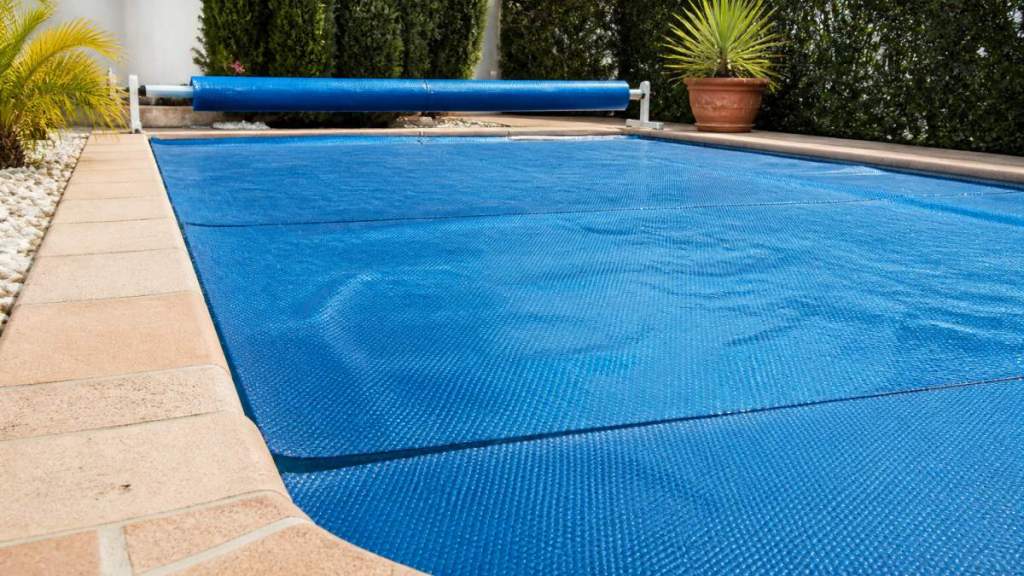
- Solar covers (clear or translucent) trap heat during the day and reduce evaporation at night. They warm water, not cool it.
- Opaque covers (dark or solid colors) block sunlight and reduce evaporation, warming water slightly less than solar covers.
- Automatic covers (typically solid and opaque) provide maximum insulation, trapping the most heat and preventing the most evaporation.
The key takeaway: all pool covers reduce evaporation, and less evaporation means warmer water. To keep pool water cool, an uncovered pool with good air circulation stays cooler than a covered one in hot weather.
Pool Water Evaporation and Temperature Control
Pool water evaporation is the primary natural cooling mechanism for residential pools. On a sunny day, surface water molecules absorb energy, break free as vapor, and remove heat from the remaining water.
The rate of evaporation depends on several factors:
- Sun exposure: Direct sunlight heats water and increases evaporation rate
- Air temperature: Hotter air increases evaporation
- Humidity: Low humidity accelerates evaporation; high humidity slows it
A cover interrupts this cycle. By blocking the surface, it prevents water molecules from escaping, so the heat that would have left with that vapor stays in the pool and raises the temperature.
To measure whether your pool is losing water to evaporation or to a leak, use the bucket test. Fill a bucket with pool water and place it on the pool deck. Mark the water level in both the bucket and the pool. After 24 hours, compare how much each has dropped. If the pool level dropped more than the bucket, you likely have a leak. If they dropped similarly, evaporation is your main water loss source.
Should You Cover Your Pool During the Day in Hot Weather?
No, don’t cover your pool during the day if you want to keep water cool. Daytime covering traps solar heat and prevents evaporative cooling, so water temperature rises instead of falling.
However, daytime coverage makes sense in specific situations:
- Reducing water loss: If water conservation is your priority, a cover reduces evaporation and saves water
- Minimizing chemical loss: Covers reduce chlorine and other chemical evaporation
- Protecting from debris: Covers keep leaves, dirt, and other contaminants out
The trade-off is clear: you gain water and chemical conservation but lose evaporation’s natural cooling. If your pool is already too warm, daytime covering makes it worse.
A better daytime strategy is shade.
Never cover a pool during the day if you’re using it. A cover creates a safety hazard, traps heat, and prevents swimmers from accessing the water. Remove covers before anyone enters the pool, and store them safely away from the pool area.
How to Keep Pool Water Cool When Temperatures Rise
When temperatures spike, maximize natural cooling and minimize heat input:
Increase evaporation
- Leave the pool uncovered during the day to allow maximum evaporation
- Run pool pumps and filters during cooler morning and evening hours when evaporation is most effective
- Position fans near the pool to increase air movement across the water surface
Reduce solar heat input
- Install shade structures on the south and west sides of the pool
- Use shade cloth or umbrellas during peak sun hours (10 a.m. to 4 p.m.)
- Trim trees and vegetation to allow more shade without blocking air circulation
Manage water circulation
- Run pumps during cooler parts of the day (early morning or late evening)
- Avoid running pumps during peak heat hours, as circulation can warm the water
- If you have a heat pump or heater, turn it off completely during hot weather
Consider evaporative cooling products
- Liquid evaporation suppressants reduce water loss while allowing some cooling benefit
- They create a thin, invisible layer that slows evaporation but doesn’t block it completely
- They’re most effective in low-humidity climates
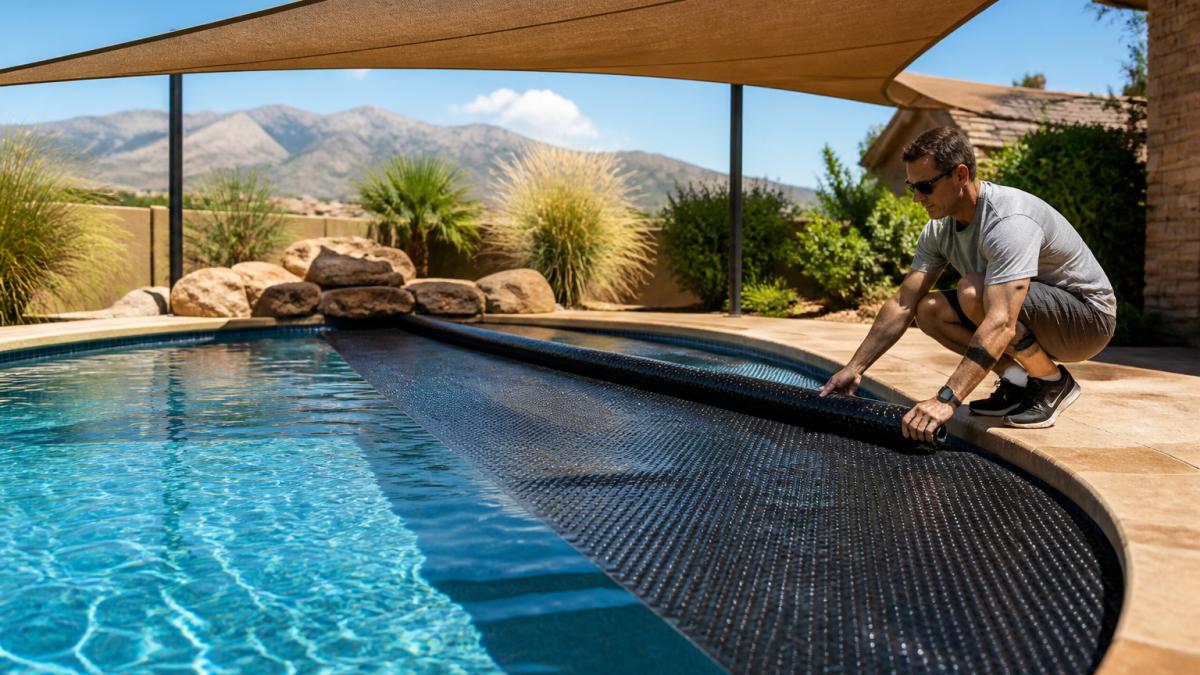
The most effective approach combines strategies: an uncovered pool with good shade, adequate air circulation, and strategic pump timing stays significantly cooler than a covered pool in hot weather.
Do Pool Covers Keep Water Warm? Understanding Cover Types
Yes, pool covers do keep water warm, their primary job in cooler months, and the opposite of what you want when water is already too hot.
Automatic covers (solid, opaque, often vinyl or slatted) provide the strongest insulation and best evaporation control.
Liquid evaporation suppressants aren’t covers but belong in this comparison.
Windbreaks (fencing, hedges, shade sails) reduce evaporation by slowing the air movement that carries vapor away.
Choosing a cover: a practical comparison
| Method | Effect on water temperature | Evaporation reduction | Upfront cost | Ongoing maintenance | Safety benefit |
|---|---|---|---|---|---|
| Solar cover | Warms (5-15°F typical) | High | Low | Replace every 1-3 seasons; clean and store | Minimal |
| Automatic cover | Holds heat, blocks solar gain | Very high | High | Motor and fabric service; track cleaning | High |
| Tarp/winter cover | Slight insulation | High when installed | Low to moderate | Heavy to handle; seasonal use only | Moderate to high |
| Liquid suppressant | Minimal warming | Moderate | Low per application | Reapply every few days | None |
| Windbreak | Minimal warming | Low to moderate | Varies | Landscape maintenance | None |
Safe use, storage, and maintenance
A dirty, torn, or poorly stored cover loses most of its value.
Standing water on a solid or automatic cover adds weight, stresses the mechanism, and creates a drowning hazard if a child or pet falls onto it.
Safety is non-negotiable in cover selection. A solar cover is not a safety cover: it won’t support a person and can disorient a swimmer who becomes entangled.
Never leave a solar cover on the pool while swimmers are in the water. The film can wrap around a swimmer and block access to the surface. Remove and store the cover completely before anyone enters the pool.
How cover choice interacts with heating
If you heat your pool with a solar thermal system, heat pump, or gas heater, your cover choice changes how hard that system works.
At Dixie Pool Solar Heating & Misting, our Heliocol panels actively warm your pool water using the sun’s energy, and pairing them with the right cover keeps that heat in the pool when you want it and lets it escape when you do not.
Managing Pool Temperature Year-Round
Evaporation doesn’t happen the same way everywhere. The right strategy depends on your climate, season, and actual water loss, so measure the loss before changing anything.
A repeatable method for measuring evaporation
You don’t need special equipment for a reliable read on water loss. Use this method consistently to separate evaporation from a leak and track whether your changes work.
- Pick a fixed reference point. Mark a spot on the pool wall, skimmer, or tile line where you can read the water level the same way every time. A piece of tape or a grease pencil mark works.
- Set up a control container. Place a clean, open bucket or tub on the pool deck near the pool. Fill it with pool water to within a few inches of the top. The container experiences the same sun, wind, and humidity as the pool surface, but it cannot leak.
- Record both levels at the same time each day. Measure the pool level at your reference point and the bucket level. Note the time, air temperature, and whether it rained or the pool was used.
- Account for the variables. If it rained, note how much. If swimmers splashed water out, note it. If you added fill water, note how much. These adjustments keep the comparison honest.
- Compare over 3 to 7 days. If the pool level drops noticeably more than the bucket level over the same period, and you have accounted for splash-out and refill, you likely have a leak. If they drop at similar rates, evaporation is your main loss.
Typically, an uncovered pool loses roughly one-quarter to one-half inch of water per day in hot, dry, windy summer conditions, and less when humid or calm. Your measurements tell you where you fall in that range.
Run the bucket test for at least three days before drawing conclusions. A single hot, windy day can exaggerate loss and lead you to chase a leak that is not there.
Climate- and season-specific guidance
Hot, dry, windy conditions. Evaporation peaks. Leave the pool uncovered during the day if cooling is the goal, but expect high water loss.
Hot and humid conditions. Evaporation slows because the air is already near saturation. Water loss is lower, but the pool still absorbs solar heat and can feel too warm.
Winter (off-season). If the pool isn’t in use, a cover is essential for debris control, safety, and reducing water loss.
Quantifying water and energy savings
To estimate savings, start with your measured daily evaporation loss in inches. Multiply by your pool’s surface area in square feet, then convert to gallons using the fact that one inch of water over one square foot is about 0.623 gallons.
A cover that cuts evaporation by half saves roughly half that water, and reduces heat loss to lower heating run time.
Prevention methods and their trade-offs
No single method solves everything. The table below compares the main options by effectiveness, cost, convenience, and maintenance.
| Method | Effectiveness at reducing loss | Relative cost | Convenience | Maintenance |
|---|---|---|---|---|
| Solar cover | High | Low | Moderate (reel helps) | Replace every 1-3 seasons |
| Automatic cover | Very high | High | High | Motor and fabric service |
| Liquid suppressant | Moderate | Low per use | High | Reapply every few days |
| Windbreak | Low to moderate | Varies | High once installed | Landscape upkeep |
| Reducing water features | Moderate | Low | High | None |
| Shade structures | Low for evaporation, high for heat | Moderate to high | High | Seasonal cleaning |
The core principle is simple: covers trap heat and prevent evaporation. Use them when you want to keep water warm. Remove them when you want water to cool naturally through evaporation. Measure your loss first, then match the method to your climate and season.
Conclusion
A pool cover does not keep water cool, it does the opposite. Covers trap heat and prevent evaporative cooling, making water warmer.
The most effective way to manage pool temperature year-round is combining strategic cover use with active heating when needed. At Dixie Pool Solar Heating & Misting, our solar thermal heating systems warm your pool efficiently in spring and fall while keeping the flexibility to cool naturally in summer.
Frequently Asked Questions
Does a pool cover keep water cool?
No, pool covers trap heat and actually warm water instead. Clear and opaque covers both reduce evaporation, which prevents the cooling effect that evaporation provides. Dark covers absorb sunlight and transfer that heat into the water. If your goal is cooling, remove the cover during the hottest parts of the day to allow evaporation and heat loss.
How much water should my pool lose to evaporation?
Normal pool water loss ranges from 1/4 inch to 1 inch per day, depending on temperature, humidity, wind, and sun exposure. To measure your pool’s evaporation rate, fill a bucket with pool water, place it on the pool deck, and mark the water level. Compare the bucket’s water loss to your pool’s water loss over the same period. If your pool loses significantly more than the bucket, you may have a leak.
Should I cover my pool during the day in hot weather?
Not if you want to cool your pool. Covers trap heat and prevent evaporative cooling. Instead, remove covers during peak heat hours, use a water feature like a fountain to increase evaporation, or install a dedicated cooling system. Covers are best used overnight or during off-season months to reduce water loss and maintain warmth when heating is your goal.
What is the best way to keep pool water cool?
Increase evaporation by running fountains or water features, remove pool covers during hot hours, ensure good air circulation to allow wind to carry away heat, and use shade structures or landscaping to block direct sunlight during the hottest times. For significant cooling in extreme heat, misting systems or dedicated pool chillers offer the most effective solutions. Proper water circulation and filtration also help maintain cooler temperatures.


Leave a Reply