Last Updated: October 22, 2026
Quick Summary
A cost comparison of pool heating methods reveals that while gas heaters have the lowest upfront cost, solar heating delivers the lowest total cost of ownership over ten years due to minimal operating expenses. Gas heating costs $1,500-$2,400 annually, heat pumps cost $960-$1,800, and solar costs only $50-$200, making solar systems pay for themselves in five to ten years through energy savings.
- Gas heaters cost $150-$300 monthly during peak season but total $15,000-$25,000 over ten years including fuel
- Heat pumps reduce operating costs to $80-$150 monthly with a ten-year total cost of $10,000-$20,000
- Solar heating costs essentially nothing to operate at $5-$15 monthly, totaling $5,000-$10,000 over ten years
- A pool cover reduces heating costs by 50-70% regardless of heating method by minimizing heat loss
- Solar systems in Southern Utah typically pay for themselves in five to ten years and last 20+ years
Table of Contents
- Understanding Pool Heating Methods and Their Cost Structure
- Gas Pool Heaters: Natural Gas and Propane Heating Costs
- Electric Resistance and Heat Pump Pool Heaters
- Solar Pool Heating Cost and Long-Term Savings
- Pool Heating Cost Per Month: Operating Expenses Across Methods
- Pool Cover Heating Savings and Heat Loss Reduction
- Total Cost of Ownership: Upfront, Installation, and Lifetime Expenses
- Which Heating Method Makes Sense for Your Pool and Climate
- Frequently Asked Questions
Understanding Pool Heating Methods and Their Cost Structure
The cost comparison of pool heating methods isn’t straightforward: each method trades off upfront cost, installation expense, and ongoing operating costs differently.
Most homeowners focus only on equipment price. A cheaper heater upfront might cost thousands more over five years if it runs inefficiently or needs constant maintenance. The real framework is total cost of ownership: purchase and installation, monthly operation, and equipment lifespan.
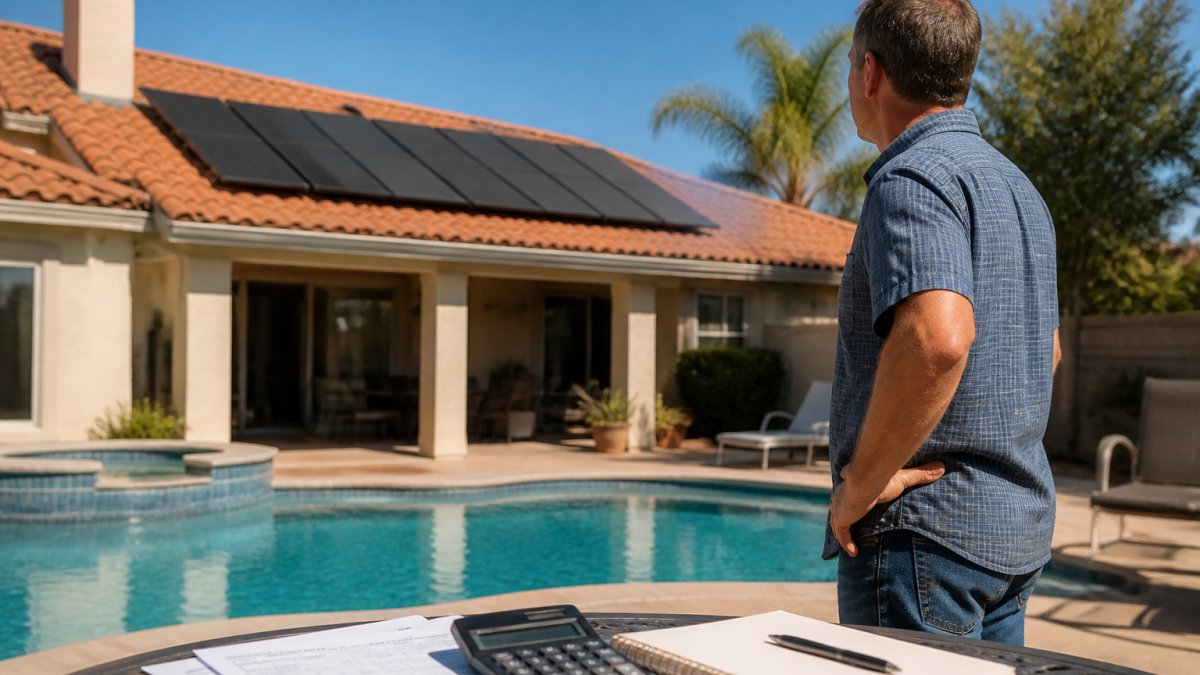
What looks expensive upfront can be the cheapest option over 10 years; what seems affordable becomes a money pit once energy bills arrive.
What changes the math: local utility rates, months of pool use, climate, pool cover use, and roof sun exposure. A method that makes sense in one scenario is wasteful in another. This guide walks through each major method for your specific situation.
Gas Pool Heaters: Natural Gas and Propane Heating Costs
Gas heaters, natural gas or propane, are the fastest way to heat a pool. They burn fuel and transfer the heat directly to your water. Want your pool at 85°F by tomorrow afternoon? A gas heater gets you there.
Equipment cost is typically lower than other options, which is why gas has been the default for decades, and installation is straightforward where gas lines or propane tanks exist.
A gas heater in peak season can add hundreds to your monthly utility bill. Heating March through November, as many Southern Utah homeowners do, means eight months of fuel consumption. Many realize after two or three seasons that they’re spending far more on gas than anticipated.
Propane has similar operating costs plus tank refills and delivery fees. Natural gas is cheaper per unit of heat but requires an existing line to the pool area. Both need regular maintenance, filters, leak checks, burner inspections, adding long-term expense.
Electric Resistance and Heat Pump Pool Heaters
Electric resistance heaters and electric heat pumps both use electricity, but they work in completely different ways, and that difference matters enormously for your operating costs.
Electric Resistance Heaters
An electric resistance heater works like a giant toaster: current generates heat directly, which transfers to your pool water. Upfront cost is very low, often the cheapest equipment available, and installation just needs an electrical connection.
But operating one is expensive. Efficiency is high (nearly all electrical input becomes heat), yet electricity costs more than other fuels and resistance heating consumes a lot of power. For most homeowners, resistance heating makes sense only for small pools, occasional use, or backup heating alongside another method.
Pool Heat Pump Cost and Efficiency
A pool heat pump extracts heat from the air (or ground) and transfers it into your pool water. It’s far more efficient than resistance heating because it moves existing heat rather than creating new heat from electricity.
Equipment cost runs higher than resistance but lower than a quality gas heater, and installation is more complex, airflow and refrigerant lines usually mean hiring a professional. The real advantage is operating cost: a heat pump uses far less electricity per degree of heating, so monthly bills are substantially lower.
Heat pumps work best in moderate climates; efficiency drops in very cold conditions, which is why they’re often paired with backup heating. For Southern Utah’s moderate winters and long shoulder seasons, a heat pump often delivers the best balance of upfront cost and operating expense.
Solar Pool Heating Cost and Long-Term Savings
Solar pool heating harnesses the sun’s thermal energy to warm your pool without burning fuel or consuming electricity. The “fuel” is free and infinite.
Solar collectors absorb sunlight and transfer that heat to your pool water through a heat exchanger. A pump circulates water through the collectors, using minimal electricity compared to resistance or gas heating.
The upfront equipment and installation cost for solar heating is higher than gas or resistance heaters. This is the barrier that stops many homeowners from considering it. However, the long-term math shifts dramatically in solar’s favor.
Solar heating works best in sunny climates with strong seasonal sun exposure. Southern Utah’s high elevation, low humidity, and abundant sunshine make it ideal for solar pool heating. A south-facing or west-facing roof with minimal shading is the optimal installation location.
The efficiency of solar heating depends on outdoor temperature, sun intensity, and time of year. In spring and fall, solar systems work well during sunny days. In summer, they maintain water temperature easily.
Pool Heating Cost Per Month: Operating Expenses Across Methods
To compare heating methods fairly, you need to look at actual monthly operating costs. These vary based on local utility rates, pool size, target water temperature, and how many hours per day you run the heater.
For a typical residential pool in Southern Utah during peak heating season, gas heating costs roughly $150-$300 per month depending on how aggressively you heat and local gas prices. Electric resistance heating typically costs $200-$400 per month because electricity rates are higher than gas rates.
These monthly costs compound dramatically over a heating season. If you heat your pool from March through November (eight months), a gas heater costs $1,200-$2,400 for the season. A heat pump costs $640-$1,200. Solar heating costs $40-$120.
The monthly cost also depends on how much you use your heater. Running the heater 24/7 costs more than running it 4-6 hours daily. Many homeowners find they can maintain comfortable water temperature with part-time heating, especially when using a pool cover to reduce heat loss.
Pool Cover Heating Savings and Heat Loss Reduction
Here’s a detail most guides skip: a pool cover is one of the highest-return investments you can make for heating efficiency. A cover reduces heat loss from evaporation and radiation, which means your heater doesn’t have to work as hard to maintain temperature.
A quality pool cover can reduce heating costs by 50-70% compared to an uncovered pool. This is true regardless of your heating method. An uncovered pool loses enormous amounts of heat to the atmosphere, especially at night and on cooler days.
This changes the economics of every heating method. With a cover, your gas heater costs less to operate. Your heat pump becomes even more efficient. Your solar system can maintain temperature longer into the shoulder seasons. The cover essentially makes your heating system work less hard to achieve the same result.
For homeowners considering solar heating, a pool cover is particularly valuable. It extends the effective heating season and allows solar systems to maintain comfortable temperatures even on partly cloudy days.
Total Cost of Ownership: Upfront, Installation, and Lifetime Expenses
The real decision framework requires adding three cost categories together: equipment cost, installation cost, and total operating costs over the system’s lifespan.
| Heating Method | Equipment Cost | Installation Cost | Annual Operating Cost | Typical Lifespan | 10-Year Total Cost |
|---|---|---|---|---|---|
| Gas Heater | Low | Low | $1,500-$2,400 | 8-10 years | $15,000-$25,000 |
| Electric Resistance | Very Low | Low | $2,400-$4,800 | 5-7 years | $15,000-$30,000 |
| Heat Pump | Medium | Medium | $960-$1,800 | 10-15 years | $10,000-$20,000 |
| Solar Heating | High | High | $50-$200 | 20+ years | $5,000-$10,000 |
This table reveals why solar heating makes sense for long-term ownership. Yes, the upfront and installation costs are higher. But over ten years, the total cost is typically lower than other methods because operating costs are so minimal.
Gas heaters look cheap initially but become expensive over time. Electric resistance heaters are the worst long-term value. Heat pumps offer a middle ground with reasonable upfront costs and moderate operating expenses. Solar heating requires patience and capital upfront but delivers the lowest long-term cost, especially for homeowners planning to stay in their home for five or more years.
Your payback period, the time it takes for energy savings to equal the upfront investment, typically ranges from five to ten years for solar systems, depending on your local utility rates and sun exposure. After payback, you’re essentially heating your pool for free for another 10-15 years, which is why the total cost of ownership favors solar so strongly over longer time horizons.
Which Heating Method Makes Sense for Your Pool and Climate
The right heating method depends on your specific situation, not on what’s “best” in general.
Choose a gas heater if you want the fastest heating speed, lowest upfront cost, and you don’t mind higher monthly operating expenses. This makes sense for occasional users or people who heat their pool only a few times per year.
Choose an electric resistance heater only if you have a very small pool, heat occasionally, or need a simple, low-maintenance backup system.
Choose a heat pump if you want a balance between upfront cost and operating efficiency. Heat pumps work well for moderate climates and deliver good energy efficiency without the high initial investment of solar.
Choose solar heating if you have a south-facing roof with good sun exposure, plan to stay in your home long-term, and want the lowest total cost of ownership.
The decision ultimately comes down to how long you plan to own your home and how much you value long-term savings versus immediate affordability.
Frequently Asked Questions
How much does it cost per month to heat a swimming pool?
Monthly pool heating costs vary by method. Gas heaters typically run $150-$300 monthly during peak season, depending on fuel rates and usage frequency. Electric resistance heaters cost $200-$400 monthly due to high electricity consumption. Heat pumps average $75-$150 monthly in moderate climates. Solar systems have near-zero monthly operating costs after installation. Actual figures depend on pool size, target temperature, outdoor climate, and local utility rates. Pool covers reduce monthly costs by 30-50% regardless of heating method.
Is a solar pool heater cheaper to run than a heat pump?
Yes. Solar pool heating cost operates at virtually zero monthly expense once installed, as it uses free solar energy. Heat pumps, while more efficient than gas or electric resistance heaters, still require electricity and typically cost $75-$150 monthly. Over a 20-year lifespan, solar systems deliver significantly lower operating costs. However, heat pumps heat pools faster in cold weather and work on cloudy days, whereas solar heating slows in winter. The choice depends on your climate, budget, and how quickly you need to heat your pool.
What is the cheapest way to heat a pool?
Using a pool cover is the cheapest way to reduce heating costs, it cuts heat loss by 30-50% regardless of your heater type. Among active heating methods, solar pool heating cost is lowest long-term because it has no operating expenses after installation. However, upfront equipment and installation costs for solar are higher than gas heaters. Gas heaters are cheapest to buy and install upfront but cost the most to operate monthly. For lowest total cost of ownership over 10-20 years in sunny climates, solar heating combined with a pool cover wins.
How much can a pool cover reduce heating costs?
Pool covers reduce heating costs by 30-50% by minimizing evaporation and heat loss. A standard cover prevents water temperature from dropping overnight and reduces the workload on any heating method, whether gas, electric, or solar. This means lower monthly energy bills, faster heating times, and extended pool season. Even inexpensive covers deliver measurable savings. For households using their pools seasonally, a cover is one of the most cost-effective upgrades available and works alongside any heating system.
If you’re ready to explore solar heating for your pool in Southern Utah, Dixie Pool Solar Heating & Misting can walk you through the numbers specific to your home, roof exposure, and local utility rates. Our team uses Heliocol industrial-grade panels designed to last 20+ years with minimal maintenance. Get a free quote today and discover how much you could save on pool heating costs while extending your swimming season from March through November.


Leave a Reply