
Last Updated: October 25, 2026
Quick Summary
Preventing algae in pool misting lines means controlling water, light, and food: flush the lines every two to four weeks during cooling season, drain and store them dry at season’s end, and keep the supply water filtered and clean. Shade or cap sun-exposed tubing and soak nozzles in a mild vinegar-and-water mix to stop growth at the openings.
- Cleaning a misting line takes about 30 to 45 minutes and needs no special tools.
- Flush misting lines every two to four weeks during cooling season, and always before the first run of the year.
- If a line has sat unused for more than a week, flush it before the next run.
- Soak nozzles in roughly one part white vinegar to three parts water for 20 to 30 minutes, then rinse.
- Never poke a nozzle with a pin, since it widens the opening and ruins the spray pattern.
Table of Contents
- Why Pool Misting Lines Turn Green
- How to Clean Pool Misting Lines Step by Step
- How Often to Flush Misting Lines
- Pool Misting Nozzle Maintenance That Prevents Clogs
- How to Prevent Algae in Pool Hoses
- Keep Sanitizer, pH, and Filtration in Check
- Choosing Treatments Safe for Misting Lines
- Schedule a Misting System Check With Dixie Pool
- Frequently Asked Questions
Why Pool Misting Lines Turn Green
Green slime inside a misting line is algae, and it shows up for one reason: the line gives algae everything it needs to grow. Preventing algae in pool misting water lines comes down to controlling water, light, and food.
A misting line is a small, warm, sunlit water system. That is close to a perfect algae incubator. Below, we break down the seven reasons growth starts, then show you exactly how to clean it out and keep it gone.
Stagnant Water and Warm Temperatures
Algae needs still water and warmth. A misting line that runs for a few minutes and then sits for hours gives it both.
Water left in the tubing has nowhere to go. The sun heats the line, and that trapped water stays warm for the rest of the day. Warm, still water is where algae blooms fastest.
Sunlight and Nutrient Buildup
Clear tubing lets sunlight reach the water inside. Algae needs light to grow, so a sun-exposed line feeds itself.
Nutrients come from dust, pollen, leaves, and the pool water itself. Organic matter settles in low spots and at the nozzles.
If you are new to how these cooling systems work, our guide on pool water cooling misting systems covers the full setup before you dig into algae problems.
How to Clean Pool Misting Lines Step by Step
Cleaning a misting line takes about 30 to 45 minutes and needs no special tools. But before you flush, diagnose: green growth, white mineral scale, and pink or gray biofilm look similar from outside and each needs a different approach. Treating scale as algae, or algae as scale, wastes time and can damage nozzles.
First, identify what is actually in the line
- Green or brown slime: Algae. Usually worst in sun-exposed clear tubing and in lines that sit idle.
- White, crusty buildup at nozzles: Mineral scale from hard supply water. Common in areas with high calcium and magnesium.
- Pink, gray, or rust-colored film: Biofilm or iron bacteria. Often appears in lines fed from wells or stored water.
A quick field test: scrape a small sample onto a white paper towel. Algae wipes off green; scale stays gritty and white; biofilm feels slick and smells earthy.
The cleaning sequence
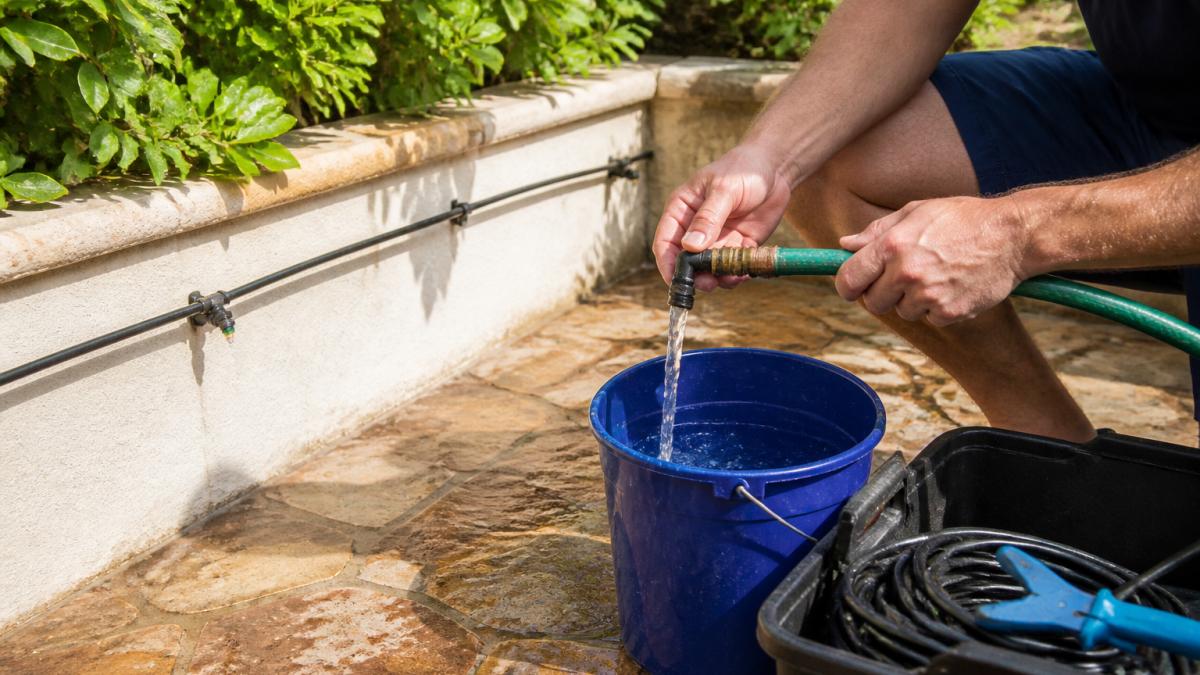
- Shut off the system and disconnect it from the water supply. Relieve pressure before opening any fitting.
- Remove the nozzles and set them aside in a bucket of clean water. Keep track of which nozzle came from which position so spray patterns stay matched.
- Flush the line with a garden hose on full pressure, running water through until it comes out clear. Flush in the direction of normal flow when possible.
- Scrub reachable sections with a soft line brush. Do not use abrasive pads on plastic tubing; they scratch the interior and give algae a foothold.
- Soak the nozzles in a mild vinegar-and-water mix (roughly one part white vinegar to three parts water) for 20 to 30 minutes, then rinse and clear each opening with a soft brush.
- Reconnect everything and run the system for a few minutes to check flow and spray pattern at each nozzle.
Verify the clean
Run the system and walk the line. Even spray, no drips, and no weak tips mean the clean worked. If one nozzle still sprays poorly, repeat the soak on that nozzle only; repeated clogging in the same spot often points to scale in the supply water rather than algae.
Never poke a nozzle with a pin or wire. It widens the opening, ruins the spray pattern, and can crack the nozzle body. Use a soft brush and a soak instead.
When to clean versus replace
If tubing is stained but flexible and flowing freely, cleaning is enough. If tubing is brittle, cracked, clouded, or permanently discolored, replace that section, algae and biofilm can embed in degraded plastic and return quickly. For lines that clog repeatedly despite cleaning, a professional inspection of supply water quality and line routing is the next step.
How Often to Flush Misting Lines
Flush misting lines every two to four weeks during cooling season, and always before you start the system for the year. In hot, dry weather, lean toward every two weeks.
The rule of thumb: if the line has sat unused for more than a week, flush it before the next run.
- Start of season: full flush and nozzle clean
- Peak summer: every two weeks
- End of season: flush, drain, and store dry
Here is the flushing schedule the article recommends for keeping misting lines clear.
| Timing | What to do |
|---|---|
| Every two to four weeks in cooling season | Flush the lines |
| Hot, dry weather | Lean toward every two weeks |
| Line unused more than a week | Flush before the next run |
| Start of season | Full flush and nozzle clean |
| Peak summer | Flush every two weeks |
| End of season | Flush, drain, and store dry |
Pool Misting Nozzle Maintenance That Prevents Clogs
Nozzles clog faster than lines do. Mineral scale and algae both build up at the tiny openings, so nozzle care is where most people fall behind.
Soak nozzles in a mild vinegar-and-water mix, then rinse and clear each tip with a soft brush.
Check spray quality each time you run the system. Our guide to the best misting system components for backyard pools covers which parts last longer.
How to Prevent Algae in Pool Hoses
Preventing algae in pool hoses and misting lines starts with the water you feed them. Filtered, clean water carries far less organic matter than raw hose water.
Keep these habits in place:
- Use a filter on the supply line where possible.
- Drain lines after each season so nothing sits inside.
- Keep the ends capped when the system is off.
If green lines keep coming back, the problem may be bigger than the line itself. Our walkthrough on how to troubleshoot pool water cooling issues helps you spot whether the cause is the misting system or the pool water.
Keep Sanitizer, pH, and Filtration in Check
Algae in the misting line often traces back to the pool water feeding it. Get the pool chemistry right, and you remove the food source before it reaches the line.
Chlorine Levels and pH Balance
Keep free chlorine in the normal range and pH near the middle of the safe band. Test the water regularly, since small swings open the door to algae. When temperatures spike, chlorine burns off faster, so test more often.
For deeper guidance, our article on maintaining pool chemistry in hot weather covers how heat changes your dosing.
Circulation and Filter Run Time
Run the filter long enough each day to turn the water over fully. Still water in the pool feeds algae that then travels into the misting line. Good circulation plus steady filtration keeps both systems cleaner.
Choosing Treatments Safe for Misting Lines
Not every pool chemical belongs in a misting line. The tubing, seals, and nozzles are engineered for clean pressurized water, not for the residue and reactivity of concentrated pool chemistry. Before you pour anything into the supply, confirm three things: what the tubing is made of, what the system sprays onto, and what the manufacturer approves.
Why pool chemicals behave differently in a misting line
A pool is a large, diluted, circulating body of water. A misting line is a small-bore, low-volume, often stagnant tube that heats up in the sun. The same dose that is mild in a pool can sit at full strength inside a line for hours, attacking seals and leaving scale or residue at every nozzle. Some products also leave films that clog the tiny orifices misting systems depend on.
Never pour full-strength pool shock, chlorine tablets, or granular chlorine into misting tubing. These can crack seals, degrade tubing, and leave residue that permanently alters spray patterns. They also create a respiratory hazard when the system later sprays into occupied outdoor space.
Treatment compatibility by line material
- Polyethylene and polyurethane tubing: Generally tolerant of mild, diluted treatments, but sensitive to strong oxidizers and solvents. Rinse thoroughly after any treatment.
- PVC and vinyl tubing: More rigid and more prone to stress cracking under concentrated chemicals; avoid prolonged contact with high-strength chlorine or acid-based cleaners.
- Stainless steel and brass fittings and nozzles: Vulnerable to acid attack and to chloride stress cracking; keep pH of any soak solution near neutral and rinse immediately.
What is generally safe to use
- Mild vinegar-and-water soaks for removable nozzles, followed by a clean-water rinse. This is the standard approach most service technicians use for mineral scale.
- Manufacturer-approved line cleaners at label strength only. If the label does not mention misting or low-volume tubing, call the maker before use.
- Diluted algaecide at label strength only where the manufacturer confirms it is compatible with the tubing and safe for the intended spray exposure.
What to avoid
- Chlorine tablets or pucks placed inside tubing or reservoirs.
- Full-strength shock, muriatic acid, or undiluted bleach.
- Solvent-based cleaners that can soften or swell plastic tubing.
If you are unsure whether a product is compatible, test it on a short scrap of the same tubing: soak it for the recommended contact time, rinse, and check for softening, clouding, or cracking before treating the whole system.
Rinsing and return to service
After any treatment, flush the line with clean water until the discharge runs clear and odor-free, then run the system briefly to confirm even spray. If spray is uneven or a nozzle drips, stop and inspect before returning the system to regular use. When in doubt, replace the affected section of tubing rather than risk a seal failure that sprays treatment residue into the air.
Schedule a Misting System Check With Dixie Pool
At Dixie Pool Solar Heating & Misting, we build and service solar heating and misting systems for homeowners across Southern Utah. Our Heliocol panels carry a 12-year warranty, and our labor is backed for 2 years. We help families extend pool use from March through November with little to no maintenance after install. Before booking a service check, you can review pool misting system cost and installation details to understand what a professional visit involves.
Frequently Asked Questions
Why are my pool misting lines turning green?
Green growth in pool misting lines usually comes from stagnant water sitting in the tubing between uses, combined with warmth and sunlight. Algae spores are already present in pool water, and a misting line that never fully drains gives them a quiet place to settle. Small amounts of organic matter, such as pollen or dust, add nutrients. Flushing the lines regularly and letting them drain after each cycle removes the conditions algae need.
Can algae clog misting nozzles?
Yes. Nozzle openings are tiny, so even a thin film of algae or biofilm can block the spray pattern or stop it entirely. Once a nozzle clogs, pressure builds in that section of the line and the mist becomes uneven. Regular pool misting nozzle maintenance, including soaking removable nozzles in a mild cleaner and flushing the line before reinstalling them, keeps openings clear and protects the pump from strain.
How often should pool misting lines be flushed?
Flush misting lines at least every two weeks during heavy use, and weekly in hot weather when the system runs daily. If the system sits unused for a stretch, flush it before the first use and again after. A simple flush with clean water clears stagnant water and loosens early algae growth before it becomes a clog. Pair each flush with a quick visual check of the nozzles and hose connections.
Can pool chemicals prevent algae in misting lines?
Pool chemicals help, but they are not a complete answer for the lines themselves. Keeping pool chlorine in the 1-3 ppm range and pH near 7.5 reduces the algae spores entering the system, and brushing and filtering the pool remove nutrients. For the tubing, use only treatments labeled safe for misting systems, since harsh chemicals can damage nozzles and seals. Flushing and draining remain the most reliable prevention.
Green lines and weak spray usually mean the system needs attention, not replacement. Get a free quote from Dixie Pool Solar Heating & Misting and we will flush, check, and tune your misting setup so it runs clean all season.


Leave a Reply