Table of Contents
- Start With a Temperature Check: Is Your Pool Too Warm or Not Cooling?
- Pool Heat Pump Troubleshooting: When Cooling Mode Fails
- Pool Heater Not Heating: Diagnosing the Wrong Problem
- Pool Pump Troubleshooting: Water Flow and Circulation Checks
- Cooling Methods Compared: Effectiveness, Cost, and Water Use
- Prevention and Ongoing Monitoring to Keep Pool Water Cool
- Frequently Asked Questions
Last Updated: October 12, 2026
Start With a Temperature Check: Is Your Pool Too Warm or Not Cooling?
Learning how to troubleshoot pool water cooling issues starts with one question: is your pool actually too warm, or is your cooling equipment failing? Those are two different problems, and mixing them up wastes time and money. In Southern Utah, summer heat pushes water temperatures higher than most owners expect.
Before you touch a single valve, measure the water. Then decide whether you need cooling or repair.
Measure Water Temperature Correctly
A pool thermometer is the only reliable tool here. Skip the hand test, since 85°F water feels cool when the air hits 105°F.
- Test in the morning, before the sun hits the surface
- Sample at least 12 inches below the surface, away from returns
- Test the deep end and shallow end separately
Target Temperature Ranges for Comfort and Safety
Most swimmers prefer water between 78°F and 82°F. Above 86°F, the water stops feeling refreshing and starts feeling like a bath. High temperatures also speed up chlorine demand and encourage algae and bacteria growth, so the CDC guidance on healthy swimming and water treatment is worth reviewing if your water runs hot for weeks.
If morning and afternoon readings differ by more than 6°F, your issue is sun exposure, not equipment. Shade, covers, and aeration will help more than any repair.
Pool Heat Pump Troubleshooting: When Cooling Mode Fails
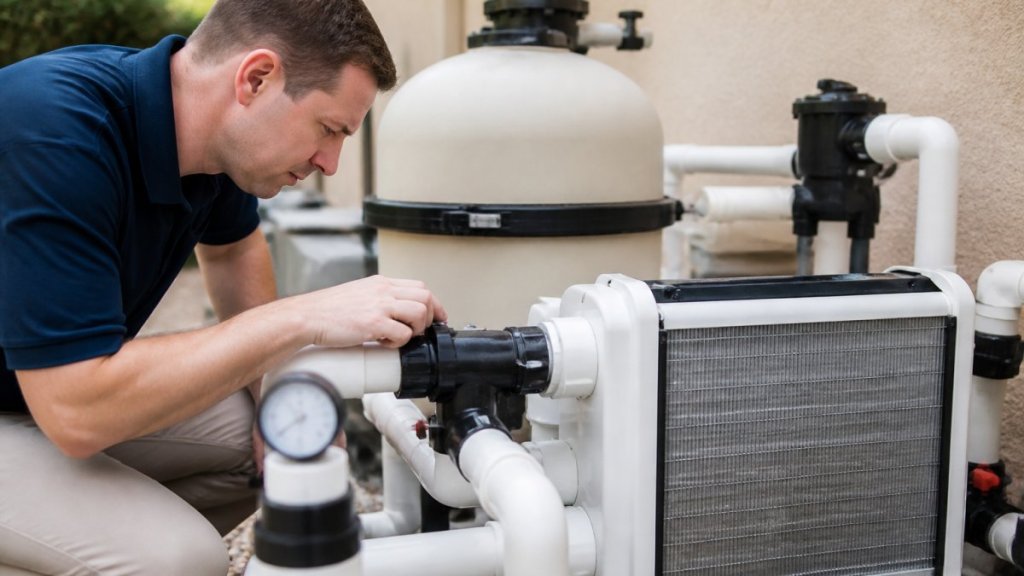
A pool heat pump that won’t cool is usually stuck in heating mode, blocked by airflow, low on refrigerant, or starved of the water flow it needs to move heat. Before you assume the unit is broken, confirm the pool is actually calling for cooling. If the water is warm because of sun and ambient heat, no heat pump setting will fix it.
Confirm the Unit Is in Cooling Mode
Start at the thermostat and work outward:
- Set the mode to cool, not heat or auto. Auto can flip back to heating when the air cools at night.
- Set the target temperature at least 2°F below the current water temperature. A heat pump will not run in cooling if the set point is above the water reading.
- Check the display for a fault code. Most manufacturers publish a code list in the manual, and a flow or pressure fault will lock out cooling.
Check Airflow and the Outdoor Unit
A heat pump moves heat from the water to the outdoor air, so restricted airflow kills cooling capacity:
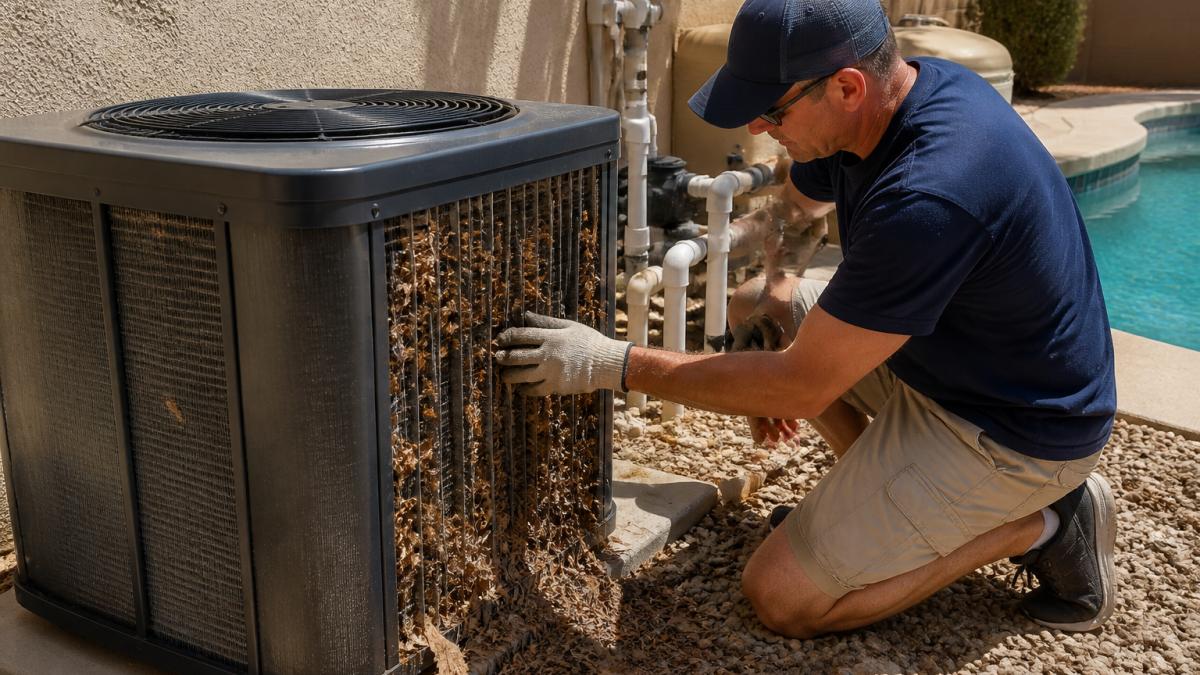
- Clear leaves, grass clippings, and debris from the fins and fan.
- Keep shrubs, fencing, and equipment at least 24 inches from the unit. Most manufacturers specify a minimum clearance in the installation manual.
- Hose the fins from the inside out with low pressure. Bent fins block airflow and should be combed straight.
Verify Water Flow Before You Blame the Refrigerant
Low flow is the most overlooked cause of poor cooling. A heat pump needs a minimum flow rate to transfer heat, and most units will shut down or short-cycle when flow drops:
- Confirm the filter is clean and the pressure gauge is near its clean baseline.
- Check that all valves are open and the pump is primed.
- Look for air bubbles in the pump basket, which point to a suction-side leak.
- Confirm the bypass valve, if installed, is set to send full flow through the heat pump.
Frost or ice on the coils, a compressor that runs but never changes water temperature, or a unit that trips the breaker repeatedly all point to a refrigerant or electrical problem. Refrigerant work and sealed-system repairs require a licensed technician. Do not open the sealed system yourself.
Shut off power at the breaker before clearing debris from the fan or fins. The fan can start without warning, and the coils can be hot.
Pool Heater Not Heating: Diagnosing the Wrong Problem
A pool heater not heating is a separate issue from a pool that won’t cool, and the two get blamed for each other constantly. If your water is too warm, a heater running when it shouldn’t is a real cause.
Signs Your Heater Is Running When It Shouldn’t
Watch for these clues:
- The heater fires up on mild mornings
- Your gas or electric bill climbs with no change in use
- Water temperature drifts up overnight
- The thermostat reads higher than your set point
A stuck thermostat, a failed sensor, or an automatic control left in “heat” mode will all do this. Shut the heater off at the breaker and watch the temperature for 24 hours. If it holds steady, the heater was the culprit.
Never run a heater with a low water level or weak flow. The heat exchanger can crack from overheating, and that repair costs far more than the thermostat you were trying to avoid.
Pool Pump Troubleshooting: Water Flow and Circulation Checks
Pool pump troubleshooting always comes back to two numbers: filter pressure and water level. Weak circulation lets warm surface water sit on top, so the pool never mixes and never cools.
Check Filter Pressure and Clean or Backwash
Read the gauge on your filter while the pump runs. Note the clean starting pressure after a fresh backwash or cartridge change.
When the reading climbs 8 to 10 PSI above that baseline, the filter is dirty. Backwash a sand or DE filter, or hose off a cartridge filter. A clogged filter starves the whole system of flow.
Verify Water Level and Inspect for Leaks
A low water level pulls air into the skimmer and breaks the pump’s prime. Keep water at the midpoint of the skimmer opening.
Then walk the equipment pad and pool deck:
- Check for wet spots that never dry
- Look for cracked O-rings and loose fittings
- Watch the pump basket for air bubbles
- Confirm the pump holds prime overnight
Air bubbles plus a dropping water level usually mean a suction-side leak. Fix it before chasing temperature problems.
Cooling Methods Compared: Effectiveness, Cost, and Water Use
Every cooling method trades off effectiveness against cost and water use. Aeration, fountains, and jets work by speeding up evaporation, which cools the water but raises the water bill and shifts your water chemistry. Mechanical chillers cool without evaporating but draw significant electricity. The right choice depends on how hot the water gets, how much you pay for water and power, and how sensitive your chemistry is.
| Method | Effectiveness | Cost to Run | Water Use | Best For |
|---|---|---|---|---|
| Aerator or fountain | Moderate | Low | High | Pools that run a few degrees warm |
| Running jets and water features | Moderate | Low | High | Quick relief during peak heat |
| Nighttime circulation | Mild | Low | None | Steady background cooling |
| Shade or pool cover | Mild | Low | None | Reducing daytime heat gain |
| Mechanical pool cooler | Strong | High | None | Pools that stay hot despite other fixes |
How Each Method Actually Works
- Aeration and fountains increase the surface area where water meets air, so more water evaporates and carries heat away. The effect is real but limited by humidity. In dry air, a fountain can drop temperature noticeably; in humid air, evaporation slows and the benefit shrinks.
- Nighttime circulation moves warm surface water through the system when the air is cooler, releasing heat without adding any. It is the cheapest method because the pump is already running.
- Shade and covers reduce how much solar heat enters the water in the first place. A solar cover left on during peak sun traps heat, so remove it or use a reflective cover if cooling is the goal.
- Mechanical coolers use a refrigeration cycle to pull heat from the water, similar to an air conditioner. They work regardless of humidity but add a significant electrical load and a second piece of equipment to maintain.
Evaporation Trade-Offs and Water Chemistry
Evaporation lowers temperature, but it also concentrates everything dissolved in the water. When you run a fountain or aerator daily:
- Test alkalinity and cyanuric acid more often, since both concentrate as water leaves.
- Expect to add makeup water more frequently, which can dilute stabilizer over time.
- Watch calcium hardness, because concentrated minerals can scale equipment and surfaces.
- Keep chlorine in range, since warm water increases chlorine demand even as evaporation removes some of it.
A simple routine is to test chemistry weekly when cooling features run, and after any heavy evaporation period. If your water is already high in minerals, a fountain may cost more in chemistry adjustments than it saves in comfort.
Choosing a Method
Start with the cheapest, lowest-impact options: run the pump at night, add shade, and remove covers during peak sun. If the pool still runs warm, add a fountain or aerator and monitor water use and chemistry. Reserve a mechanical cooler for pools that stay hot despite these steps, or for owners who want cooling without the water loss.
Track temperature, water level, and chemical readings for a week before and after adding a cooling method. That record shows whether the method is worth its cost and water use.
Prevention and Ongoing Monitoring to Keep Pool Water Cool
Prevention beats troubleshooting. A short weekly routine keeps temperatures stable and catches small problems early.
- Run the pump at night to release heat
- Add shade with umbrellas, sails, or landscaping
- Keep a solar cover on during peak sun
- Log temperature, PSI, and water level each week
Solar thermal systems change the math here. Panels that heat in spring and fall can be bypassed in July, so you control temperature without running a chiller. Dixie Pool Solar Heating & Misting installs Heliocol panels with a 12-year warranty, and customers like Corbin’s report a smooth, professionally integrated setup.
Frequently Asked Questions
What keeps pool water cool?
Several methods can lower pool water temperature. Running a fountain, aerator, or water feature increases evaporation, which cools the remaining water. A mechanical cooler or a heat pump with reverse-cycle cooling provides more controlled cooling. Keeping the pool shaded during peak sun hours and running the pump at night also help. In Southern Utah, where summer heat pushes water above 90°F, combining evaporation and timed circulation works best. Proper pool cooling depends on your specific setup and climate.
Why is my pool losing 1 inch of water a day?
Losing about 1 inch of water per day in hot, dry weather is often normal evaporation, especially if you run fountains or water features. However, if the loss continues when the pool is covered or temperatures drop, you likely have a leak. Check the pump, filter, and plumbing connections for visible moisture. A bucket test can help confirm whether the loss is evaporation or a leak. Fixing leaks quickly prevents equipment strain and keeps your pool cooling system working properly.
Can a clogged pool pump or filter affect water temperature?
Yes. A clogged filter or pump impeller restricts water flow through the circulation system. When flow drops, heat pumps and heaters cannot transfer heat efficiently, and cooling features like fountains or aerators lose effectiveness. Check your filter pressure gauge: if the reading is 8-10 PSI above the clean baseline, it’s time to clean or backwash. Clearing blockages restores water movement and helps your pool cooling system perform as intended.
When should I call a pool technician about a cooling problem?
Call a technician if you’ve checked the thermostat, filter, water level, and pump operation and the pool still won’t cool. Also seek professional help if you hear unusual noises from the heat pump, see refrigerant leaks, notice error codes on the heater panel, or if the pool loses more than 2 inches of water in 24 hours. These signs point to issues beyond routine troubleshooting. A qualified technician can diagnose refrigerant, compressor, or structural problems safely.
Pool water that runs too warm or won’t cool down rarely fixes itself, and guessing at repairs gets expensive fast. Dixie Pool Solar Heating & Misting can diagnose the real cause and recommend the right fix, from Heliocol panels built to last 20+ years to professional misting systems that cool without wasting water. Get a free quote and take back control of your pool temperature.


Leave a Reply