
Last Updated: November 16, 2026
Quick Summary
Yes, a solar pool heater can work in winter, but it produces far less heat than in summer. It needs enough light to warm the water moving through its collectors, so clear, sunny days give the best results. In winter it mainly helps hold the water a few degrees warmer and protects the system from freezing.
- Clear, sunny days give the best winter results, while heavy cloud cover reduces output sharply.
- Shade from trees or buildings can cut collector output across the whole flow path.
- Cover the pool every night, since an uncovered pool can lose 4-6°F overnight in cold, sunny winters.
- Drain the collectors at the low drain valves before the first hard freeze.
- Bypass the collectors when they are cooler than the pool water, because cold panels pull heat out of the water.
Table of Contents
- How a Solar Pool Heater Collects Heat in Low Light
- Whether Solar Pool Heating Works During Winter
- Solar Pool Heating in Cold Weather: Realistic Temperature Gains
- How to Winterize a Solar Pool Heater Without Damaging It
- How Pool Covers Reduce Overnight Heat Loss
- Winter Operating Guide: When to Run the Circulation Pump
- Planning Your Next Step Before the Next Pool Season
- Frequently Asked Questions
How a Solar Pool Heater Collects Heat in Low Light
Solar pool heaters can work in winter, but they produce far less heat than they do in summer. Most people who ask this question want to know whether the panels still make any useful difference when days are short and the sun sits low. The short answer is yes, with limits. A solar pool heater does not need bright sun to collect heat, but it needs enough light to warm the water passing through its collectors.
The system is simple. Pool water is pumped from the filter through rows of dark plastic collector tubes on the roof. Those tubes absorb sunlight and transfer the heat to the water, which then flows back into the pool. Because there is no fuel burning and no electric heating element, the main ongoing cost is the circulation pump.
In low light, a few things change:
- Collectors absorb less total energy because the sun is lower and the days are shorter.
- Diffuse light on overcast days still reaches the panels, but at a reduced rate.
- Cold air pulls heat from the water as it moves through the exposed collectors.
Watch out: the panels can only heat water that is actually moving through them. A pump that runs on a timer during the coldest hours may cancel out the gain you hoped to collect.
Whether Solar Pool Heating Works During Winter
Solar pool heating does work during winter, but the gains are modest. In winter, the goal is usually not to swim comfortably. It is to hold the water a few degrees warmer than it would otherwise be and to keep the system from freezing. Understanding that difference sets realistic expectations from the start.
How Outdoor Temperature Affects Performance
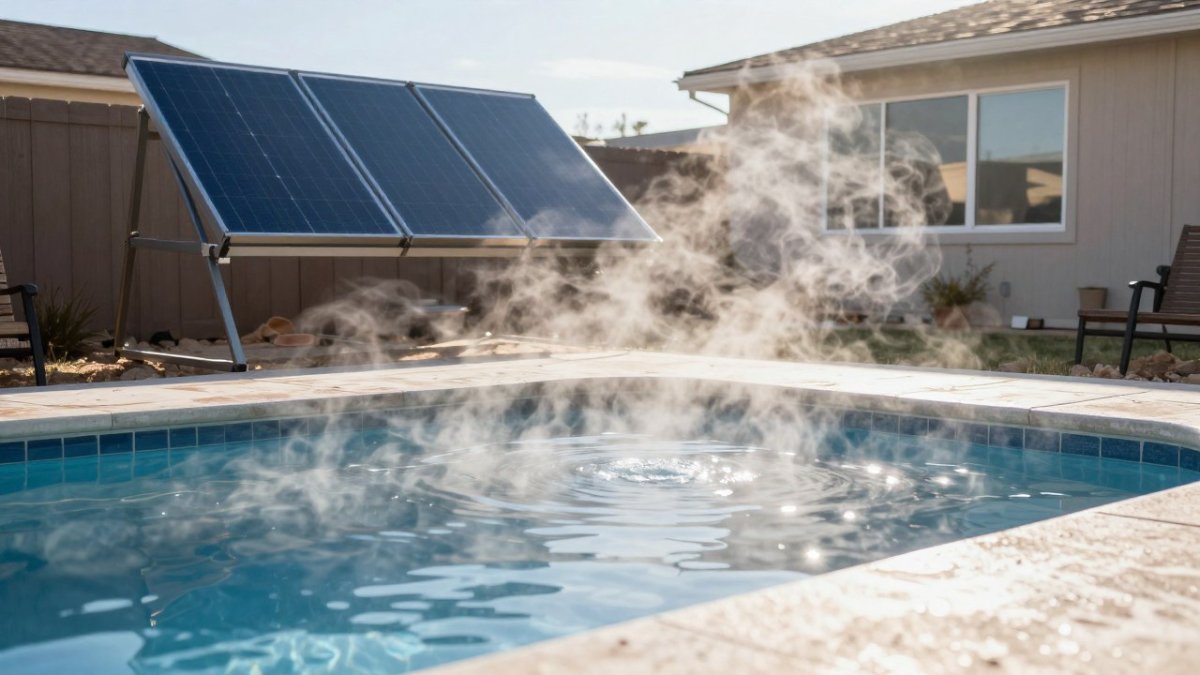
Air temperature has a strong effect on how much heat a collector keeps. Warm daytime air means less heat loss from the panels to the surrounding environment. Cold air does the opposite, so the water loses heat as it moves through the collectors, even when the sun is out.
A practical rule of thumb: on a cold but sunny winter day, a well-positioned system can still add a few degrees. On a freezing day with heavy clouds, the gain may be close to zero. Plan around the typical daytime high, not the best-case afternoon.
How Sunlight, Cloud Cover and Shade Change Results
Clear skies give the best winter results. Cloud cover reduces the energy reaching the panels, and heavy overcast can cut output sharply. Compare how sunlight, cloud cover and shade change results. Learn how cloud cover affects performance and how to keep your pool warm. Shade from trees, fences or nearby buildings can do even more damage, because a partly shaded collector loses heat production across the whole flow path.
Check your site before buying. A roof that faces south and gets direct sun through most of the day performs far better than one that is shaded in the late afternoon.
Solar Pool Heating in Cold Weather: Realistic Temperature Gains
Most homeowners want a number, so here is a realistic picture by climate pattern rather than a single broad range. In winter, solar pool heating is best understood as a heat-maintenance tool, not a comfort heater. The gain you see depends on three things working together: how much sun your collectors receive, how much heat the pool loses overnight, and how much collector area you have relative to pool volume.
Solar heating gains depend heavily on conditions. On a sunny day, a properly sized system can add a few degrees during the day, while a cloudy or freezing day may add little or nothing. Overnight, an uncovered pool can lose several degrees, so the net change from one morning to the next is often small without a cover. A cover used every night helps preserve more of the daytime gain.
Consider how the same system performs under different conditions: on a clear winter day, the collectors can add some heat during the day, but an uncovered pool overnight near freezing can lose enough heat to erase much of that gain. Adding a cover reduces that overnight loss, which helps the water start each sunny day from a higher point.
| Climate pattern | Typical winter daytime gain (sunny) | Typical overnight loss (uncovered) | Net effect with cover |
|---|---|---|---|
| Mild, sunny winters | 3-6°F | 2-4°F | Slow warming over several days |
| Cold, sunny winters | 2-5°F | 4-6°F | Holding pattern; gains preserved |
| Cold, cloudy winters | 0-2°F | 3-5°F | Little net gain; freeze protection is the priority |
Typical winter daytime gain (sunny)
Actual results depend on collector area, pool size, sun exposure, pump run time, and cover habits. The key distinction is that collecting some solar heat does not necessarily make the pool comfortable for swimming, and it does not by itself protect plumbing during a freeze. Those are separate goals that require separate strategies.
How to Winterize a Solar Pool Heater Without Damaging It
Winterizing protects the system from freezing. Use this freeze-protection checklist for the whole pool heating setup to cover every component. Water left in collectors can expand and crack the panels or tubing once temperatures drop below freezing. Many owners choose to drain the collectors before the first hard freeze. Follow the full step-by-step winterization process before freezing weather arrives.
- Turn the pump off and set the solar valve to drain or bypass, following your system’s manual.
- Open the drain valves at the lowest points of the collectors and let them empty completely.
- Use compressed air at low pressure to blow out remaining water from the tubes if your system allows it.
- Close the drain valves once the collectors are dry, and keep the bypass set so water does not re-enter the panels.
- Check the plumbing around the collectors for leftover water, especially in low spots.
Spring startup reverses these steps. Refill the collectors slowly, bleed the air, and check for leaks before running the pump at full speed.
Watch out: do not guess the drain points. Missing one low valve can leave enough water inside to split a tube during a freeze.
How Pool Covers Reduce Overnight Heat Loss
A solid or solar pool cover is one of the most effective winter tools. Guidance on choosing a cover for cold Utah winters can help you pick the right one. Most pool heat is lost through the surface, and much of that loss happens overnight when no sunlight is available. A cover traps heat that would otherwise escape into the air.
Covers also reduce evaporation, which removes heat from the water. Using the cover every night and removing it during the day gives the solar system a better starting point each morning. In cold winters, a cover can help the water stay warmer.
Winter Operating Guide: When to Run the Circulation Pump
Running the pump at the right time matters as much as the panels themselves, but winter operation is really a decision sequence, not a single schedule. Use this step-by-step guide to decide each day whether to send water through the collectors, bypass them, or shut down entirely.
Step 1: Check the forecast the night before. Note the expected daytime high, the overnight low, and whether a freeze warning is in effect. If the overnight low is forecast to drop below 32°F, plan for freeze protection rather than heat collection.
Step 2: On a sunny day with a daytime high above freezing, circulate through the collectors during the warmest window. Mid-morning through mid-afternoon is typically best. Run the pump long enough to turn over the pool volume at least once, and keep the solar valve open only while the collectors are warmer than the pool water.
Step 3: Bypass the collectors when they are cooler than the pool. A simple rule: if the panels are cold to the touch or the air temperature is dropping, bypass them. Circulating through cold collectors pulls heat out of the water instead of adding it.
Step 4: On cloudy or freezing days, prioritize freeze protection over heating. Many systems use a freeze sensor or controller that automatically starts the pump and circulates water when air temperature approaches freezing. If your system lacks that automation, run the pump manually during the coldest hours or drain the collectors before the freeze, following the manufacturer’s instructions.
Step 5: Keep filtration needs separate from solar scheduling. The pool still needs enough pump run time to stay clean. Set your solar schedule around that minimum rather than replacing it.
Watch out: running the pump through the collectors during a hard freeze without a freeze-protection strategy can damage panels and plumbing, and circulating through cold collectors on a freezing night can cool the pool faster than it would cool on its own. When in doubt, bypass and protect.
Planning Your Next Step Before the Next Pool Season
Winter is a good time to decide whether solar heating fits your pool. Check your sun exposure, review your cover habits, and plan your winterization steps before the first freeze arrives. If you want a clear answer for your property, contact Dixie Pool Solar Heating & Misting for a free quote.
Frequently Asked Questions
Can a solar pool heater work when it is cold outside?
Yes, a solar pool heater can still collect heat when air temperatures are cold, as long as the sun is shining on the collectors. Performance drops as outdoor temperatures fall, because the water passing through the panels loses heat to the air faster. On sunny winter days, a solar system can add some warmth even when the air is chilly. The gain is modest, though, so do not expect a cold-weather pool to feel like a summer pool.
Does a solar pool heater work on cloudy winter days?
Solar collectors gather less heat on cloudy days because they depend on direct and diffuse sunlight. Thin clouds still allow some collection, but heavy overcast cuts output sharply. Shade from trees or buildings also reduces gains. Running the pump during the sunniest part of the day gives the system the best chance to collect heat, and a pool cover helps keep that heat in on cloudy days.
Will a solar pool heater prevent my pool from freezing?
A solar pool heater is not a freeze protection system. It can warm water somewhat during the day, but it will not reliably keep a pool above freezing overnight in cold weather. Freeze protection depends on proper winterization, which includes draining the collectors and piping when temperatures drop toward freezing. Check your system’s manufacturer guidance and local climate conditions before the first hard freeze of the season.
How do I winterize my solar pool heater?
Winterizing a solar pool heater typically means shutting the system down before freezing temperatures arrive. Turn off the pump, close the solar valve, and drain the collectors and supply lines so no water is trapped where it can freeze and crack. Some systems use a bypass valve to route water back to the pool; set it so the collectors stay empty. Reverse the steps in spring. If you are unsure about your system’s layout, have a professional handle the procedure.


Leave a Reply