
Last Updated: November 18, 2026
Quick Summary
Install a solar pool cover flat on the water with the bubble side down and the smooth side facing the sky, then trim any overhang so the edges sit tight. Measure at the waterline first, cut on a warm day, and use a correctly loaded reel to keep the cover centered and protected.
- Measure length and width at the waterline, not at the coping, before ordering.
- Let the cover relax in the sun for 15-20 minutes before cutting it.
- Space straps evenly across the cover width, typically three to five for a standard residential cover.
- Roll the cover with bubbles facing in toward the beam so they do not crush.
- Leave roughly an inch of overhang and cut relief slits at inside corners to stop curling.
Table of Contents
- Why Correct Installation Decides How Well a Solar Pool Cover Works
- Measuring Your Pool Before You Unroll a Solar Pool Cover
- How to Cut a Solar Pool Cover to Fit Without Ruining It
- Which Way to Put a Solar Cover on a Pool: Bubble Side Down
- Step-by-Step: Unfolding and Positioning the Cover on the Water
- Troubleshooting Common Installation Problems
- Frequently Asked Questions
Why Correct Installation Decides How Well a Solar Pool Cover Works
A solar pool cover only pays you back when it sits flat on the water, bubble side down, with no gaps at the edges.
Here’s the core problem: a solar pool cover works by trapping heat and blocking evaporation at the water surface.
What most guides miss is how much the fit matters.
- Flat contact with the water = better heat retention
- Tight edges = less evaporation and heat loss
- Bubble side down = sunlight absorbed into the pool
If you want the deeper playbook on keeping water in the pool, our guide on how to prevent pool water evaporation walks through the full strategy.
Measuring Your Pool Before You Unroll a Solar Pool Cover
Measure twice before you buy, because a cover is cut to your pool’s actual dimensions, not a guess. Grab a tape measure and record the longest length and widest width at the waterline.
Then check the shape. Most pools are simple, but plenty are not. Note every corner, curve, and step before you order.
- Measure length at the waterline, not the coping
- Measure width at the widest point
- Sketch the outline on paper with measurements
For a rectangular pool, a standard cover size often fits with minor trimming. While you’re sizing things up, it helps to read our guide on how to choose the right pool cover for your climate and pool type before you commit.
Handling Rectangles, Freeform Shapes, and Steps
Rectangles are easy: order to your measured length and width, then trim the last inch or two for a clean edge. Freeform pools need a template. Lay heavy craft paper or a tarp over the water, trace the outline, and cut the cover to match. Steps and benches are the tricky part. Cut relief slits so the cover settles around them instead of bunching up.
How to Cut a Solar Pool Cover to Fit Without Ruining It
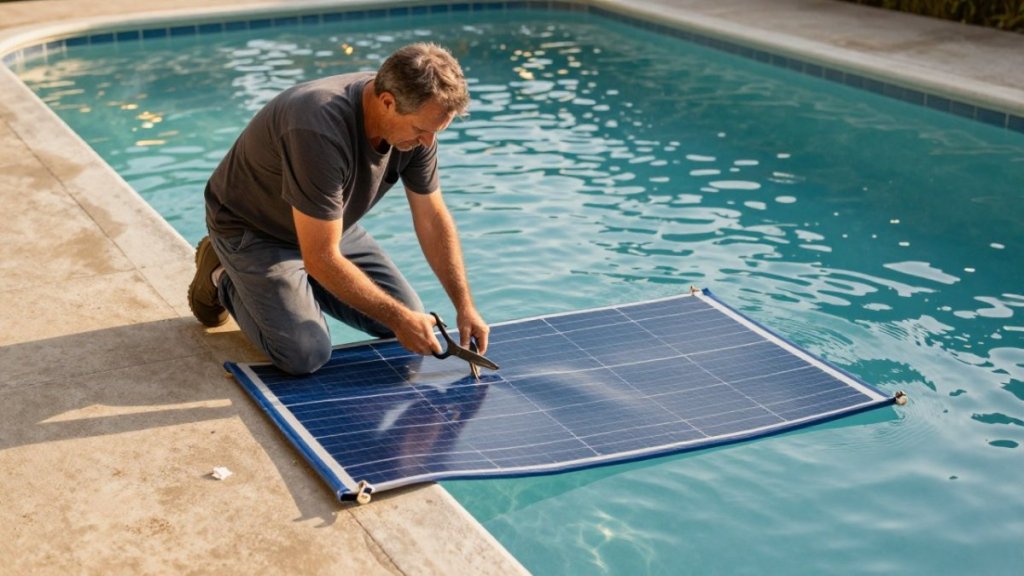
Cut on a warm, sunny day when the plastic is soft and pliable. Cold plastic cracks.
Then cut in slow, steady passes with sharp heavy-duty scissors or a utility knife. Don’t try to hack through in one snip.
- Let the cover relax in the sun for 15-20 minutes first
- Mark the line, then cut just outside it
- Leave a small margin, then test-fit before trimming more
A common mistake is cutting too much on the first pass. You can always take more off. You can’t put it back.
Which Way to Put a Solar Cover on a Pool: Bubble Side Down
Bubble side down is the rule. The bubbles face the water, and the smooth side faces the sky.
Here’s why it works. The bubbles trap a layer of air against the water, and that layer holds heat in.
- Bubble side down: heats the water, holds heat in
- Smooth side up: lets sunlight through, sheds rain and debris
- Bubble side up: wrong, and a waste of the cover
If heating costs are your main concern, our cost-effective pool heating guide shows how a correctly oriented cover fits into the bigger picture.
Step-by-Step: Unfolding and Positioning the Cover on the Water
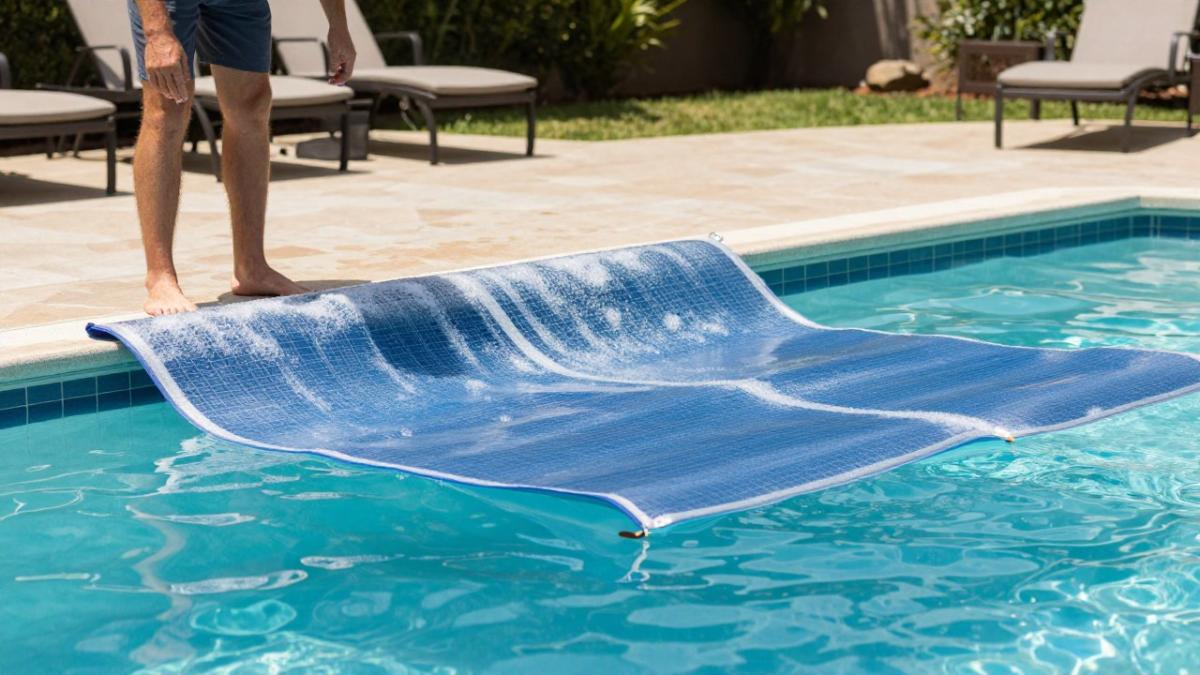
Unroll the cover on a calm day, because wind turns a light blanket into a sail. Two people make this far easier than one, but you can do it solo with a reel or a little patience.
(/2026/08/30/extend-swimming-season-utah/) pairs well with a properly installed cover.
Troubleshooting Common Installation Problems
Most install problems come down to fit, wind, or orientation. The table below gives the quick fix, and the notes after it explain why each problem happens so you can prevent it next season.
| Problem | Likely Cause | Fix |
|---|---|---|
| Cover won’t sit flat | Wrinkles or trapped air | Smooth by hand, work air to the edges |
| Edges curl up | Cover cut too tight | Trim relief slits or size up |
| Poor heating | Bubble side up | Flip it, bubbles down |
| Cover blows off | Wind or loose fit | Add weights or use a reel |
| Bunching at steps | No relief cuts | Cut slits around steps and benches |
| Straps sag on reel | Loose tension | Tighten straps evenly |
| Cover drifts to one side | Wind, uneven fill, or a cover cut short on one edge | Re-center it, add a corner weight, or re-trim the short edge |
| Cover is hard to handle | Cold plastic, wrong size, or no reel | Warm it in the sun, size down, or add a reel |
Why the Cover Drifts
A cover that slides to one side is usually a wind problem or a fit problem. If the pool is exposed to prevailing wind, the cover will creep toward the downwind edge no matter how well it is cut. A corner weight, a few inches of overhang tucked under the coping, or a reel that holds the cover centered will stop the drift.
Why the Edges Curl
Curling edges almost always mean the cover was cut too tight. Leave a small overhang, roughly an inch, and cut relief slits at inside corners so the cover can settle without bunching. If the curl is already set, lay the cover flat in the sun for an afternoon and weight the edges; if it still curls, trim a fresh edge.
Why the Cover Is Hard to Handle
A cover that feels heavy, stiff, or impossible to manage solo is usually cold, oversized, or both. Plastic stiffens in cool weather, so let the cover relax in the sun before you unfold it. If the cover is simply too large for one person, a reel is the fix, a manual reel lets one person roll and unroll a standard residential cover without dragging it across the deck.
If temperature swings are your real headache, our guide on seasonal pool temperature control covers how to manage the water once the cover is on.
Frequently Asked Questions
Should the bubbles on a solar pool cover face up or down?
Bubble side down, every time. The bubbles trap a layer of warmed air against the water, and that is what slows heat loss overnight and lets sunlight heat the pool during the day. Flipping the cover bubble side up puts the smooth side against the water, which cuts heat retention and can make the cover sit unevenly. If you are ever unsure after unfolding, run your hand across the surface: the dimpled side goes toward the water.
Can one person put a solar pool cover on by themselves?
Yes, if you work in sections rather than trying to lift the whole cover at once. Start at one end, lay a few feet of cover on the water, and walk the rest across the pool edge by edge. A reel makes solo handling far easier because you crank the cover on and off from one spot. For larger pools, a cover sized to your dimensions plus a reel is the difference between a two-minute job and a wrestling match.
How do I cut a solar pool cover to fit an irregular pool shape?
Leave the cover on the water for a day so it relaxes and settles into the pool shape, then trim only the overhang. Mark your cut line with chalk or tape, leave roughly an inch of slack so the cover can move with the water, and cut in short passes with sharp scissors. Never cut before the cover has flattened out, and never trim it tight against the coping, because a cover that fits like a lid tears at the edges.
Will a solar cover alone keep my pool warm enough to swim in March?
A cover slows heat loss and adds some warmth, but it cannot generate the heat a full solar thermal system provides. A cover slows heat loss, but it cannot generate the heat a full solar thermal system provides. Check with Dixie Pool Solar Heating & Misting on our website for a quote tailored to your pool.


Leave a Reply