Last Updated: November 5, 2026
Quick Summary
The most energy-efficient ways to cool swimming pools are running the pump overnight when air is cooler, shading the water from afternoon sun, and using covers strategically. Aerators and misting add evaporative cooling in dry climates, while chillers or reversible heat pumps handle the hardest cases at higher running cost.
- Run a variable-speed pump overnight, when cooler air lets the water shed daytime heat at low energy cost.
- Shade the pool from afternoon sun, since sunlight is the main source of heat gain.
- Use a pool cover at night or in cool seasons, and pull it back during the afternoon to allow evaporative cooling.
- Aerators cool through evaporation and work best in dry air, but they increase water loss and need topping off.
- Chillers and reversible heat pumps cool regardless of humidity, but their daily electricity cost should be estimated before buying.
Table of Contents
- Why Pool Water Gets Too Warm and When Cooling Matters
- Low-Energy Methods: Night Pump Runtime, Shade and Pool Covers
- How a Pool Aerator Cools Water Through Evaporation
- How to Cool Down Hot Pool Water Fast Without Overspending
- Pool Chiller Cost, Heat Pumps and Mechanical Cooling Options
- Comparing Energy Use, Cost and Performance by Climate and Pool Size
- Choosing the Right Cooling Method for Your Budget and Target Temperature
- Frequently Asked Questions
Why Pool Water Gets Too Warm and When Cooling Matters
Pool water heats up faster than most owners expect, and once it climbs past the mid-80s Fahrenheit it stops being refreshing and starts being uncomfortable, which is why many owners start looking for ways to keep their cool swimming pools comfortable through the summer.
Pool water picks up heat from three main sources: direct sunlight striking the surface, warm ambient air, and the heat generated by your pump and any heater running on the system. Sunlight does most of the damage in the afternoon, when the sun is high and the air is still. Calm air also limits evaporation, which is one of the few natural processes that removes heat from water.
Cooling matters most when you actually use the pool. A pool sitting unused on a 105-degree afternoon is a waste of effort to chill.
Low-Energy Methods: Night Pump Runtime, Shade and Pool Covers
The cheapest cooling strategies work with the environment rather than against it. Most of them cost little or nothing beyond changes in habit or a modest one-time setup, and they are a practical way to keep cool swimming pools without adding equipment.
Running the Pump at Night
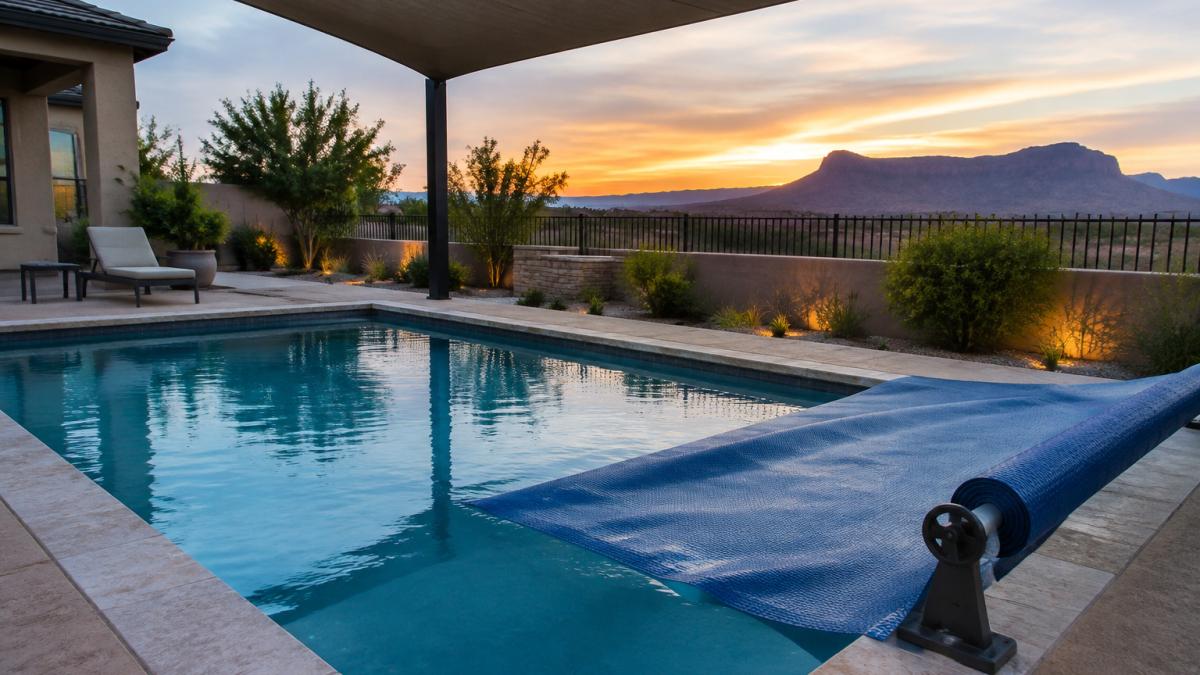
Running your circulation pump overnight, when air temperatures drop, lets the water shed some of the heat it picked up during the day. Many owners find that a timer set to run the pump during cooler hours, combined with a variable-speed pump, keeps energy use low while still moving water enough to release heat. Variable-speed pumps run efficiently at low speeds for long periods, which makes extended nighttime circulation far cheaper than running a single-speed pump at full power.
Shade, Windbreaks and Pool Covers
Shade blocks the sun that heats the water in the first place. A shade sail, a well-placed tree, or a structure on the west side of the pool can reduce afternoon heat gain noticeably. If misting looks like a fast option, see the misting system installation costs before committing.
Pool covers are a double-edged tool. A cover traps heat and reduces evaporation, which helps keep water warm on cool nights but also prevents the evaporative cooling you want in summer.
How a Pool Aerator Cools Water Through Evaporation
Evaporation is the most effective passive cooling process a pool has.
A pool aerator, sometimes called a water feature or spray system, pushes water through jets or fountains above the surface.
Keep the tradeoff in mind. Evaporation removes water as well as heat, so you will need to top off the pool more often, and that water has to be balanced chemically after each refill.
How to Cool Down Hot Pool Water Fast Without Overspending
Sometimes the water is already hot and you need results within a day, not a season.
If you need faster cooling than these steps deliver, the next tier is a chiller or heat pump, covered below.
Watch out: chemical balance can shift after a large water change or heavy evaporation. If cooling isn’t working as expected, troubleshoot pool water cooling problems to find and fix the cause.
Pool Chiller Cost, Heat Pumps and Mechanical Cooling Options
A reversible heat pump uses the same refrigeration cycle in both directions: it can chill water in summer and warm it in shoulder seasons, so it appeals to owners who want one unit for year-round temperature control (Pump Up Your Savings with Heat Pumps). A standard heat-only heat pump cannot cool a pool at all, if cooling is the goal, confirm the unit is rated for chilling before you buy.
What drives the price
Equipment pricing scales with cooling capacity, which is sized to pool volume and the temperature drop you want. A small above-ground pool needs a fraction of the capacity of a large in-ground pool, and a unit sized too small will run constantly without reaching target temperature. Installation adds cost for electrical service, plumbing tie-ins, pad placement, and any panel or breaker upgrades.
What it costs to run
Running cost is where mechanical cooling separates itself from passive methods. A chiller or reversible heat pump draws meaningful electricity whenever the compressor runs, and in peak summer it may run many hours per day to hold a target temperature. The practical comparison is not the sticker price but the cost per degree of cooling per day:
- Estimate the hours per day the compressor will run at your target temperature.
- Multiply by the unit’s rated input power (listed in the specs, in kilowatts).
- Multiply by your electricity rate per kWh.
That gives a daily operating estimate you can compare directly against the near-zero runtime cost of night pumping, shade, or an aerator. Mechanical cooling generally only pays off when passive and evaporative methods cannot keep up, typically in humid climates, in pools with heavy sun exposure and little shade, or when a specific event demands a fast, large temperature drop.
Performance caveats
Chillers and reversible heat pumps perform consistently regardless of humidity, which is their main advantage over aeration. But their efficiency falls as outdoor air temperature climbs, because the unit has to reject heat into already-hot air.
Watch out: adding a chiller or heat pump changes your circulation and electrical load.
Solar thermal is a related but different system: it captures the sun’s heat to warm water and extend the swimming season, and it does not cool a pool.
Comparing Energy Use, Cost and Performance by Climate and Pool Size
Most guides present cooling methods as if they work equally everywhere. They don’t. The same aerator that drops water temperature several degrees in dry desert air barely moves the needle in humid coastal air, and a chiller that runs efficiently on a dry 95-degree day works harder on a humid one. Comparing methods on a consistent basis means looking at four variables together: humidity, nighttime air temperature, wind, and pool characteristics.
How climate changes the answer
Evaporative methods, aeration, fountains, misting, depend on the air’s capacity to absorb water vapor. In dry air, evaporation is fast and cooling is strong. As relative humidity rises, the air approaches saturation, evaporation slows, and the cooling effect shrinks.
Nighttime air temperature sets the ceiling on night pumping. Circulating water overnight only sheds heat if the air is cooler than the water.
How pool characteristics change the answer
Pool size and depth determine thermal mass. A large, deep pool holds far more heat and responds slowly to any method, while a small or shallow pool can swing several degrees in an afternoon. Sun exposure is the other big lever: a pool with full afternoon sun gains heat faster than one shaded on the west side, so shade investments pay back more on exposed pools.
A consistent way to compare methods
To compare fairly, estimate the same three numbers for each option:
- Temperature drop needed: the gap between current water temperature and your comfortable target.
- Hours per day the method runs: pump hours, aerator hours, or compressor hours.
- Energy and water consumed: electricity in kWh for pumps and chillers, plus refill water for evaporation-heavy methods.
Passive methods, night pumping, shade, strategic cover use, cost almost nothing to run but cool slowly and depend on cool nights and dry air. Evaporative methods add meaningful cooling at moderate pump cost but consume water and lose effectiveness as humidity rises. Mechanical cooling delivers the fastest, most climate-independent results but carries the highest ongoing electricity cost. Laying the three side by side on the same assumptions is the only honest comparison.
A simple decision framework
Start with your target temperature and budget, then work down this ladder:
- A few degrees off, occasional hot afternoons: night pumping, shade, and pulling the cover back during the day are usually enough, at near-zero operating cost.
- Steady cooling through the hottest months in dry air: add an aerator or misting system on a timer for afternoon use; accept the added water top-offs.
- Humid climate, heavy sun, or a large pool that passive methods can’t hold: mechanical chilling or a reversible heat pump becomes the realistic option, budgeted on daily kWh rather than sticker price.
Watch out: every method that increases evaporation also increases water loss and refill demand, and local water-use rules may limit how much you can top off. Check your water provider’s current restrictions before leaning on evaporation-heavy cooling, and retest pH and sanitizer after any change to circulation or aeration, since both can shift water chemistry.
The best cooling method depends heavily on climate and pool characteristics, as summarised below.
| Factor | Effect on cooling | Practical implication |
|---|---|---|
| Humidity | Higher humidity slows evaporation | Rely less on aeration as humidity rises |
| Nighttime air temperature | Sets the limit on night pumping | Cool nights make night pumping one of the cheapest tools |
| Wind | Speeds evaporation but drives water loss | Windbreaks can reduce water loss |
| Pool size and depth | Larger pools hold more heat and respond slowly | Small pools swing temperature faster |
| Sun exposure | Full afternoon sun gains heat quickly | Shade pays back most on exposed pools |
| Passive methods | Near-zero running cost, slower cooling | Suit a few degrees off on occasional hot days |
| Mechanical cooling | Fastest, climate-independent results | Highest ongoing electricity cost |
Choosing the Right Cooling Method for Your Budget and Target Temperature
Pick your method by starting with the temperature you want and the money you can spend.
Most owners end up combining methods. To pick a target temperature that also saves the most energy, see the best pool temperature for energy efficiency.
For a tailored plan based on your pool size, sun exposure and target temperature, contact Dixie Pool Solar Heating & Misting for a quote.
Frequently Asked Questions
How do I keep my pool cool in 100-degree weather?
Start by running the pump overnight, when air temperatures drop and the water can shed heat, and keep the pump off during the hottest afternoon hours to avoid adding heat from circulation. Use a solar cover or floating insulation during the day to limit sun gain, and add shade from sails or trees on the most exposed sides. Aeration or a spray feature can add evaporative cooling of a few degrees, though results depend on humidity. In very hot, dry conditions these passive steps may not be enough, and other cooling options can be compared on cost.
Do pool aerators actually lower water temperature?
A pool aerator can lower water temperature by a small amount through evaporative cooling, because water leaving the surface as spray or droplets carries heat away. The effect is strongest when humidity is low and air is dry, and weakest in humid conditions where evaporation slows. Aerators also add circulation and oxygenation, which helps the water mix. Expect modest gains rather than dramatic drops, and pair an aerator with night pump runtime and shade for the best overall results.
Is a pool chiller worth the investment for residential use?
A pool chiller can be worth it if you need to hold a specific water temperature through extended heat and have the budget for installation and electricity. Compare the chiller’s operating cost against a combination of covers, shade and night circulation, which cost far less to run. Chillers work best in pools that are sized to match the unit’s capacity and in climates where passive cooling falls short. If your main goal is modest cooling, lower-cost methods usually deliver most of the benefit first.
What is the most energy-efficient way to cool a swimming pool?
The most energy-efficient approach usually combines low-cost passive methods: running the pump at night when water can release heat, using a pool cover during the day to limit solar gain, and adding shade where the pool gets the most sun. Variable-speed pumps reduce the electricity needed for circulation. Mechanical options such as chillers and reversible heat pumps use more energy but offer more control. Start with the passive steps before investing in equipment.
Ready to get started? Dixie Pool Solar Heating & Misting can assess your pool and recommend the cooling approach that fits your budget. Get a Free Quote and see how an energy-efficient setup can keep your water comfortable through the summer.


Leave a Reply