Table of Contents
- Energy Efficient Pool Heating for Homes: What Actually Works
- Pool Heat Pump vs Solar: Which Wins for Your Climate
- Pool Cover Energy Savings: The Cheapest Efficiency Upgrade
- Sizing Your Heater and Controlling Evaporation
- Smart Controls, Retrofits, and Regional Climate Mapping
- How to Get a Solar Pool Heating Quote
- Frequently Asked Questions
Last Updated: September 10, 2026
Energy Efficient Pool Heating for Homes: What Actually Works
Energy efficient pool heating for homes is the practice of warming pool water using systems that draw most of their input from the environment rather than from a utility meter. At Dixie Pool Solar Heating & Misting, we install solar thermal collectors that turn sunlight into heat with no operating cost once the panels are up. Many homeowners can cut seasonal heating bills by $1,500 to $2,000 and swim from March through November.
The catch is that “energy efficient” means different things depending on your climate, your pool, and how you use it. A system that performs beautifully in full sun can underdeliver on a shaded lot. Below, we break down the three approaches that matter, what each one costs you over a season, and how to size a system so it actually delivers.
Solar thermal panels heat water directly with sunlight. They are not the same as photovoltaic panels, which generate electricity. If your goal is warm water, thermal is the more direct path.
Pool Heat Pump vs Solar: Which Wins for Your Climate
Solar thermal wins in sunny, warm climates with long daylight hours; heat pumps win in cooler, cloudier regions where sunlight is unreliable. The choice comes down to how many clear days your pool season actually contains.
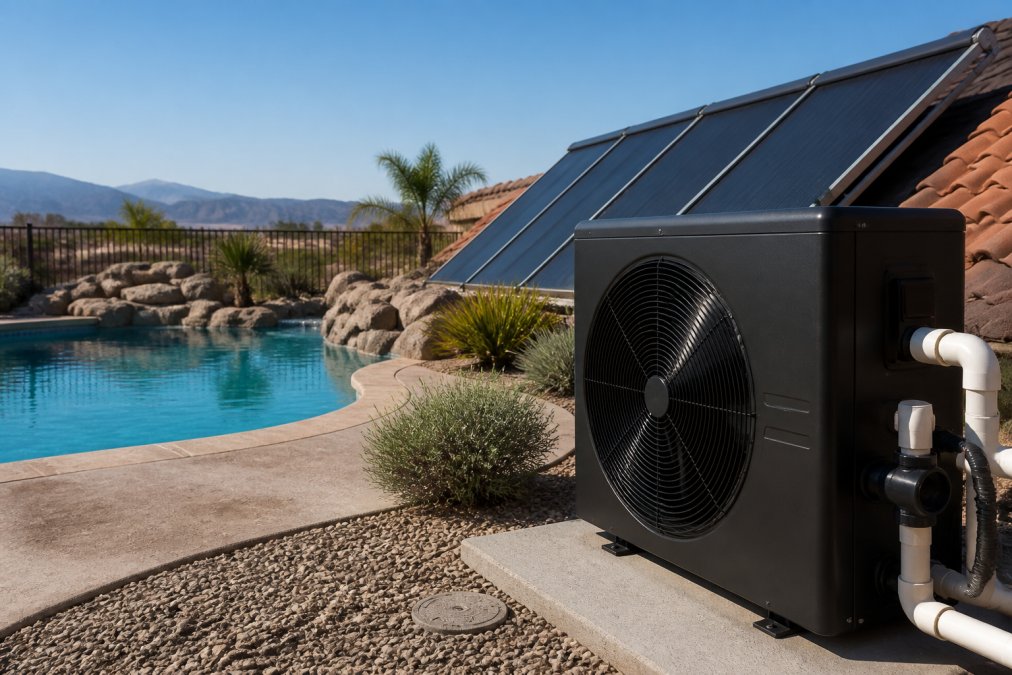
A heat pump moves existing heat from the air into the water using a compressor and refrigerant cycle. Its coefficient of performance, the ratio of heat delivered to electricity consumed, typically runs between 4 and 6 in mild conditions (energy.gov). That number drops as ambient air temperature falls, which is why heat pumps struggle in cold snaps.
Solar thermal collectors use no compressor and no grid electricity. Water circulates through panels, absorbs heat, and returns to the pool. Operating costs after installation are close to zero, and there is nothing to tune or replace on a maintenance cycle beyond occasional cleaning.
| Factor | Solar Thermal | Heat Pump |
|---|---|---|
| Operating cost | Near zero after install | Ongoing electricity use |
| Best climate | Sunny, mild winters | Cooler, cloudier regions |
| Cold-weather performance | Depends on sun hours | Drops with air temperature |
| Lifespan | 20+ years with quality panels | Shorter compressor service life |
| Carbon footprint | Minimal | Tied to grid mix |
If your property gets strong sun from March onward, solar thermal is the stronger long-term play. If your season is short and skies are frequently overcast, a heat pump may recover heat more consistently.
Pool Cover Energy Savings: The Cheapest Efficiency Upgrade
A pool blanket is the single highest-return efficiency purchase most homeowners can make, because most pool heat loss is evaporation, not conduction. Cover the water and you cut that loss at the source.
The mechanics are straightforward: evaporation consumes energy, and every gallon that leaves as vapor takes heat with it. A floating cover or blanket traps that vapor and returns it to the pool. Combined with a solar thermal system, evaporation control often means the difference between a system that keeps up and one that runs constantly.
- Use a floating blanket nightly during the shoulder months
- Keep the cover clean so it transmits rather than blocks sunlight
- Pair covers with a solar system for the largest combined gain
- Expect the cover to pay for itself faster than any other upgrade
The thing nobody tells you about covers is that they matter most in the spring and fall, exactly when you are trying to stretch your season. Skipping the cover in March undoes much of what your panels gained that day.
Sizing Your Heater and Controlling Evaporation
Correct sizing starts with surface area, not pool volume, because heat gain and loss happen at the water’s surface. A system sized to the wrong surface area will either underperform or waste capacity.
The collector-to-surface ratio. For solar thermal in a sunny climate, most installers size the collector array at roughly 50% to 100% of the pool’s surface area (energy.gov). A 400-square-foot pool in a strong-sun region typically needs about 200 to 300 square feet of unglazed collector; the same pool under more cloud cover pushes toward the top of that range or beyond. Above-ground pools with less wind exposure and shallower depth often sit at the low end; in-ground pools with a deep end and open exposure sit higher.
The evaporation math. A pool loses most of its heat through evaporation, and the loss scales with surface area, water temperature, air temperature, humidity, and wind. A common rule of thumb is that an uncovered pool loses roughly 5 to 10 degrees Fahrenheit overnight in shoulder months. A floating blanket cuts that evaporative loss dramatically, which is why covers and sizing are the same conversation: every degree you stop losing is a degree your heater does not have to replace.
Key inputs for system sizing:
- Pool surface area in square feet
- Average sun hours during your target season
- Typical wind exposure and shade coverage
- Desired water temperature and how you regulate it
- Collector tilt and orientation relative to true south
The payback formula. To estimate whether a heat pump or solar thermal pays off, compare annual operating cost against installed cost:
- Solar thermal: installed cost divided by near-zero annual operating cost gives a payback driven almost entirely by upfront price and how many seasons you actually swim.
- Heat pump: installed cost divided by (seasonal electricity use × your utility rate) gives a payback that shifts with local rates and how cold your shoulder months run.
A simple way to frame it: if a heat pump costs $X to install and saves $Y per season versus a gas heater, payback in seasons equals X ÷ Y. Run that number for your own utility rate and swim window rather than trusting a national average, because both vary widely by region.
A thermostat control ties it together. Set your target temperature and let the controller decide when to circulate water through the collectors. This prevents the system from cooling the pool on cold, cloudy days.
Before you buy, pull your last 12 months of utility bills and your pool’s surface area. Those two numbers let you estimate payback in about ten minutes and will keep a sales pitch from outrunning your actual math.
Smart Controls, Retrofits, and Regional Climate Mapping
Three angles most guides skip: how to retrofit an existing system, how to automate heating around utility pricing, and how to map your climate before you buy.
Retrofitting vs. new installation. If you already have a gas heater or heat pump, solar thermal can often be added alongside it as the primary heat source, with the existing unit as backup for cloudy stretches. The retrofit usually ties into the existing pump and filter loop through a diverter valve and a separate collector loop, so the old heater stays plumbed in as a fallback rather than being ripped out. That means less disruption to your equipment pad and no re-plumbing of the main pool return. A new installation gives you a clean slate to optimize panel placement, tilt, and circulation from day one, which matters if your current pad is cramped or your roof orientation is poor.
Smart home integration. Modern controllers can connect to home automation systems, letting you adjust water temperature regulation from a phone, schedule circulation around your utility’s peak hours, and monitor performance over time. The practical win is load shifting: if your utility charges more during late-afternoon peak windows, you can run the heat pump or circulation pump earlier in the day when rates are lower and let the pool’s thermal mass carry the heat into the evening. Pair the controller with a pool cover and you compound the savings, because you are both adding heat cheaply and losing less of it overnight.
Regional climate mapping. Your location dictates everything, and the two variables that matter most for a heat pump are average ambient air temperature and humidity during your swim season. Heat pump performance holds up well in mild, humid conditions and falls off in cold, dry air, because there is less heat in the air to move and the unit works harder to defrost. Solar thermal performance tracks sun hours and cloud cover instead. Before choosing a system, map your average monthly sun hours and average overnight low against your desired swim window. A region with intense summer sun and mild winters supports a smaller collector array and a longer season; areas with more cloud cover need more panel area to hit the same temperature.
| Your Situation | Recommended Approach |
|---|---|
| Strong sun, mild winters | Solar thermal as primary heat |
| Cloudy, cool climate | Heat pump or hybrid setup |
| Existing gas heater | Retrofit solar alongside it |
| Shaded lot | Larger array or heat pump |
| Time-of-use utility rates | Smart controller to shift load off peak |
The retrofit path is usually the fastest route to lower operating costs, because you keep the existing heater as backup and add the efficient system as the primary source. You do not have to choose one or the other.
How to Get a Solar Pool Heating Quote
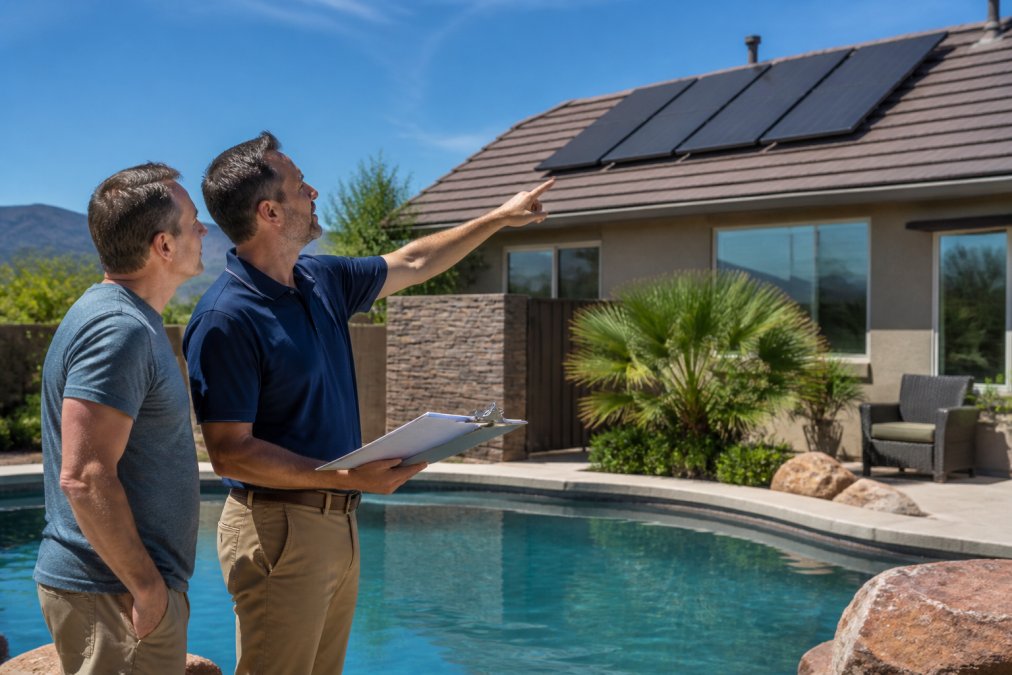
Getting an accurate solar pool heating quote takes about a week and starts with a site assessment, not a phone number. A reputable installer will measure your pool, check roof orientation and sun exposure, and size the collector array to your actual conditions.
What a good quote should include:
- Collector panel count and total surface area
- Panel brand and warranty terms
- Integration details with your existing pump and filter
- Estimated seasonal performance for your climate
- Any available incentives and how to claim them
Ask specifically about warranty length and what happens after it expires. Quality panels are built to last decades, and a strong warranty signals the installer’s confidence in the hardware. Labor coverage matters just as much as panel coverage, so confirm both in writing.
Before you sign, ask what documentation you will receive for any tax credit or rebate claim. Eligibility rules change, so confirm current requirements with the official source rather than relying on a sales pitch. The U.S. Department of Energy guidance on solar pool heating explains how these systems work and what to expect.
Frequently Asked Questions
What is the most energy-efficient pool heater for a home?
Solar thermal panels rank highest for efficiency in sunny climates because they use free sunlight to warm water with no operating cost once installed. Heat pumps are the most efficient electric option, moving existing heat rather than generating it. In Southern Utah, solar thermal paired with a pool blanket keeps water at usable temperatures from March through November while cutting annual heating costs by $1,500 to $2,000.
Does a heated pool use a lot of electricity?
Only if you rely on electric resistance or a heat pump. A heat pump uses electricity but moves heat rather than creating it, so consumption is far lower than a resistance heater. Solar thermal heating uses no electricity at all for water warming, just a small pump for water circulation. Adding a pool blanket reduces evaporation, which is where most heat and energy disappear.
How does solar pool heating compare to a heat pump?
Solar thermal has near-zero operating costs, a 20+ year panel lifespan, and works best in sunny regions. Heat pumps run day or night regardless of sun exposure but carry ongoing electricity costs and a shorter service life. For homeowners wanting to extend the season from March through November without monthly bills, solar wins on long-term cost. A heat pump suits shaded properties with limited roof exposure.
Can I extend my swimming season with sustainable heating methods?
Yes. Solar thermal systems combined with a pool blanket and thermostat control keep water warm from March through November in Southern Utah’s climate. Panels absorb ambient heat even on cooler days, and covers trap that warmth overnight. This approach uses renewable energy, lowers your carbon footprint, and qualifies for a 25% Utah state tax credit up to $2,000 plus a $750 gas rebate.
Extending your swim season without watching the gas meter spin is the whole point of energy efficient pool heating for homes. At Dixie Pool Solar Heating & Misting, we install Heliocol panels backed by a 12-year warranty and a 20+ year lifespan, with no operating costs after installation. Our team handles the integration and walks you through every incentive you may qualify for. Get a free quote and find out how many months you can add to your season.


Leave a Reply