Last Updated: November 4, 2026
Quick Summary
To qualify for renewable energy tax credits in Utah, you must install a new qualifying system at a home you own and live in, meet local building and electrical codes, and claim both the federal credit on IRS Form 5695 and the Utah credit on Form TC-40E. You need enough tax liability to use the credits, and you claim them in the tax year the system is placed in service.
- Federal and Utah credits are separate programs, each with its own rules, forms and limits.
- The credit is claimed in the tax year the system is fully installed and producing, not when you signed the contract.
- Keep itemized invoices, proof of payment, permit records and the manufacturer spec sheet to avoid delayed claims.
- Solar thermal pool heaters generally qualify, but gas and electric heat pumps and solar covers alone do not.
- Wait for the signed final inspection before filing, or you may have to amend your return later.
Table of Contents
- What Qualifies for Renewable Energy Tax Credits in Utah
- Eligibility Requirements for Residential Renewable Energy Systems
- Which Technologies Qualify: Solar, Geothermal, Wind, and Biomass
- The Federal Solar Tax Credit 2026: What Homeowners Should Know
- Solar Pool Heater Tax Credit 2026: Does Your System Qualify?
- How to Claim Energy Tax Credits on Your Tax Return
- Tax Credit Stacking Limits and Post-Installation Filing Timelines
- Get Your Free Quote and Start Your Solar Pool Heating Project
- Frequently Asked Questions
What Qualifies for Renewable Energy Tax Credits in Utah
Qualifying for renewable energy tax credits in Utah starts with knowing that two separate programs exist: a federal credit and a state credit. Each has its own rules, forms, and limits. Miss one, and you leave money on the table.
This guide walks you through both programs in plain English.
Here is the short version: a renewable energy tax credit is a dollar-for-dollar reduction in the tax you owe, claimed after you install a qualifying system. It is not a rebate check. You need tax liability to use it.
Federal vs. Utah State Credits: Two Separate Programs
The federal credit applies nationwide. The Utah credit is a state program with its own cap and its own form.
You can generally claim both, but they follow different rules. The state side does have a cap, which we cover below.
Plan around the credit’s limits before you file.
Eligibility Requirements for Residential Renewable Energy Systems
To qualify, your system generally needs to meet four tests:
- It is installed at your primary or secondary residence. Rentals you do not live in usually fail this test.
- It is new and first placed in service by you. Used equipment generally does not qualify.
- It meets local building and electrical codes. Permits and inspections matter here.
Keep every receipt and the signed contract. You will need them at filing time.
Your Interactive Eligibility Checklist
Run through this before you buy anything:
- The system serves a home you own and live in for part of the year
- The equipment is new, not refurbished or used
- You have a written contract with itemized installation costs
- Your installer pulled the required permits
- You have the manufacturer’s specification sheet showing system capacity
- You know your expected federal credit amount and state credit cap
- You have enough tax liability to use both credits
- You have saved all invoices and proof of payment
If you can check every box, you are in good shape. If not, fix the gaps before installation, not after.
Which Technologies Qualify: Solar, Geothermal, Wind, and Biomass
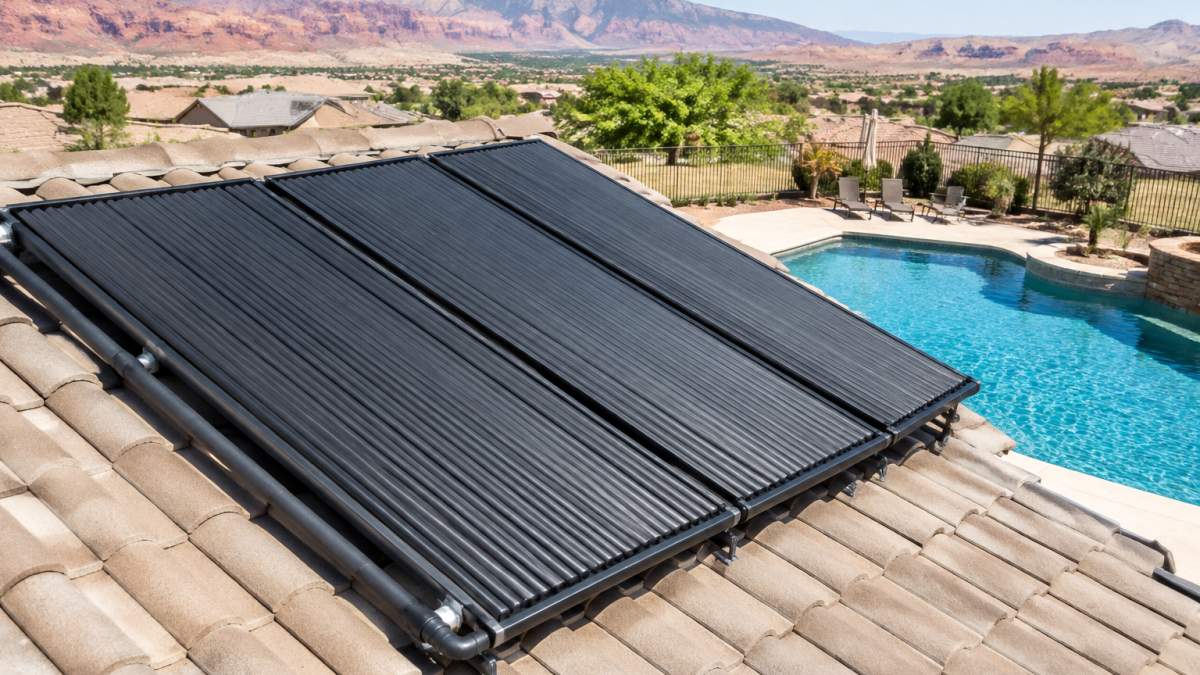
Federal and state programs each define their own list of qualifying technologies, so check current definitions before you file.
Solar thermal is the category pool owners care about most. It heats water directly instead of making electricity.
Other technologies have their own eligibility rules, so confirm current requirements with the official program source before assuming eligibility.
The Federal Solar Tax Credit 2026: What Homeowners Should Know
The federal solar tax credit works by applying a percentage of your system cost against your federal income tax. The details decide whether your claim holds up, so review the current official rules.
What Counts Toward the Cost Basis
The credit is calculated on the full installed cost of the system, not just the hardware. Costs that generally count include:
- Solar collectors, panels, and mounting hardware
- Labor for on-site preparation, assembly, and installation
- Wiring, piping, and interconnect equipment
- Permit fees and inspection fees
- Energy storage devices charged by the solar system (added by the Inflation Reduction Act)
- Sales tax paid on eligible components
Costs that generally do not count include a new roof installed at the same time, structural upgrades not required by the solar installation, and extended warranties or service contracts. The U.S. Department of Energy’s homeowner guide to the federal solar credit walks through the eligible cost categories.
How the Credit Is Calculated and Carried Forward
Check the current federal rules to confirm how the credit applies to your tax liability and whether unused amounts carry forward.
You claim the credit on IRS Form 5695, Residential Energy Credits, which calculates the allowable credit on the residential energy credit worksheet and then carries the result to Schedule 3 of Form 1040. The form asks for the system’s placed-in-service date, so keep your final inspection sign-off and your contractor’s completion invoice together.
Placed-in-Service Timing
You claim the credit in the tax year the system is fully installed and producing, not the year you signed the contract or paid the deposit. A system commissioned in December lands on that year’s return; one commissioned in January waits a full year. This is the single most common timing mistake pool owners make when they schedule installation in late fall.
Watch out: if you claim the credit before the system passes final inspection, you may have to amend your return later. Wait for the signed-off inspection before filing.
How This Applies to Solar Pool Heating
Whether solar thermal pool heating qualifies depends on the current federal and state rules, so confirm eligibility with the official sources. For a deeper walkthrough of the credit rules specific to pools, see our solar pool heater tax credit 2026 guide.
Heliocol panels are solar thermal collectors built for pool heating. Our panels carry a 12-year warranty and are designed to last 20 years or more.
Solar Pool Heater Tax Credit 2026: Does Your System Qualify?
A solar pool heater tax credit 2026 claim depends on one thing: whether your system is solar thermal, not electric or gas.
Here is where pool owners get confused. A solar cover alone does not qualify. Neither does a standard gas heater.
For a deeper walkthrough of the credit rules, see our solar pool heater tax credit 2026 guide.
We install Heliocol panels, which are solar thermal collectors built for pool heating. They carry a 12-year warranty and are designed to last 20 years or more.
How to Claim Energy Tax Credits on Your Tax Return
Claiming the federal credit means filing IRS Form 5695, Residential Energy Credits with your return. The form walks you through the cost basis and credit calculation.
For Utah, you file Form TC-40E, Renewable Residential Energy Systems Credit with your state return. The state form asks for system details, cost, and installation date.
Required Forms and Documentation
Gather these before you sit down with your tax preparer:
- IRS Form 5695 for the federal credit, per current IRS instructions
- Utah state credit form, per current state instructions
- Itemized contractor invoice showing equipment and labor separately
- Manufacturer specification sheet with system capacity
- Proof of payment, such as bank statements or canceled checks
- Permit and inspection records from your local building department
Missing paperwork is the most common reason claims get delayed. Collect it at installation, not in April. Our guide on how to claim Utah energy efficiency tax incentives covers the filing sequence step by step.
Gather these documents before you file so your federal and Utah claims are not delayed.
| Document | Purpose |
|---|---|
| IRS Form 5695 | Federal residential energy credit |
| Utah state credit form | State renewable energy systems credit |
| Itemized contractor invoice | Shows equipment and labor separately |
| Manufacturer specification sheet | Shows system capacity |
| Proof of payment | Bank statements or canceled checks |
| Permit and inspection records | From your local building department |
Tax Credit Stacking Limits and Post-Installation Filing Timelines
Stacking federal and state credits depends on each program’s current rules. The timing of your installation determines which tax year each credit lands on.
How Stacking Actually Works
The federal and state credits are claimed on separate returns, and each program has its own cap and rules. Confirm current stacking rules with the official instructions before you claim both on the same system.
Because state credits are often limited by tax liability, check the current state form instructions before you assume you can carry any unused amount forward.
Post-Installation Filing Calendar
Use this sequence after your system is commissioned:
- Day of final inspection, Get the signed inspection sign-off and the contractor’s completion invoice. These establish your placed-in-service date.
- Within 30 days, Confirm your contractor has recorded the permit close-out with the local building department.
- Before the filing deadline, Collect the cost basis, placed-in-service date and system details your preparer will need.
- By the federal filing deadline, Confirm current filing deadlines and forms with the official sources, then file with your federal and state returns.
Watch out: if you claim the credit before the system passes final inspection, you may have to amend your return later. Wait for the signed-off inspection before filing.
The Timing Trap Most Homeowners Hit
The tax year is generally set by the placed-in-service date, not the purchase date. Confirm the current rule with the official instructions. If you are close to year-end, ask your installer whether the system can realistically be commissioned and inspected before December 31, a partially installed system does not qualify for that year.
If you are still checking what your pool project qualifies for, our Utah residential pool tax credit guide breaks down the state rules for pool owners, and our guide on how to claim Utah energy efficiency tax incentives covers the filing sequence step by step.
Get Your Free Quote and Start Your Solar Pool Heating Project
The credit only helps if you actually install a qualifying system. That is where we come in.
Dixie Pool Solar Heating & Misting installs Heliocol solar thermal panels with a 12-year panel warranty and a 2-year labor warranty. Our systems have no operating costs and can extend your swim season from March through November. Eligibility for the state credit and available rebates depends on current program rules.
Ready to see what your pool needs? Get your solar pool heating quote and find out what your system qualifies for.
Frequently Asked Questions
What qualifies for renewable energy tax credits in Utah?
Utah offers a state income tax credit for qualifying residential renewable energy systems, and the federal government offers a separate credit for solar systems. Check the current program rules with the official sources to confirm eligibility. Keep all receipts and manufacturer documentation for your tax filing.
Does a solar pool heater qualify for the federal solar tax credit 2026?
Solar thermal systems, including solar pool heaters, generally do not qualify for the federal residential solar tax credit, which applies to electricity-generating solar photovoltaic systems. Utah’s state credit may apply to some solar thermal systems under its residential renewable energy provisions. Confirm current program rules with the official sources before filing, since eligibility categories can change.
How do I claim energy tax credits on my tax return?
For the federal credit, file IRS Form 5695 with your return and report the qualified system costs. For the Utah state credit, complete the applicable state form with the current instructions and attach documentation showing installation costs. Keep manufacturer certification and your contractor’s invoice on file. Filing typically happens in the tax year the system was placed in service, so time your installation with your filing schedule in mind.
Can I stack Utah state and federal renewable energy tax credits?
Yes, in most cases you can claim both the federal solar tax credit and the Utah state credit on the same qualifying system, but stacking rules and caps apply. The Utah credit is subject to limits set by current state rules, and you should confirm whether excess credit carries forward. The federal credit has its own rules. Because combined claims can trigger limitations based on your tax liability, review both programs carefully or consult a tax professional before filing.
The gap between a qualifying system and a disqualified one often comes down to paperwork and installation details. Get those right the first time. Get started with Dixie Pool Solar Heating & Misting and turn your pool into a year-round asset.


Leave a Reply