Quick Summary
You can lower pool temperature without a chiller by running the pump overnight, shading the water from afternoon sun, and adding a fountain or spray for evaporative cooling. Combining these methods typically gives a 5 to 10 degree drop over days, not overnight.
- Run the pump overnight so cooler night air and circulation pull heat from the water surface.
- Shade the pool during afternoon sun, since blocking sunlight prevents daytime heat gain.
- A fountain or spray works best in dry air, where evaporation carries heat away quickly.
- Evaporation removes water and concentrates minerals, so test and rebalance chemistry after top-offs.
- Combining shade, a fountain, and night pumping can drop water 5 to 10 degrees over several days.
Table of Contents
- Why Pool Water Overheats in Summer
- How Much Each Method Can Realistically Cool Your Pool
- How to Cool Pool Water Fast With Overnight Pump Operation
- Does Running the Pool Pump at Night Cool the Pool?
- Pool Shade Ideas That Keep Water Cooler
- Using a Pool Fountain to Cool Water Through Evaporation
- Energy, Water Use and Safety Trade-Offs
- Building a Cooling Plan for Your Pool and Budget
- Frequently Asked Questions
Last Updated: October 30, 2026
Pool water that hits 90 degrees in July is uncomfortable, and it’s not just a matter of taste. Warm water stresses the pool’s chemistry and makes the surface feel like bathwater, which is why homeowners in hot climates search for ways to lower pool temperature without a chiller. The good news is that you have more options than most people realize.
This guide walks through seven practical ways to cool pool water, what each one can and cannot accomplish, and what it costs you in water, energy, and safety.
Why Pool Water Overheats in Summer
Pool water heats up because it absorbs sunlight and sits in warm air for hours each day. A pool is a large, exposed body of water, so solar radiation hits it all day long.
Air temperature matters too. When the air is hot and dry, the water surface loses some heat through evaporation, but warm nights and still air can keep the water from cooling down.
Understanding this helps you pick the right approach. Shade cuts down on the sun’s heating. Evaporation and fresh water pull heat out of the pool.
How Much Each Method Can Realistically Cool Your Pool
Most homeowners overestimate how much a single method will do. Realistic expectations keep you from giving up too early or from buying something that won’t deliver.
| Method | Typical Water Temperature Effect | How Fast | Best Conditions | Ongoing Cost |
|---|---|---|---|---|
| Overnight pump operation | 2-5°F drop | Several nights to a week | Nights that fall 15°F or more below the daytime high | Electricity |
| Shade sails or umbrellas | Prevents 3-8°F of daytime gain | Immediate prevention | Afternoon sun exposure on the water | Upfront purchase |
| Pool fountain or spray | 3-7°F drop while running | Hours to a day | Dry air, low humidity, breeze | Electricity and water |
| Adding cooler water | 1-3°F per partial refill | Fast, partial | Cooler source water available | Water bill |
| Nighttime air exposure (no pump) | 1-3°F drop | Slow, several nights | Cool, dry nights | Free |
| Combination of shade + fountain + night pump | 5-10°F drop | Days to a week | Dry climate with cool nights | Electricity and water |
A few cautions on reading these numbers. They are ranges, not promises, and they assume the method is used correctly and consistently.
Measure before and after. Use a pool thermometer at the same depth and time of day for a week before you add a method, then for a week after. Without a baseline, it is easy to credit a method for cooling that actually came from a cooler weather pattern.
What conditions change the result most:
- Humidity: Evaporative methods (fountains, sprays, night air) work far better in dry air. In humid climates, expect the low end of every range.
- Wind: A steady breeze accelerates evaporation and heat loss. A sheltered pool cools more slowly.
- Pool size and depth: Shallow pools and above-ground pools swing faster in both directions; large deep pools change slowly.
- Sun exposure: A pool in full sun all day will fight every cooling method. Shade first, then cool.
- Nighttime temperature: If nights stay above roughly 75°F, overnight pump operation and night air exposure deliver little.
Treat the low end of each range as the dependable expectation and the high end as a best case. If you need a 15-20°F drop, no combination of these methods will get you there; that is the point at which a chiller or a different water-management strategy enters the conversation.
How to Cool Pool Water Fast With Overnight Pump Operation
Running your pump overnight is one of the cheapest ways to cool a pool. Cooler night air moves across the surface, and circulation mixes the warm water near the top with cooler water below. This works best when nights drop well below the daytime high.
To try it:
- Set the pump timer to run from late evening until early morning.
- Make sure the filter is clean so water flow stays strong.
- Check the water temperature each morning to see the effect.
Watch out: a pump running all night uses real electricity, so check your utility rate before running it every night.
Does Running the Pool Pump at Night Cool the Pool?
Yes, but usually by a small amount. The pump moves water through the filter and returns it to the pool, which mixes the water and spreads cooler temperatures evenly. The real cooling comes from the air. If the night air is cool and dry, the water surface gives up heat more easily.
Pump operation alone rarely drops the temperature dramatically. Think of it as a background tactic that works alongside shade and evaporation rather than replacing them.
Pool Shade Ideas That Keep Water Cooler
Shade is the most reliable way to stop the pool from heating up in the first place. Blocking direct sunlight during the afternoon, when the sun is strongest, keeps the water noticeably cooler. Find out whether a pool cover keeps water cool before you buy one.
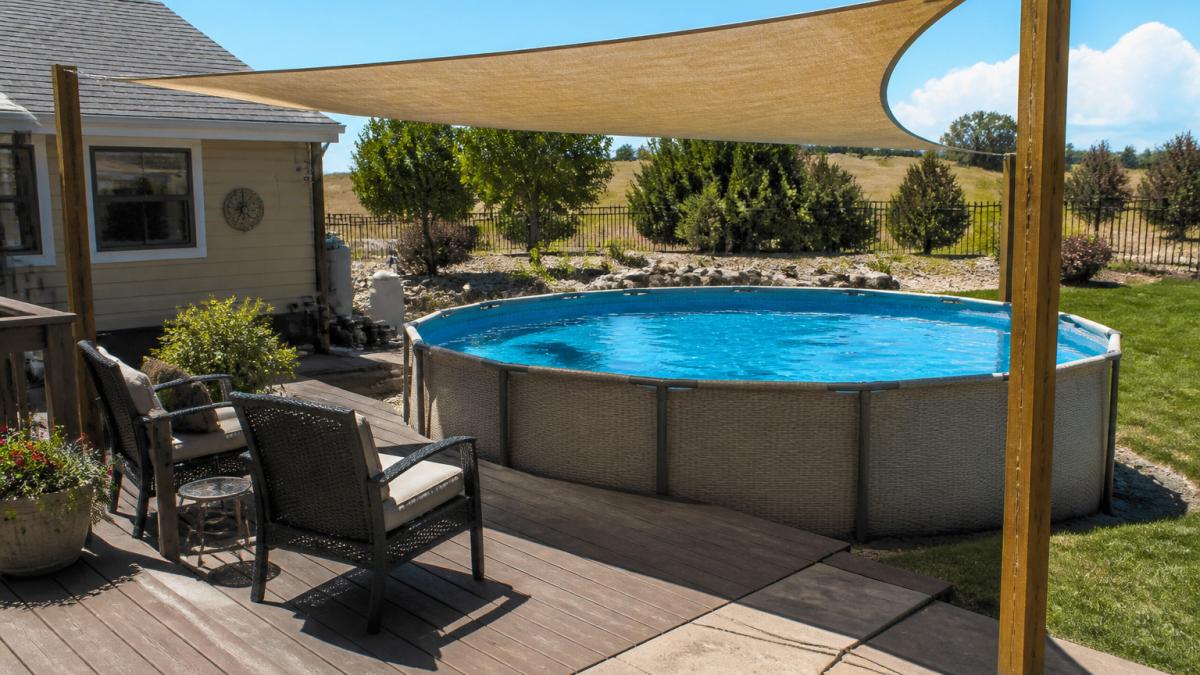
Common options include:
- Umbrellas placed at the pool edge, useful for smaller pools.
- Cabanas or pergolas that offer ongoing shade and a place to sit.
- Strategic plantings that block sun without dropping leaves into the water.
Using a Pool Fountain to Cool Water Through Evaporation
A fountain or spray feature cools water by increasing the surface area exposed to air. As droplets leave the water and evaporate, they carry heat away. This is the same principle that makes sweating cool your body.
Fountains work best in dry climates with low humidity, where evaporation happens quickly. Compare misting systems for pool cooling if you want evaporative cooling without a fountain.
Keep in mind that evaporation also removes water from the pool, so you will need to top it up regularly.
Energy, Water Use and Safety Trade-Offs
Every cooling method has a cost, and the costs are not just money. Learn how to limit evaporation losses before you commit to a fountain or misting approach. Before you commit, weigh water use, electricity, chemistry, and safety together, because a tactic that saves on one line can cost you on another.
Water use and evaporation
Evaporation is the engine behind fountains, sprays, and night-air cooling, and it removes water from the pool.
There is a second effect: evaporation leaves dissolved minerals and stabilizers behind. As water evaporates and you refill with fresh water, cyanuric acid, calcium, and total dissolved solids can climb over a season. That is why pools that rely heavily on evaporative cooling often need a partial drain and refill periodically, not just a top-off.
Chemical balance
Adding cooler water dilutes chlorine and can shift pH and alkalinity, so test and adjust after every significant top-off. Evaporation alone tends to concentrate chemicals, while refilling dilutes them; the two effects do not cancel out perfectly, which is why the pool can drift out of balance even when the water level looks normal. A common mistake is adding water to cool the pool without testing the chemistry afterward. Check free chlorine, pH, and alkalinity after each fill, and watch cyanuric acid if you use stabilized chlorine.
Energy costs and pump scheduling
Running the pump overnight is not free. The cost depends on your pump’s wattage and your electricity rate. A variable-speed pump run at low speed for eight overnight hours typically uses far less electricity than a single-speed pump run the same duration, so if cooling is the goal, low-and-slow is the better schedule. Compare the overnight run against your normal filtration schedule rather than adding hours on top of it: shifting filtration to nighttime can capture most of the cooling benefit without raising total daily energy use. Check your utility’s time-of-use rates, since off-peak overnight power is often cheaper.
Do not extend pump run time indefinitely to chase cooling. Filtration needs are set by bather load and water clarity, not by temperature. Once you have met the filtration requirement, extra hours buy little cooling and add wear on the equipment.
Safety and equipment compatibility
Electrical equipment near water needs proper grounding and GFCI protection, and any fountain, spray, or pump should be installed per the manufacturer’s instructions and local electrical code. Keep cords and outlets away from the pool edge and out of puddles. Before buying a fountain or spray feature, confirm it matches your existing pump and plumbing; an undersized pump will not drive a large feature, and an oversized one can overwhelm a small filter. For shade structures, check that posts and anchors are set for wind loads in your area, and keep sails tensioned so they do not sag or trap rainwater.
Weighing the trade-offs
A simple way to decide: if water is cheap and plentiful where you are and the air is dry, evaporative methods plus overnight pumping give the best cooling per dollar. If water is expensive or restricted, lean on shade and pump scheduling instead. If electricity is expensive, run a variable-speed pump at low speed overnight and skip the fountain during peak-rate hours. In every case, test the chemistry after top-offs and keep electrical equipment properly protected.
Building a Cooling Plan for Your Pool and Budget
Combine methods rather than relying on one. A practical plan for most homeowners looks like this:
- Low budget: Run the pump at night, check the filter, and add shade where the afternoon sun hits hardest.
- Medium budget: Add a shade sail and a fountain or spray feature for evaporative cooling.
- Higher budget: Invest in permanent shade structures and a solar heating setup for long-term comfort.
Start with the cheapest, most effective change, usually shade or nighttime pump operation, and measure the result for a week. If you are budgeting for evaporative cooling, see the misting system cost and installation guide. Then add the next method if you still need more cooling.
If you want a more permanent way to manage pool temperature across the season, Dixie Pool Solar Heating & Misting can walk you through options that fit your pool, your climate, and your budget. Request a quote from our website.
Frequently Asked Questions
Can a fountain or waterfall lower pool temperature?
A fountain can lower pool temperature slightly by increasing surface agitation and evaporation, which removes some heat from the water. The effect is modest, though, and it works best in dry air with low humidity. In humid conditions evaporation slows down, so a fountain adds little cooling. A fountain also raises water use, since the lost water must be replaced, and it can disturb pool chemistry if you run it constantly. Treat it as a supporting method alongside shade and night pump operation rather than a primary solution.
What is the fastest way to cool down a swimming pool?
The fastest practical methods combine several tactics: adding a portion of cooler water, shading the surface during the hottest hours, and running the pump and filter overnight when air temperatures drop. Partially draining and refilling with cooler water produces the quickest drop, but it uses a lot of water and requires rebalancing the chemistry afterward. Pool owners in Southern Utah often find nighttime air is the most reliable heat-removal tool, since desert nights cool quickly.
How can I cool my pool without a chiller?
You can cool a pool without a chiller by using nighttime air, evaporation, shade, and cooler water additions. Running the pump at night moves water across the surface so it can release heat to cooler air. Shade sails or umbrellas reduce direct sun on the water. Keep in mind that these methods lower temperatures gradually rather than producing large, immediate drops, and their results depend on climate, humidity, and pool type.
Does running a pool pump at night cool the water?
Running the pump at night can help cool the water when outdoor air is cooler than the pool. Circulation brings warmer water from below the surface to the top, where it can release heat to the night air. The effect depends on how much cooler the night is, how long the pump runs, and how humid the air is. Running the pump overnight also uses electricity, so compare runtime costs against the cooling you expect to gain.


Leave a Reply