Last Updated: October 26, 2026
Quick Summary
A solar pool heater lasts 20+ years on the collector side, with Heliocol panels carrying a 12-year warranty, while pumps, valves, and sensors need attention far sooner. Pumps last 8-12 years, valves 5-10 years, and sensors 3-7 years, so watch the small parts as your early warning system.
- Heliocol collector panels carry a 12-year warranty and last 20+ years.
- Quality variable-speed pool pumps typically last 8-12 years.
- Valves last 5-10 years and sensors 3-7 years before failing.
- Replace rather than repair when multiple leaks hit collectors over 15 years.
- A partial replacement keeping the pump and plumbing costs far less than a full rebuild.
Table of Contents
- How Solar Pool Heating Systems Work and What Wears Out
- Solar Pool Heater Lifespan by Component
- Solar Pool Heater Maintenance That Extends Service Life
- Solar Pool Heater Repair: What Can Be Fixed and What Cannot
- Warning Signs Your System Is Nearing the End
- Repair or Replace: A Decision Framework
- Solar Pool Heater Replacement Cost and Cost Drivers
- Winterizing and Freeze Protection for a Longer Lifespan
- Frequently Asked Questions
How Solar Pool Heating Systems Work and What Wears Out
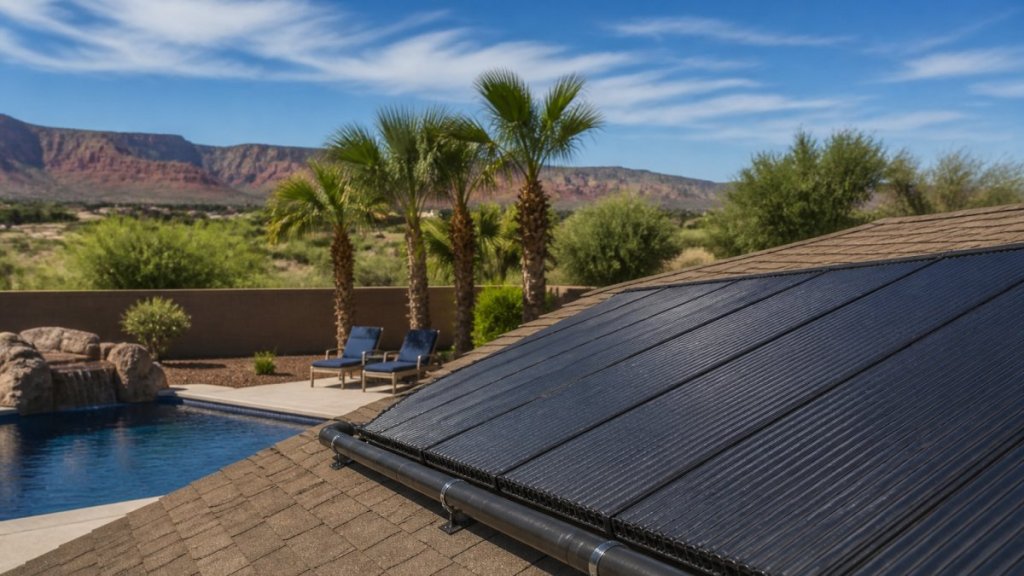
A solar pool heating system is a closed loop of plumbing that pushes pool water through roof-mounted collectors, where sun exposure warms it before it returns to the pool. At Dixie Pool Solar Heating & Misting, we use Heliocol panels.
Solar Pool Heater Lifespan by Component
Most solar pool heater lifespan questions get answered with a single number. That number is misleading. Component life varies enormously, and knowing the ranges helps you plan rather than panic.
Here is the component-by-component picture, with the variables that move each range.
Collector Panels: The Long-Lived Core
Our Heliocol panels carry a 12-year warranty and have a lifespan of 20+ years.
Pumps, Valves, and Sensors: The Shorter-Lived Parts
The mechanical side is where budgets actually go. Pumps, valves, and sensors are the components most likely to need attention within the first stretch of ownership, and they are also the cheapest to replace.
Typical service-life ranges practitioners see:
- Pool pump: 8-12 years for a quality variable-speed pump running a normal swim season; shorter if it runs dry, pulls from a clogged filter, or sits in a hot pump house.
- Valves (check, diverter, and isolation): 5-10 years. Valve internals are the first casualty of poor water chemistry and mineral buildup.
- Sensors (temperature and flow): 3-7 years. Sensors drift out of calibration before they fail outright, which is why inaccurate readings are an early warning sign.
- Plumbing and fittings: 10-20 years for properly supported PVC; much shorter where freeze damage or direct sun exposure goes unaddressed.
- Controller/automation: 7-12 years, with surge protection and a dry enclosure adding years.
What most guides miss is that these parts fail early for preventable reasons. Poor water chemistry eats valve internals. A clogged filter strains the pump. A failed sensor can leave the system running when it should not.
Watch the small parts. They are your early warning system for the whole loop.
Lifespan by Climate and Water Chemistry
If you want the collector-specific deep dive, our guide to how long solar pool panels last covers material and climate effects in more detail.
Solar Pool Heater Maintenance That Extends Service Life
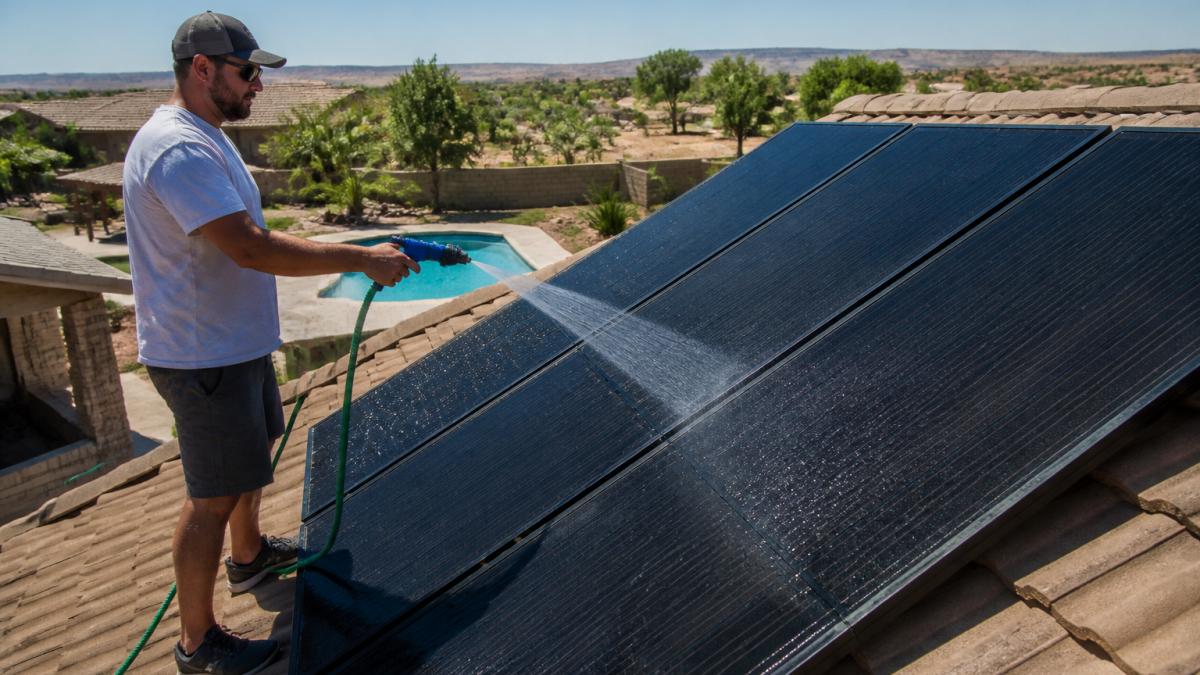
For a deeper walkthrough, our solar pool heating maintenance guide covers cleaning, inspecting, and winterizing step by step.
Solar Pool Heater Repair: What Can Be Fixed and What Cannot
Most solar pool heater repair falls into two buckets: cheap fixes and false economies. Knowing which is which saves money.
What is usually fixable:
- Leaking plumbing connections and fittings
- Failed valves and sensors
- Pump repairs or replacement
- Individual collector damage, in some cases
What usually is not worth fixing:
- Delaminated or UV-degraded collector panels
- Widespread cracking across an aging array
- Systems where multiple components are failing at once
The rule we use: if the repair costs a meaningful fraction of a new system and the collectors are already old, replacement wins. Patching a failing array just moves the expense forward a year or two.
Warning Signs Your System Is Nearing the End
If you are spotting several of these at once, our guide to signs your solar pool heater needs repair walks through each symptom in detail.
Repair or Replace: A Decision Framework
The repair-versus-replacement call comes down to three questions: how old are the collectors, how much is failing, and what does the repair actually buy you?
Use this framework:
| Situation | Recommended Action | Why |
|---|---|---|
| One valve or sensor failing, collectors sound | Repair | Cheap, quick, restores full function |
| Pump failing, collectors under 10 years | Repair or replace pump | Mechanical part, not an array issue |
| Isolated collector damage, rest of array healthy | Repair if feasible | Contained problem |
| Multiple leaks, collectors over 15 years | Replace | Repair costs approach new system |
| Widespread cracking or delamination | Replace | Panels are past service life |
Before you decide, check what your warranty still covers. Our solar pool heating warranty coverage guide explains what is protected, what voids a claim, and how to file one.
Solar Pool Heater Replacement Cost and Cost Drivers
For current pricing on your pool, request a quote.
How a Replacement Quote Is Built
A replacement quote is essentially four line items:
- Collector material and count. The array is usually the largest single line. More panels and higher-grade panels raise it; a partial array replacement lowers it.
- Mounting and roof work. Standard pitched roofs are straightforward. Tile, metal, steep pitch, multiple roof planes, and long pipe runs add labor and hardware.
- Plumbing and mechanical reuse. Keeping a serviceable pump, filter, and much of the plumbing lowers the bill substantially. Replacing them at the same time raises it but can be cheaper than doing them separately later.
- Removal and disposal. Taking down the old array, disposing of collectors responsibly, and patching mounting points is real labor that some bids bury and others itemize.
Cost Drivers in Plain Terms
- Collector count and array size: more panels, higher material cost. Array size is driven by pool surface area and target temperature rise, not by preference.
- Panel type and warranty terms: longer warranties carry higher upfront cost. Compare warranty length and what it actually covers, not just the headline years.
- Roof access and mounting: complex rooflines, tile roofs, and long runs add labor. A second-story roof with a steep pitch is a different job than a single-story composition roof.
- Plumbing and pump reuse: keeping serviceable parts lowers the bill. Have the pump and plumbing inspected before you accept a full-rebuild quote.
- Removal and disposal of the old system: ask explicitly whether it is included.
- Permits and inspection: some jurisdictions require permits for roof-mounted work; confirm who pulls them and who pays.
Partial vs. Full Replacement
A partial replacement, keeping the pump and plumbing, costs far less than a full rebuild. That is often the smart middle path for a system with good bones and tired collectors. A full replacement makes sense when the mechanical side is also near end of life or when the existing plumbing cannot support a new array.
What to Ask Before You Sign
- What is the collector warranty length, and what voids it?
- Is removal and disposal of the old array included?
- Are permits and inspection included?
- Which existing components are being reused, and what is their remaining life?
- What flow rate will the new array be designed for, and does the existing pump meet it?
For current pricing on your pool, request a quote rather than relying on generic estimates. Our solar pool heating warranty coverage guide explains what is protected and how to file a claim if a new component fails early.
Winterizing and Freeze Protection for a Longer Lifespan
Our step-by-step winterization guide covers the full procedure.
For homeowners who want the deeper detail on panel longevity, our guide to how long solar pool panels last breaks down the collector side specifically.
Frequently Asked Questions
How long does a solar pool heater last?
Heliocol panels have a lifespan of 20+ years and carry a 12-year warranty.
What are the signs that a solar pool heater needs to be replaced?
Watch for water temperatures that no longer reach their usual levels, visible cracks or leaks in the collector array, panels that stay cold to the touch while the pump runs, and rising repair bills. Repeated freeze damage or a collector array that has lost most of its flow rate are also strong signals. If repairs approach the cost of a new system, replacement usually makes more financial sense.
Can a solar pool heater be repaired, or should it be replaced?
Many problems are repairable. Leaking plumbing, failed valves, bad sensors, and pump issues are routine solar pool heater repair jobs. Collector panels with isolated cracks can sometimes be patched. Replacement becomes the better choice when the collector array itself is failing across multiple panels, when the system is past its expected service life, or when repair costs climb toward the price of a new installation.
What maintenance helps a solar pool heater last longer?
Rinse the collectors with mild soap and water a few times a season to remove dust and debris. Keep the pool’s water chemistry balanced so acidic or scaling water does not attack the system. Maintain proper flow rate through the collector array, check for leaks after every season, and winterize the system before the first freeze. A solar pool cover also reduces heat loss and eases the load on the system.
Does a solar pool heater need to be winterized?
Yes, in areas that see freezing weather. Water left in the collectors and plumbing can freeze, expand, and crack panels. Winterizing typically means draining the collector array and exposed plumbing, shutting off the system at the valves, and covering or protecting roof-mounted components. Skipping this step is one of the most common causes of premature collector damage.
How much does it cost to replace a solar pool heater?
Pricing varies by project, so ask for a written quote rather than relying on a generic estimate.
Extending your swim season from March through November should not mean babysitting a heating system. Dixie Pool Solar Heating & Misting installs Heliocol panels backed by a 12-year warranty, plus a 2-year labor warranty on our work, and the systems run with little to no maintenance after installation. Solar thermal energy does the heating, so there are no operating costs to absorb. Get started with Dixie Pool Solar Heating & Misting and get a free quote on a system built to last.


Leave a Reply