Table of Contents
- How Sustainable Pool Heating Works
- Benefit 1: Slash Operating Costs and Utility Bills
- Benefit 2: Extending Swimming Season With Solar
- Benefit 3: Solar vs Electric Pool Heater Efficiency
- Benefit 4: Reduce Your Carbon Footprint and Reliance on Fossil Fuels
- Benefit 5: Smart Home Integration and Climate-Specific Performance
- Benefit 6: Durability, Low Maintenance, and Long-Term Savings
- Benefit 7: Understanding Solar Pool Heater Installation Cost and Incentives
- Frequently Asked Questions
Last Updated: September 21, 2026
How Sustainable Pool Heating Works
Sustainable pool heating warms pool water with renewable energy instead of gas or grid electricity. The most common method, solar thermal heating, pumps water through panels that absorb heat from the sun and ambient air.
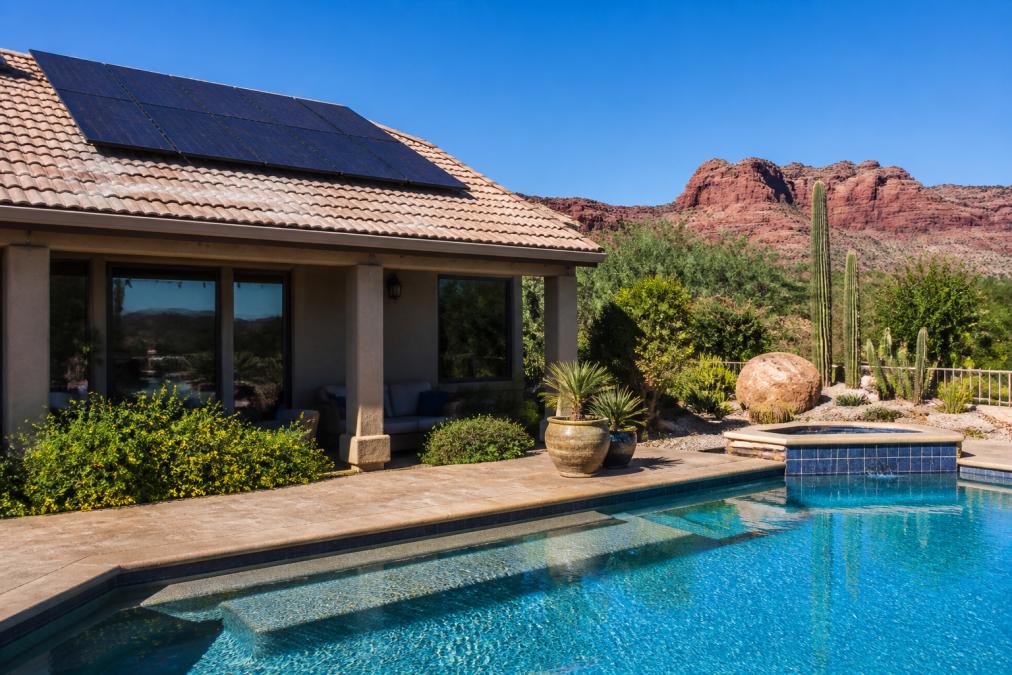
The process works in four steps:
- Pool water flows through a filter and pump
- Water moves into roof-mounted solar collectors
- The sun heats the water inside the panels
- Warm water returns to your pool
Benefit 1: Slash Operating Costs and Utility Bills
The biggest draw is the money. A solar thermal system runs on sunlight, so monthly operating costs drop to nearly zero after installation.
A solar thermal system has no fuel costs. Once installed, the sun does the work. That’s why long-term savings beat every gas or electric option.
Benefit 2: Extending Swimming Season With Solar
Most pool owners in colder climates accept a short season. Solar heating changes that.
A few practical notes:
- A solar cover at night keeps heat from escaping
- Panel orientation matters; south-facing roofs perform best
- Shade on the panels cuts output fast
Benefit 3: Solar vs Electric Pool Heater Efficiency
Solar and electric heaters both warm water, but they get there differently.
Here’s how they stack up:
| Feature | Solar Thermal | Electric Heat Pump |
|---|---|---|
| Fuel source | Sunlight | Electricity |
| Operating cost | Near zero | Ongoing |
| Monthly bills | Minimal | Varies by rate |
| Lifespan | 20+ years | 10-15 years |
| Best for | Sunny climates | Shaded or cloudy areas |
Benefit 4: Reduce Your Carbon Footprint and Reliance on Fossil Fuels
Gas pool heaters burn natural gas or propane, releasing carbon emissions every hour they run. Solar systems release none.
The environmental case is simple:
- No combustion means zero direct emissions
- No fuel extraction, transport, or storage
- Renewable energy from the sun, replenished daily
- Lower demand on the electric grid
Solar thermal panels work in cool weather too. They collect heat from ambient air and sunlight, so a crisp March day can still warm your pool.
Benefit 5: Smart Home Integration and Climate-Specific Performance
Smart home integration separates a system that saves money from one that quietly wastes it: an array without intelligent control runs whenever the pump runs, while a smart-controlled array runs only when the panels are hotter than the pool, cutting pump runtime meaningfully over a season.
What smart controllers actually do
A modern solar controller is a differential controller that compares collector water temperature to pool water temperature. When the collector exceeds the pool by a set threshold (typically 3-5°F), it opens a diverter valve and circulates water through the panels; when the differential drops below that threshold, it closes the valve and stops flow. That prevents the most common solar heating mistake: pumping pool water through cool panels on a cloudy afternoon and actually cooling the pool.
Beyond that core function, today’s controllers add:
- App-based monitoring, Check pool temperature, collector temperature, and system status from a phone. Most major controller brands (Hayward, Pentair, Jandy) offer Wi-Fi modules that integrate with their existing pool automation platforms.
- Scheduling and setpoints, Set a target pool temperature and let the controller decide when to run. Some models learn your usage patterns and pre-heat before your typical swim times.
- Freeze protection, In colder markets, the controller automatically circulates water when air temperature approaches freezing, preventing pipe damage. This is not optional in climates with hard freezes.
- Fault alerts, Leak sensors, flow switches, and pressure monitors can trigger notifications before a small issue becomes a repair bill.
- Integration with broader home automation, Systems that speak to platforms like Amazon Alexa, Google Home, or Apple HomeKit let you include pool heating in routines (for example, “turn on pool heat” as part of a weekend scene).
Why climate-specific tuning matters more than the hardware
Panel tilt angle. In lower latitudes, panels can be mounted at a shallower angle and still capture strong sun; in higher latitudes, a steeper tilt improves winter and shoulder-season performance. A fixed-angle installation optimized for summer will underperform in spring and fall, exactly when you want the extra heat.
Regional suitability at a glance
| Climate type | Best-fit sustainable method | Key tuning consideration |
|---|---|---|
| Hot and arid | Solar thermal with generous panel area | Higher panel count to compensate for low ambient heat; consider misting for peak summer overheat |
| Humid and warm | Solar thermal with standard panel area | Ambient heat boosts performance; watch for algae and chemistry balance at higher temps |
| Mild coastal | Solar thermal with moderate tilt | Fog and marine layer reduce direct gain; smart scheduling around clear windows matters |
| Cold with hard freezes | Solar thermal plus freeze protection and a backup heat pump | Controller freeze mode is mandatory; heat pump covers extended cloudy stretches |
The practical takeaway
If you are installing a solar thermal system, the controller is the brain of the system, not an accessory. A basic differential controller captures most of the savings; a smart controller with app monitoring, freeze protection, and variable-speed pump integration captures more and flags problems before you notice them in your pool temperature. When comparing quotes, ask which controller is included and whether it supports your existing automation platform.
If your pool already has a variable-speed pump, a smart solar controller can often be programmed to run the pump at the lowest speed that still moves water through the panels efficiently. That combination, variable speed plus differential control, is where the biggest operating-cost reductions come from.
Benefit 6: Durability, Low Maintenance, and Long-Term Savings
Solar thermal panels are built to last. The Heliocol panels we install carry a 20+ year lifespan and an industry-best 12-year warranty. We offer a 2-year warranty on all other labor.
- Keep panels clear of debris
- Check the filter and pump as usual
- Watch for leaks at fittings
Benefit 7: Understanding Solar Pool Heater Installation Cost and Incentives
Cost is the question every pool owner asks first, and the one most guides answer worst, either a single national average that doesn’t apply to your roof, or no numbers at all. Here is a more useful breakdown.
What drives the installed cost
Solar thermal pool heating is priced per panel, and panel count scales with pool surface area. The industry rule of thumb: collector area should equal 50-100% of the pool’s surface area, depending on climate and season length. A 400-square-foot pool in a sunny climate might need 200-300 square feet of collector; in a cooler climate, 350-400 square feet.
- Pool size, Larger surface area requires more panels.
- Roof complexity, Tile, slate, and steep pitches take longer to mount and may require specialized hardware.
- Distance from equipment pad to roof, Longer plumbing runs mean more pipe, more labor, and slightly more pump head.
- Controller and automation tier, A basic differential controller adds little; a smart controller with app integration and variable-speed pump compatibility adds more.
- Existing equipment condition, If your pump is near end of life, upgrading to a variable-speed model at the same time often makes sense and can be bundled into the project.
Retrofitting vs. new installation
This decision changes the math significantly.
Retrofitting an existing pool is the more common scenario. Your pool, pump, filter, and plumbing are already in place; the solar installation adds a diverter valve, controller, sensor pair, and panel array. The existing pump usually handles the additional flow, though a variable-speed upgrade is worth considering. Retrofits are typically faster, often two to four days, and less disruptive because the pool stays operational throughout.
Incentives: what actually applies
Federal, state, and utility incentives can offset a meaningful share of the upfront cost, but the landscape changes. As of the most recent guidance, the federal residential clean energy credit (often called the solar investment tax credit) has covered a percentage of qualifying solar installation costs, including solar water heating systems. Eligibility rules, caps, and expiration dates have shifted over time, so confirm current status before relying on it.
A few practical notes:
- Solar thermal and solar electric are treated differently under many incentive programs. Do not assume a credit that applies to photovoltaic panels also applies to thermal collectors.
- Documentation matters. Most credits require itemized invoices, manufacturer certifications, and proof of installation. Missing paperwork is the most common reason credits get denied.
- Stacking rules vary. Some programs allow you to combine federal, state, and utility incentives; others prohibit double-dipping. Read the fine print.
- Timing matters. Credits are often tied to the tax year the system is placed in service, not the year you signed the contract.
What installation actually looks like
A typical residential installation follows this sequence:
- Site assessment, Roof orientation, shading analysis, structural check, and equipment pad review.
- System design, Panel count, layout, tilt angle, plumbing route, and controller selection.
- Permitting, Local building and electrical permits as required. Timelines vary by jurisdiction.
- Mounting and plumbing, Panel mounting, pipe runs, diverter valve installation, and sensor placement.
- Controller setup, Programming setpoints, differential thresholds, freeze protection, and any smart-home integration.
- Testing and handoff, Pressure test, flow verification, temperature differential check, and walkthrough.
Most residential installs take two to five days on site, plus permitting lead time. The pool typically stays usable throughout, aside from brief offline periods during plumbing tie-in.
The honest caveat
Solar thermal is not right for every property. If your roof is heavily shaded, faces the wrong direction, or lacks structural capacity for panels, a heat pump may be the better sustainable option. A site assessment before you commit will tell you which path makes sense, and a good installer will tell you when solar is not the answer.
Incentive programs change with each tax year and legislative session. Confirm current federal, state, and utility rules before you buy, and keep every invoice and certification in a dedicated folder. Missing documentation is the most common reason homeowners lose a credit they qualified for.
Frequently Asked Questions
How much money can you save by switching to sustainable pool heating?
Savings depend on your current system, pool size, and local energy rates. Homeowners often report saving $1,500 to $2,000 per year on heating costs after switching to solar thermal energy. Because the system uses the sun’s heat instead of gas or electricity, there are no operating costs once installed. You may also qualify for a 25% Utah state tax credit (up to $2,000) and a $750 gas rebate, lowering the upfront investment further.
Can sustainable pool heating extend my swimming season?
Yes. In Southern Utah, a properly sized solar thermal system can keep your pool comfortable from March through November. The panels collect ambient heat and transfer it to your pool water, raising the temperature even when outside air is cool. Using a solar cover at night reduces heat loss and helps maintain warmth, so you get more usable swim days without relying on a gas heater.
How does solar pool heating compare to gas or electric heat pumps?
Solar thermal systems use the sun’s energy to heat water directly, so they have almost no operating costs after installation. Electric heat pumps and gas heaters rely on utility power or fuel, which means monthly bills. Solar panels also last 20+ years and require little maintenance, while mechanical heaters need more frequent service. For homeowners who want lower long-term costs and a smaller environmental impact, solar is often the better fit.
What is the typical lifespan of a solar pool heating system?
High-quality solar panels, like Heliocol, are designed to last more than 20 years. They carry a 12-year warranty on the panels themselves, and installation labor is typically covered for 2 years. After the warranty period, panels rarely fail suddenly; they may gradually lose some efficiency, but many continue to perform well with basic upkeep. That long lifespan makes sustainable pool heating a durable investment.
Heating a pool shouldn’t mean watching your gas bill climb every month. Solar thermal systems cut operating costs to near zero, extend your season, and reduce your carbon footprint, all with minimal upkeep. Dixie Pool Solar Heating & Misting installs Heliocol panels backed by a 12-year warranty, handles full system integration, and helps you claim every incentive you qualify for. Get a free quote and find out how much you could save.
 Dixie Pool Solar Heating & Misting
Leave a comment