Table of Contents
- How Solar Pool Heating Works and Why It Matters
- Solar Pool Heating Cost vs Savings: What Homeowners Should Expect
- Solar Pool Heater Installation Near Me: What the Process Looks Like
- Solar Pool Heating System Efficiency Tips for Maximum Thermal Gain
- Climate-Specific Optimization for Southern Utah Pools
- Integrating Solar Heating with Smart Home Automation
- Maximize Pool Value with Solar Heating: Long-Term Property Benefits
- Frequently Asked Questions
Last Updated: September 14, 2026
How Solar Pool Heating Works and Why It Matters
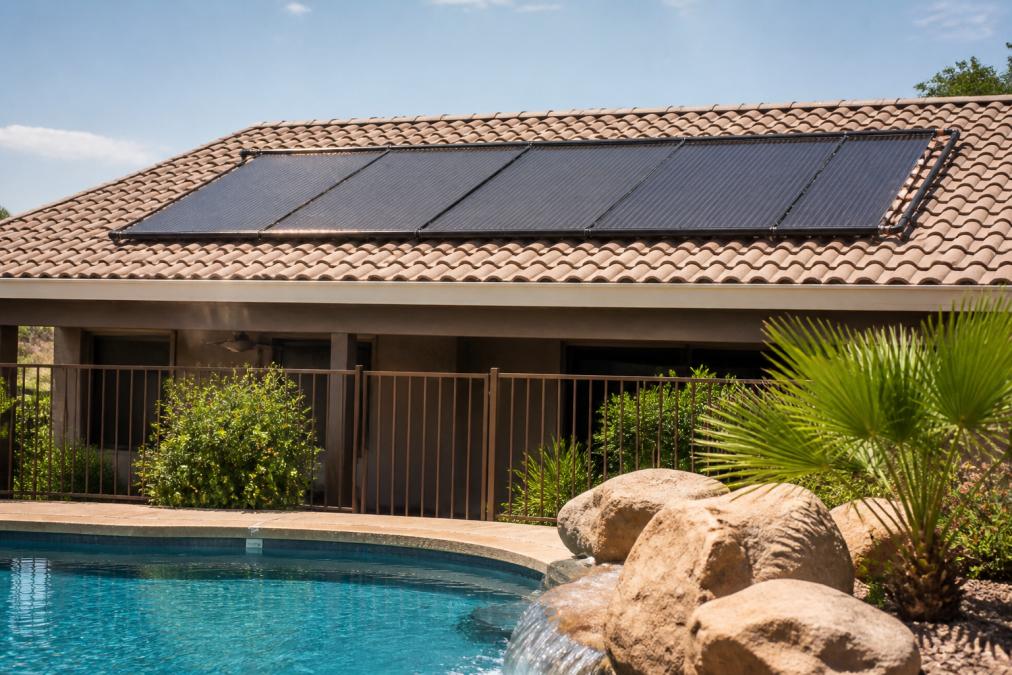
Solar pool heating is the process of circulating pool water through roof-mounted collectors, where solar radiation transfers thermal energy into the water before it returns to the pool. This guide from Dixie Pool Solar Heating & Misting explains how homeowners can maximize pool value with solar heating, extending their swim season from March through November without gas bills.
The system relies on a simple principle: your existing pool pump pushes water through solar collectors, absorbing heat from the sun at no operating cost. Unlike photovoltaic panels that generate electricity, solar thermal collectors directly warm your water.
U.S. Department of Energy solar pool heating overview confirms that solar pool heating is the most cost-effective use of solar energy in many climates.
The Solar Thermal Process
Water flows from your pool pump through a filter, then through a solar valve that diverts it to the collectors when conditions favor heat gain. The collectors absorb solar radiation, warming the water by several degrees per pass. A thermostat control determines when the system operates, ensuring you only heat when the sun provides free thermal energy.
Key Components of a Solar Pool Heating System
Every system includes collectors, a solar valve, a thermostat controller, and plumbing that ties into your existing pool equipment. Dixie Pool Solar Heating & Misting installs Heliocol panels built to last 20+ years, backed by an industry-best 12-year warranty.
Solar Pool Heating Cost vs Savings: What Homeowners Should Expect
The financial case for solar pool heating is straightforward: you eliminate the monthly cost of firing a gas heater while extending your usable swim season. What most guides skip is the math behind the payback number. Here is a step-by-step model you can run with your own figures.
Step 1: Estimate Your Current Heating Cost
Pull twelve months of utility bills and total the gas or electric charges attributable to pool heating (for gas, look for therms consumed in months your heater runs; for electric heat pumps, isolate the pool circuit if it is separately metered). A common pattern is a seasonal heating bill depending on pool size, setpoint, and how early in spring you start heating.
Step 2: Estimate Your Solar Coverage
Solar thermal does not replace 100% of a gas heater’s output in every month. In a sunny, high-desert climate, a properly sized collector array can carry the full load from roughly mid-spring through early fall, with the gas heater acting as backup on cloudy stretches and shoulder-season mornings. A reasonable planning assumption is 70-90% annual displacement of heating energy, not 100%.
Step 3: Calculate Net System Cost
Net cost = installed price − incentives − any utility rebate.
Federal: The Residential Clean Energy Credit (IRS Form 5695) allows a 30% credit on qualifying solar water heating property installed in a primary or secondary residence. Pool heating may be eligible if it is a qualifying solar water heating property, confirm eligibility with a tax professional.
State and utility: State credits and utility rebates vary widely and change year to year. Check your state energy office and your gas or electric utility’s rebate catalog before signing a contract.
Step 4: Payback Formula
Payback (years) = Net system cost ÷ Annual heating cost avoided
Worked example with placeholder figures, substitute your own:
| Input | Example value |
|---|---|
| Annual heating cost before solar | $1,800 |
| Solar displacement rate | 80% |
| Annual heating cost avoided | $1,440 |
| Installed system cost (varies) | $6,500 |
| Federal credit (if applicable) | −$1,950 |
| Utility rebate (if applicable) | −$500 |
| Net system cost | $4,050 |
| Simple payback | 2.8 years |
After payback, the only ongoing cost is pump electricity, which you were already paying to circulate and filter the pool.
What Actually Moves the Payback Number
- Utility rate. Higher per-therm or per-kWh heating costs shorten payback.
- Collector area relative to pool surface. Undersized arrays lean on the backup heater more, cutting displacement.
- Season length you actually use. Heating a pool you swim in nine months a year returns more than one you use four.
- Cover discipline. An uncovered pool can lose the majority of its heat overnight; a cover is the single cheapest payback accelerator.
- Incentive timing. Credits and rebates are legislated, not permanent, model payback with and without them.
Payback is not a fixed number. It is a function of your utility rate, your displacement rate, and your net cost after incentives. Run the four steps above with your own bills before you accept any quote.
Financing and Cash-Flow View
If you finance the net cost, compare the monthly payment against your current monthly heating bill. When the payment is at or below the bill it replaces, the system is cash-flow positive from month one, a framing that matters more to many homeowners than the simple payback figure.
IRS Residential Clean Energy Credit guidance
DOE solar pool heating overview
Solar Pool Heater Installation Near Me: What the Process Looks Like
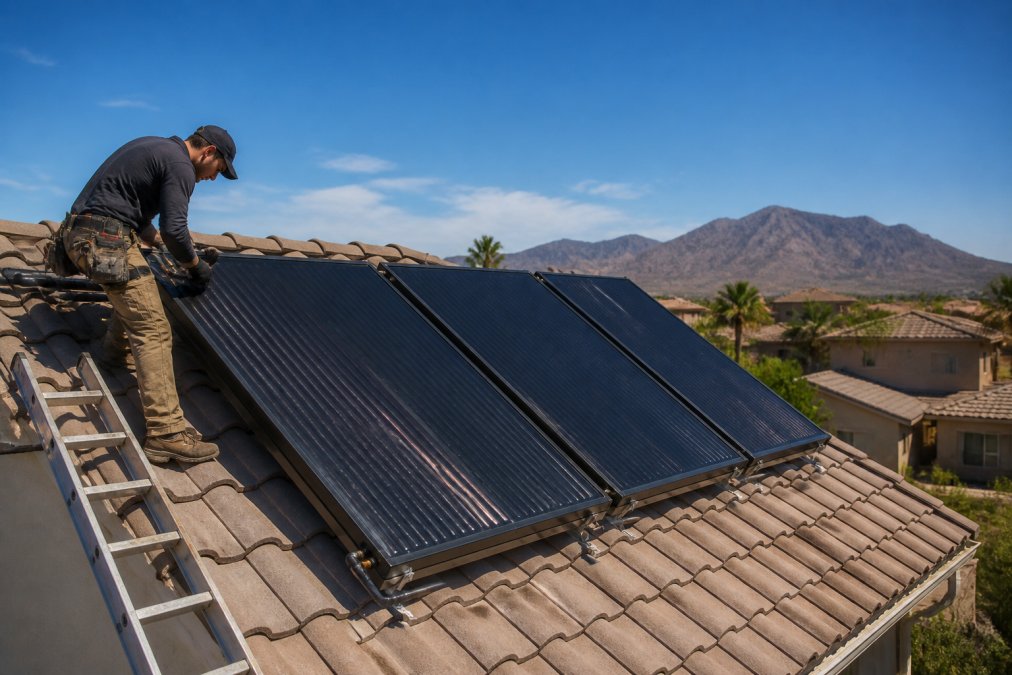
Finding a solar pool heater installation near me starts with a site assessment, followed by system sizing, permitting, and a one-to-two-day installation. Dixie Pool Solar Heating & Misting handles the entire process, from roof evaluation to final integration with your existing pool equipment.
Site Assessment and System Sizing
Technicians evaluate roof orientation, shading, and available square footage to determine collector count. South-facing roofs with minimal shade deliver the best thermal gain. System sizing accounts for your pool’s volume and desired temperature increase.
Installation Timeline and Warranty Coverage
Most installations complete in one to two days. Dixie Pool Solar Heating & Misting provides a 12-year warranty on all panels and a 2-year labor warranty on other components. Little to no maintenance is required after installation.
Solar Pool Heating System Efficiency Tips for Maximum Thermal Gain
Getting the most from your system means optimizing water circulation and minimizing heat loss. Small adjustments to pump scheduling and pool covering can noticeably raise water temperature.
Optimizing Pump Run Times and Flow Rate
Run your pump during peak sunlight hours when solar radiation is strongest. Proper flow rate ensures water spends enough time in the collectors to absorb heat without overheating. A solar valve and thermostat control automate this process.
Evaporation Control and Heat Retention
An uncovered pool loses significant heat overnight through evaporation. A pool blanket or solar cover traps heat and reduces evaporation, keeping water warmer longer. This simple addition boosts heat retention and lowers operating costs.
Run your pump mid-day, not overnight. Water heated at noon stays warm into evening swim time, while nighttime circulation wastes thermal gain.
Climate-Specific Optimization for Southern Utah Pools
Most solar pool heating guides give one set of instructions for the entire country. That is a mistake, because the two variables that dominate performance, humidity and diurnal temperature swing, vary enormously by region. Here is how to tune a system for a high-desert climate, and how that differs from a humid climate.
The Two Climate Levers That Matter
Humidity. Evaporation is the largest heat loss in any uncovered pool, and evaporation rate is driven by the vapor-pressure difference between the water surface and the air. In arid air, that difference is large, so evaporation, and therefore heat loss, is aggressive. In humid air, evaporation is slower, so an uncovered pool retains more heat but the collector array also has less dry, cool air to work with on the return side.
Diurnal swing. High-desert locations routinely see 25-35°F swings between afternoon high and pre-dawn low. That swing is a gift during the day (strong solar gain, cool ambient air helping the collector reject less heat) and a liability at night (rapid radiant and evaporative loss).
High-Desert Tuning Checklist
- Cover every night, without exception. In arid climates, an uncovered pool can lose the majority of a day’s gain overnight. A bubble cover or automatic cover is not optional here, it is the highest-ROI component in the system.
- Bias collector area toward the upper end of the sizing range. Because nights are cold, you want enough array to recover quickly on the next sunny day rather than limping back to setpoint.
- Run the pump in the middle of the day, not at dawn. You want the warmest water returning to the pool when ambient air is warmest, minimizing losses in the return plumbing.
- Set the controller to lock out on cold, windy afternoons. A cold front moving through can turn the collectors into a radiator. A differential thermostat that compares collector temperature to pool temperature prevents this.
- Expect shoulder-season variability. March and November can deliver excellent solar days and near-freezing nights in the same week. Sizing for the shoulder season, not the peak of summer, is what actually extends your swim calendar.
How This Differs in a Humid Climate
In a humid climate, the tuning priorities invert:
- Evaporation loss is lower, so a cover is helpful but less transformative.
- Cloud cover and afternoon thunderstorms reduce peak solar gain, so collector area is often sized larger relative to pool volume to compensate.
- Because nights are warmer, the system can run later into the evening without losing ground.
- Mold, algae, and debris loads are higher, so filtration run time may need to be longer independent of heating needs, meaning the heating and filtration schedules must be reconciled rather than treated as one.
Roof Orientation, Pitch, and Shading
Collector performance is not just about climate. Three site factors dominate:
- Cardinal direction. South-facing is ideal in the northern hemisphere. East and west orientations lose meaningful output in the morning or afternoon respectively; north-facing is generally not viable for pool heating.
- Pitch. Collectors perform well across a wide pitch range, but a tilt roughly equal to your latitude minus 10-15 degrees tends to favor the summer swim season, when you actually want the heat.
- Shading. Even partial shade from a chimney, tree, or adjacent roof section can disproportionately cut output, because a shaded collector can lose heat rather than gain it. Walk the roof at multiple times of day before finalizing layout.
Sizing Rule of Thumb
Your installer should refine this using your actual pool volume, desired temperature rise, and local solar resource.
Ask your installer for the collector-area-to-pool-surface ratio they are proposing, and why. If they cannot explain it in terms of your climate, your roof, and your target season, get a second quote.
Dixie Pool Solar Heating & Misting sizes systems specifically for this climate, accounting for the high-desert evaporation load and the shoulder-season temperature swings that determine how many months you actually get to swim.
Integrating Solar Heating with Smart Home Automation
Smart controllers let you monitor water temperature, adjust pump scheduling, and receive alerts from your phone. Integration with home automation systems improves energy efficiency by running the pump only when conditions favor heat gain.
Automated thermostat control responds to ambient temperature and solar radiation, maximizing thermal gain without manual adjustments. This reduces operating costs and extends equipment life. For homeowners seeking hands-off operation, smart integration pairs well with solar pool heating.
Maximize Pool Value with Solar Heating: Long-Term Property Benefits
A solar-heated pool extends usable swim months and lowers utility costs, both of which appeal to buyers. Homes with efficient, low-maintenance pool systems often stand out in the market.
DOE guidance on solar energy and home value notes that energy-efficient features can influence buyer decisions. A system with no operating costs and a 20+ year lifespan adds durable value.
Beyond resale, the practical benefit is simple: more swim days, smaller bills, and minimal upkeep. Homeowners who maximize pool value with solar heating get both lifestyle and financial returns.
Frequently Asked Questions
Does a solar pool heater add value to a home?
Yes. A solar pool heating system can increase your property value by extending your swimming season and reducing operating costs. Homebuyers in Southern Utah often see solar heating as a low-maintenance, energy-efficient upgrade. With Heliocol panels lasting 20+ years and a 12-year warranty, the system remains an asset long after installation. Many homeowners find that the added usability from March through November makes the pool more attractive to buyers.
How can I make my solar pool heater more efficient?
Start by optimizing your pool pump scheduling to run during peak solar radiation hours, typically mid-morning to late afternoon. Use a pool blanket to reduce evaporation and heat loss overnight. Keep solar collectors clean and free of debris. Ensure your flow rate matches the manufacturer’s recommendation for your system size. A thermostat control that activates the solar valve only when collectors are warmer than the pool water also prevents unnecessary heat loss.
What is the lifespan of a solar pool heating system?
Heliocol panels are built to last 20+ years with little to no maintenance. Dixie Pool Solar offers a 12-year warranty on all panels and a 2-year labor warranty on installation. After the warranty period, panels do not suddenly fail; they continue to perform, though extreme weather or debris may require occasional service. Proper installation and seasonal checks help you get the full lifespan from your investment.
Does solar pool heating save money on energy bills?
Solar pool heating uses the sun’s thermal energy instead of gas or electricity, so operating costs are near zero after installation. Homeowners can save significantly on heating costs. You may also qualify for the Utah State 25% or $2,000 State Tax Credit and the Enbridge Gas $750 Gas Rebate. Actual savings depend on pool size, usage, and local climate, but the system typically pays for itself over time.
Extending your swim season without rising gas bills is achievable with the right system and installation partner. Dixie Pool Solar Heating & Misting delivers Heliocol panels with a 12-year warranty, a 2-year labor warranty, and systems designed for Southern Utah’s climate. Get a free quote from Dixie Pool Solar Heating & Misting and start maximizing pool value with solar heating this season.
 Dixie Pool Solar Heating & Misting
Leave a comment