
Table of Contents
- Why Wind Speeds Up Pool Water Loss
- How Windbreaks Reduce Pool Evaporation
- Pool Windbreak Placement: Where to Put a Barrier
- Fences, Hedges, or Trees: Choosing the Right Windbreak
- Using a Pool Cover Alongside a Windbreak
- Estimating Your Losses with a Pool Evaporation Calculator
- Reading a Pool Water Evaporation Chart and Checking Your Results
- Start Your Windbreak Plan This Season
- Frequently Asked Questions
Last Updated: November 7, 2026
Why Wind Speeds Up Pool Water Loss
Wind is one of the biggest reasons a pool loses water on hot, dry days in Southern Utah. Moving air can pull water off the surface quickly, and the effect is easy to underestimate. Understanding how windbreaks reduce pool evaporation starts with understanding the wind itself.
Evaporation happens when water molecules at the surface gain enough energy to escape into the air. Still air holds a thin layer of moisture just above the water. This layer slows evaporation because the air is already close to saturated. Wind removes that layer and replaces it with drier air, so evaporation speeds up.
Two things drive the loss:
- Air movement: Breezes and gusts sweep moisture away from the surface.
- Dry air: Low relative humidity pulls water out faster.
Southern Utah combines both. Its dry climate and frequent afternoon winds mean an open pool can lose a noticeable amount of water each day. U.S. Department of Energy guidance on residential pool energy use
How Windbreaks Reduce Pool Evaporation
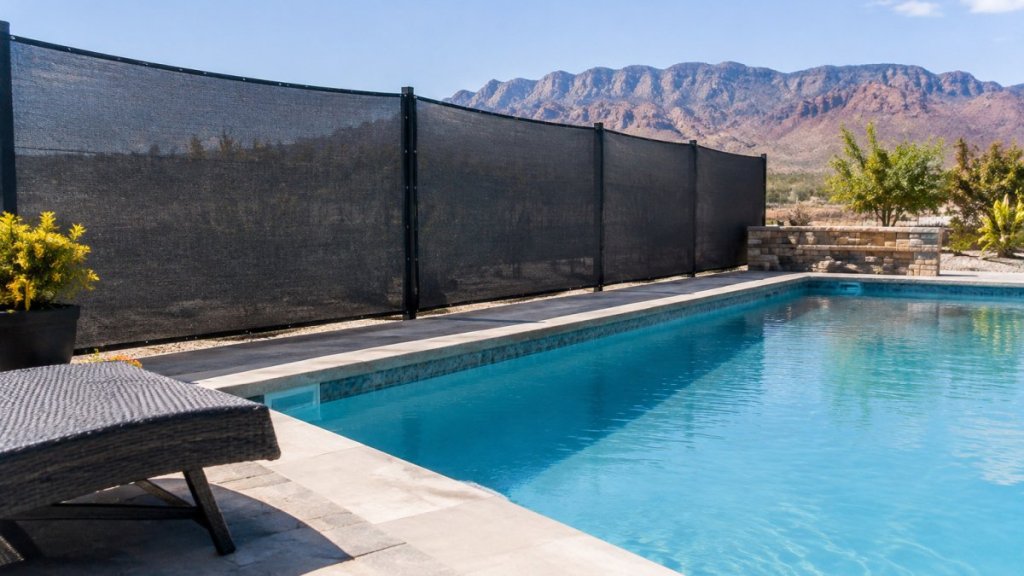
A windbreak is a physical barrier that slows wind before it crosses the water. When wind hits a fence, hedge, or row of trees, it slows down, bends over the top, and drops toward the pool at a gentler angle. That calmer air carries less moisture away.
The main benefits are simple:
- The moist layer above the water stays in place longer.
- Gusts that splash water over the edge are reduced.
- Less heat is lost from the water surface.
Windbreaks do not stop evaporation completely. They reduce the air movement that drives it. Pairing a windbreak with other measures, such as a cover, usually gives the best results.
Pool Windbreak Placement: Where to Put a Barrier
Placement matters as much as the barrier itself. A windbreak on the wrong side of the pool does very little.
Start by finding the prevailing wind direction for your yard. Watch which way the wind blows during the hottest part of the day. Then place the barrier on the windward side, the side the wind comes from.
A few placement tips:
- Put the barrier close enough to shelter the water, but not so close that it blocks sunlight from the pool.
- Leave a gap so air can still flow over the barrier, rather than piling up against it.
- Cover the full length of the exposed side, not just a short section.
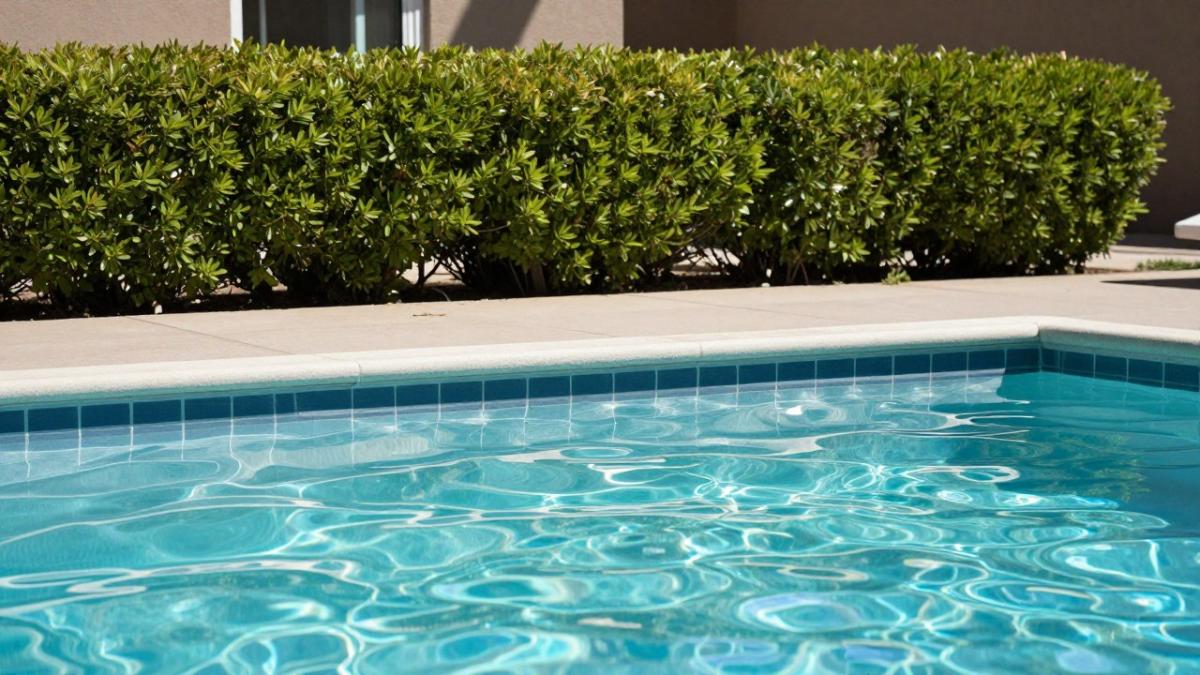
!A backyard swimming pool in Southern Utah with a low hedge along its windward side, bright afternoon sun on the water
Sizing Height and Distance
Height and distance work together. A barrier that is too short lets wind pass over the top. One that is too close can create turbulence right at the pool edge.
As a general approach:
- Height: Aim for a barrier at least as tall as the pool’s exposed edge, and taller where wind is strongest.
- Distance: Place the barrier a short distance from the pool so wind is slowed before it reaches the water.
Exact sizing depends on your yard, wind exposure, and local conditions. Measure the wind pattern for a few afternoons before you build or plant.
Fences, Hedges, or Trees: Choosing the Right Windbreak
Each type of windbreak has trade-offs.
- Fences: Solid fences block wind quickly and reliably. They can also create strong eddies if they are too close to the water.
- Hedges: Dense shrubs offer a natural look and filter wind through their branches. They take time to reach full height.
- Trees: Trees provide large-scale shade and shelter. They need space, and their roots can interfere with plumbing or hardscape.
A mix of a fence for fast coverage, with shrubs or trees added for appearance over time, is one common approach.
Using a Pool Cover Alongside a Windbreak
A windbreak reduces air movement, but a pool cover stops evaporation at the surface. Together they handle both sides of the problem.
A cover is generally one of the most effective single measures against evaporation. Use a windbreak in addition to a cover when you want to keep the pool cool during the day or reduce losses while the cover is off. The windbreak also helps when the cover is removed for swimming.
Estimating Your Losses with a Pool Evaporation Calculator
Before you invest in a barrier, estimate how much water you are losing. A pool evaporation calculator uses your pool size, local humidity, wind speed, and water temperature to estimate daily loss. Estimates like these can help compare the savings from a windbreak against the cost of building or planting one.
Treat calculator results as estimates. Your actual loss will vary with weather and pool use.
Reading a Pool Water Evaporation Chart and Checking Your Results
A pool water evaporation chart shows typical losses at different wind speeds and humidity levels, and it is useful for setting expectations, but it cannot tell you whether your specific windbreak is working. For that you need a before-and-after test that isolates evaporation from the other ways a pool loses water.
Why a simple refill log fails. The amount of water you add back over a week reflects evaporation plus splash-out, backwashing, leaks, rainfall, and how many people used the pool. If you swim more during the test week, or it rains, the number moves for reasons that have nothing to do with the windbreak.
A repeatable test that accounts for the variables:
- Pick two comparable weeks. Same season, similar forecast, similar pool use. Avoid weeks with rain, heavy bather load, or backwashing.
- Mark a reference level. Use a pencil line on the skimmer throat or a piece of tape at the waterline, and measure the drop at the same time each morning before the pump runs.
- Log the confounders. Note daily high temperature, wind speed and direction, rainfall, and roughly how many people swam. A cheap rain gauge and a wind reading from a nearby station are enough.
- Rule out leaks first. A pool that loses water overnight with the pump off and no wind is leaking, not evaporating. Fix that before you credit a windbreak.
- Install the barrier, then repeat. Run the same measurement for a second week under similar conditions.
- Compare like with like. Subtract rainfall, and discard days with heavy use or splash-out. What remains is the evaporation signal.
Reading the result. A meaningful drop in daily water loss under similar wind and temperature is the signal you want. If the number barely moves, the barrier is probably too short, on the wrong side, or too close, recheck the wind direction and the height-to-distance ratio before adding more material.
Using a chart correctly. Treat chart values as a baseline for an unsheltered pool at a given wind speed and humidity. The gap between the chart and your measured loss is roughly what your windbreak and cover are buying you, which is the number worth comparing against the cost of the barrier.
The article lays out a repeatable way to check whether a windbreak is actually cutting evaporation, separate from other causes of water loss.
| Step | What to do | Note |
|---|---|---|
| Pick two weeks | Choose comparable weeks | Avoid rain, heavy use, backwashing |
| Mark reference level | Pencil line or tape at waterline | Measure drop each morning before pump runs |
| Log confounders | Record temperature, wind, rainfall, bathers | Cheap rain gauge is enough |
| Rule out leaks | Check overnight loss with pump off | Leaks are not evaporation |
| Install barrier | Repeat measurement for second week | Use similar conditions |
| Compare like with like | Subtract rainfall, discard heavy-use days | Left: the evaporation signal |
Start Your Windbreak Plan This Season
Begin with a simple plan. Watch the wind for a few afternoons, pick the windward side, and choose a barrier that fits your yard. Add a pool cover for the biggest savings.
Dixie Pool Solar Heating & Misting can help you go further. Our solar heating systems keep your pool warm from March through November without gas or electricity, and book a free solar heating consultation to see how a heating upgrade fits your plan. Ask for a free quote to learn what fits your pool and budget.
Frequently Asked Questions
Does wind affect pool evaporation?
Yes. Wind moves the moist air layer sitting on the water surface, replacing it with drier air that pulls more water into the atmosphere. Evaporation rises as wind speed increases, so a breezy pool can lose noticeably more water than a sheltered one, even when air temperature is the same. Reducing air movement across the surface is one of the most direct ways to slow this loss. Windbreaks, covers, and careful placement of landscaping all address the problem from different angles.
Where should a windbreak be placed around a pool?
Place the windbreak on the side facing the prevailing wind, close enough to shelter the water surface but far enough away that it does not shade the pool or block your view. A barrier positioned upwind of the water intercepts air before it crosses the surface. Walk the yard during a windy afternoon to see which direction gusts arrive from, then plan the barrier to cover that edge of the pool.
Do pool covers reduce evaporation more than windbreaks?
In most cases, yes. A pool cover blocks the water surface directly, and covers are generally the most effective single measure for reducing evaporation. A windbreak lowers the wind reaching the water, which helps, but it does not stop evaporation entirely. Using both can work well: a windbreak to reduce air movement when the pool is uncovered, and a cover when the pool is not in use.
Can a windbreak help keep pool water warmer?
A windbreak can help by reducing the heat carried away when wind passes over the water. Evaporation removes heat from the water, so less evaporation generally means less heat loss. The effect is real but moderate, and it is strongest when combined with a cover or a solar heating system. Results depend on wind exposure, sun, and air temperature at your site, so track water temperature before and after installing a barrier to see the difference.


Leave a Reply